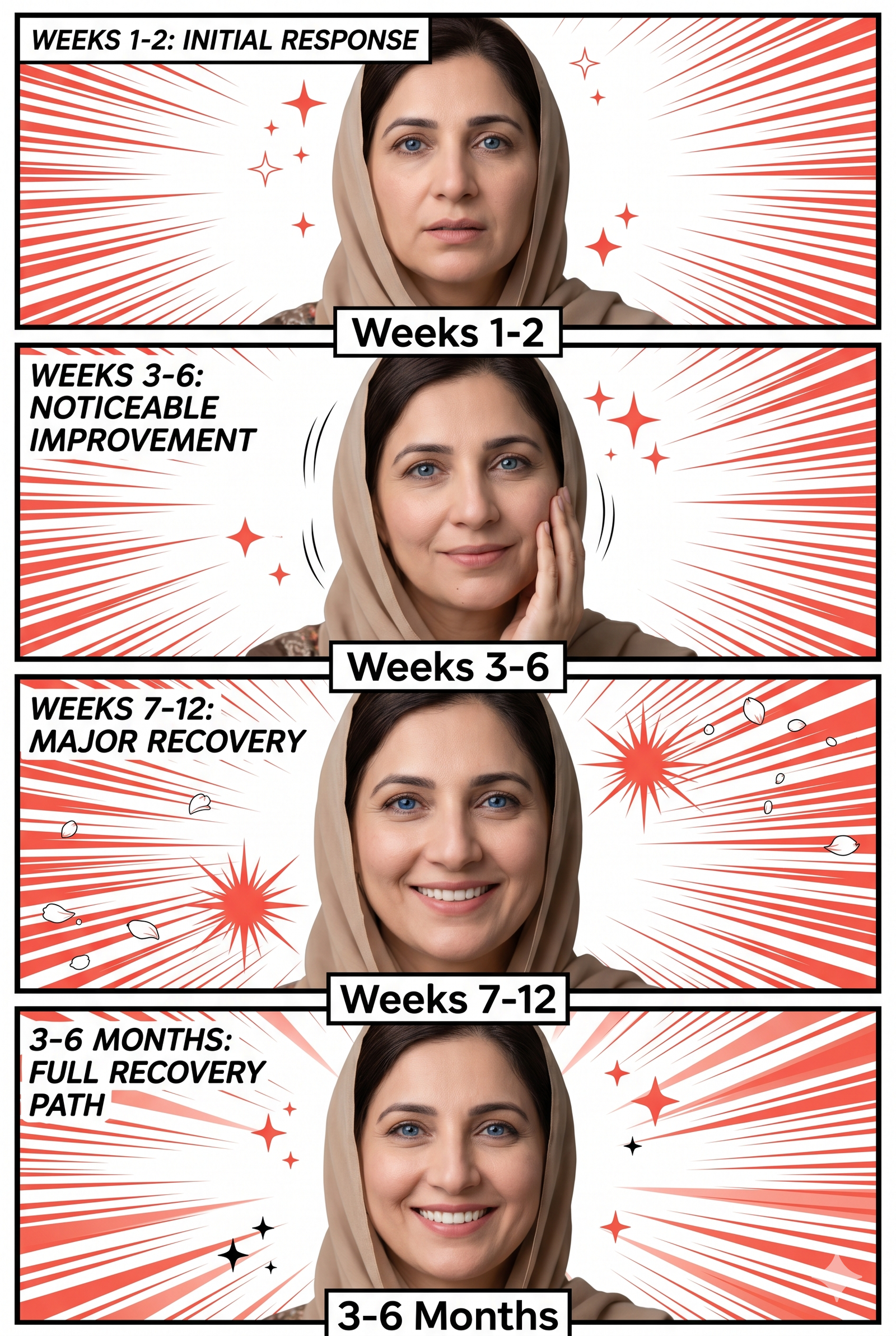
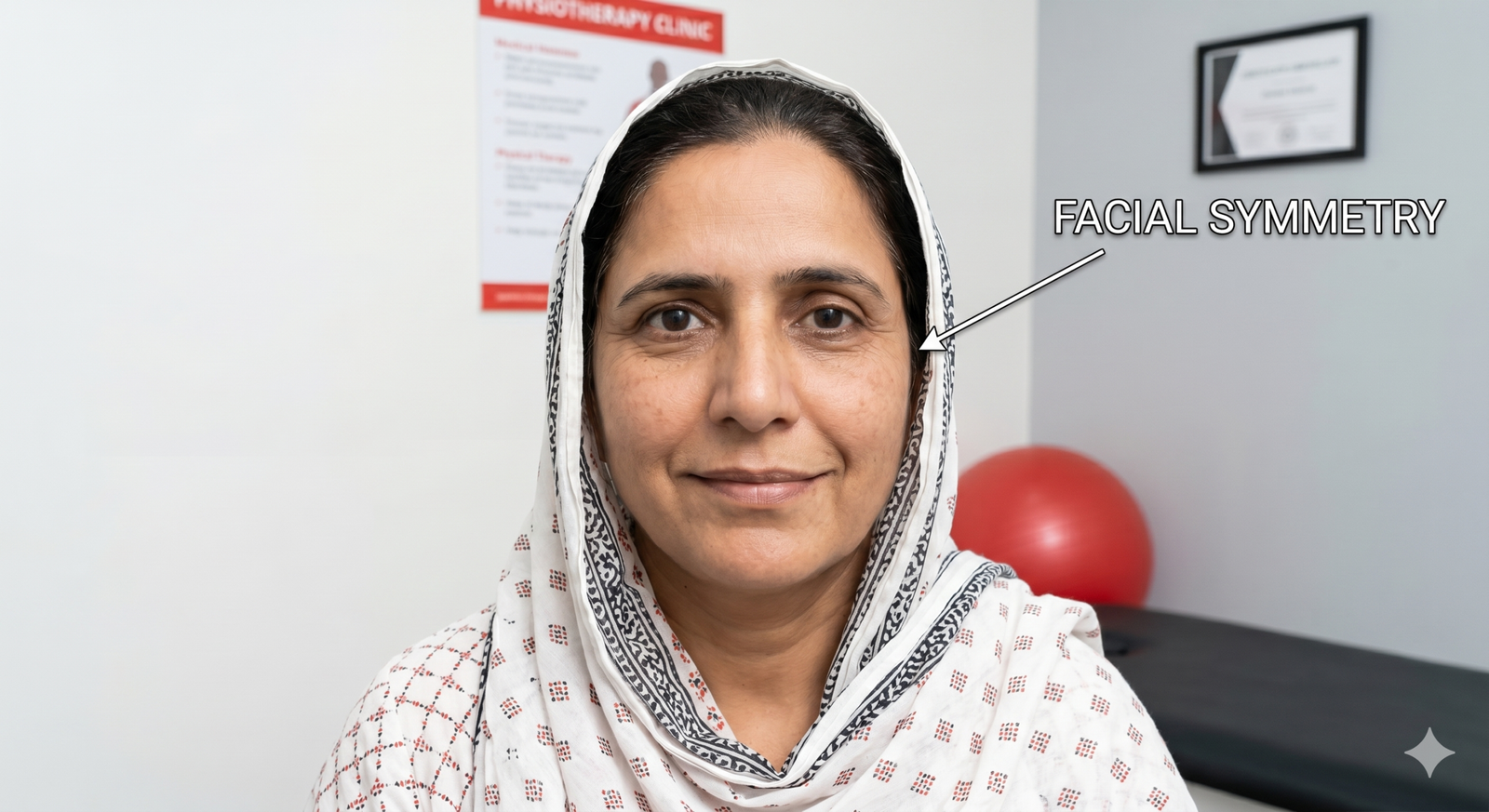
Face Drooping
Sudden weakness or drooping of facial muscles on one side of the face, affecting the forehead, eye, or mouth.
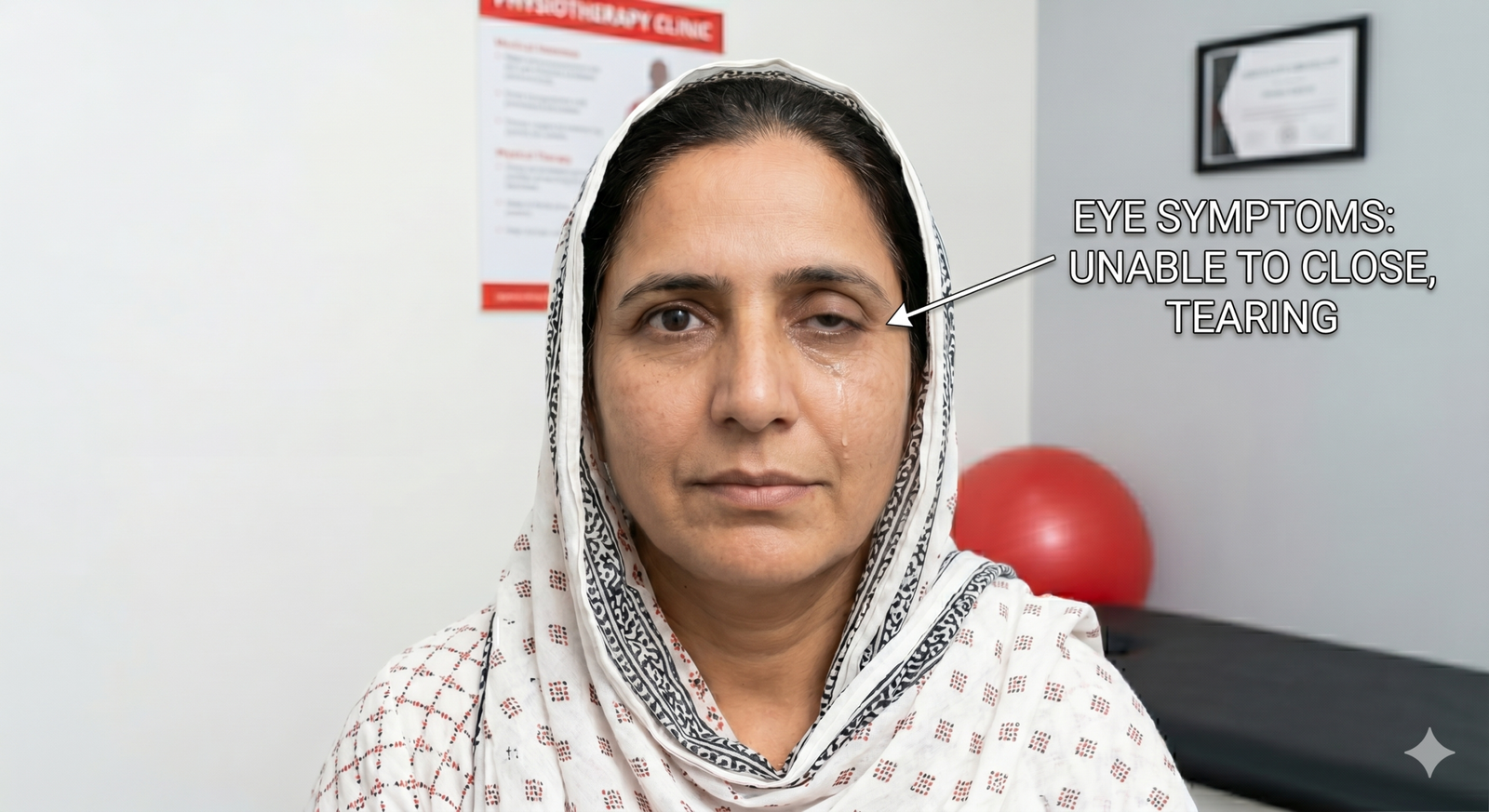
Eye Symptoms
Inability to close eye on affected side, excessive tearing or dry eye, and difficulty with eye movements.
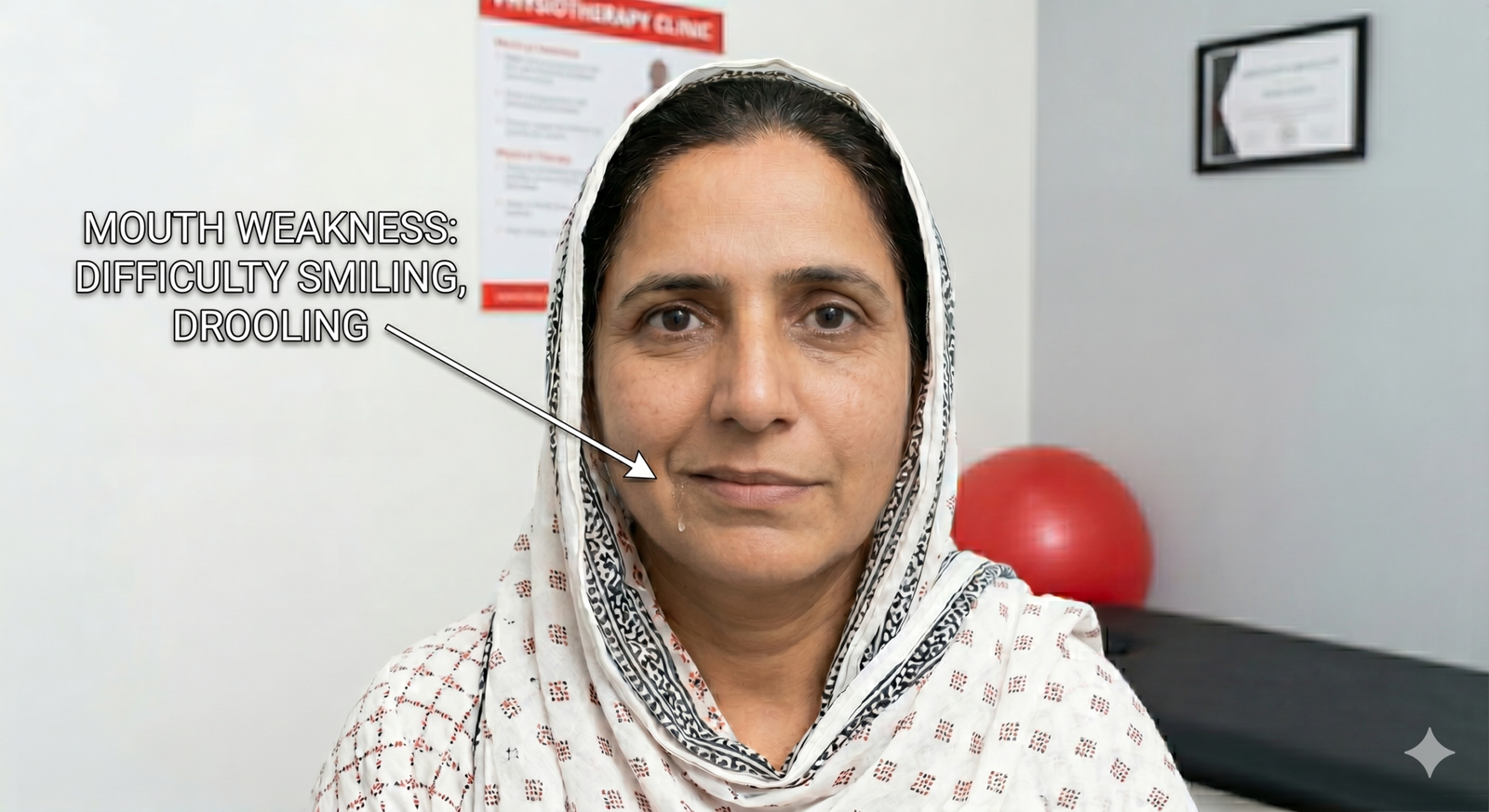
Mouth Weakness
Difficulty smiling or speaking, food accumulation in cheek, and drooling from affected side.
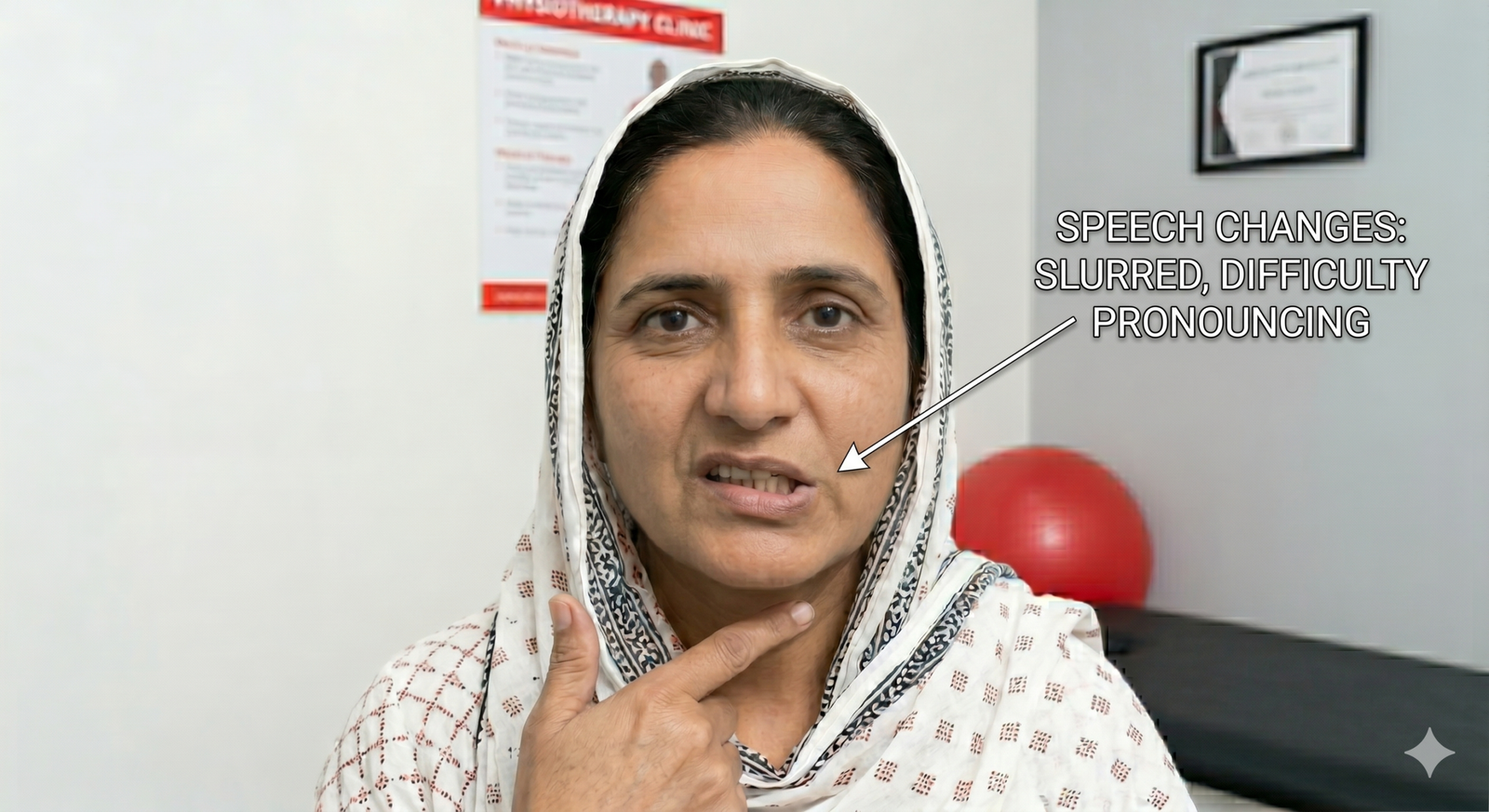
Speech Changes
Slurred speech, difficulty pronouncing certain sounds, and changes to voice quality and tone.
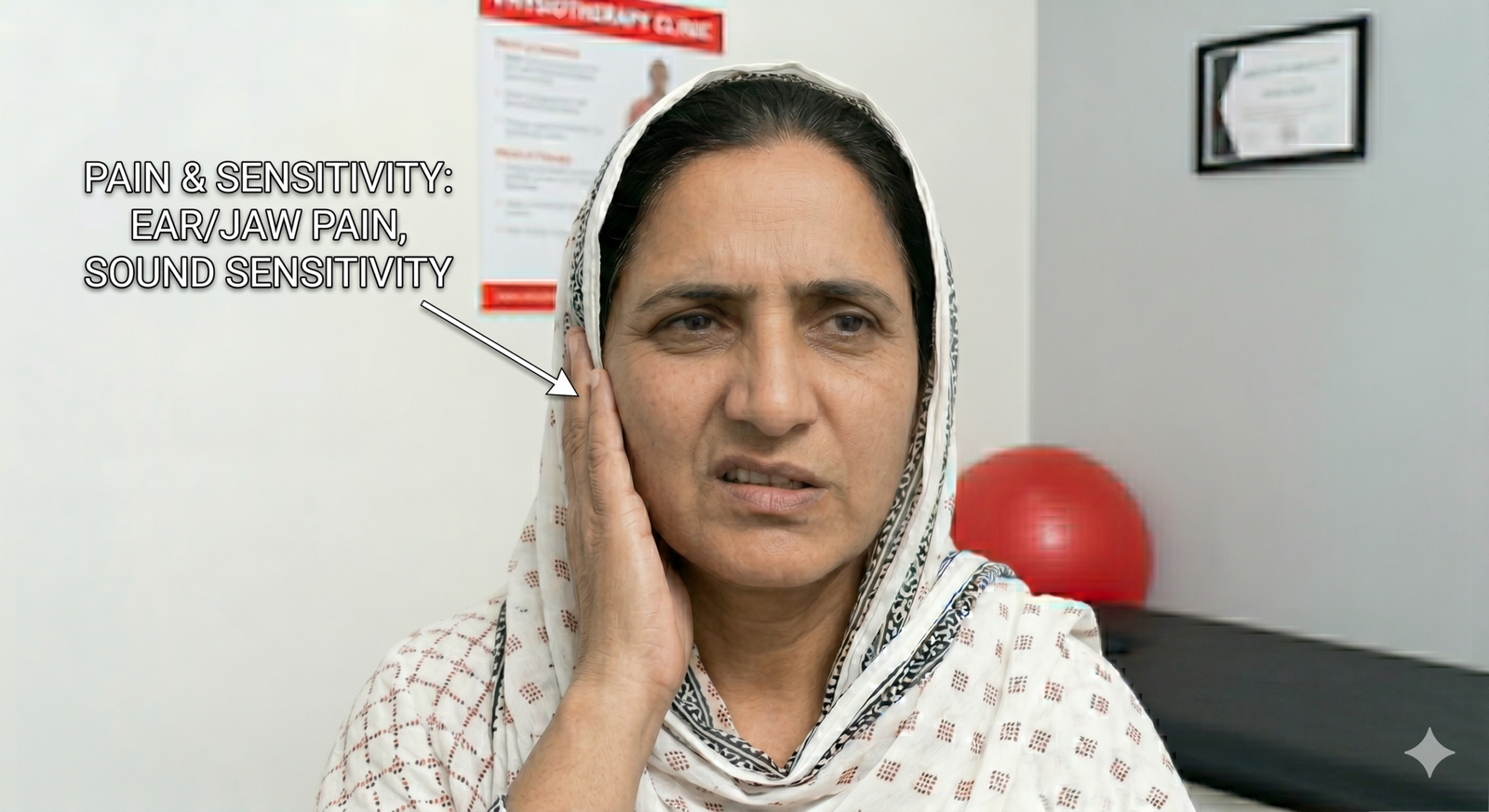
Pain & Sensitivity
Pain in ear, jaw, or behind ear on affected side, and heightened sensitivity to sound (hyperacusis).
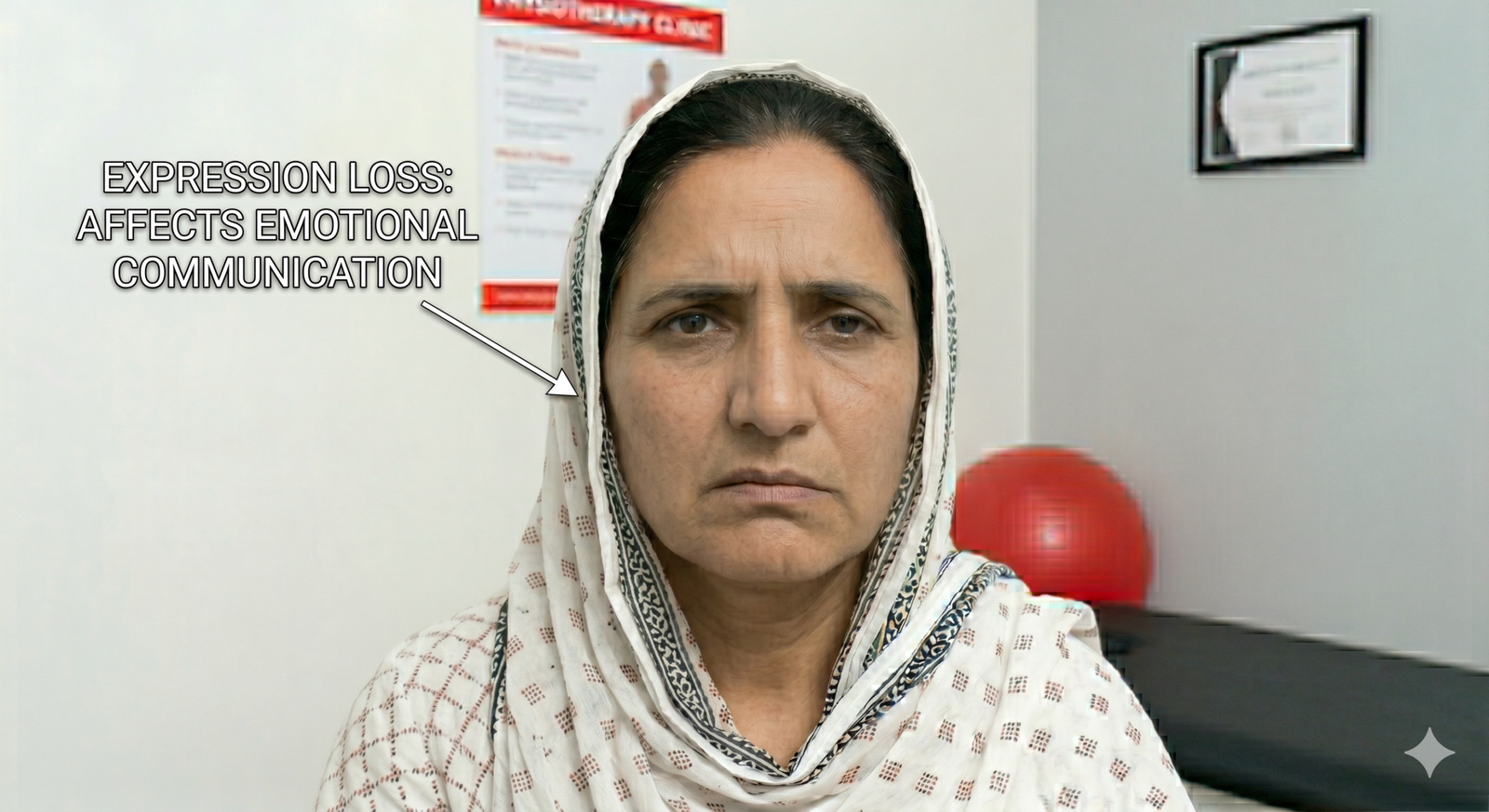
Expression Loss
Inability to show facial expressions naturally, affecting emotional communication and social confidence.

Eye Closure Strengthening
Fundamental exercise for protecting the eye and restoring orbicularis oculi function. Critical for preventing dry eye and corneal damage.
- Gently close eyes slowly, count to 5
- Hold eyes closed with resistance
- Relax and rest for 5 seconds
- Progress to tighter closure over weeks
Sets: Repeat 10-15 times, 3 times daily

Smile & Lip Corner Elevation
Restores zygomaticus major and minor function, improving smile quality and mouth corner elevation for natural expression.
- Hold mouth corners with fingers
- Try to smile while resisting with fingers
- Build resistance gradually over time
- Progress to smiling without finger assistance
Sets: 10 repetitions, 3-4 times daily

Nose Wrinkle & Nasalis Activation
Activates nasalis muscle, improves upper facial control, and enhances overall facial symmetry and expression.
- Wrinkle nose as if smelling something
- Hold wrinkle for 5 seconds
- Alternately lift knees up and down
- Relax and breathe normally
- Focus on symmetrical contraction
Sets: Repeat 12-15 times daily

Speech & Articulation Practice
Improves speech clarity, mouth muscle control, and articulation through phonetic and speech-based exercises.
- Practice words with /p/, /b/, /m/ sounds
- Exaggerate mouth movements while speaking
- Record and listen to speech patterns
- Gradually increase complexity and speed
Sets: Practice 5-10 minutes, 2 times daily

Jaw & Mastication Exercises
Strengthens masseter and temporalis muscles, improves jaw closure, and enhances chewing function.
- Clench teeth gently for 5 seconds
- Open mouth slowly and fully
- Move jaw side to side gently
- Chew slowly on both sides
Sets: Repeat 10-12 times, 3 times daily

Mirror Feedback & Visual Training
Uses visual feedback to improve symmetry awareness, body proprioception, and exercise quality control.
- Perform all exercises in front of mirror
- Watch for asymmetry and imbalance
- Self-correct during exercises
- Note daily improvements in symmetry
- Document progress with photos weekly