
Doing too much, too soon
A new walking routine, more hours on your feet or a jump in running distance, faster than your body can adapt.
Sudden load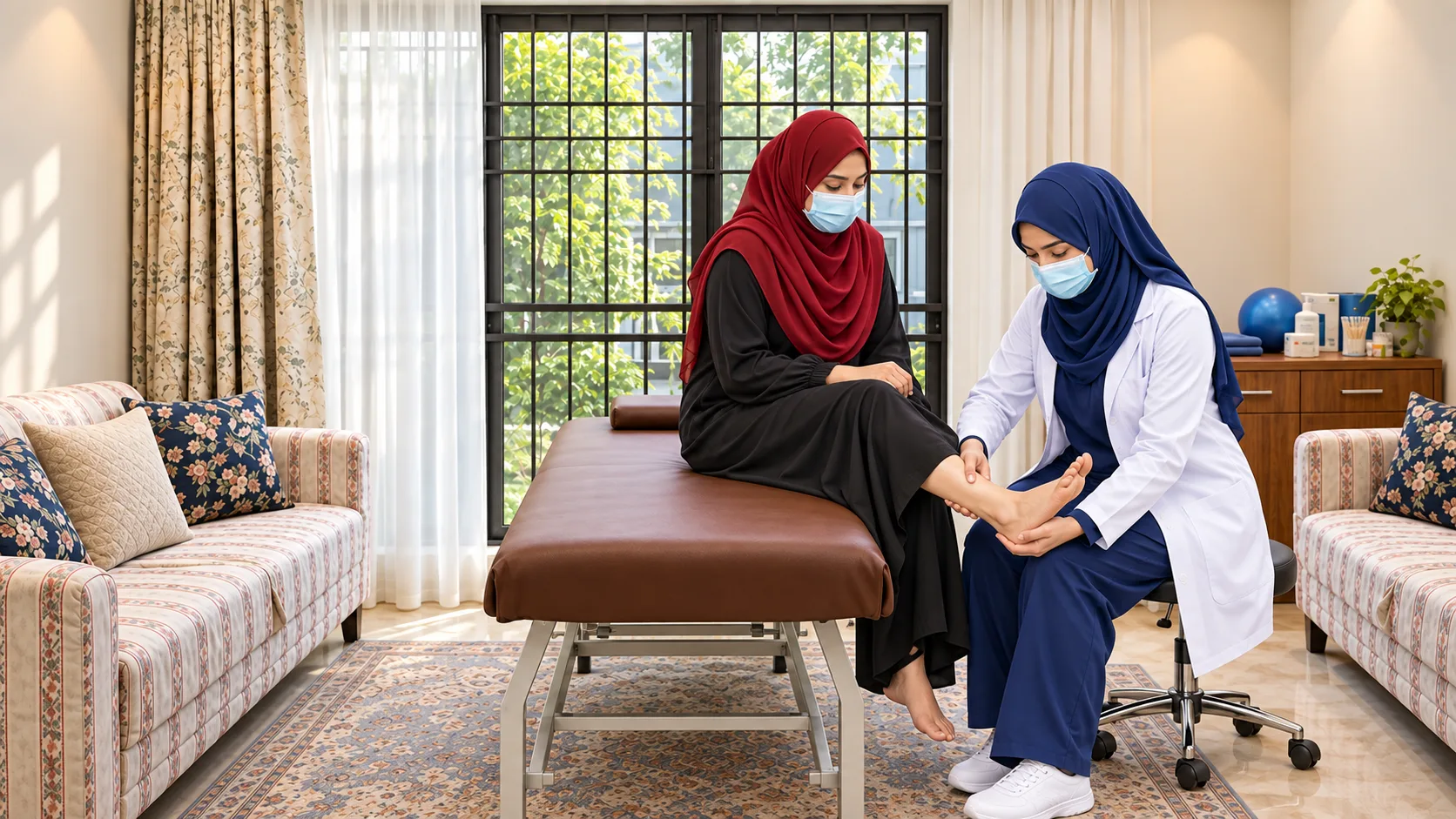
Foot & Ankle Physiotherapy · Lahore
Heel pain, a rolled ankle, a sore Achilles or swelling that won't settle: foot and ankle problems change how you walk, stand and live. Clear answers and step-by-step rehab from a female physiotherapist, at the studio or at home.
Foot & Ankle Care
Each foot has 26 bones and dozens of small joints, muscles and ligaments that work together every time you stand, walk or climb the stairs. When one part hurts, you start to walk differently, and that extra strain often travels up to the knees, hips and back.
At Munaza Physio Studio we start by finding out exactly what is hurting and why, then build a simple, step-by-step plan to settle the pain, rebuild strength and balance, and get you back to the things you want to do.
Explore the foot in 3D
Tap a symptom to see where it usually comes from. It's a guide to help you describe your pain, not a diagnosis. Your assessment confirms what is really going on.
Sharp pain with your first steps out of bed that eases as you move, then comes back after standing for a long time, is a classic sign of plantar fasciitis: irritation of the thick band under your foot.
Read moreInteractive 3D anatomy: BodyParts3D, © The Database Center for Life Science, licensed under CC BY 4.0.
Is foot or ankle pain stopping you from…
What we treat
Tap the 3D foot above if you're not sure what yours is called. Most problems below improve with the right exercise, advice and time.
Heel pain
The plantar fascia is a strong band that runs under your foot from the heel to the toes, like the string of a bow. When it is loaded more than it can handle, the point where it joins the heel becomes irritated and painful. It is one of the most common causes of heel pain, in walkers and runners alike.
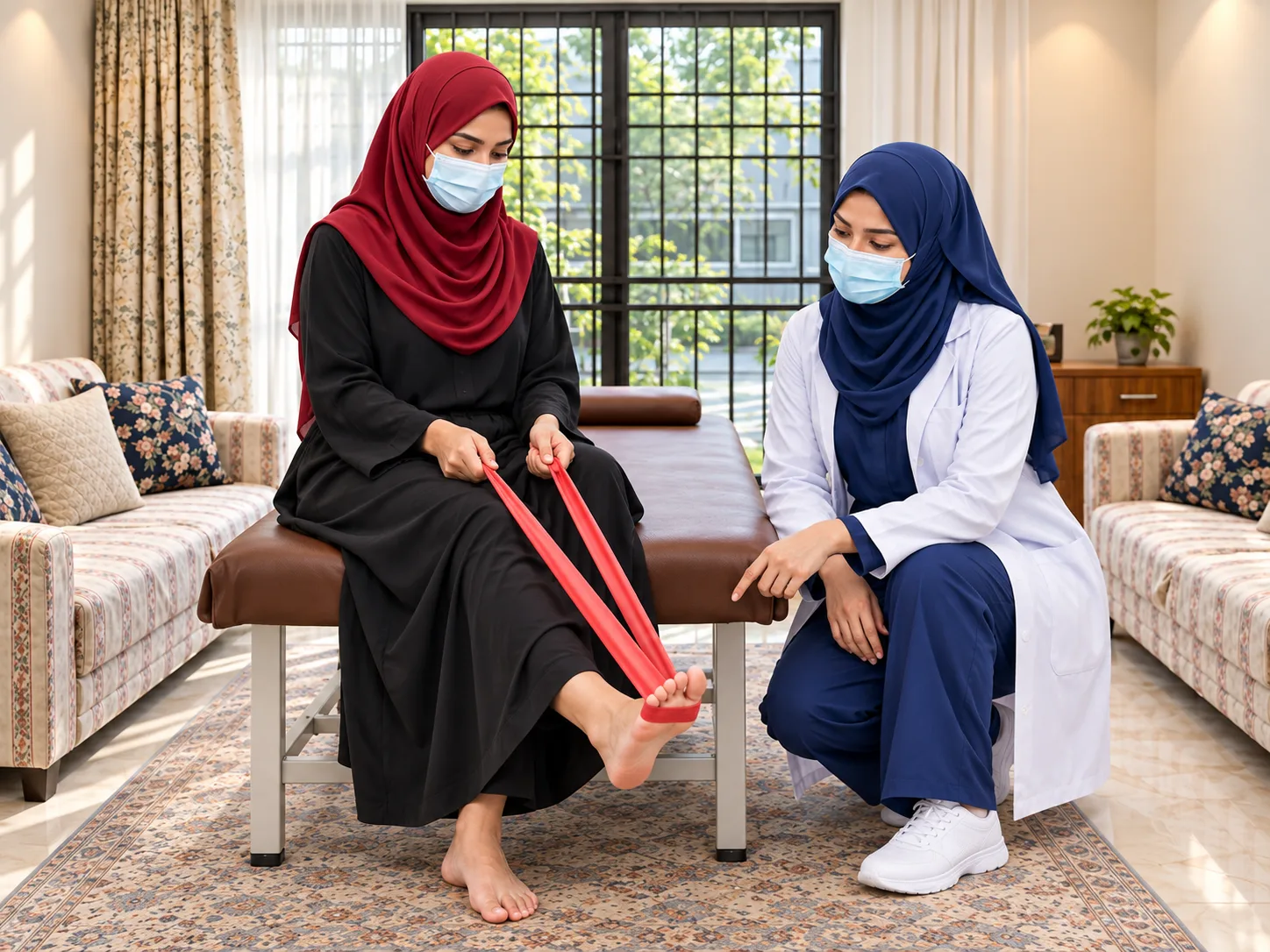
TipBefore getting out of bed, gently pull your toes back towards you for 30 seconds, and keep supportive slippers by the bed rather than walking barefoot.
Back of the heel
The Achilles is the thick tendon that joins your calf muscles to your heel bone. It works hardest when you push off, climb stairs or run. When the load goes up faster than the tendon can adapt, it becomes painful and stiff. Resting alone rarely fixes it; tendons recover best with the right amount of the right exercise.

Reduce what flares it and keep gentle movement going.
Restore easy, pain-tolerable movement at the ankle.
Slow, steady calf exercises that the tendon can handle.
Heavier and single-leg work as the tendon adapts.
Faster, bouncier movements like skipping, when ready.
Return to walking, running or sport in planned steps.
TipSome discomfort during tendon exercises can be fine, as long as it settles by the next morning. Your physio will explain what level is right for you.
Inner shin pain
Medial tibial stress syndrome, better known as shin splints, is an ache along the inner edge of the shinbone. It is common when people start running, walk briskly for exercise or suddenly do more impact than usual.
Rolled ankles
A sprain happens when the ankle rolls and stretches or tears the ligaments that hold it steady, most often on the outside. Many people are told it's "just a sprain", but without proper rehab the ankle can stay weak and wobbly, and the same side sprains again.

Calm the pain and swelling, and walk as comfort allows.
Get the ankle bending and moving freely again.
Strengthen the calf and the muscles around the ankle.
Single-leg and balance work so the ankle reacts quickly.
Steps, hops and turns, done well and with confidence.
Build up to jogging, turning and changes of speed.
Return to sport and daily life, tested rather than guessed.
Stiff, achy joints
Osteoarthritis is wear and change in a joint over time. In the foot it most often affects the main ankle joint (sometimes years after an old injury), the small joints across the middle of the foot, and the big toe. Movement and strength usually help, and physiotherapy shows you how to do it without flaring the pain.
TipStiffer-soled shoes with a gentle rocker can take pressure off a painful big toe or midfoot. Bring your everyday shoes to your appointment so we can check them together.
Swelling
Swollen ankles are common and often harmless, especially after an injury, a long day on your feet or time in a cast. But swelling is a sign rather than a diagnosis, so it is worth knowing which kind needs a doctor.
Why do feet and ankles hurt
A new walking routine, more hours on your feet or a jump in running distance, faster than your body can adapt.
Sudden loadFlat, worn, narrow or high-heeled shoes, or going barefoot on hard floors all day.
FootwearA sprain or fracture that settled but was never properly rehabilitated leaves the ankle weaker and less steady.
Incomplete rehabThese muscles absorb shock and push you forward. When they tire, bones, tendons and the plantar fascia take more strain.
StrengthIf the ankle doesn't bend well, the foot, knee and hip make up for it, and something eventually complains.
MobilityPregnancy, weight changes, new work demands or long hours standing all change how much load your feet carry.
Daily loadSCROLL FOR THE ASSESSMENT TO FIND YOUR ROOT CAUSE
Why physiotherapy works
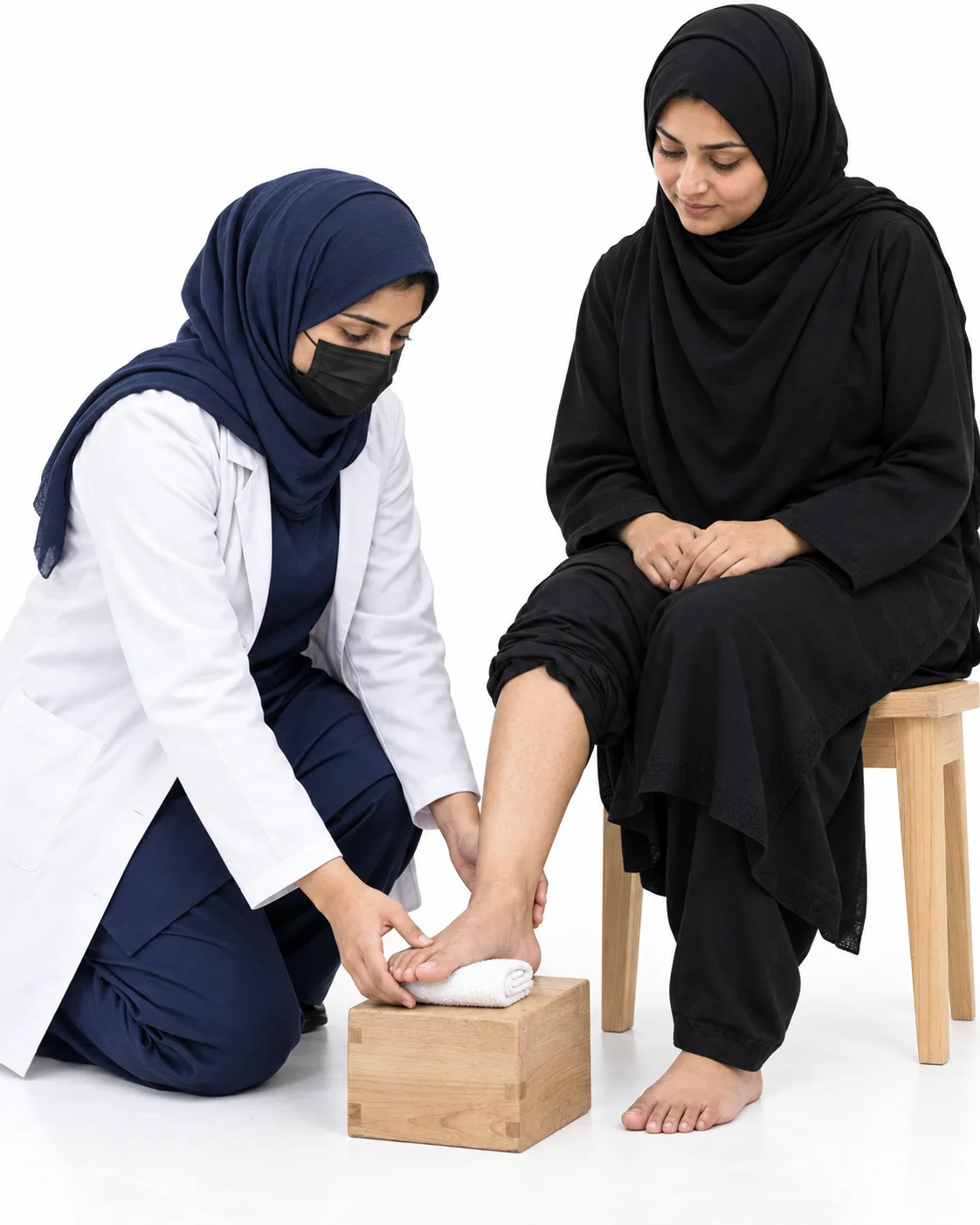
Resting may ease pain for a while, but it does not rebuild strength, balance or confidence. Physiotherapy finds the cause, settles the pain and then gradually builds your feet and ankles back up, so the problem is less likely to return.
We look at how you walk, stand and move, your shoes and your daily routine to find the real cause.
Adjust activity, manage swelling and use hands-on care where it helps, so the pain calms down.
Step-by-step exercises for the calf, foot and balance that your body can handle.
A planned return to walking, work, prayer, exercise or sport, and a plan to keep it that way.
Our advanced treatment techniques
Every plan is built around your assessment. These are the tools we use most, chosen and combined for your problem.
What is happening, what to keep doing, what to change for now, in plain language.
Calf, foot and leg exercises that start easy and build as you improve.
Restoring ankle and toe movement so you walk, squat and climb stairs comfortably.
Single-leg and reaction work that helps stop sprains coming back.
Gentle joint and soft-tissue techniques where they help, never as the whole plan.
Taping, braces, insoles and shoe advice when they are useful for you.
Step by step
We find out what hurts, what is weak and what your feet need to do in your daily life.
Activity is adjusted, not stopped, so symptoms calm while treatment begins.
We get the ankle, foot and toes moving the way everyday life needs.
Your calf, foot and leg muscles are strengthened gradually.
Balance and control exercises so your ankle reacts quickly and you feel steady.
Walking, standing, stairs and impact are increased step by step.
Return to walking, work, exercise or sport, with a plan to keep it going.
Home exercises
Examples of the exercises we often use. Your physio will choose the right ones, and the right amount, for your foot and ankle.
Mild, short-lived discomfort can be normal. Stop any exercise that causes sharp pain, makes you limp or leaves your ankle more swollen the next day, and ask your physio.
Self-care at home
For most sore, strained or swollen ankles, these simple steps can ease pain while you wait for, or alongside, your treatment.
Rest from what makes it worse, and raise your foot on a pillow when you can.
A bag of frozen peas wrapped in a towel, for up to 20 minutes every 2 to 3 hours. Never put ice straight on the skin.
Wide shoes with a low heel and a soft sole.
Soft insoles or heel pads can take pressure off a sore heel.
A wrap or bandage can support a sprained ankle. It should never feel tight, tingly or numb.
Regular, gentle stretching and movement, within comfort, helps recovery.
If pain or swelling isn't improving after a few days, keeps coming back or stops you walking normally, book an assessment. See the red flags below for when to see a doctor first.
Care designed for women
Munaza Physio Studio is a women-only physiotherapy practice. From heel pain during pregnancy to getting back on your feet after an ankle fracture, you are seen one-to-one by a female physiotherapist, in the studio or in your own home.
Women-only environment with a female physiotherapist
Heel, foot and ankle care during and after pregnancy
One-to-one sessions, never rushed
Home visits across Lahore when walking is difficult
Footwear advice that fits your daily life
Real Stories
My mother had a stroke that left her right arm and leg immobile. With Dr. Munaza’s expert physiotherapy, she regained full movement completely painfree and without any medication. We’re truly grateful for her care and professionalism.
I took home sessions for my neck, shoulder, back, and hip pain. Alhamdulillah, all my pain is gone like a magic. Even my headache, which I had for many years, got better with the exercises. Thank you so much Dr Munaza for your kind treatment and care. May Allah bless you.
“Dr. Munaza treated my neck and shoulder pain, as well as my muscle pull issue, very effectively. With the help of exercises and therapy, I feel much better now. She is very kind, caring, and cooperative. Highly recommended!”
I had neck pain with headaches for a long time. After treatment with Dr. Munaza, my pain got much better and the headaches eased. She listened carefully, treated me gently, and explained everything clearly. I feel relaxed and thankful for her care Best physiotherpist in the area👍🏻
Dr. Munaza is very kind and professional. My shoulder pain improved within a few sessions. Highly recommended!!!!
Simple pricing
Transparent pricing, with a personalised assessment at the start of every plan.
Clinic sessions start from PKR 1,500.
Home visit pricing depends on your location and condition, contact us for a quote.
Book AssessmentStrong feet, steady steps
The goal is not an overnight fix. It is a clear path back to walking, standing and moving with comfort and confidence, and the strength to stay there.
Questions
Yes. For most foot and ankle pain that comes from muscles, tendons, ligaments or joints, physiotherapy is a first-line treatment. We find out what is causing it, then use exercise, movement, swelling management and practical advice to help it settle and stay settled.
Yes, it is one of the most common problems we treat. Treatment usually combines adjusting your daily load, calf and foot strengthening, stretches and footwear advice, progressed according to how your heel responds.
Once a more serious injury has been ruled out, the earlier the better. Starting guided movement in the first days to weeks helps the ankle recover movement, strength and balance, and lowers the chance of it giving way again.
Gentle walking within comfort is often fine. If each step makes it worse, you are limping, or swelling builds through the day, your ankle is doing more than it can handle right now, and an assessment will help decide what to keep, reduce or change.
Swelling that keeps coming back can follow an old sprain or too much load, but it can also have medical causes. If it persists, gets worse, affects only one leg or appears without an injury, it should be checked by a clinician.
Usually calf strengthening and ankle movement first, then balance and single-leg control, then more active tasks like steps and hops. The right exercises and amount depend on your problem and your goals, which is what the assessment works out.
Most foot and ankle problems don't need a scan to start treatment. If your assessment suggests a fracture or something that needs a closer look, we will refer you to a doctor for imaging first.
It depends on what your ankle can do, not just on the calendar. We usually look for comfortable walking, good calf strength and steady single-leg balance before starting a gradual walk-run plan.
Safety first
Ready to move forward?
Don't let foot or ankle pain decide how far you walk. Start with a thorough assessment and a clear, personalised plan.
 5.0