
Sharp pain on the first steps
The first steps out of bed or after a long sit hurt under the heel, and ease after a few minutes of walking.
Morning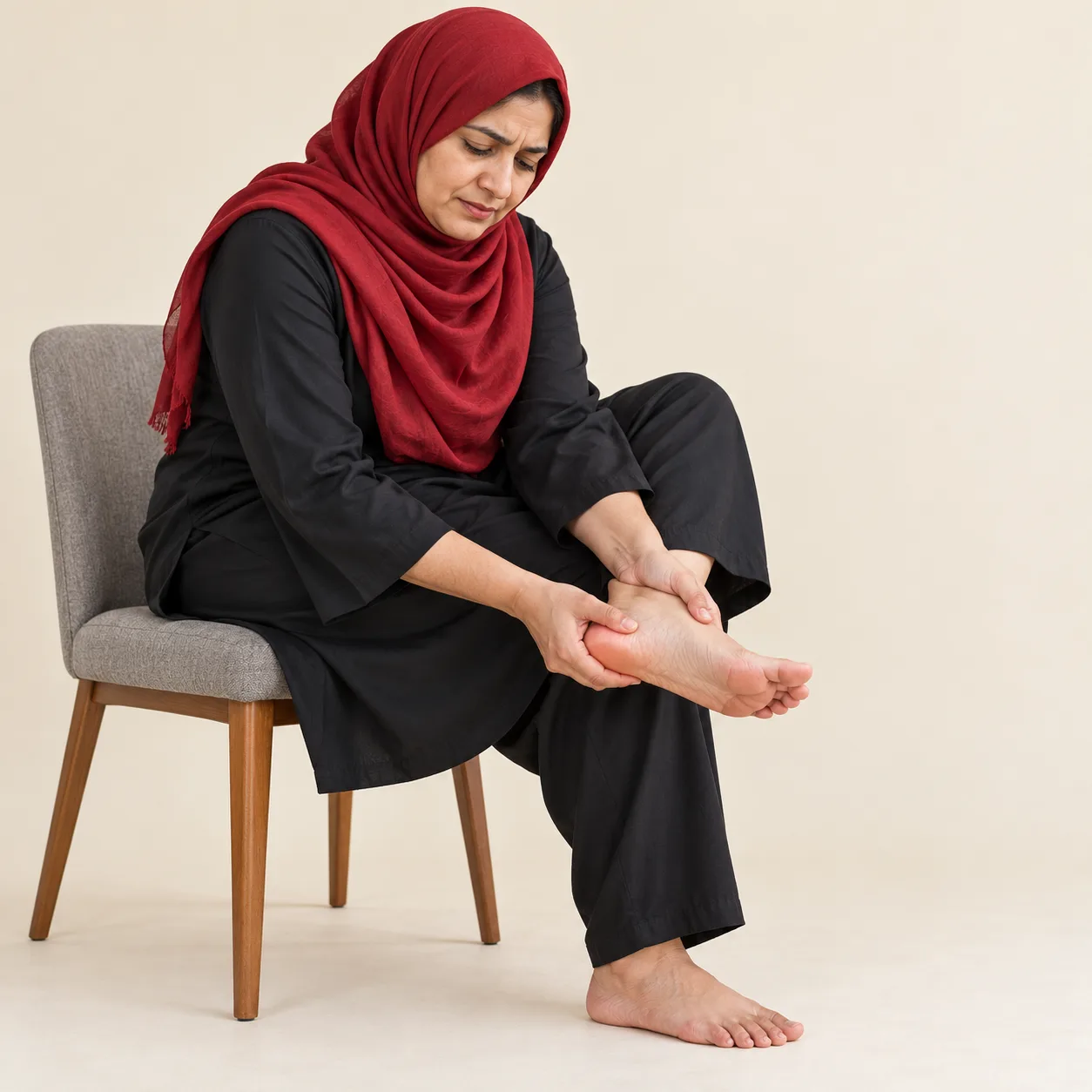
Plantar Heel Pain · Plantar Fascia · Heel · Physiotherapy · Lahore
Sharp pain under the heel with the first steps in the morning or after sitting, an ache after the kitchen, the market or a long walk, a bruised heel on marble floors. Different tissues cause each, and they need different plans. Private physiotherapy with a female physiotherapist in Lahore, at the studio or at home.
The short answer
Most heel pain under the foot is plantar fasciopathy, still often called plantar fasciitis: the thick band that runs from the heel bone to the base of the toes, and helps hold up the arch, becomes overloaded where it joins the heel. It is the commonest cause of heel pain, in active and inactive people alike, most often between 40 and 60 and more often in women.
It is linked to long hours on hard floors, a rise in walking or running, higher body weight, a tight calf, a stiff ankle and thin flat footwear. The heel pad, a nerve branch, the Achilles or a stress fracture can cause or mimic it, and a heel spur on an X-ray is usually not the cause.
Physiotherapy finds which, rules out a fracture, a nerve or a medical cause that needs a doctor first, changes the load, and then rebuilds the foot and calf: soft-tissue work and stretching to calm the pain, then strengthening of the calf and the small muscles of the foot, then heavier loading and the strength of the hip and thigh. Most cases settle within weeks to a few months with the right programme, some take a year or more, and shoes, orthoses, taping, shockwave and injections are used selectively alongside it.
At a glance
The same sore heel can come from different tissues. Where it hurts, and when, are the clues.
Plantar fasciopathy is the commonest cause of pain under the heel, in active and inactive people.
It peaks in midlife and is more common in women, with weight gain, long standing and a tight calf as common companions.
Many cases settle in weeks with the right load and rehabilitation; some last 12 to 18 months.
Calm and mobilise, strengthen the calf and foot, then load heavier and build the hip and thigh.
What you may notice
The first steps out of bed or after a long sit hurt under the heel, and ease after a few minutes of walking.
MorningCooking, ironing, a shift on your feet or a day at the market leaves the heel and arch aching by evening.
StandingWalking barefoot or in thin flat chappals on hard floors brings on a bruised feeling under the heel.
FloorsPain that follows a rise in walking, a new exercise routine or a change of shoes, often a day later.
WalkingA tight, pulling pain along the inner arch, worse when the toes are bent back or on tiptoe.
ArchBurning, tingling or night pain in the heel or arch, sometimes shooting forward into the sole.
TinglingSCROLL FOR THE ASSESSMENT TO FIND YOUR ROOT CAUSE
Where it hurts
These clues help your physiotherapist narrow it down; they are not a way to diagnose yourself.
Pain after a fall or a jump, being unable to put weight on the foot, a hot swollen heel with fever, or burning that spreads and a numb foot needs a doctor first.
Where it can come from
Pick a step to see where it sits in the foot. Watch the band tighten as the big toe lifts and the arch flattens under weight. These describe terms you may hear; they are not a checklist for diagnosing yourself.
The plantar fascia, a thick band under the foot, attaches to a small bump on the underside of the heel bone. Repeated strain there, from long standing, a sudden rise in walking or thin flat shoes, thickens the band and makes it sore, worst with the first steps. A bony spur may grow nearby; it is usually not what hurts.
Bending the big toe up winds the band round the ball of the foot like a winch, lifting and stiffening the arch for push-off. Standing flattens the arch and loads the band. Watch it tighten as the toe lifts. Walking, climbing stairs and standing on your toes all load it.
A cushion of fat in chambers under the heel absorbs the shock of each step. It can thin or bruise, with a central, bruised ache that is worse on hard floors, in bare feet or on marble. It is a different problem from the band, and it can coexist with it.
The calf muscles pull on the heel bone through the Achilles tendon, and the same tissue continues under the foot. A tight or weak calf, or a stiff ankle, raises the load on the band, so calf stretching and strengthening are central to rehabilitation.
Small branches of the tibial nerve, the nerve of the sole, pass close to the inner heel and the arch. When they are irritated or squeezed the pain burns or tingles, may shoot into the arch and can be worse at night. It is less common than a loaded band, and it can travel with it.
A teaching drawing of a woman’s right foot from the inside, not your foot. Where it hurts is a clue, not a diagnosis, which is why an assessment matters.
Inside the foot
The 3D model of a woman’s foot and lower leg follows each point as you read: the places heel pain comes from lighting in turn, the foot loaded and unloaded, the heel rising on the toes through a calf raise, and the toes curling as the small muscles of the arch work.
The band at the heel, the heel pad, the calf and Achilles, a nerve branch or a stress fracture is narrowed down, and a fracture or medical cause is ruled out.
Standing, floors, shoes and the build-up of walking are adjusted, and soft-tissue work and calf and plantar stretches calm the pain.
Slow calf raises, then raises with the big toe lifted, and the small muscles of the arch, teach the foot to carry load again.
Hip and thigh strength, and a plan for standing, walking and your day, take load off the foot and keep it off.
How it is assessed
Heel pain is diagnosed from your story and a careful examination of the foot, ankle, calf and back. A scan is used when it will change the plan. This is what a physiotherapist checks.
An X-ray, ultrasound or MRI is considered after an injury, if a stress fracture is suspected, when the diagnosis is unclear or progress stalls, or when an injection or surgery is being discussed.
Fascia or something else?
Several problems cause pain under the heel. How it behaves usually tells them apart, and an examination confirms it.
They can coexist. The Achilles, foot and ankle tendon, forefoot and nerve guides cover the other side.
Spurs, resting, rolling and injections
A few common beliefs about heel pain make it last longer. These are the ones we hear most.
None of this means your pain is not real. It means the right load matters more than rest or force.
Recovery in phases
The phases overlap and are adapted to you; they are not a fixed timetable.
Soft-tissue work on the calf and arch, straight-knee and bent-knee calf stretches, a hamstring stretch, and the first work for the small muscles of the foot, every day.
Slow calf raises with the knee straight and bent, the arch-doming exercise and the hip and back-of-leg strength, three or four days a week, when pain is mild or less.
Single-leg calf raises with the big toe lifted, hip and thigh strengthening and single-leg control, with a plan for walking, work and sport.
Many cases settle within weeks to a few months; some take 12 to 18 months. Exercise should settle within a day; if it flares for longer the load is eased, not stopped.
Heel pain exercises at home
Gentle, early-phase moves for the foot and calf. Use only the exercises agreed with your physiotherapist. Mild stretch or an ache that settles within a day is fine; sharp or lingering pain is not.
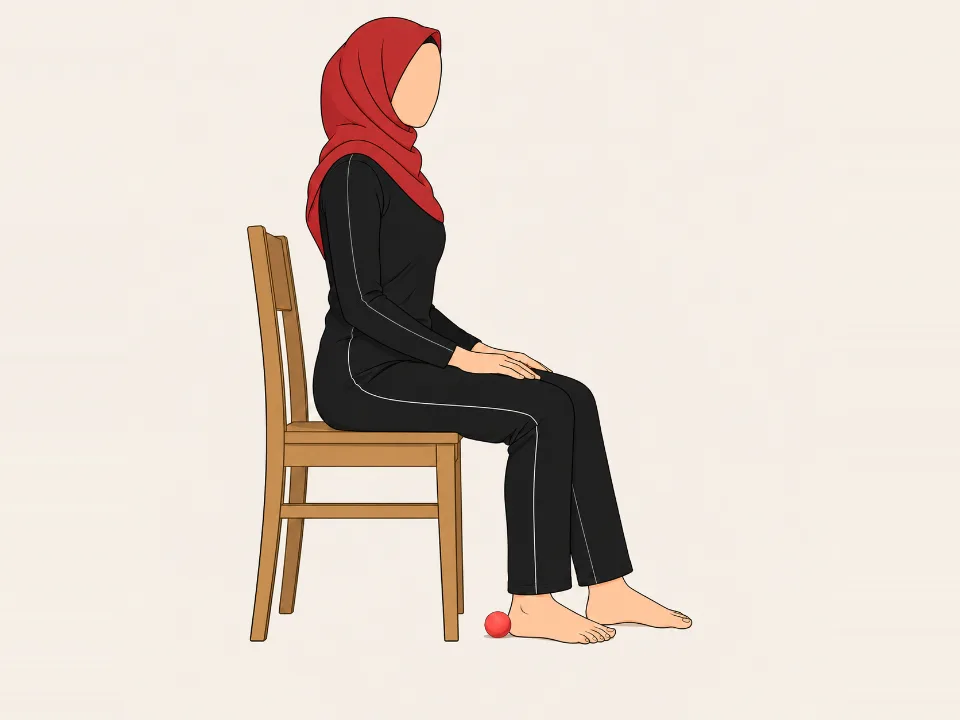
Ease stiffness in the sole and prepare the foot for the other exercises.
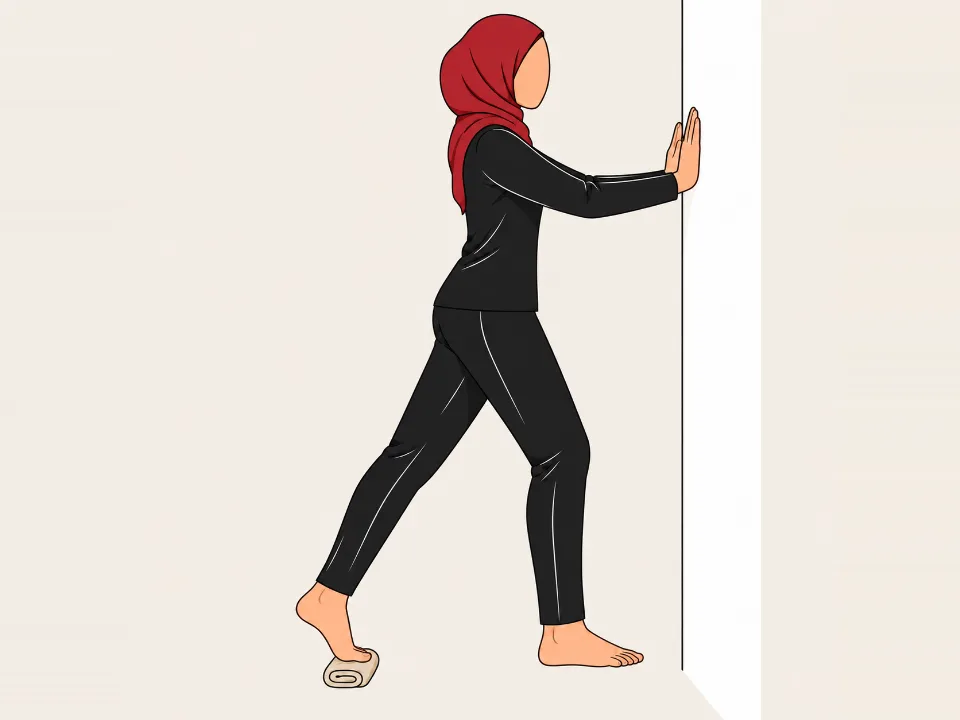
Lengthen the calf and the band under the foot, with the big toe raised.
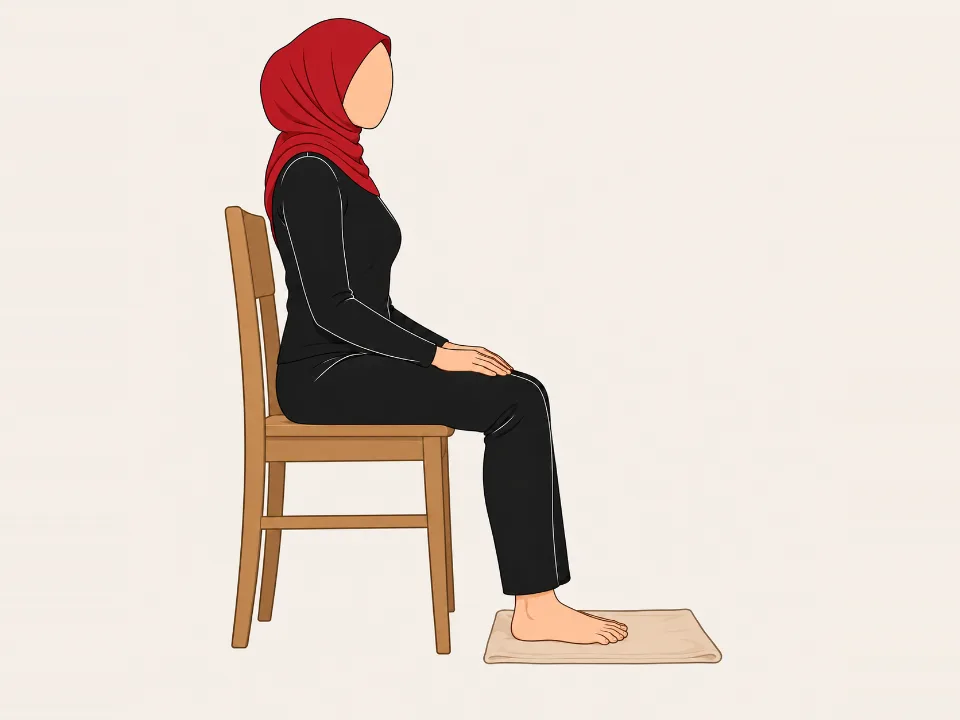
Wake the small muscles of the arch that hold the foot up.
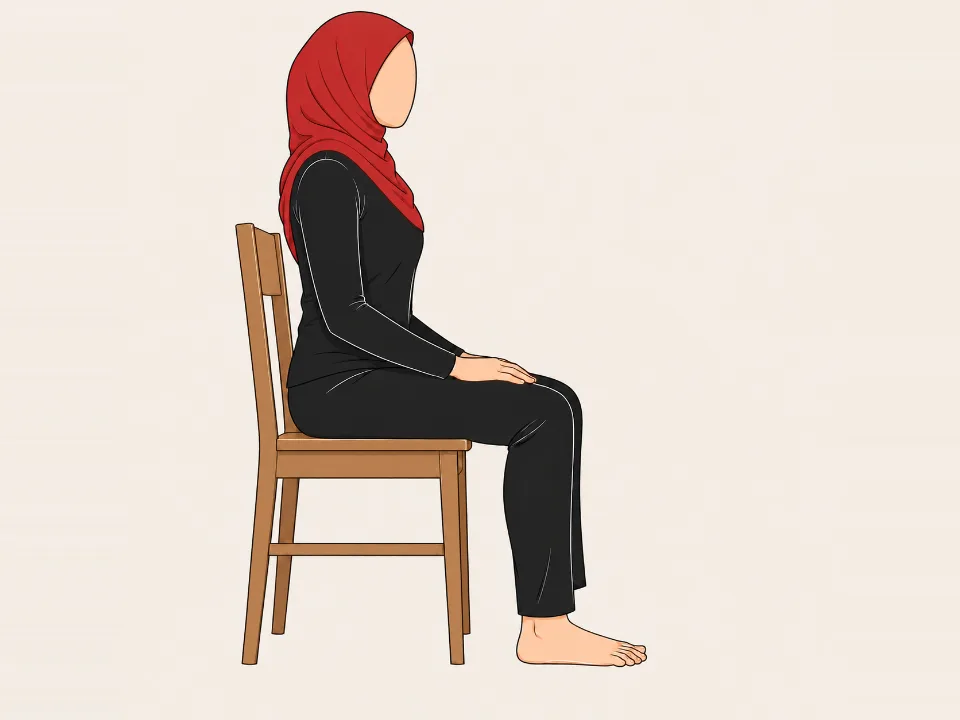
Teach the arch to lift by shortening the foot, without curling the toes.
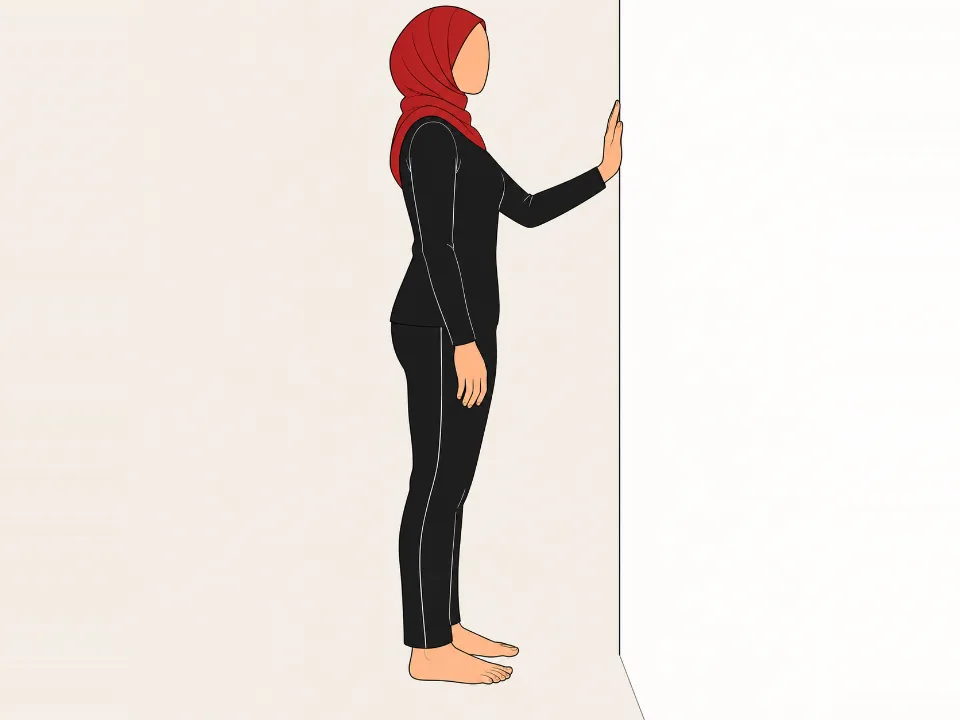
Strengthen the calf muscles that pull through the heel.
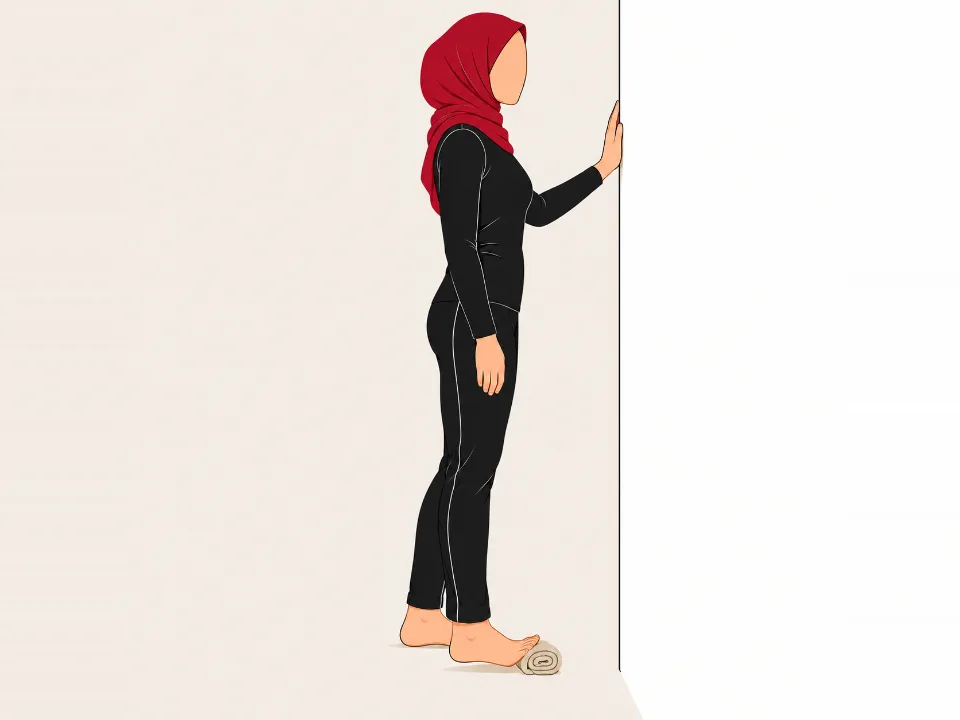
Load the plantar fascia directly as it is meant to be loaded in walking.
Mild stretch and aches that settle within a day are fine. Stop and ask for advice if the pain is sharp, builds up, the heel swells or bruises, or you feel burning or tingling.
Day to day
Small changes take the load off a sore heel while it rebuilds.
Wear a supportive, cushioned shoe or sandal with a firm heel, even at home. Avoid bare feet and thin flat chappals on marble and tile.
In the kitchen or at the ironing board stand on a folded mat, change feet, and sit for part of the job.
Raise the distance a little at a time, and keep a day between hard sessions. Avoid sudden jumps in walking or new exercise.
Before you stand in the morning or after a long sit, bend and straighten your ankle and toes and stretch the calf for a minute.
Sitting back on your heels with the toes tucked under stretches the band hard; use a folded cushion or a chair when it flares.
Rolling the arch on a cold bottle, or a warm wrapped pack before exercise, can ease an ache, for 10 to 15 minutes at a time.
Pain relief is a matter for your doctor or pharmacist. Tell them, and us, if pain is stopping you walking, working, sleeping or looking after your family.
Step by step
Where it hurts and when, your first steps, your floors, shoes and standing hours, any fall or sudden rise in walking, pregnancy, menopause or diabetes, and what you want to get back to.
Your foot, ankle, calf, hip and back, how the toes and ankle move, the strength of your calf and foot, and how you stand, walk and climb. Nothing is forced.
Which tissue is likely sore, what is not, and whether you need a doctor, an X-ray or a scan first. Most people do not.
The load to change, your first stretches and exercises with how much and how often, shoes and support if they help, and what to expect over the next weeks.
Care designed for women
Munaza Physio Studio is a women-only physiotherapy practice. Your feet and legs are assessed one-to-one by a female physiotherapist in a private room, so you can show how you stand, walk, kneel and sit without hesitation, at home or at work.
Women-only environment with a female physiotherapist
A private room for assessment and treatment
One-to-one sessions, never a shared slot, never rushed
Pregnancy, menopause and childcare understood
Home visits across Lahore when travelling is hard

Real Stories
My mother had a stroke that left her right arm and leg immobile. With Dr. Munaza’s expert physiotherapy, she regained full movement completely painfree and without any medication. We’re truly grateful for her care and professionalism.
I took home sessions for my neck, shoulder, back, and hip pain. Alhamdulillah, all my pain is gone like a magic. Even my headache, which I had for many years, got better with the exercises. Thank you so much Dr Munaza for your kind treatment and care. May Allah bless you.
“Dr. Munaza treated my neck and shoulder pain, as well as my muscle pull issue, very effectively. With the help of exercises and therapy, I feel much better now. She is very kind, caring, and cooperative. Highly recommended!”
I had neck pain with headaches for a long time. After treatment with Dr. Munaza, my pain got much better and the headaches eased. She listened carefully, treated me gently, and explained everything clearly. I feel relaxed and thankful for her care Best physiotherpist in the area👍🏻
Dr. Munaza is very kind and professional. My shoulder pain improved within a few sessions. Highly recommended!!!!
Simple pricing
Transparent pricing, with a personalised assessment at the start of every plan.
Clinic sessions start from PKR 1,500.
Home visit pricing depends on your location and condition, contact us for a quote.
Book AssessmentYour heel can recover
Heel pain is a band, a pad or a nerve that has been asked for more than it could give, not a foot that is worn out. Given less load at first and a little more strength each week, the heel catches up, and the first steps, the kitchen and the long walk become comfortable again.
Questions
Sharp pain under the heel with the first steps after rest, which eases after a few minutes of walking, is the classic sign of plantar fasciopathy, a load-related change where the thick band under the foot joins the heel bone. The band is shortened and stiff after a night or a long sit, and the first steps stretch it suddenly. It often returns after long standing or when you get up after sitting.
No. A heel spur is a small bony point that shows on an X-ray and is found in many people who have no heel pain at all. It is not what hurts, and removing a spur is rarely needed. The pain comes from the loaded band and the tissue around its attachment, which is why treatment works on load, strength and flexibility rather than on the spur.
Because the tissue shows wear and thickening from repeated strain rather than a simple inflammation, so the "itis" name is misleading, and anti-inflammatory treatments alone rarely settle it. Plantar fasciopathy, or plantar heel pain, describes the same common problem: pain under the heel from an overloaded band, with the heel pad, a nerve branch or the calf sometimes involved.
It is commonest between 40 and 60 and in women, and is linked to long hours standing on hard floors, weight gain (including after pregnancy), a sudden rise in walking or running, tight calves and thin, flat footwear. Barefoot walking on marble or tile, long spells in the kitchen, market and wedding-season walking in flat chappals, and a stiff ankle are common triggers. The plan looks at your day, not just your foot.
Pain on the inner underside of the heel, worst with the first steps, points to the fascia. A bruised feeling in the centre of the heel, worse on hard floors, points to a thinned heel pad. Burning, tingling or night pain, sometimes shooting into the arch, suggests an irritated nerve branch. Pain at the back of the heel is the Achilles. An examination separates them, and more than one can be present.
Stretch gently and do not rest completely. Calf stretches and plantar fascia stretches, held for 30 to 60 seconds and never into sharp pain, reduce pain for many people. Rolling the arch over a small ball helps some people ease stiffness. Complete rest weakens the calf and foot muscles and the pain returns on restarting, so activity is eased and rebuilt in steps rather than stopped.
Yes. The calf and the Achilles tendon pull through the heel, so a tight or weak calf raises the load on the band. Slow, heavy calf raises with the big toe raised, which load the plantar fascia specifically, improved pain and function more than stretching alone in trials, and calf strength is the cornerstone of rehabilitation. Your physiotherapist sets the load and the pace.
A supportive, cushioned shoe with a firm heel and a slightly stiff sole, worn indoors as well as outside, takes load off the heel for many people. Thin flat chappals, bare feet on marble and worn-out shoes concentrate the load on the heel. Shoes and orthoses work by changing where the load goes, not by "correcting" the arch, so a trial of a few weeks tells you if they help.
Not usually. The diagnosis comes from your story and an examination. An X-ray is considered after an injury or if a stress fracture is suspected; an ultrasound or MRI shows fascia thickening, a tear or a fracture, and is used when the result would change the plan or when progress stalls. Spurs and thickening are common without pain, so a scan alone does not decide treatment.
A steroid injection can ease pain for a few weeks, but it does not change the long-term outcome, and repeated injections can thin the heel pad or, rarely, tear the band. Extracorporeal shockwave therapy has moderate evidence in heel pain that has lasted several months. Both are decisions to make with your doctor, alongside rather than instead of loading and strengthening.
There is no single timetable. Many people improve within a few weeks to three months once the load is changed and a stretching and strengthening programme is started, and most are much better by a year. Some cases last 12 to 18 months. Steady gains in the first steps, standing time and walking distance matter more than a date.
Sudden severe heel pain with a pop or being unable to put weight on the foot, pain after a fall or a jump, a hot red swollen heel with fever, numbness or burning that spreads, pain in a child or teenager, or heel pain in someone with diabetes and a numb foot needs medical review before exercise. Pain that is constant at night, bilateral with morning stiffness elsewhere, or that does not follow the usual pattern also needs a doctor.
Sometimes. Nerve irritation in the lower back, tight hamstrings and calf, and weak hip and thigh muscles can all raise the load on the foot or refer pain to the heel and sole. The tibial nerve that supplies the sole runs through the calf and is part of the sciatic nerve, which is why hamstring and calf work can reduce heel pain. An assessment looks above and below the foot.
Yes. Munaza Physio Studio in Allama Iqbal Town, Lahore, is a women-only practice. Your assessment and treatment are one-to-one with a female physiotherapist in a private room, at the studio or at home across Lahore.
Safety first
Your next step
Tell us where your heel hurts, when it is worst, and what it is stopping you doing. We will tell you honestly how physiotherapy can help. Women-only · One-to-one · At the studio or at home in Lahore.
 5.0