
New or worsening joint pain
Stiffness or aching in the hands, knees, hips or shoulders without a clear injury.
Joints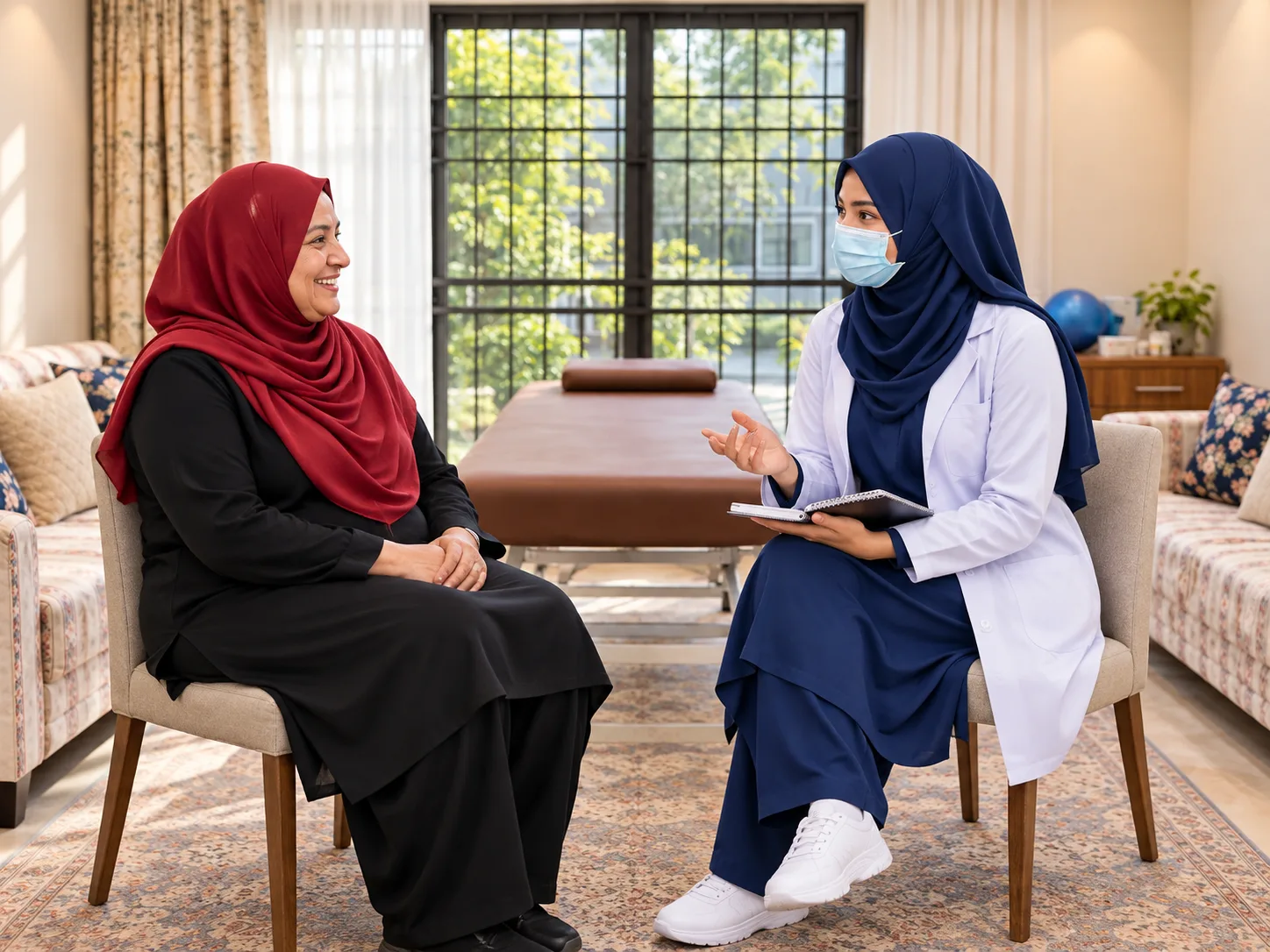
Women’s Health · Menopause · Lahore
Joint aches, new pelvic floor symptoms, and changes in strength and posture are a genuine part of the menopause transition for many women, not just “getting older”. Physiotherapy assesses what is actually changing and builds a plan to support your body through it.
At a glance
These symptoms are common during menopause, and they do respond to the right treatment.
Oestrogen changes genuinely affect joint, muscle and pelvic floor tissue, not just mood or hot flashes.
Not something to simply accept.
Joint support, strength and pelvic floor care are often addressed together.
Valuable for joints, bone density and balance, whatever your previous activity level.
Why it happens
Falling oestrogen levels during perimenopause and menopause affect more than reproductive function. Oestrogen plays a role in joint, muscle, tendon and pelvic floor tissue health throughout the body. This is why new joint aches, stiffness, or pelvic floor symptoms like leaking or heaviness can appear or worsen during this transition, even without an injury.
Physiotherapy assesses your specific pattern of symptoms and builds a targeted plan: strength work for joint and muscle support, pelvic floor rehabilitation where needed, and practical strategies for managing symptoms day to day.
What you may notice
Stiffness or aching in the hands, knees, hips or shoulders without a clear injury.
JointsEven without a prior history of bladder symptoms after childbirth.
BladderA dragging or heavy sensation, sometimes related to pelvic organ support changes.
HeavinessFeeling less steady, or noticing muscle strength isn’t what it used to be.
BalanceDiscomfort related to tissue changes, which physiotherapy can help alongside medical care.
IntimacyA sense of your body changing in ways that feel unfamiliar or discouraging.
StaminaSCROLL FOR THE ASSESSMENT TO FIND YOUR ROOT CAUSE

Understanding it
As oestrogen levels decline through perimenopause and menopause, many women notice new or worsening joint stiffness, muscle aches, and reduced tissue resilience, sometimes described as “menopausal joint pain”. It is a recognised and real phenomenon, not something to dismiss.
Falling oestrogen affects joint and connective tissue resilience throughout the body, not just one area.
New pelvic floor symptoms can appear during menopause even without a prior history of them.
Load-bearing exercise supports bone density and balance through and beyond this transition.
Where oestrogen acts
Oestrogen has receptors throughout the body, which is why its decline is felt in more than one place.
New stiffness and aching.
Reduced tissue resilience.
Aches, and strength that shifts.
Leaking, urgency or heaviness.
Bone density and balance also shift.
How we help
Joint, pelvic floor and strength assessment often happen together, and the plan is built for this transition and the years beyond it.
Taken seriously
We take menopausal joint and pelvic floor symptoms seriously as treatable, not something to simply accept.
Examples at home
Examples of the kind of strength work a plan may include. Which of them suits you depends on your assessment.
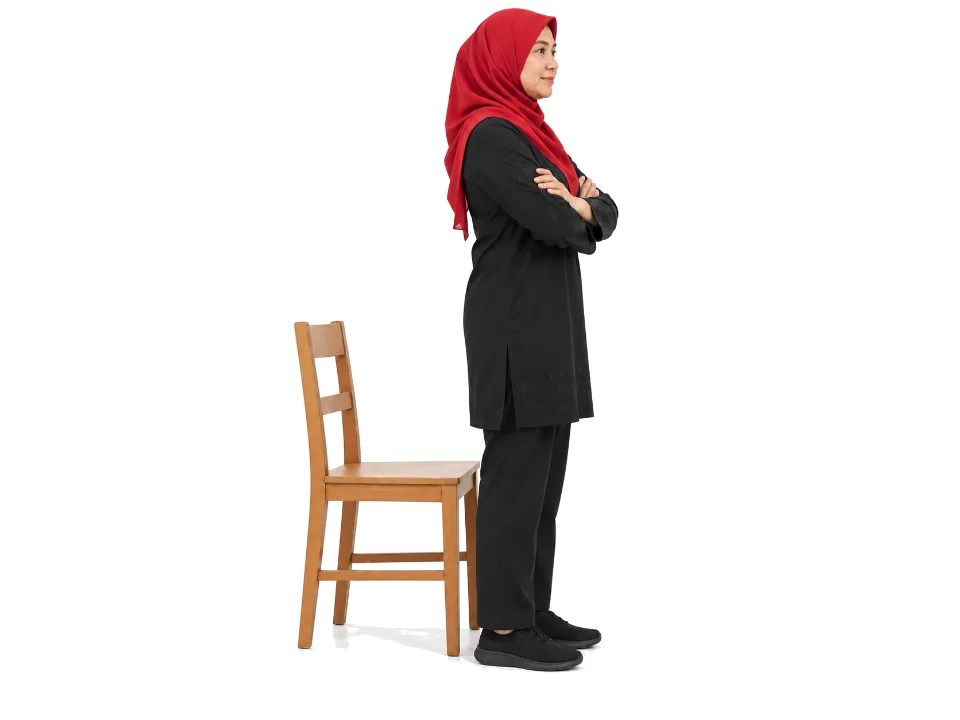
Load-bearing strength for the legs and hips, the kind daily life asks for.
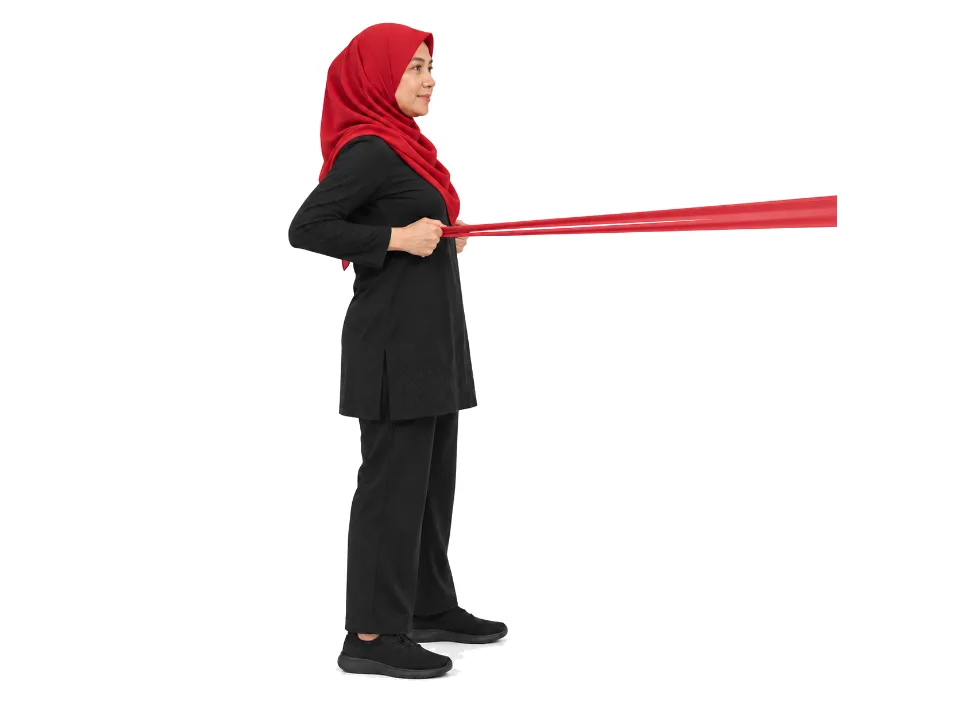
Strength for the upper back and shoulders, and for standing tall.
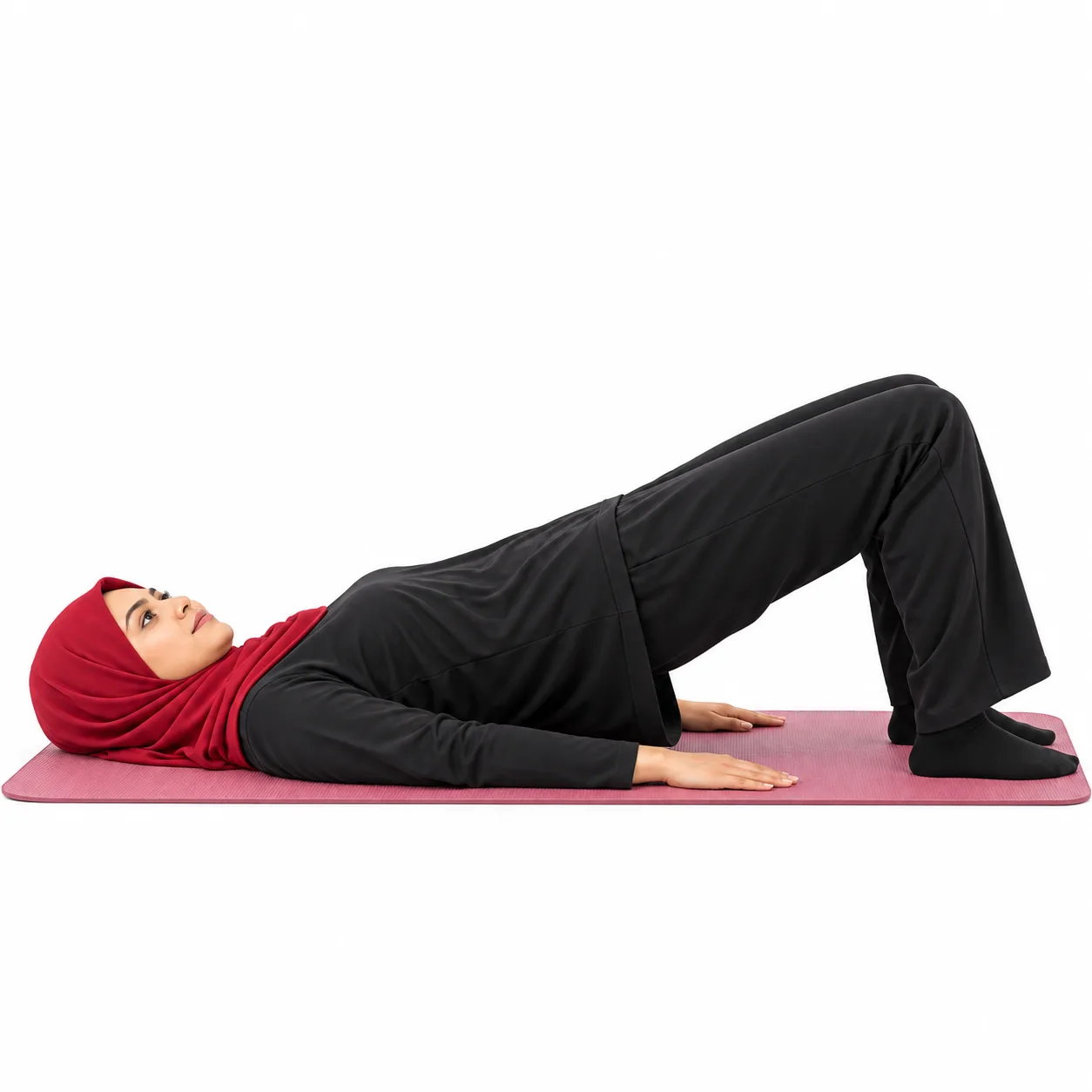
Hip and pelvic floor strength, coordinated with the breath.
Load through the legs and feet, for bone and for the calf strength that keeps you steady.
Upper-body strength, from a position you can make easier or harder by where you stand.
Balance, with a hand on a chair for safety, to stay steady on your feet.
These are examples of what an assessment may build into a plan, not a programme to start on your own. Stop if anything causes pain.
Step by step
First 15 minutes. Where you are in your menopause transition, your symptoms, and what is affecting your daily life most.
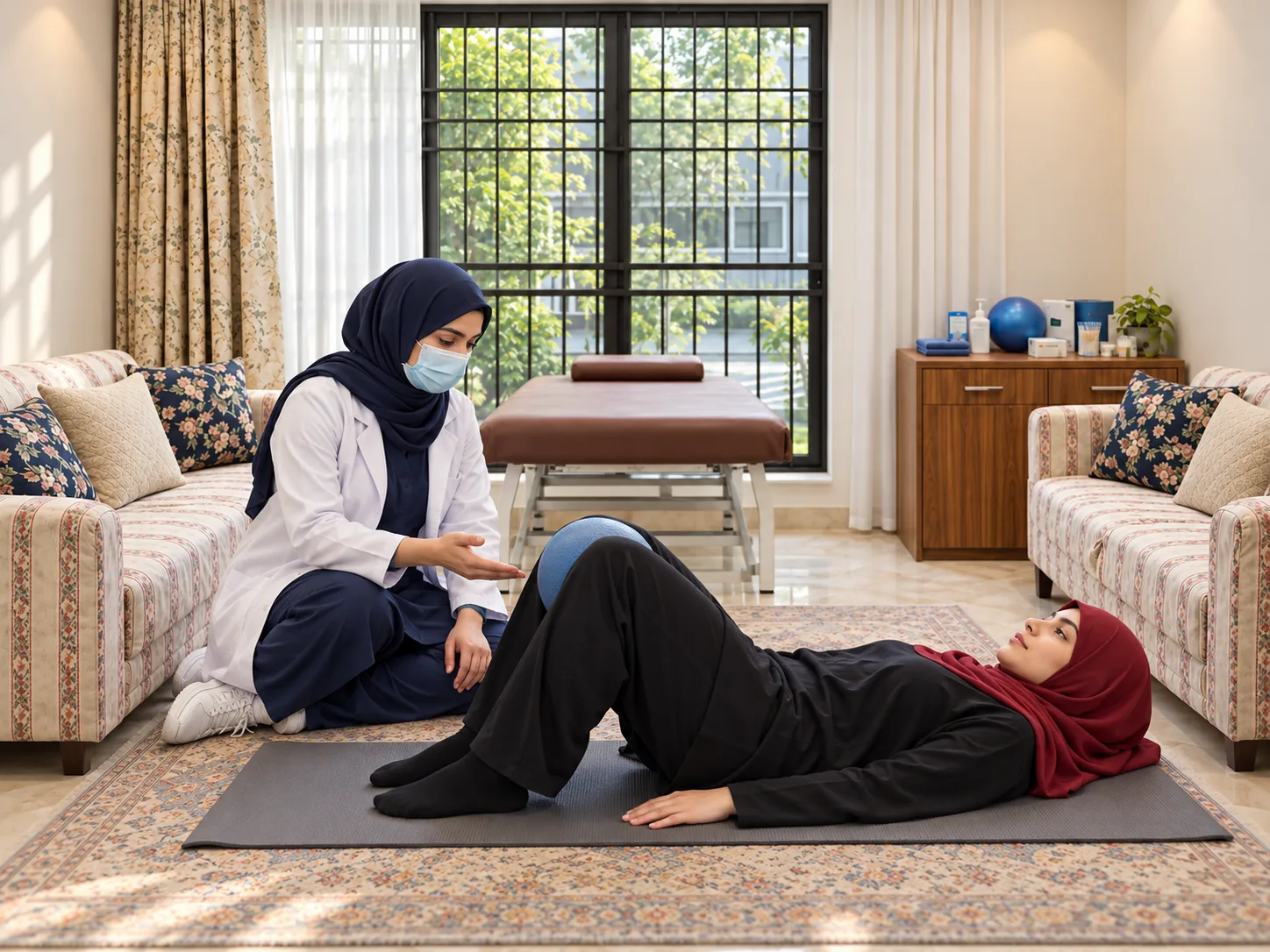
30 to 40 minutes. Joint and muscle assessment, pelvic floor evaluation where relevant, and a look at strength and balance, always with your consent explained before anything intimate is offered.
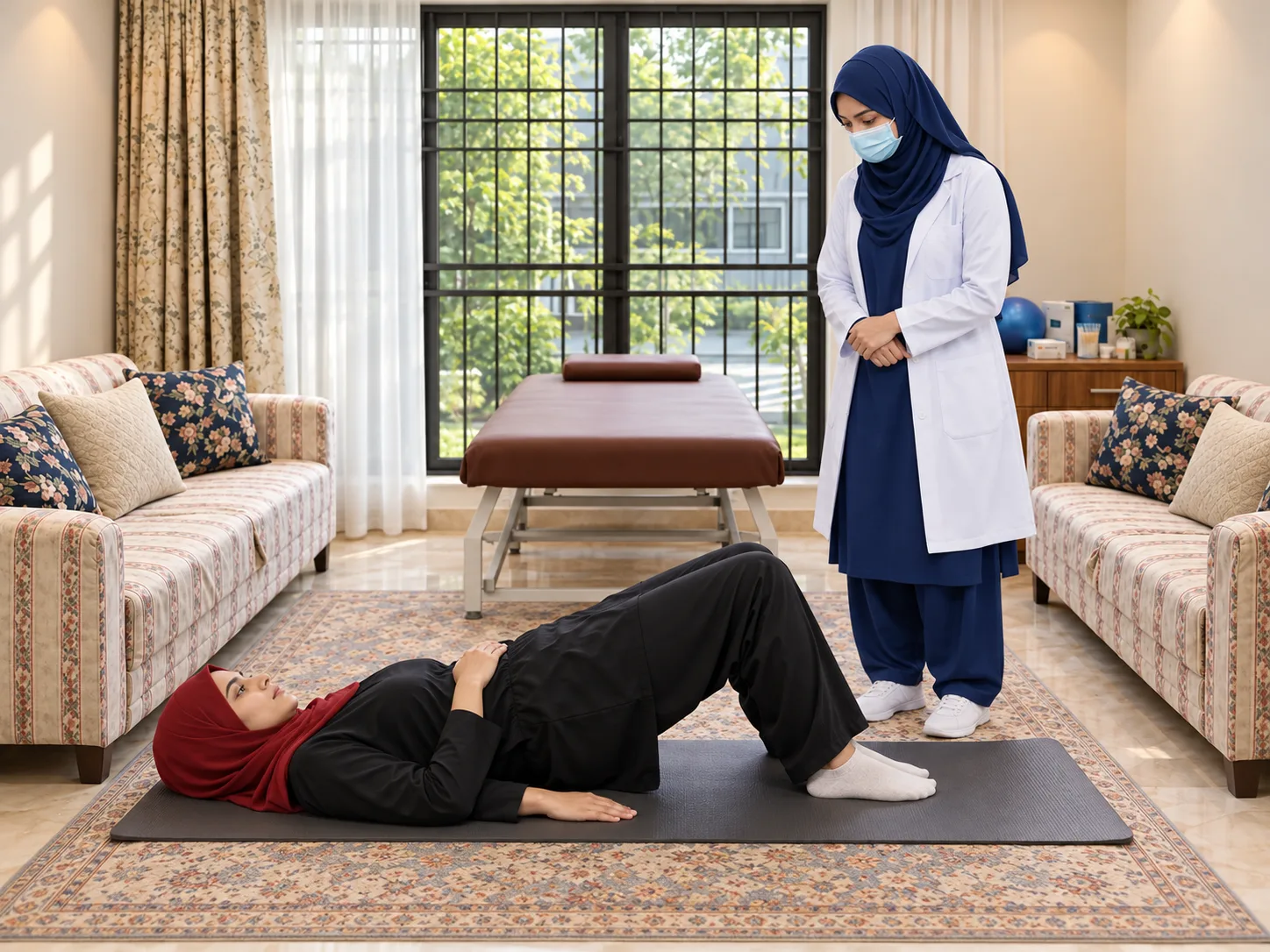
Where relevant. With your permission, we can correspond with your GP or gynaecologist, particularly where hormone therapy or other medical management is already part of your care.
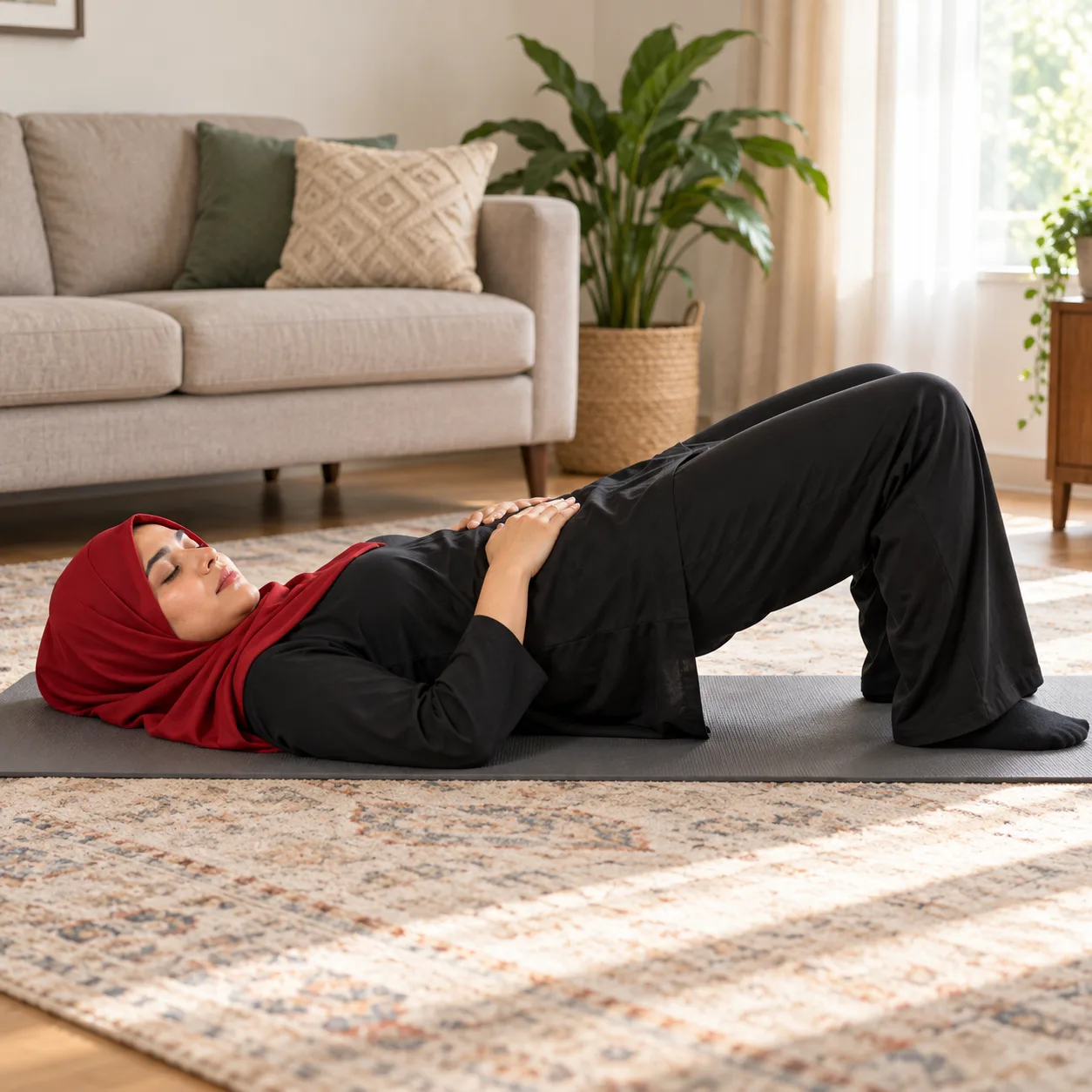
Ongoing. Joint and strength exercise, pelvic floor rehabilitation, and practical strategies, built for this transition and the years beyond it.
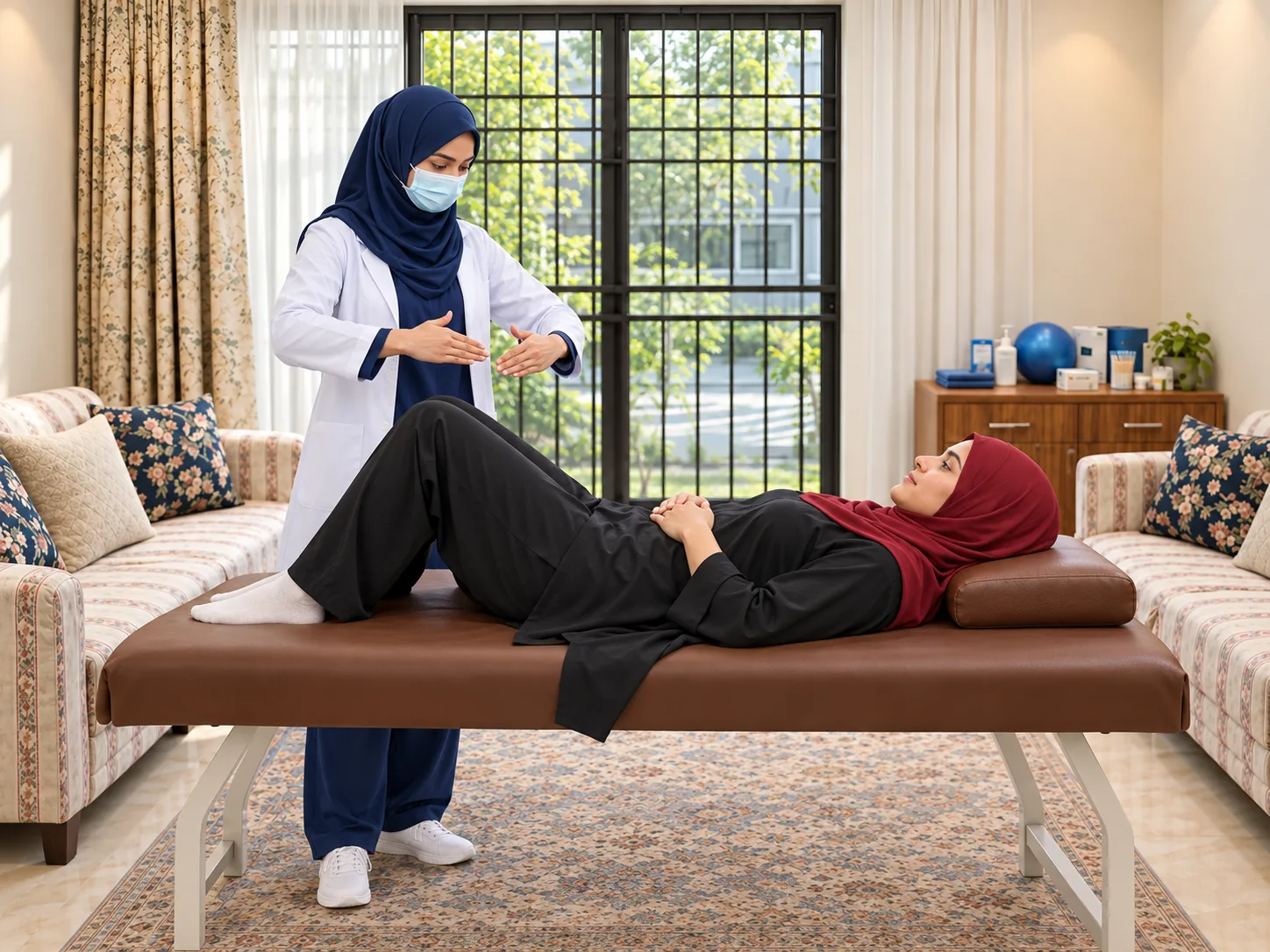
Your first visit
Appointments are one-to-one with a female physiotherapist in a private, women-only studio. Because menopause symptoms often span joints, strength and pelvic floor together, your first visit covers a broad assessment rather than a single-issue check.
Any intimate assessment is optional, explained beforehand, and requires your explicit agreement, every time.
We take menopausal joint and pelvic floor symptoms seriously as treatable, not something to simply accept.
Where symptoms suggest hormone therapy or another medical option should be discussed, we encourage that conversation with your doctor rather than working around it.
Where a pelvic floor assessment would give the clearest picture, it is always explained fully in advance and never proceeds without your specific, separate consent.
Questions
It is genuinely physical. Declining oestrogen measurably affects joint and connective tissue, which is why menopausal joint pain is a recognised clinical phenomenon, not something to dismiss as unrelated or “just stress”.
Yes. Physiotherapy addresses the musculoskeletal and pelvic floor side directly and works well alongside HRT or any other medical management your doctor has prescribed.
No examination is automatic or mandatory. It is only ever offered where clinically relevant, always explained in advance, and always requires your specific consent.
Oestrogen decline during menopause can affect pelvic floor tissue independently of childbirth history, which is why new symptoms can genuinely appear for the first time during this transition.
No. Building strength during and after menopause is genuinely valuable for joints, bone density and balance, regardless of your previous activity level.
No referral is required for general menopause physiotherapy, though we’re glad to coordinate with your GP or gynaecologist where relevant to your care.
The studio is a private, home-based space in Hasham Street, Karim Block, Allama Iqbal Town, Lahore. We share exact directions after booking, so your visit stays discreet.
Safety first
Your next step
You do not need to know whether your symptoms are “menopause-related” before reaching out. Tell us what you’re noticing, and we will tell you honestly whether physiotherapy can help. Women-only · One-to-one · Your details stay between you and your clinician.