
Pain-free at full intensity
No pain during sport-specific activity at full, game-realistic intensity.
Sports Rehabilitation / Muscle Strain
Muscle strains are tears in the muscle fiber, ranging from a few fibers torn to a large portion of the muscle. The hamstring, quadriceps and calf are the most commonly strained muscles in sport — and the single biggest mistake in management is returning to sport too soon, before the tissue has been progressively loaded to handle sport-level forces.
The short answer
A muscle strain is a tear in muscle fibres, usually where the muscle joins its tendon, and most often in the hamstring, the front of the thigh (quadriceps) or the calf. It happens when a muscle works hard while being stretched, as in sprinting, kicking or a sudden change of pace. Strains are graded 1 (a few fibres), 2 (a partial tear) or 3 (a complete tear).
Treatment is progressive loading, not rest: gentle movement and pain-free strength work start within days, building to lengthening (eccentric) strength, running and sprinting before a tested return to sport. Rehabilitation that stops when the pain stops is the main reason strains come back.
The short version
Understanding strains
Muscle strains are graded. Grade 1 (mild): a small number of fibers torn, minimal loss of strength and range, healing in 1–3 weeks. Grade 2 (moderate): a significant number of fibers torn, noticeable loss of strength, visible bruising in some cases, healing in 3–8 weeks. Grade 3 (severe): complete or near-complete tear, substantial bruising, possible palpable gap in the muscle, healing in 8–12+ weeks and sometimes requiring surgical review.
Strains happen from eccentric loading — the muscle lengthening under tension, such as the hamstring during late-swing sprinting — sudden acceleration or deceleration, fatigue, a previous strain, inadequate warm-up, muscle imbalances, and insufficient conditioning for your sport’s demands. The injured tissue must be progressively loaded to heal properly: complete rest leads to weaker, disorganised healing.
In sprinting, the hamstring works hardest at the end of each leg swing, braking the lower leg while it is being stretched. That mix of high force and length is when most hamstring strains happen, which is why fast running is both the cause and the final test of rehab.
Most strains happen where muscle fibres join the tendon, the muscle–tendon junction. Strains that reach into the tendon itself tend to take longer to heal and are more likely to come back, so where the injury is matters as much as how big it is.
A small number of fibres torn. Tightness and pain on stretching or fast running, but walking and strength are close to normal. Usually 1 to 3 weeks with good rehabilitation.
More fibres torn, with a clear loss of strength, pain walking or on stairs, and often bruising a day or two later. Usually 3 to 8 weeks.
The muscle or its tendon torn through, sometimes with a gap you can feel and heavy bruising. A hamstring tendon pulled off the sitting bone needs a specialist’s opinion within days, because some are best repaired early.
The first 48–72 hours
The POLICE protocol first: pain-guided movement within pain limits, not complete rest. Isometric exercises at pain-free angles can actually reduce pain and begin the loading process without stressing the injury, and manual therapy for surrounding areas — not directly on the injured tissue in the first few days.
From there, progressive isometric loading — holding contractions at various joint angles — with pain monitored carefully: some discomfort up to 3–4/10 during exercise is acceptable, but sharp pain or anything above 5/10 means the load is too high. Pain-free isotonic exercise — movement through range with resistance — is introduced as tolerance builds.
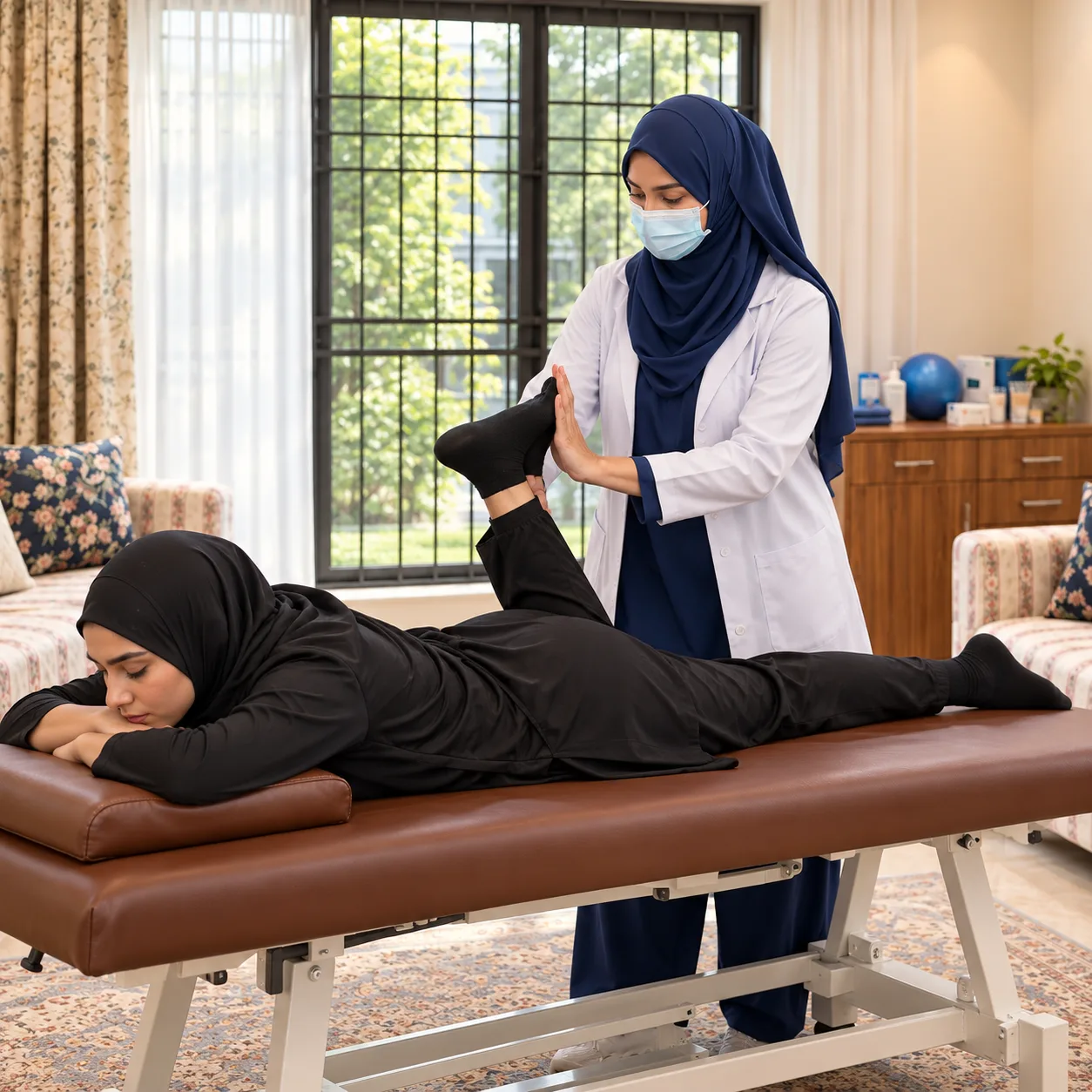
Gentle range within pain limits from day one.
Can reduce pain while beginning the loading process safely.
Some discomfort during exercise is acceptable; sharp pain above 5/10 means the load is too high.
The rehabilitation phases
The muscle lengthening under controlled load — eccentric training — is what promotes optimal fiber alignment and tensile strength. Skipping it is the most common reason a strain becomes a recurrent one.
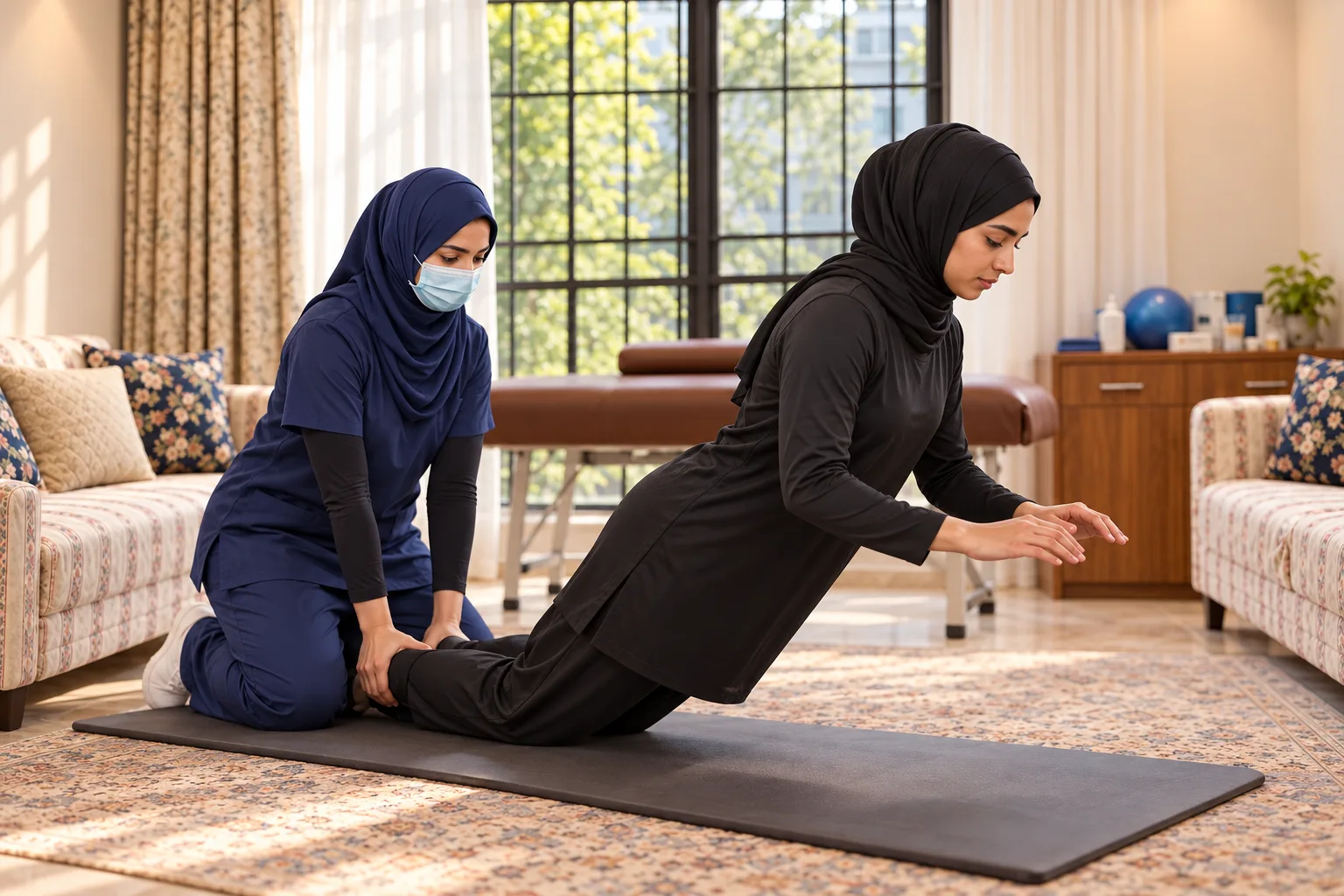
Isotonic exercise progressing in resistance, with eccentric loading as the centrepiece — full range of motion strengthening, multi-joint exercises like squats, lunges and deadlift variations, and hip and core strengthening since the kinetic chain matters for lower-limb strains.
Jogging progression through walk-jog-walk intervals, gradually increasing jog duration, then speed progression from comfortable pace to high intensity, running-mechanics assessment and correction, and agility and change-of-direction work in the later stages.
Sport-specific drills at increasing intensity, sprinting progression (particularly critical for hamstring strains), jumping and landing for quadriceps strains, acceleration and deceleration drills, and match-simulation activities alongside psychological readiness — real confidence in the injured muscle under sport conditions.
Injury-specific notes
Hamstring strains: eccentric strengthening is non-negotiable — the Nordic hamstring exercise is well-supported by evidence for both prevention and rehab. Sprint mechanics assessment matters, since many hamstring strains relate to how an athlete sprints, and lumbar/pelvic mechanics are addressed too — the hamstrings attach to the pelvis, and if pelvis position is off, the hamstrings are stressed.
Quadriceps strains are common in sports involving kicking, jumping and deceleration. We address hip flexor flexibility and strength, since tight hip flexors alter quadriceps loading, and ensure balanced quad development — the rectus femoris is most commonly strained, since it crosses two joints.
Calf strains: gastrocnemius (upper calf) strains are more common in sprinting and jumping sports; soleus (deeper calf) strains are more common in runners. Rehabilitation addresses both muscles specifically, with heel raise progression central to the programme.
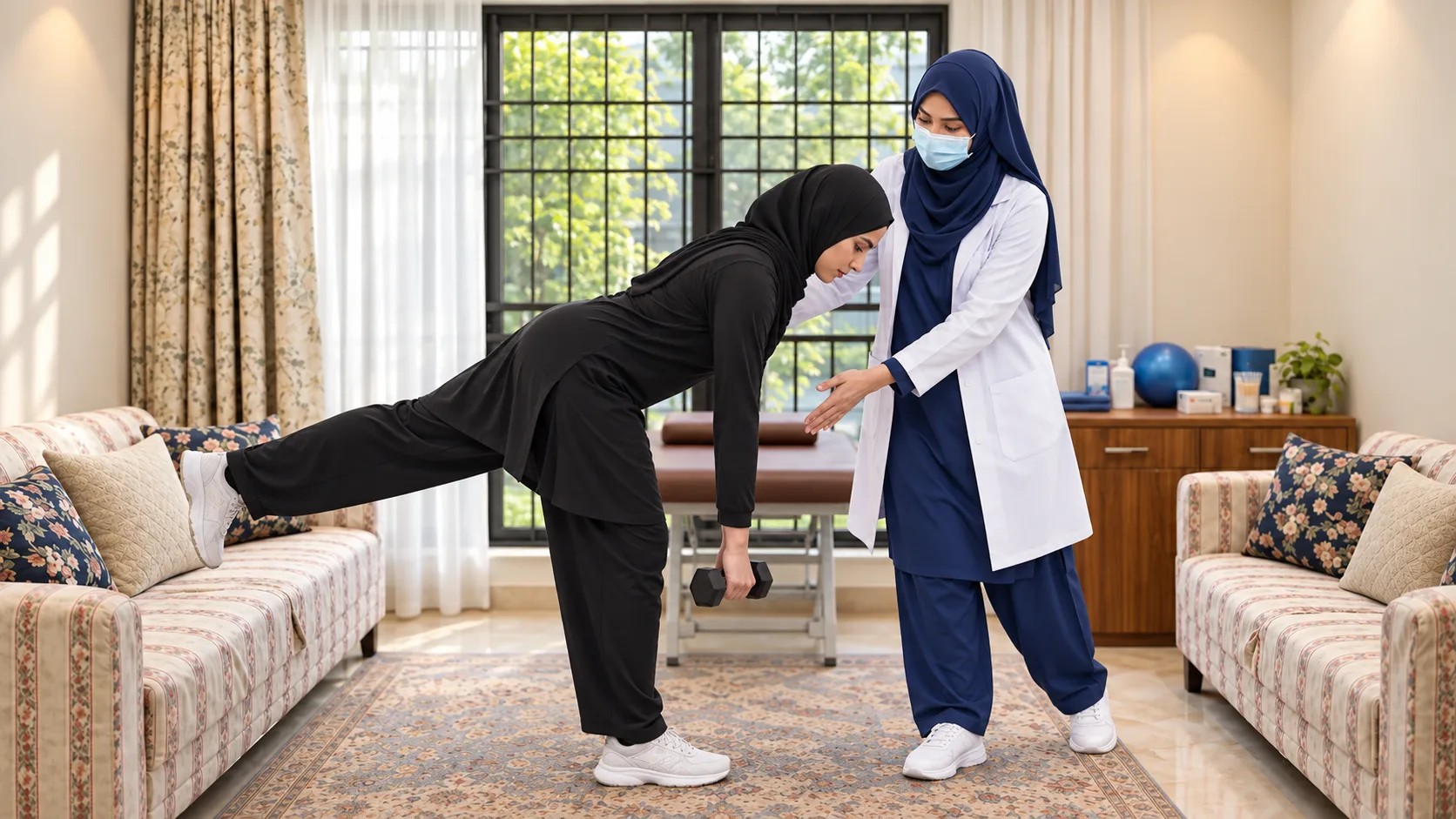
Nordic hamstring exercise, sprint mechanics, and lumbar/pelvic control.
Hip flexor flexibility and balanced quad development — rectus femoris is most vulnerable.
Gastrocnemius vs. soleus — different sports, different emphasis, both addressed.
Return-to-sport criteria
"Feeling fine" is not the same as healed and ready — the tissue is still remodelling for weeks after symptoms resolve. This is what we actually check before clearing return.
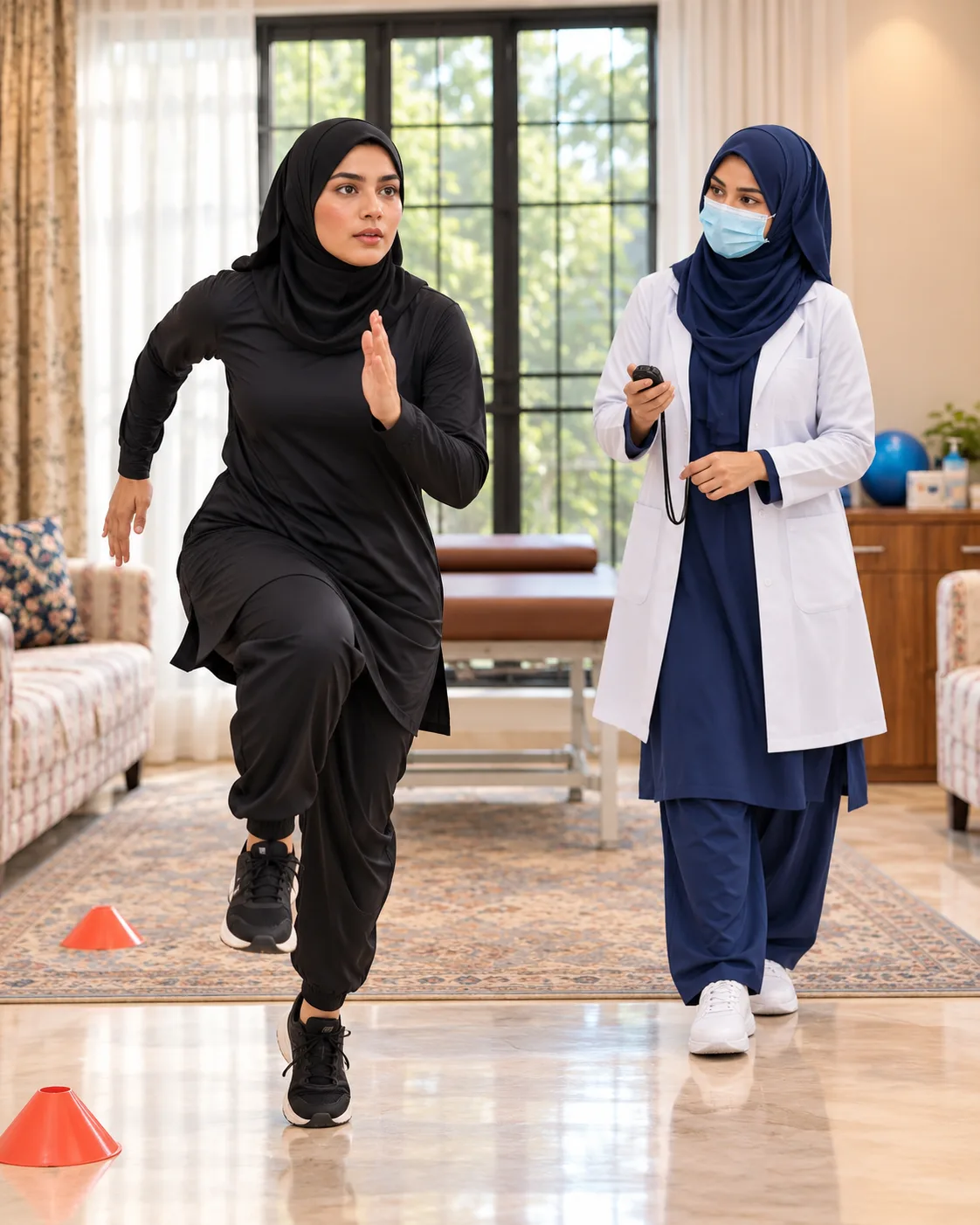
No pain during sport-specific activity at full, game-realistic intensity.
Compared to the uninjured side, not just "feels strong."
Equal to the uninjured side, with no residual restriction.
A progressive running or sport-specific programme finished without setback.
Real confidence in the injured muscle under sport conditions, not just physical clearance.
Your first appointment
Scans can be useful for grading severity and guiding prognosis, but they’re not always necessary — clinical assessment can often determine grade and guide management directly. If your doctor has already organised imaging, we use those findings; if not, we assess clinically and refer for imaging only if needed.
You can, and should, keep training the rest of your body while rehabilitating a muscle strain. Maintaining cardiovascular fitness and upper body strength matters for both physical and mental reasons — we design a modified programme that keeps you fit without compromising the injury.
If you keep straining the same muscle: recurrent strains usually mean inadequate rehabilitation from the previous strain, unresolved muscle imbalance, faulty movement patterns, insufficient sport-specific conditioning, or a training-load issue. A thorough assessment identifies which factors are actually at play.
Grading, a clear daily plan, and loading started from day one — pain-guided, not rest.
A thorough assessment of what was actually missed the first time.
A modified programme keeps you fit without compromising the injury.
Frequently asked
In the first 48–72 hours, ice is generally recommended for pain and swelling management. After that, heat can be useful for promoting blood flow and tissue flexibility before exercise. In the acute phase, ice is the safe, low-risk option.
"Feeling fine" is not the same as "healed and ready." The tissue is still remodelling for weeks after symptoms resolve. Returning to sport at two weeks after a hamstring strain — even a mild one — carries significant re-injury risk. We assess objectively before clearing return.
Recurrent strains usually mean one or more of: inadequate rehabilitation from the previous strain, unresolved muscle imbalance or weakness, faulty movement patterns, insufficient sport-specific conditioning, or a training-load issue. A thorough assessment identifies which factors are at play.
Scans can be useful for grading severity and guiding prognosis, but they’re not always necessary — clinical assessment can often determine grade and guide management. If your doctor has already organised imaging, we use those findings; otherwise we assess clinically and refer if needed.
Yes — and you should. Maintaining cardiovascular fitness and upper body strength during lower-limb rehab matters for both physical and mental reasons. We design a modified training programme that keeps you fit without compromising your injury.
A cramp eases within minutes and leaves the muscle working. A strain usually comes with a sudden sharp pain during effort, sometimes a pop, then pain on stretching or using the muscle that lasts, and often bruising a day or two later. If it hurts to walk normally, have it assessed.
Not hard, and not early. Gentle movement within comfort helps, but forceful stretching in the first days can aggravate the tear. Range comes back best through progressive strengthening, including lengthening exercises, as the muscle heals.
Yes. Munaza Physio Studio in Allama Iqbal Town, Lahore, is a private, women-only studio with female physiotherapists, so squats, hops, running drills and every part of the assessment can be done comfortably in modest clothing.
Your next move
Tell us which muscle, how it happened, and what you want to get back to. We’ll tell you honestly how we can help.