
Sitting well comes first.
Positioning, gentle movement of the weaker arm and leg, and steady sitting balance protect the shoulder, prevent stiffness and prepare the body to stand.
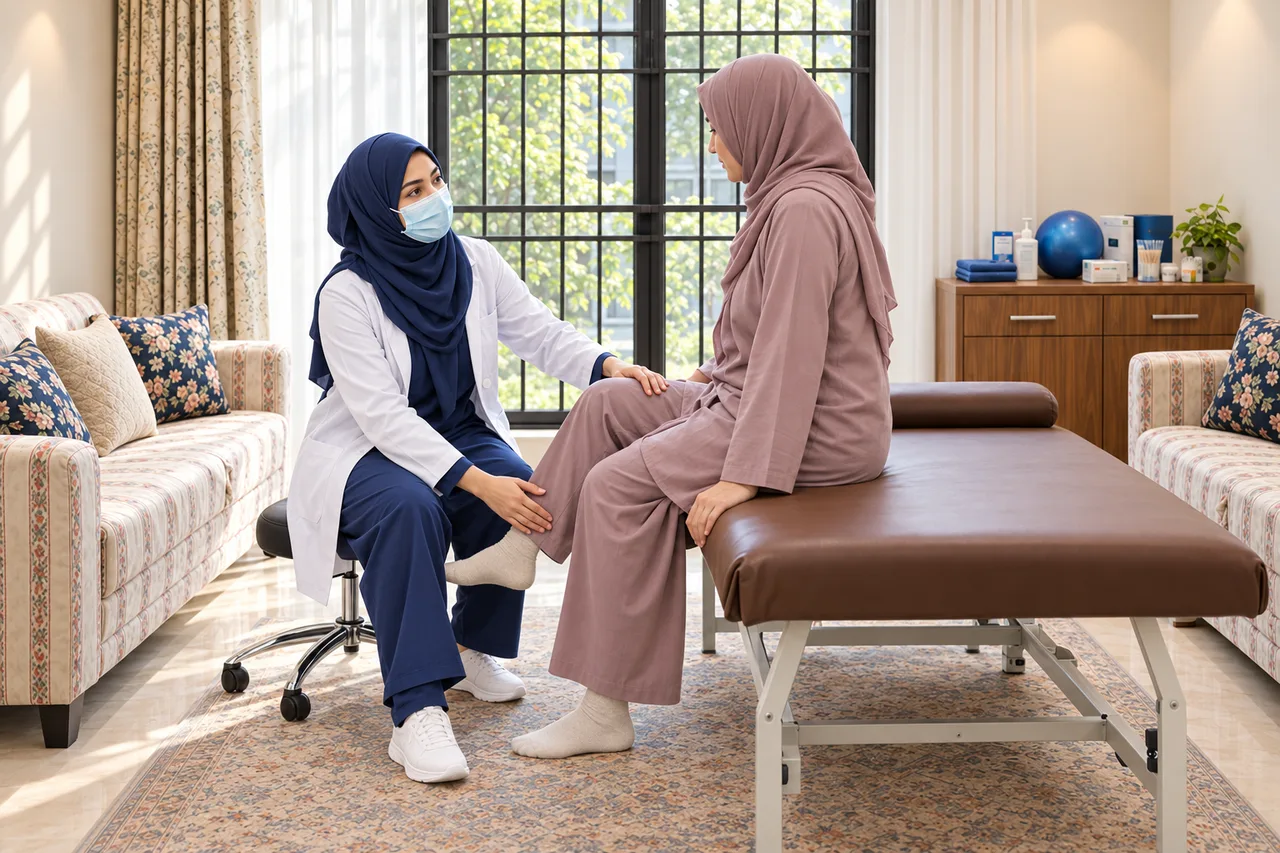
Women's Physiotherapy · Stroke Rehabilitation
Stroke recovery is built one practised movement at a time. Assessment-led neurological physiotherapy for women in Lahore, at the clinic or in your home, with your family involved from day one.
Stroke Rehabilitation Physiotherapy
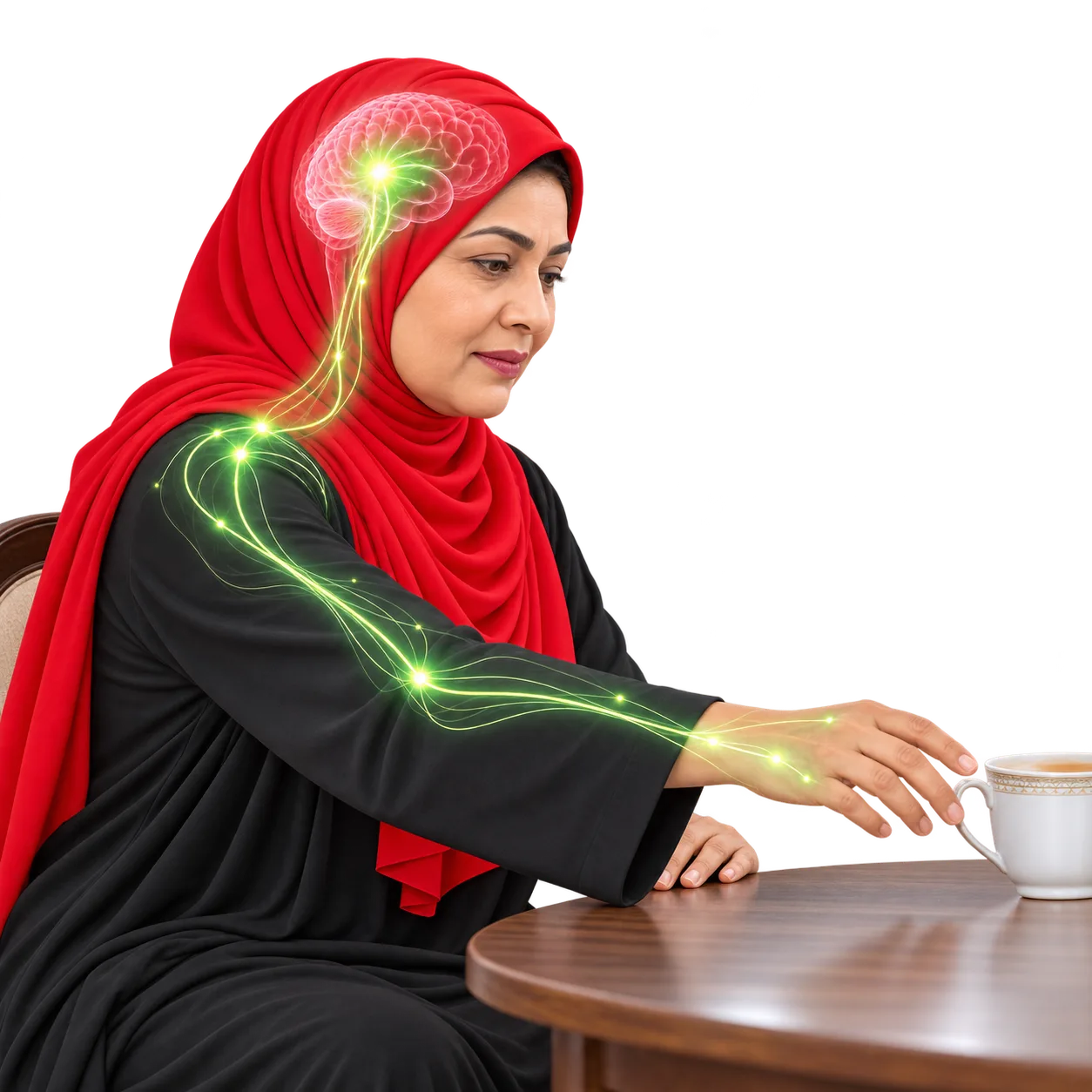
A stroke interrupts blood flow to part of the brain. Depending on where it happens, it can weaken one side of the body, unsettle balance, stiffen muscles, and change how the arm and hand, sensation and walking work.
The brain can reorganise. New connections form when a movement is practised often, with purpose and the right challenge. Physiotherapy turns that capacity into progress you can see: sitting steadier, standing up, walking further, using the hand again.
Dr. Munaza Ghani · Women-only neuro physiotherapy
Scroll to follow a typical recovery path, from sitting balance to walking on your own. Every plan starts from where you are today.
Positioning, gentle movement of the weaker arm and leg, and steady sitting balance protect the shoulder, prevent stiffness and prepare the body to stand.
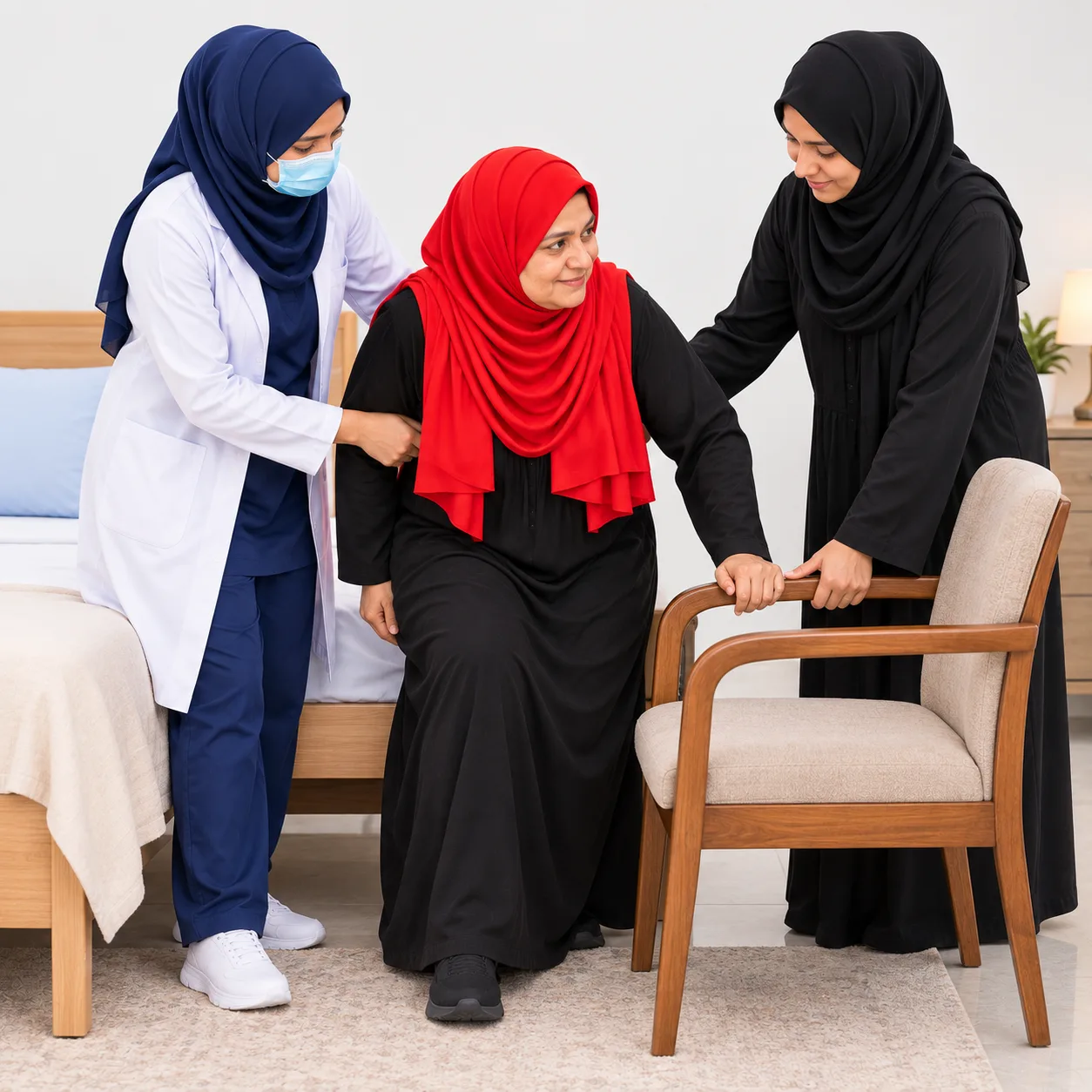
Feet back, lean forward, push through both legs. We repeat the real task many times, sharing more weight onto the weaker side as it grows stronger.
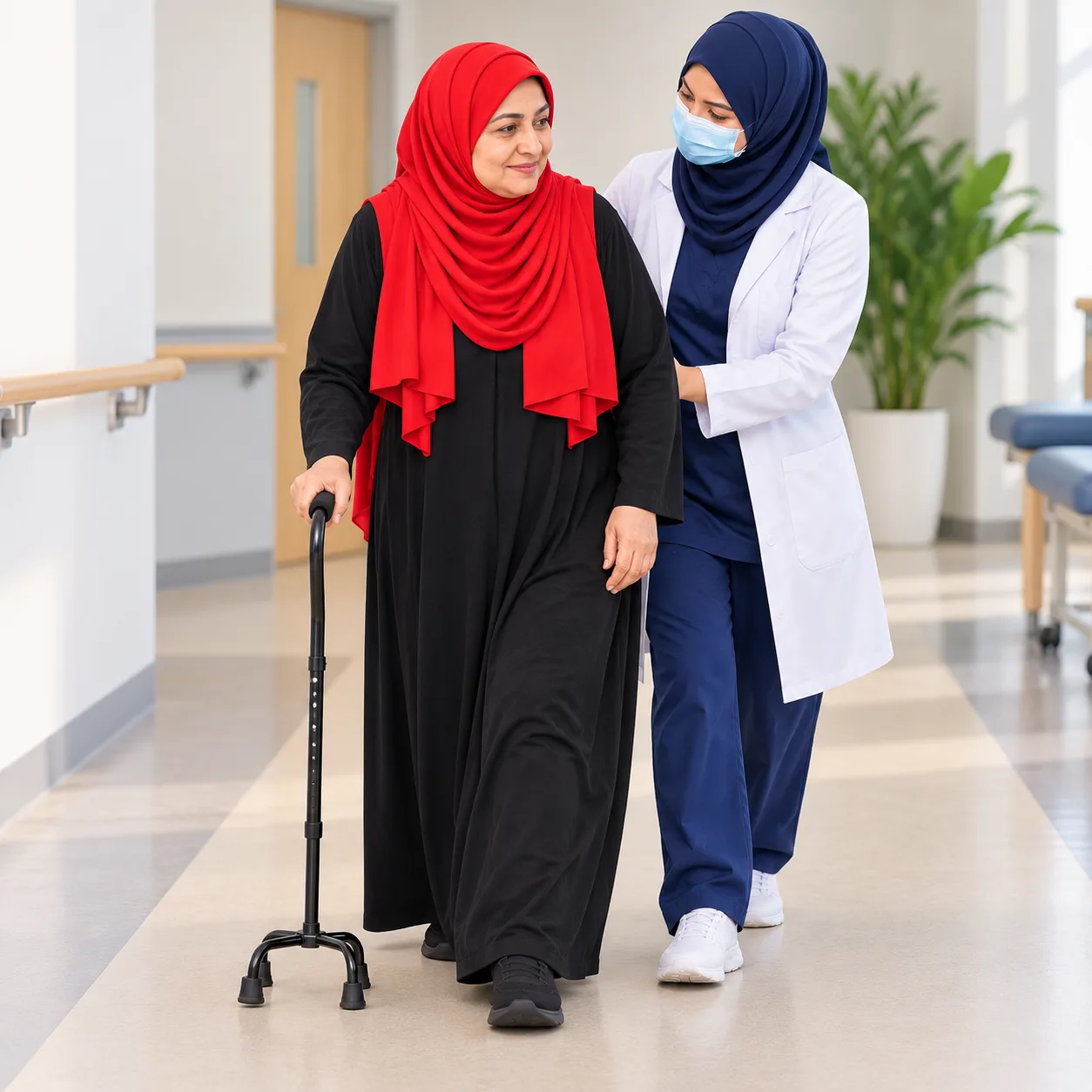
Balance training, strengthening and a walking frame or stick where it helps, while new pathways strengthen with every repetition.
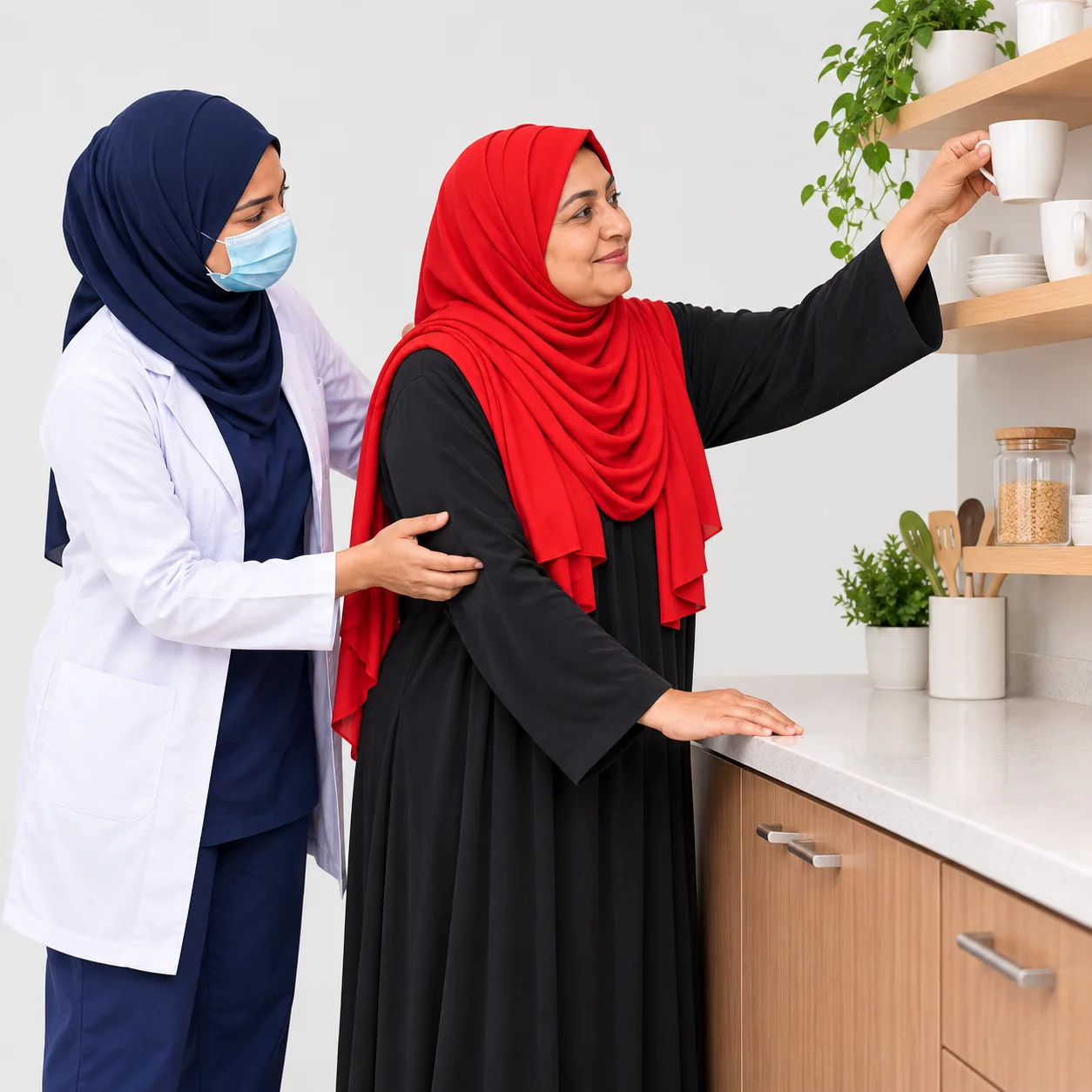
Walking practice indoors and out, stairs, and a home programme your family can help with, so progress continues between visits.
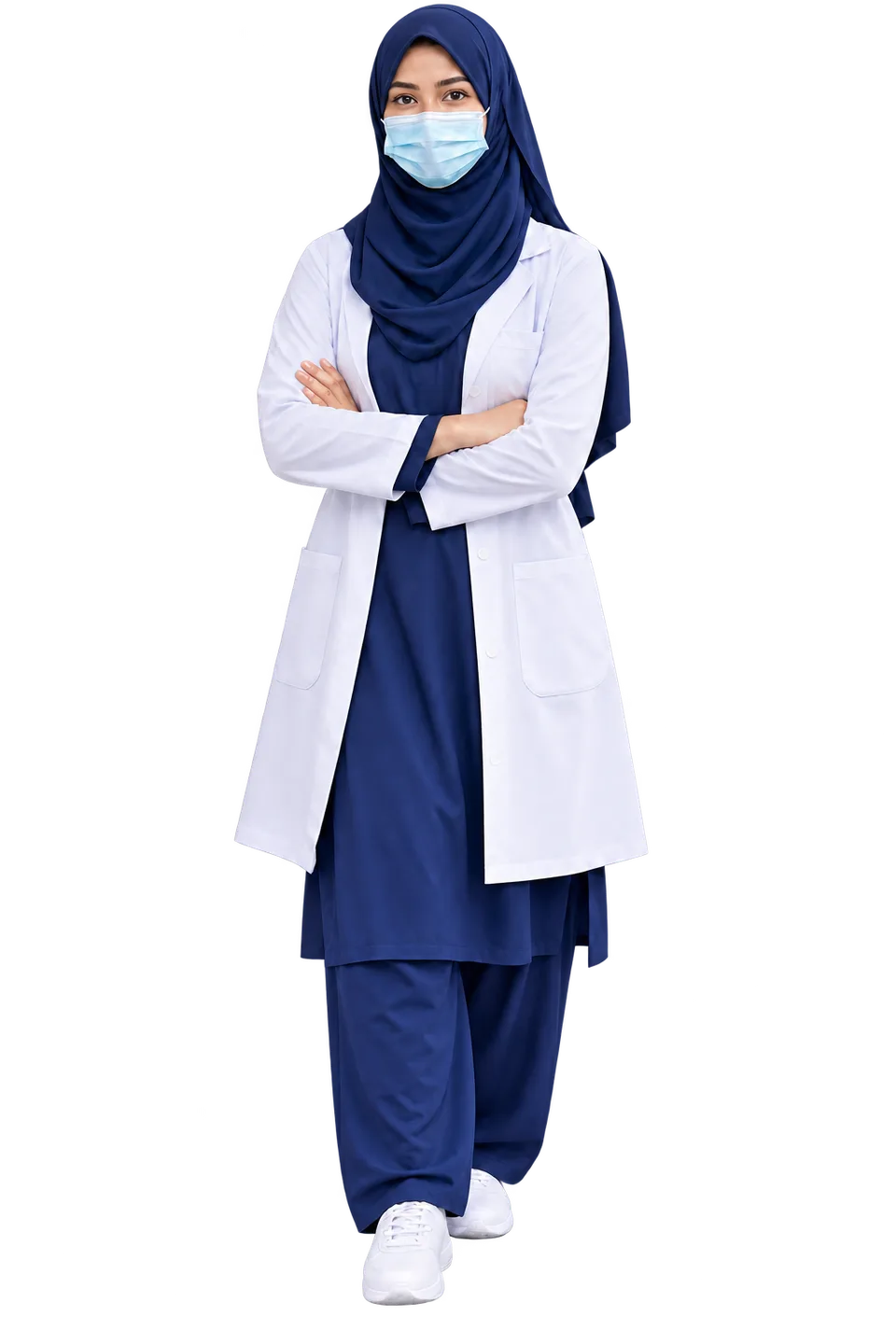
Is a stroke stopping you from…
What we treat
A new stroke is an emergency. Call Rescue 1122 immediately: treatment is time-critical.
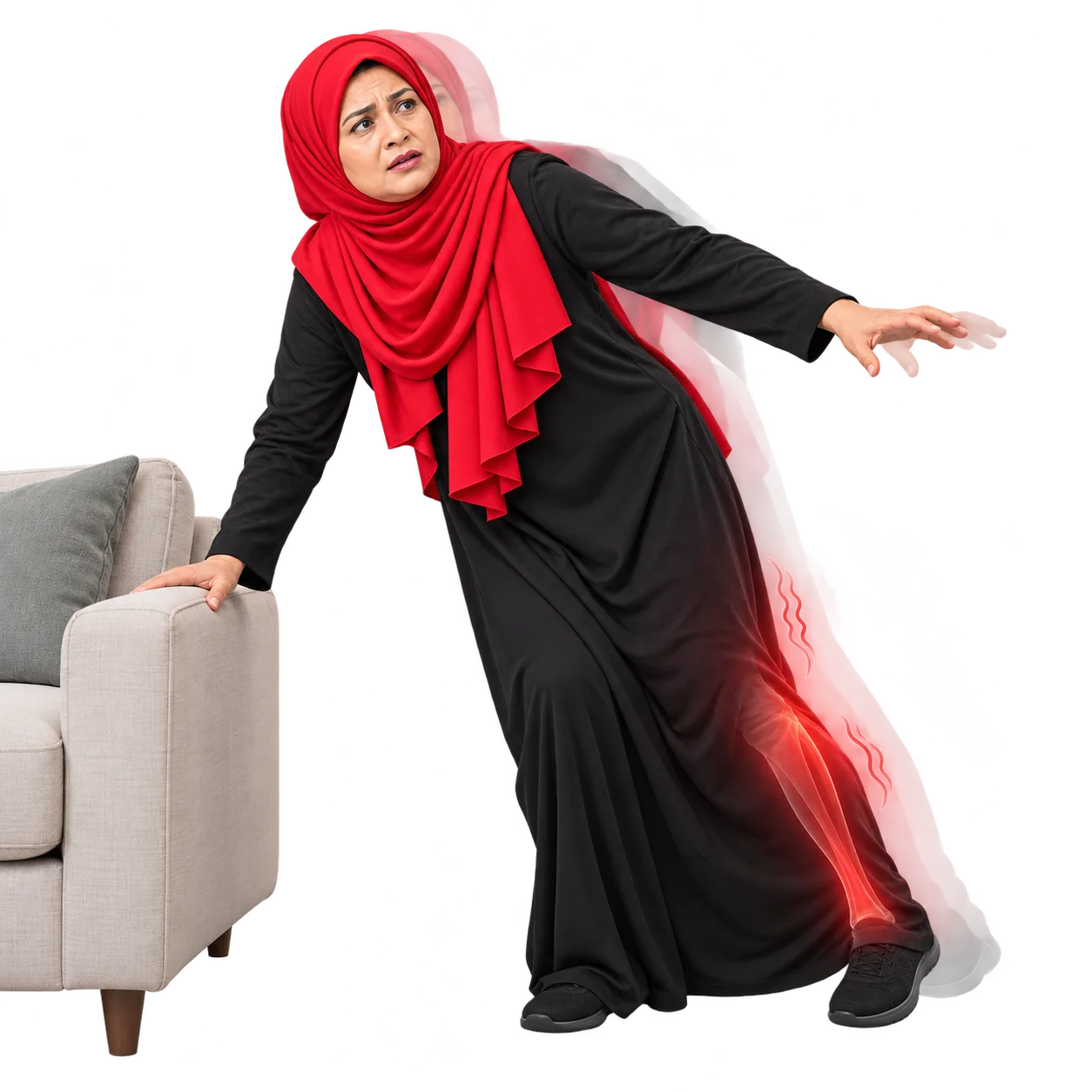
Sudden loss of balance, dizziness or trouble walking.
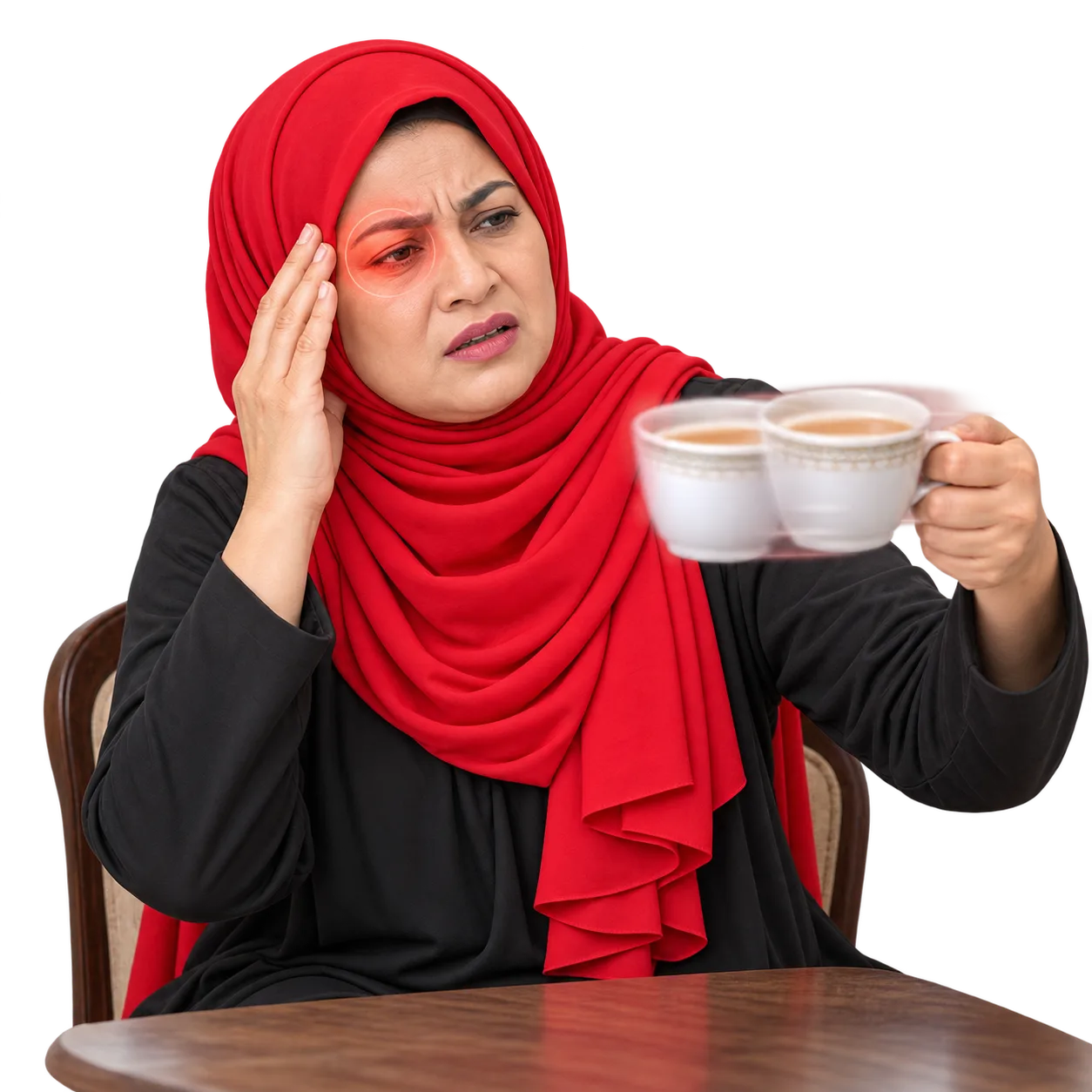
Sudden loss of vision, or blurred or double vision, in one or both eyes.
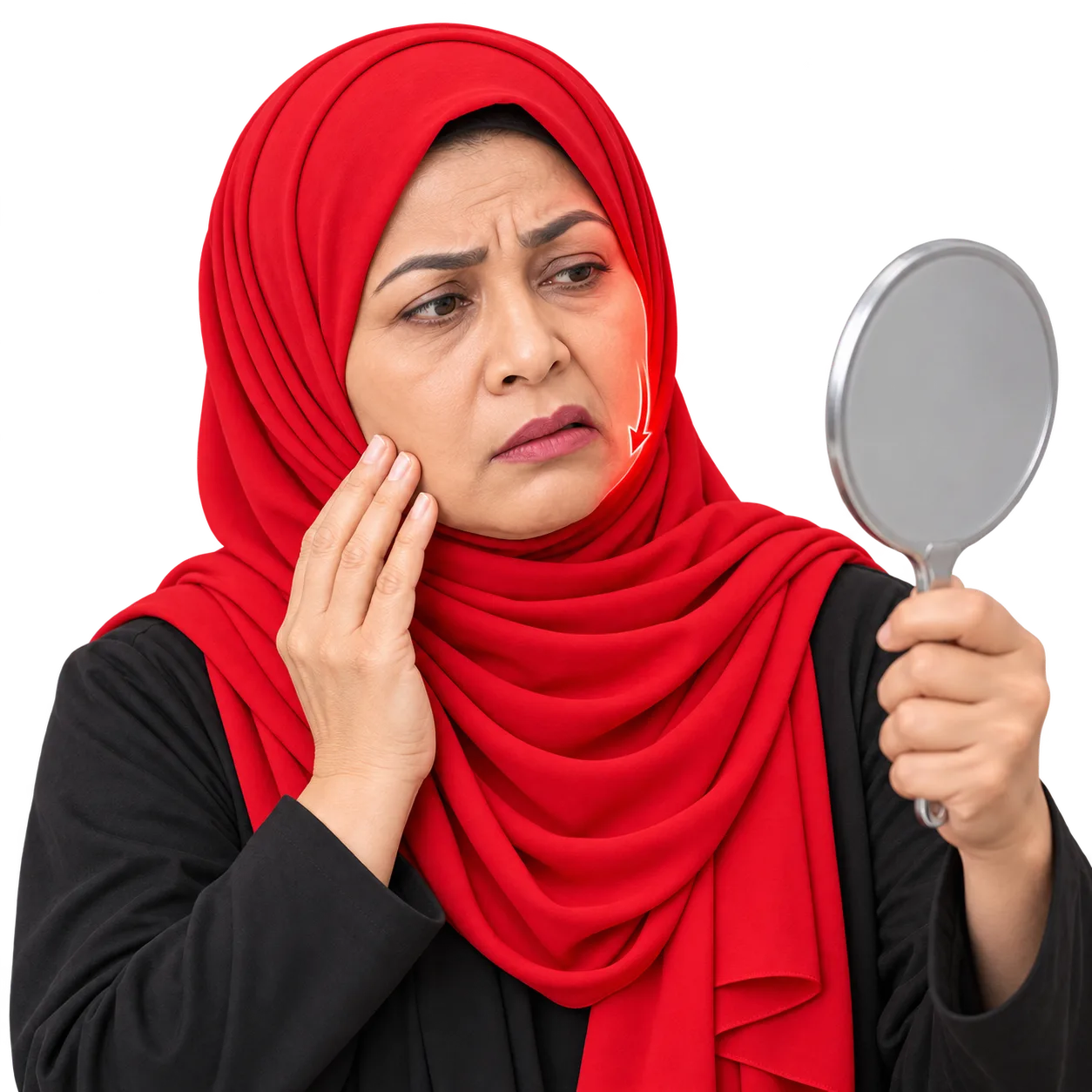
One side of the face droops or feels numb, and the smile is uneven.
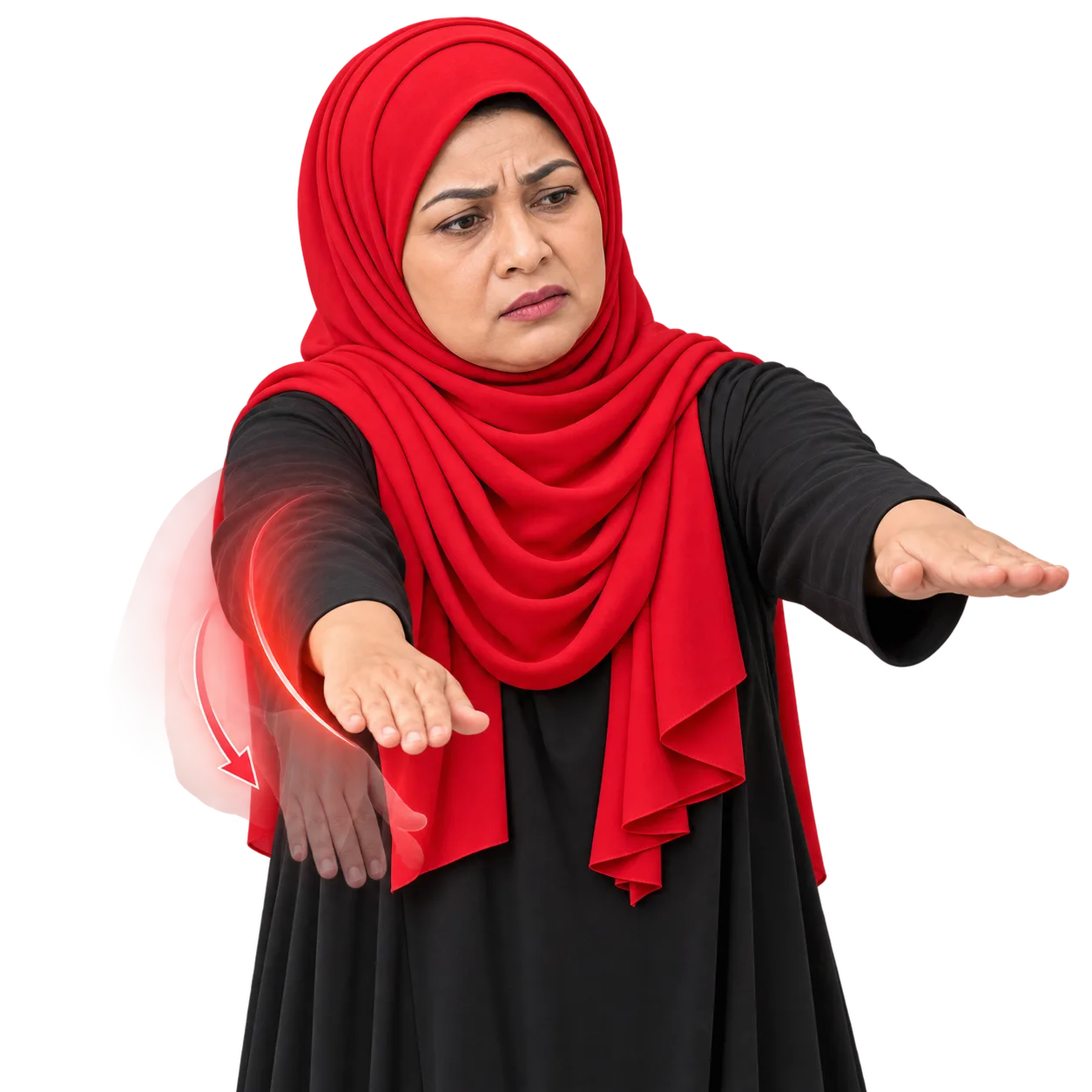
One arm or leg is weak or numb and drifts down when raised.
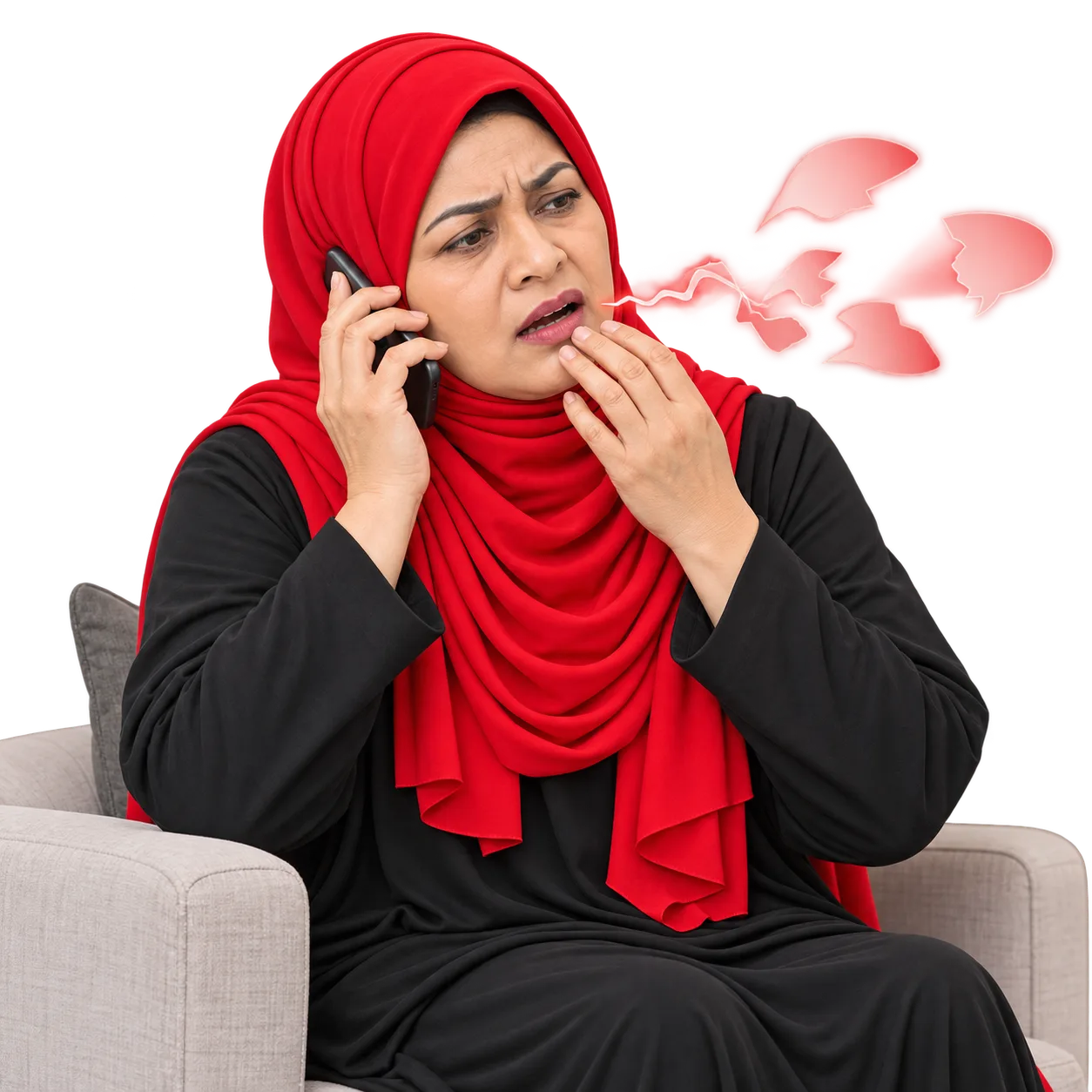
Speech is slurred or confused, or the person cannot understand you.
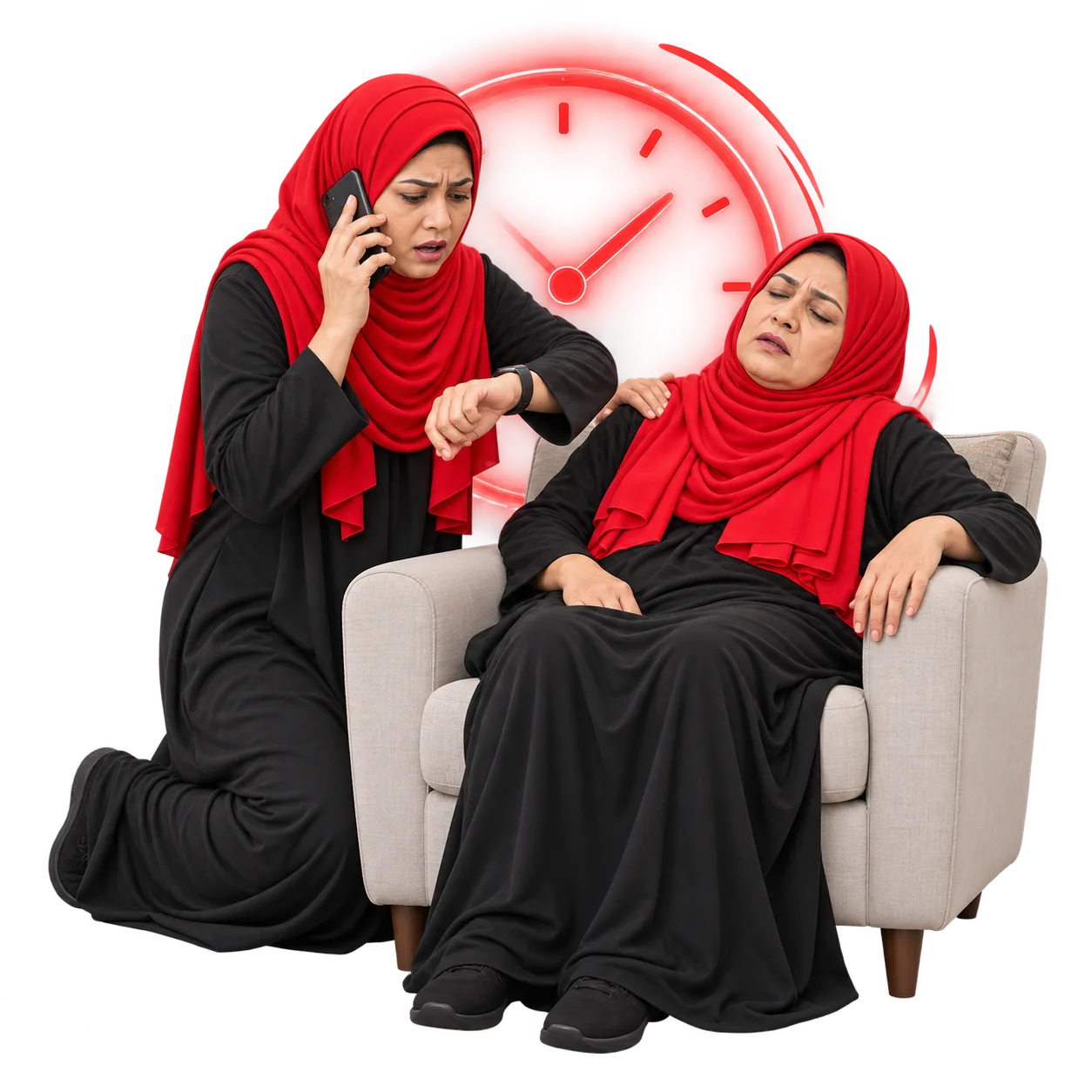
Note when the symptoms started and call Rescue 1122 straight away.
What a stroke can change
Reduced strength and control in the arm and leg on one side. Repeated, task-specific practice and progressive strengthening rebuild power and coordination.
HemiparesisMuscles can become tight and overactive, pulling the arm, hand or ankle into fixed positions. Positioning, stretching and active movement help; your doctor may add medication or injections.
Muscle toneWeight shifts away from the weaker side and balance reactions slow down. Balance training lowers the risk of falls and builds confidence standing and turning.
Postural controlShort steps, a catching toe or a stiff knee make walking slow and tiring. Walking practice, strengthening and the right aid or brace make it safer.
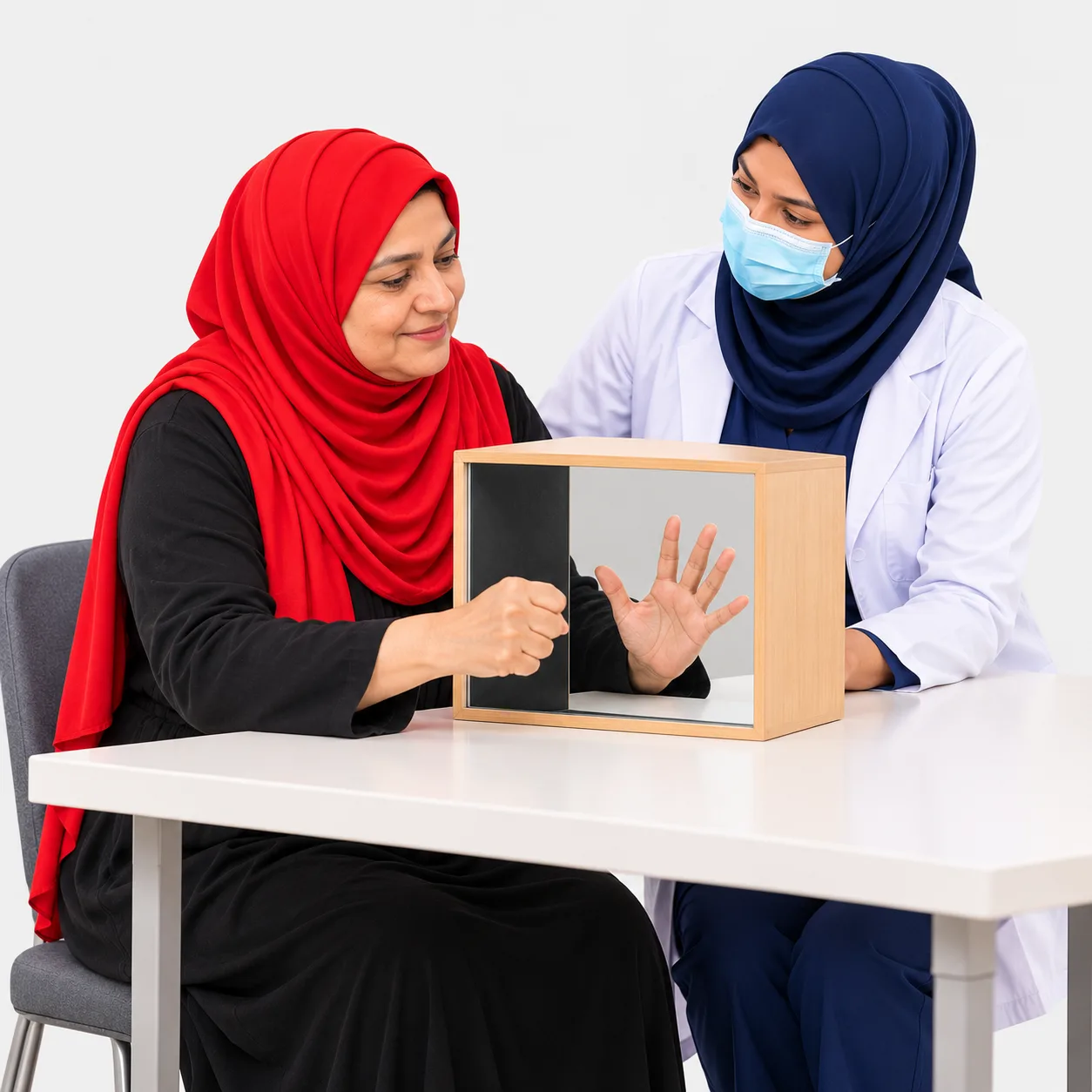
GaitReaching, gripping and fine finger movement often recover more slowly. Intensive, goal-based practice, with constraint-induced movement or mirror therapy for suitable patients, can help.
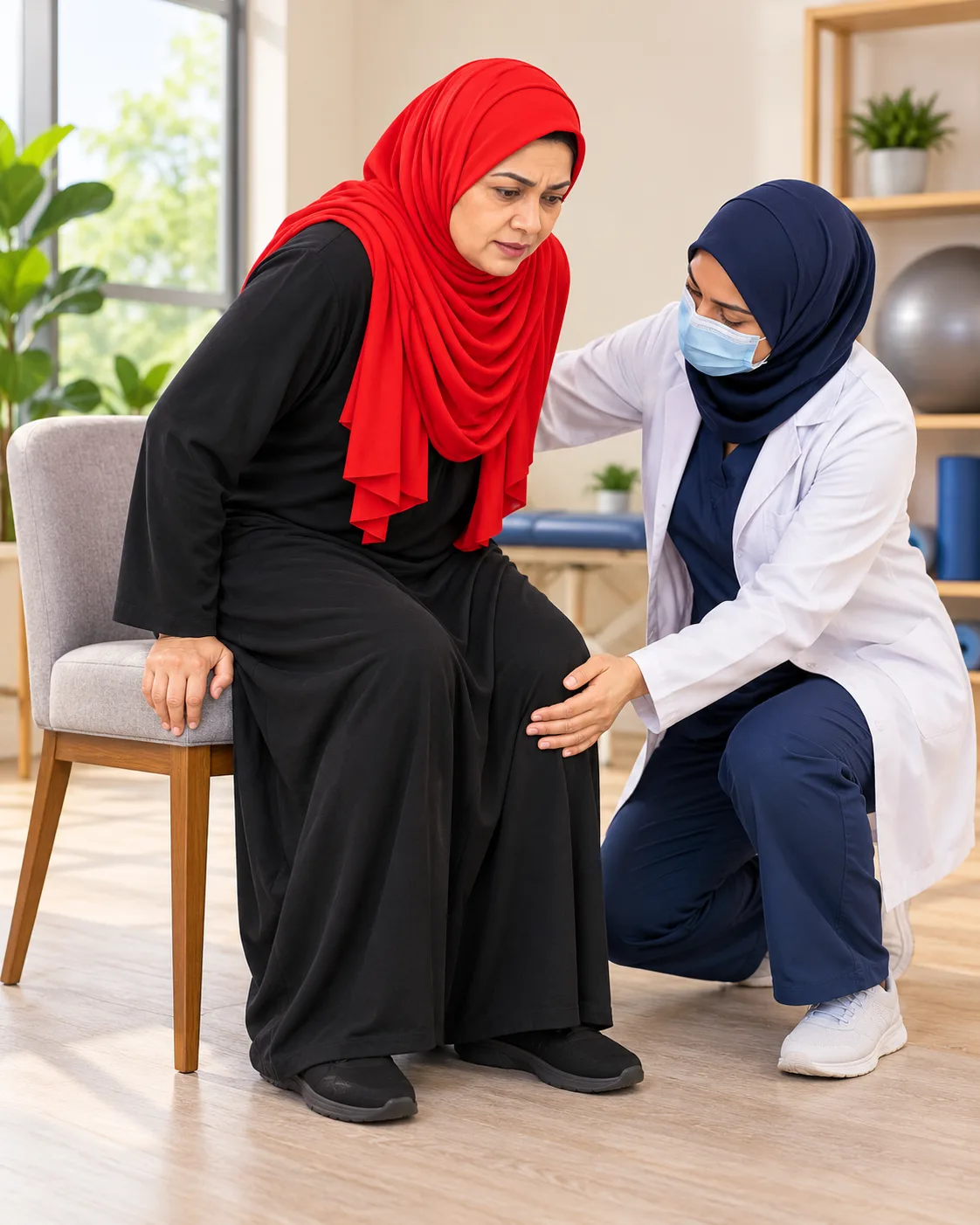
Upper limbA weak shoulder can sit lower in its socket and become painful. Careful handling, supported positioning and gentle movement protect it. Never pull on the weaker arm.
Hemiplegic shoulderReduced feeling, or less awareness of one side of the body or space, affects safety. Sensory retraining and strategies that draw attention to that side help.
Sensory and attentionTiredness, low mood and fear of falling are common after a stroke and slow recovery. Paced activity, achievable goals and support for the whole family make a difference.
The whole personSCROLL FOR THE ASSESSMENT TO FIND YOUR ROOT CAUSE
How recovery works
After a stroke, healthy parts of the brain can take over some of the work. That rewiring is driven by practice: specific, repeated, challenging and meaningful to you. The more consistently it happens, the more it helps.
Positioning, protecting the shoulder, sitting balance and early transfers, as soon as your medical team says it is safe.
Usually the time of fastest change: standing, walking, and arm and hand practice at high repetition.
Recovery slows but does not stop. Practice still improves strength, walking and confidence long afterwards.
Staying active, preventing falls and keeping your gains with a long-term home programme.
TipProgress is rarely a straight line. Plateaus are common, and changing the task, the challenge or the setting often gets things moving again.
Why physiotherapy works
Effective stroke rehabilitation is not passive. It is structured practice of the movements you need, with the right support and challenge, repeated until brain and body work together again.
Strength, tone, sensation, balance, walking and the tasks that matter at home, measured so we can track change.
Task-specific practice of sitting, standing, reaching and walking, with hands-on guidance.
Progressive strengthening and balance work for the weaker side and the whole body.
A home programme, safe handling for carers and regular reviews, so the gains continue.
Our advanced treatment techniques
Evidence-informed methods, chosen for your goals and your stage of recovery.
High-repetition practice of real activities: sit to stand, transfers, reaching and walking.
Walking re-education, weight shifting, stepping and stairs, so you move safely and further.
Progressive strengthening with stretching and positioning to manage stiffness and spasticity.
Goal-based reaching and grasping practice, with constraint-induced movement or mirror therapy where suitable.
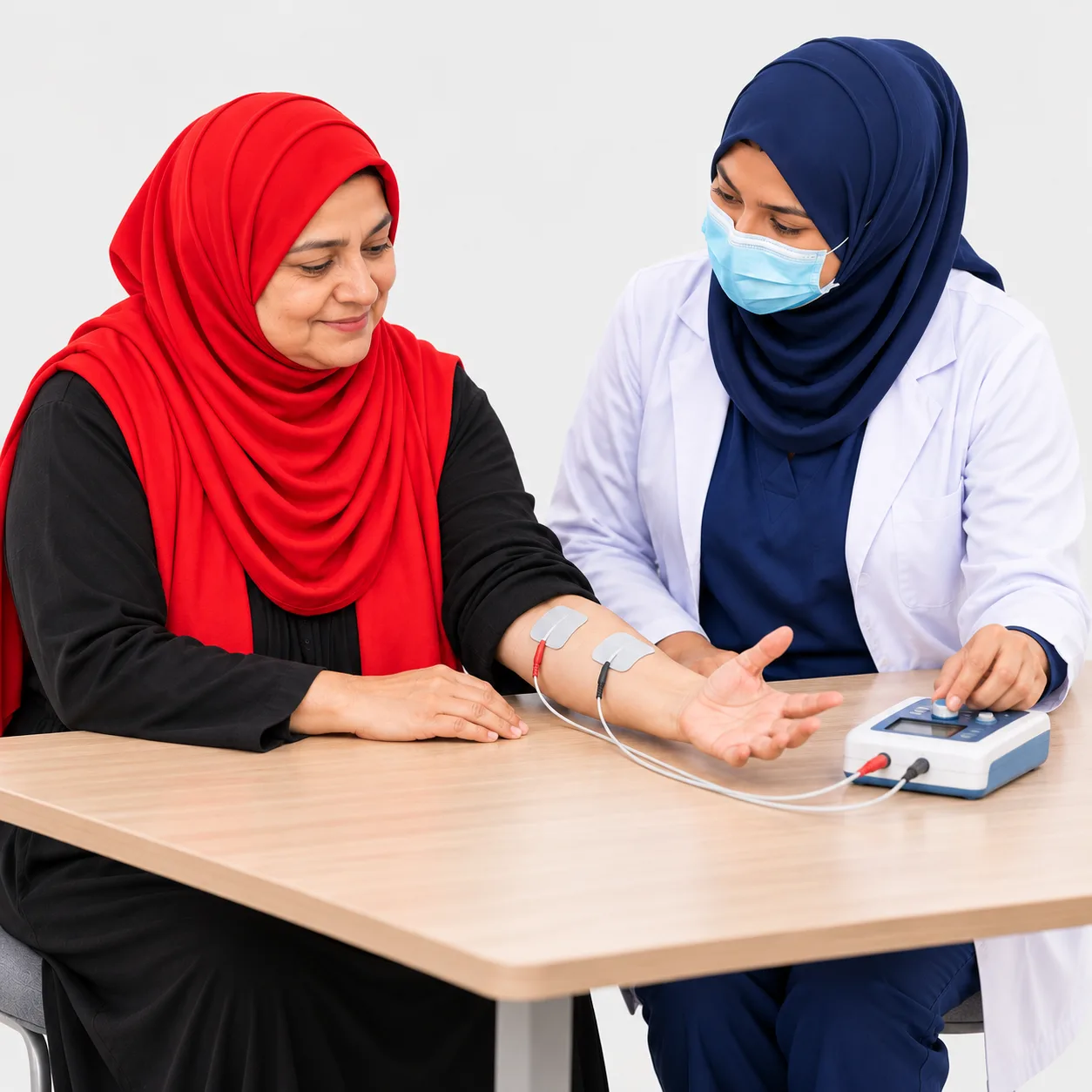
Electrical stimulation to help activate weak muscles, used alongside active practice, not instead of it.
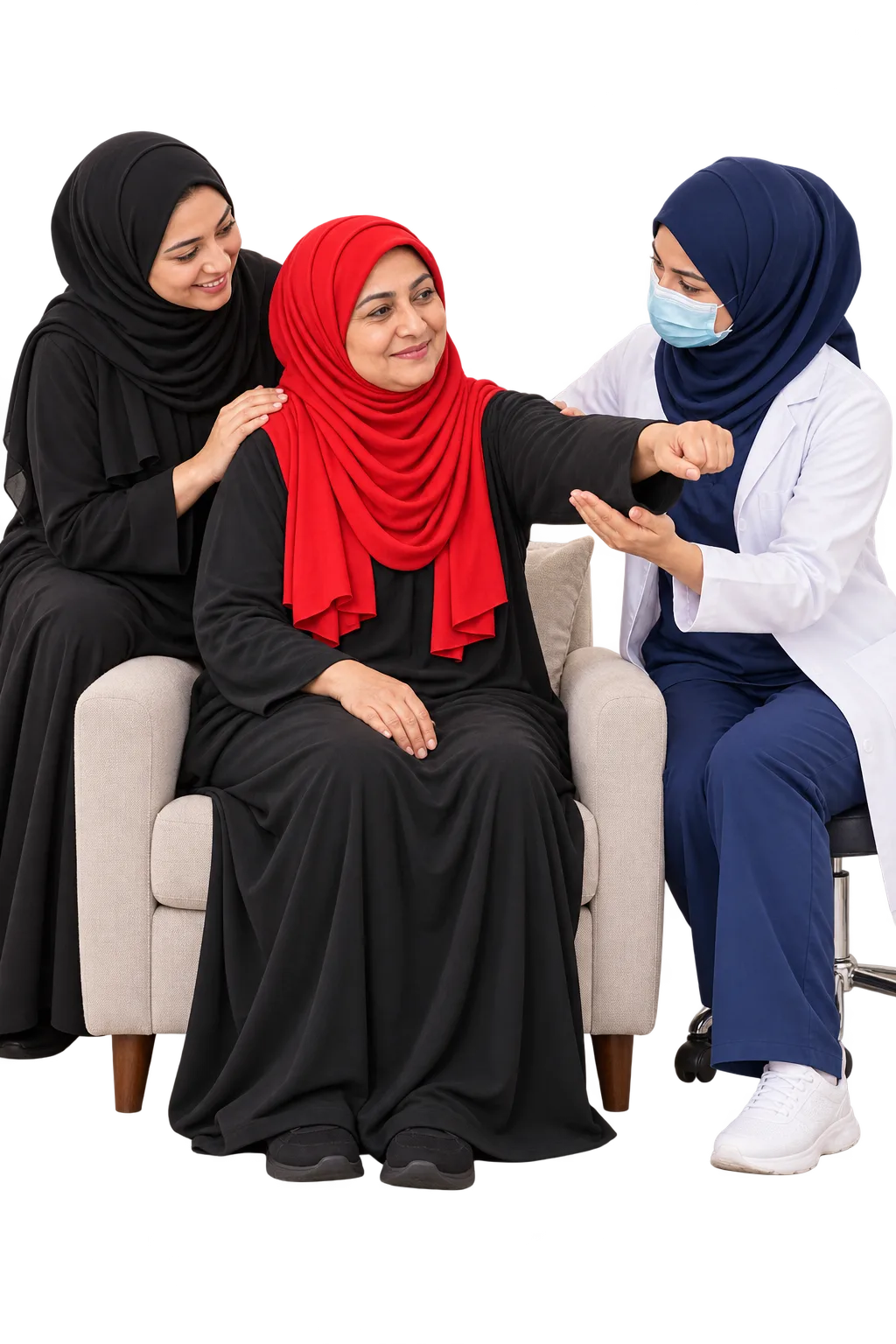
Safe handling, transfers and daily exercises, so family can support recovery between sessions.
Home exercises
Examples often used after a stroke. Your physiotherapist chooses, adapts and progresses them for you. Always have someone nearby for standing exercises.
Stop and get help if you feel chest pain, severe breathlessness, dizziness or new weakness. These are general examples, not a personal prescription.
Step by step
Strength, tone, balance, walking and daily tasks measured at the start.
Goals set with you and your family, around what matters at home.
Task practice, strengthening and balance, progressed as you improve.
A home programme, falls prevention and regular reviews to keep your gains.
Care designed for women
Munaza Physio Studio is a women-only practice. Stroke rehabilitation is long and personal, so we bring it into your home where it helps, involve the people who care for you, and keep every session dignified and unhurried.
A female physiotherapist in a women-only environment
Home-visit stroke rehabilitation across Lahore
Carer and family training in safe handling and transfers
One-to-one sessions, never rushed
Clear goals and progress reviews you can see
Real Stories
My mother had a stroke that left her right arm and leg immobile. With Dr. Munaza’s expert physiotherapy, she regained full movement completely painfree and without any medication. We’re truly grateful for her care and professionalism.
I took home sessions for my neck, shoulder, back, and hip pain. Alhamdulillah, all my pain is gone like a magic. Even my headache, which I had for many years, got better with the exercises. Thank you so much Dr Munaza for your kind treatment and care. May Allah bless you.
“Dr. Munaza treated my neck and shoulder pain, as well as my muscle pull issue, very effectively. With the help of exercises and therapy, I feel much better now. She is very kind, caring, and cooperative. Highly recommended!”
I had neck pain with headaches for a long time. After treatment with Dr. Munaza, my pain got much better and the headaches eased. She listened carefully, treated me gently, and explained everything clearly. I feel relaxed and thankful for her care Best physiotherpist in the area👍🏻
Dr. Munaza is very kind and professional. My shoulder pain improved within a few sessions. Highly recommended!!!!
Simple pricing
Transparent pricing, with a full assessment at the start of every plan.
Clinic sessions start from PKR 1,500.
Home visit pricing depends on your location and condition. Contact us for a quote.
Book AssessmentRecovery is practice
No one can honestly promise a full recovery. We can promise structured, hopeful, evidence-informed practice that helps you do more, more safely, for longer.
Questions
As soon as your medical team says it is safe. Early, gentle activity such as positioning, sitting and short assisted movements helps, and more intensive practice is built up gradually.
No. Recovery is usually fastest in the first few months, but practice still improves strength, walking and confidence long afterwards. We set realistic goals for where you are now.
Yes. Home visits often suit stroke rehabilitation, because we practise in your real surroundings and can train your family at the same time.
Very. Carer training is part of the programme: safe transfers, how to support the weaker arm, and how to help with exercises, so progress continues between sessions.
It depends on the stroke, your goals and how you progress. We plan in blocks, re-assess against your goals and adjust the frequency as you improve.
No referral is needed. Bring your discharge summary and medicine list if you have them; we work alongside your neurologist or doctor.
Clinic sessions start from PKR 1,500. Home visit pricing depends on your location and condition; contact us for a quote.
Yes. Dr. Munaza is a female physiotherapist and the practice is dedicated to women, in a private and culturally sensitive environment.
Safety first
Ready to start?
Book a full assessment at the clinic or at home, and leave with a clear plan for you and your family.
 Google review