
01 / DEVELOPMENT
A stronger start to everyday movement.
Assessment and play-based practice for head control, rolling, sitting, transitions, standing and early walking. Activities are adapted to your child’s abilities, interests and comfort.
Pediatric physiotherapy · Lahore
A child-friendly physiotherapy journey for movement, balance, posture, mobility and developmental motor skills — built around play, confidence and parent participation.

01 / Our approach to care
Physiotherapy connects movement with daily life. Goals might include getting up from the floor, walking more comfortably, joining a game or making a family routine easier.
Assessment and play-based practice for head control, rolling, sitting, transitions, standing and early walking. Activities are adapted to your child’s abilities, interests and comfort.
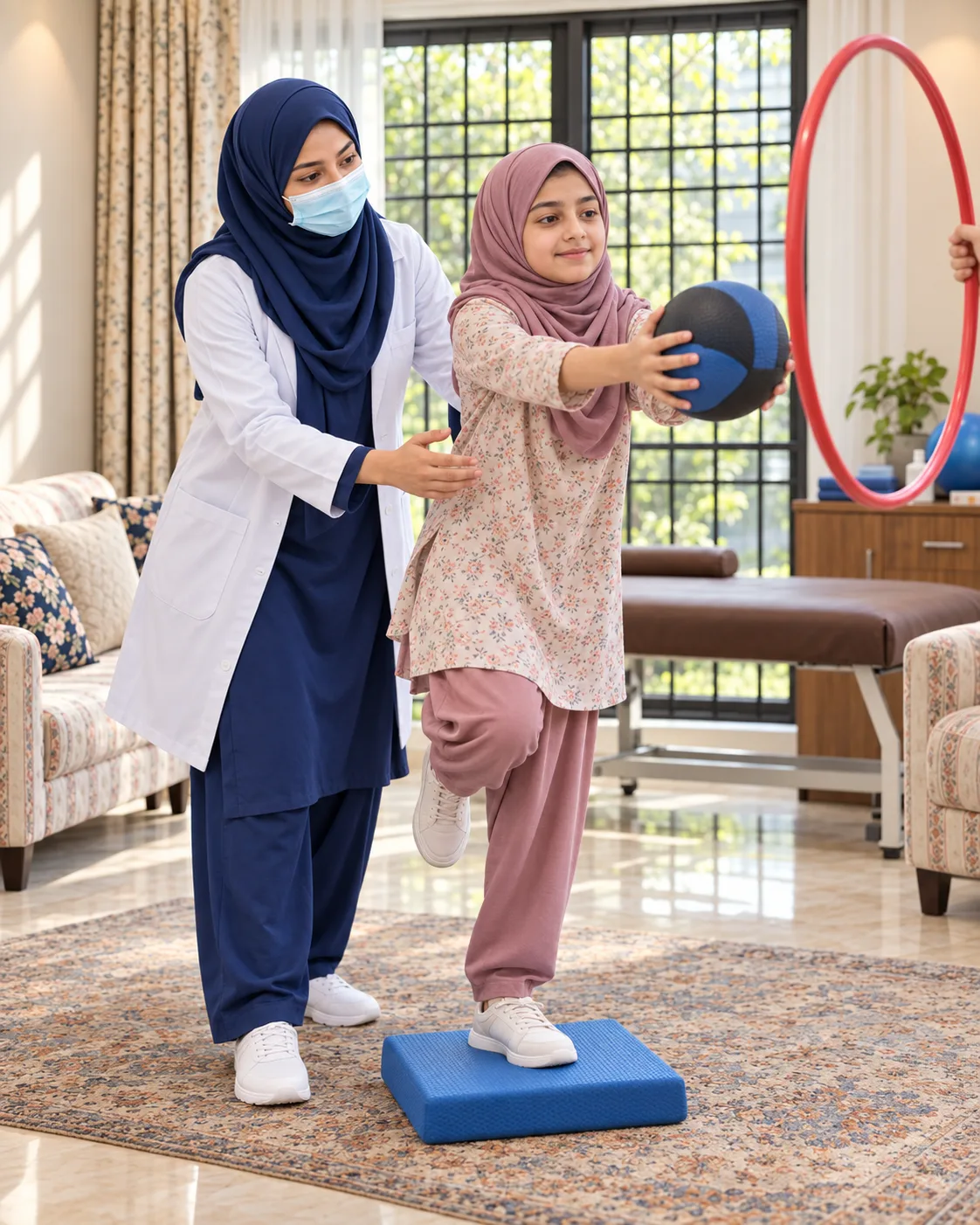
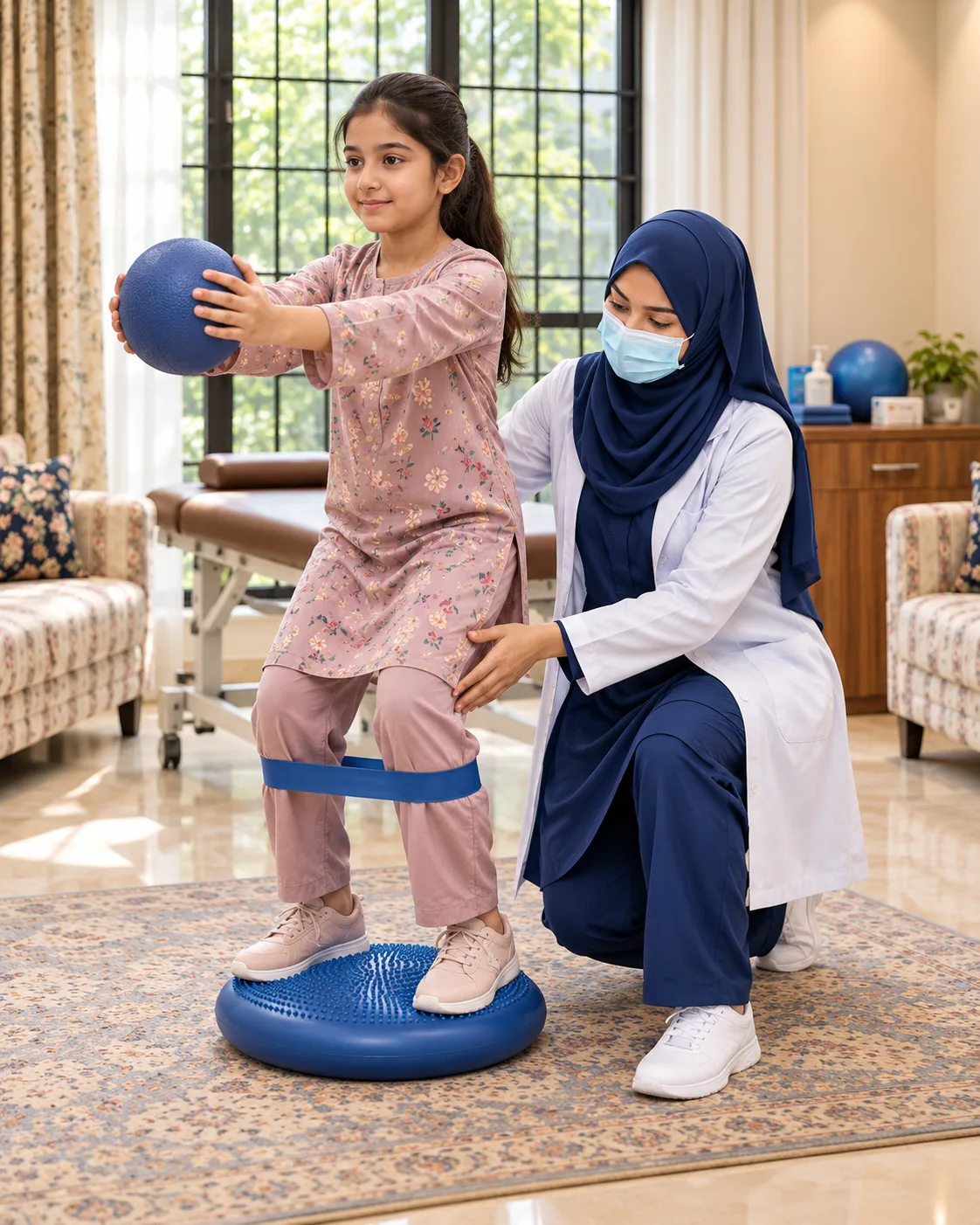
Graded strengthening, balance games and coordination practice help children work towards meaningful activities. Challenge is adjusted—not pushed through pain or exhaustion.
Walking assessment, functional movement practice and pacing for children with gait concerns, reduced mobility or fatigue. Orthotic and specialist referrals are discussed when indicated.
Gentle, clinically appropriate hands-on care can complement active exercise, comfortable positioning and activity modification. Treatment follows assessment and your child’s assent where possible.
Individual rehabilitation after injury or surgery, following medical clearance and agreed precautions. Goals may include joint movement, strength, transfers and return to daily activity.
Parent coaching turns agreed goals into manageable routines. Play, positioning, handling and movement ideas are kept realistic, so therapy supports family life rather than taking it over.
Services depend on assessment, clinical suitability and the therapist’s scope of practice. Physiotherapy supports movement and participation; it does not replace medical treatment. Occupational therapy, orthotics, surgery and specialist respiratory care may require referral to another provider.
02 / A journey we take together
Good care starts with listening. What feels difficult? What does your child enjoy? What would make daily life easier?
Discuss your concerns, health history, routines and priorities. Observe comfortable movement, play and functional skills, with assessment adapted to your child.
Agree achievable priorities together. A goal could be getting into a chair, managing a step, reaching a favourite toy or joining part of a playground game.
Build practice into everyday life. Review comfort, fatigue, function and participation, then adjust the plan. Progress is individual, not a competition.
03 / Understand the possibilities
Explore how rehabilitation may help children with different conditions. This educational directory is not a diagnosis, a treatment prescription or confirmation that every specialist service is available at this clinic.
BPT · MSOMPT
Master of Science in Physical Therapy — Orthopedic Manual Physical Therapy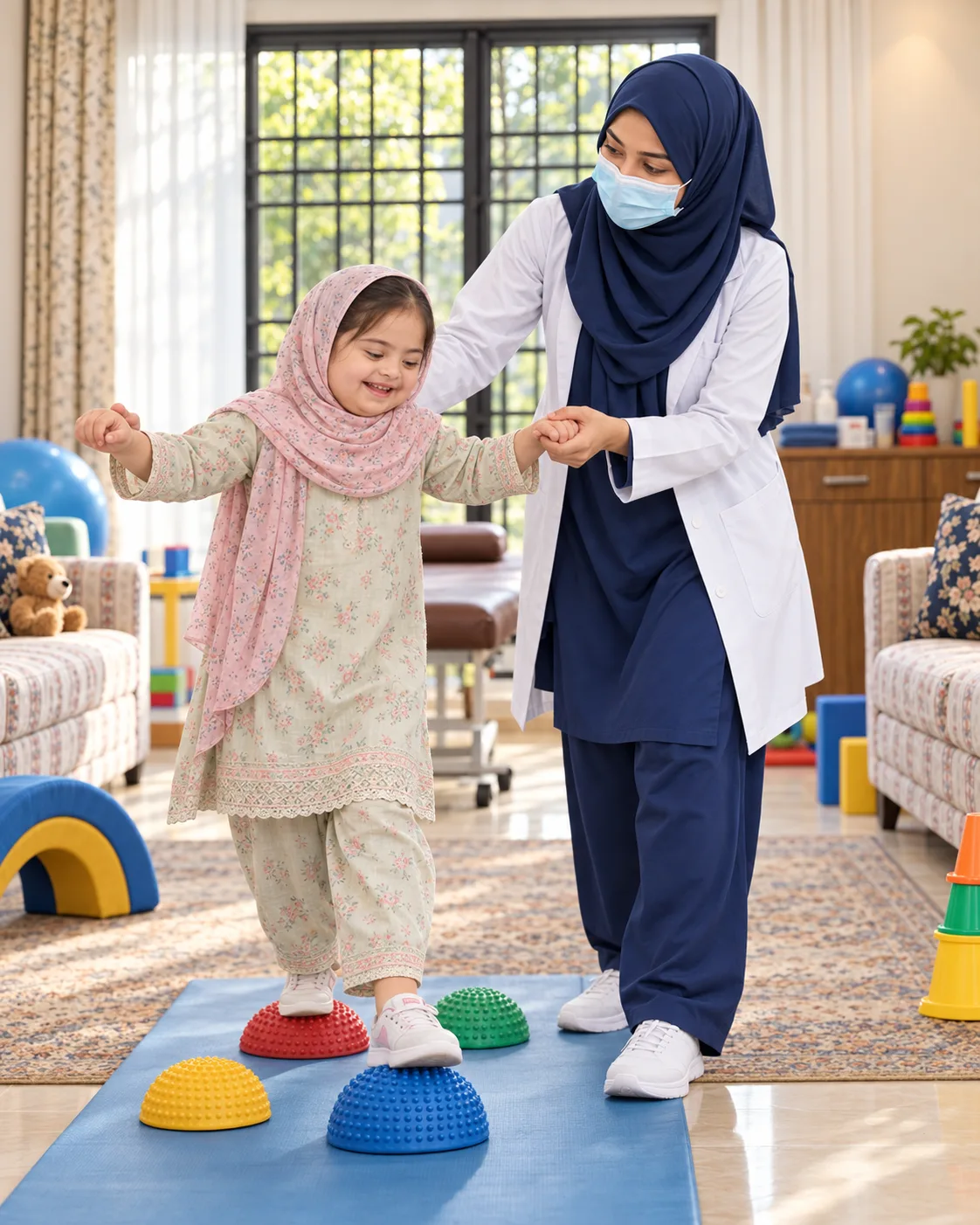
Support for postural control, transitions, balance and walking through purposeful play and graded strengthening.
Care planning: consider cardiac needs, joint laxity and neck symptoms; avoid forceful neck techniques.
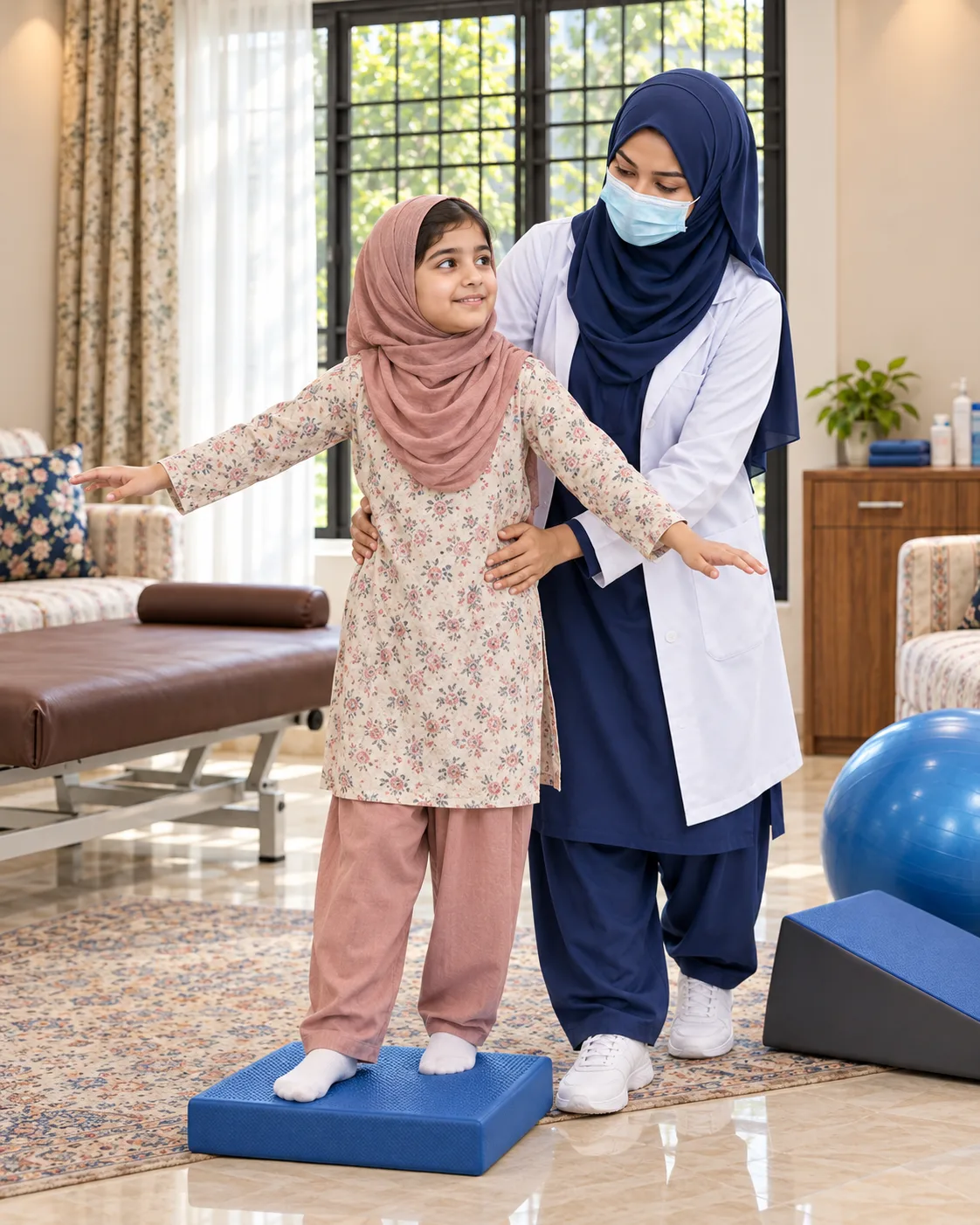
Goal-led practice for sitting, transfers, standing, walking and comfortable movement, adapted to the child’s abilities.
Care planning: coordinate pain, hip surveillance and contracture management with the specialist team.

Comfortable joint movement, graded strength and activity pacing to support school, play and daily routines.
Care planning: adapt activity during flares and follow paediatric rheumatology guidance.
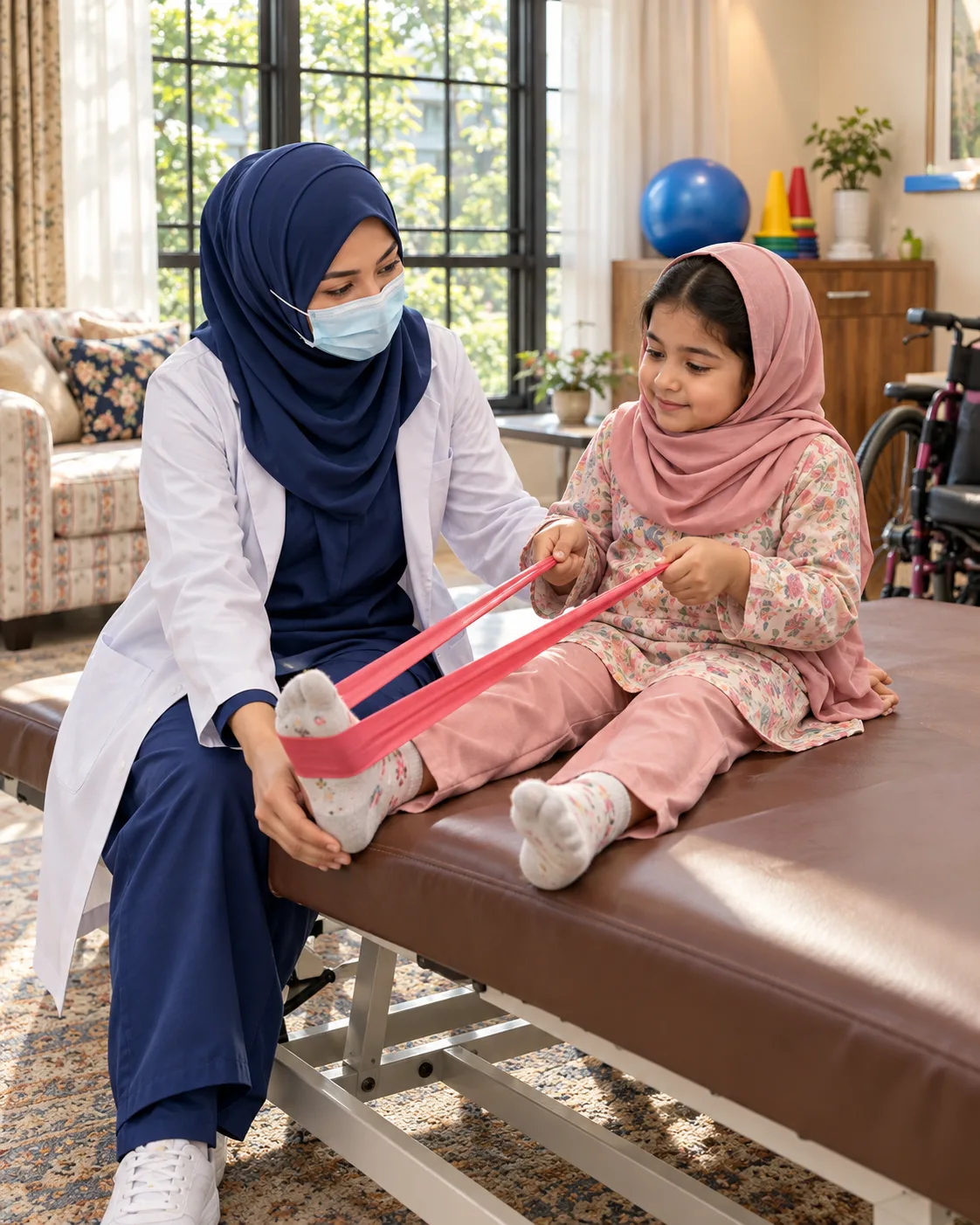
Individual movement, positioning and energy-conservation support to maintain comfort and useful daily function.
Care planning: avoid exhausting or high-load exercise; follow diagnosis-specific neuromuscular guidance.

Active movement, conditioning and symptom-focused exercise for comfortable participation.
Care planning: spinal monitoring and bracing decisions remain with specialists. Exercise is not a guaranteed correction of the curve.

Functional strengthening, supported transitions and mobility practice based on available movement and sensation.
Care planning: protect skin and follow orthopaedic and neurosurgical precautions.

Gentle assessment-led movement, positioning and reaching games for a persistent head-turn preference or head tilt.
Care planning: sudden, painful or unexplained head tilt needs medical assessment; movement is never forced.
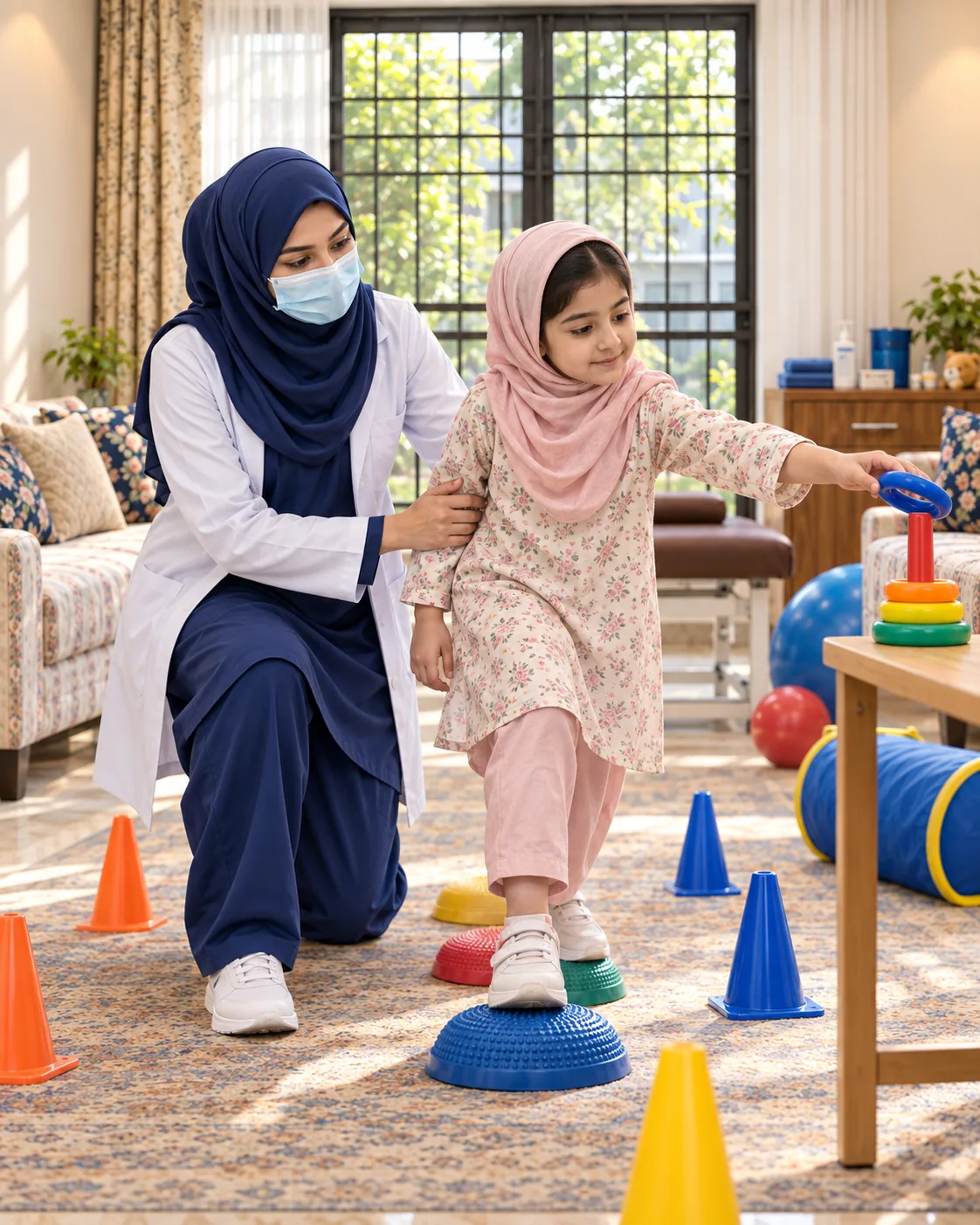
After medical stabilisation, practise balance, walking, transfers and coordinated movement through meaningful tasks.
Care planning: new facial weakness, speech changes or limb weakness requires emergency care.
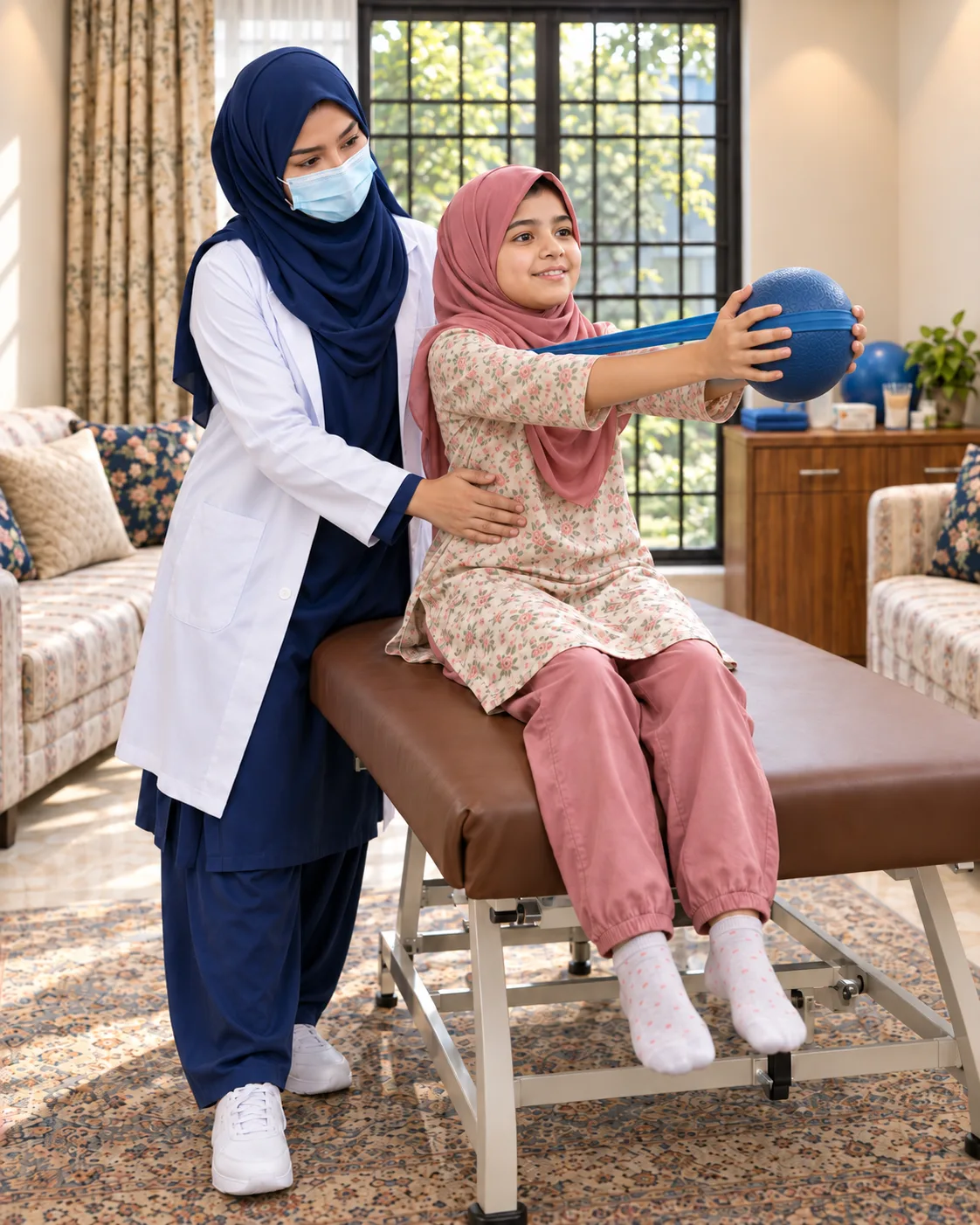
Positioning, available-muscle strengthening and transfer practice within a specialist rehabilitation plan.
Care planning: spinal precautions, altered sensation and autonomic risks determine whether clinic-based treatment is suitable.

Graded balance, coordination and mobility work for physical difficulties associated with the illness or its treatment.
Care planning: oncology or neurosurgical clearance is required. Physiotherapy does not treat the tumour.
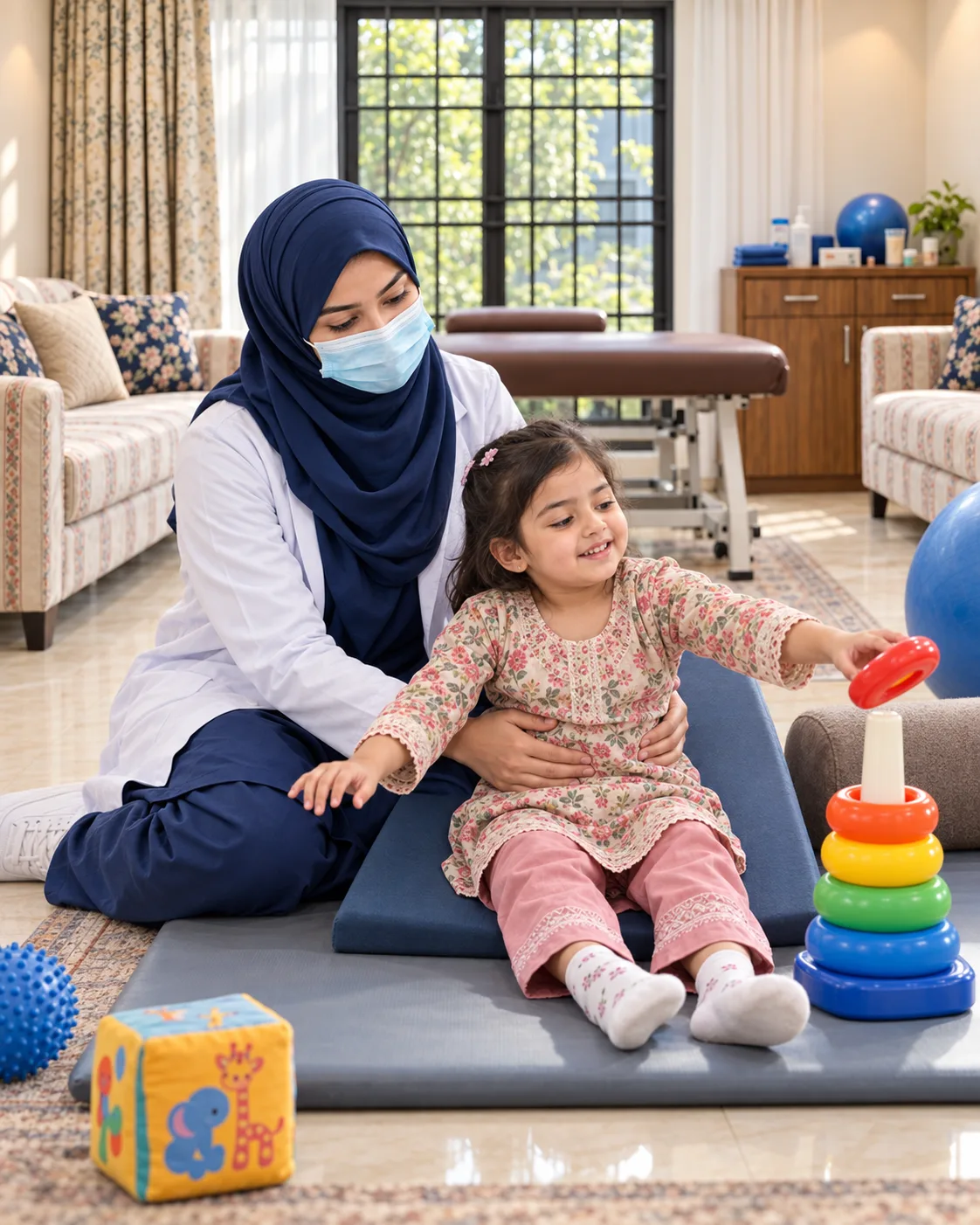
Developmental practice and functional movement support when hydrocephalus is medically managed.
Care planning: new vomiting, headache, unusual drowsiness or skill loss—especially with a shunt—requires urgent medical assessment.

Individual play-based care for head control, posture, reaching, transitions and mobility.
Care planning: goals follow the child’s abilities and associated medical needs, rather than head size alone.
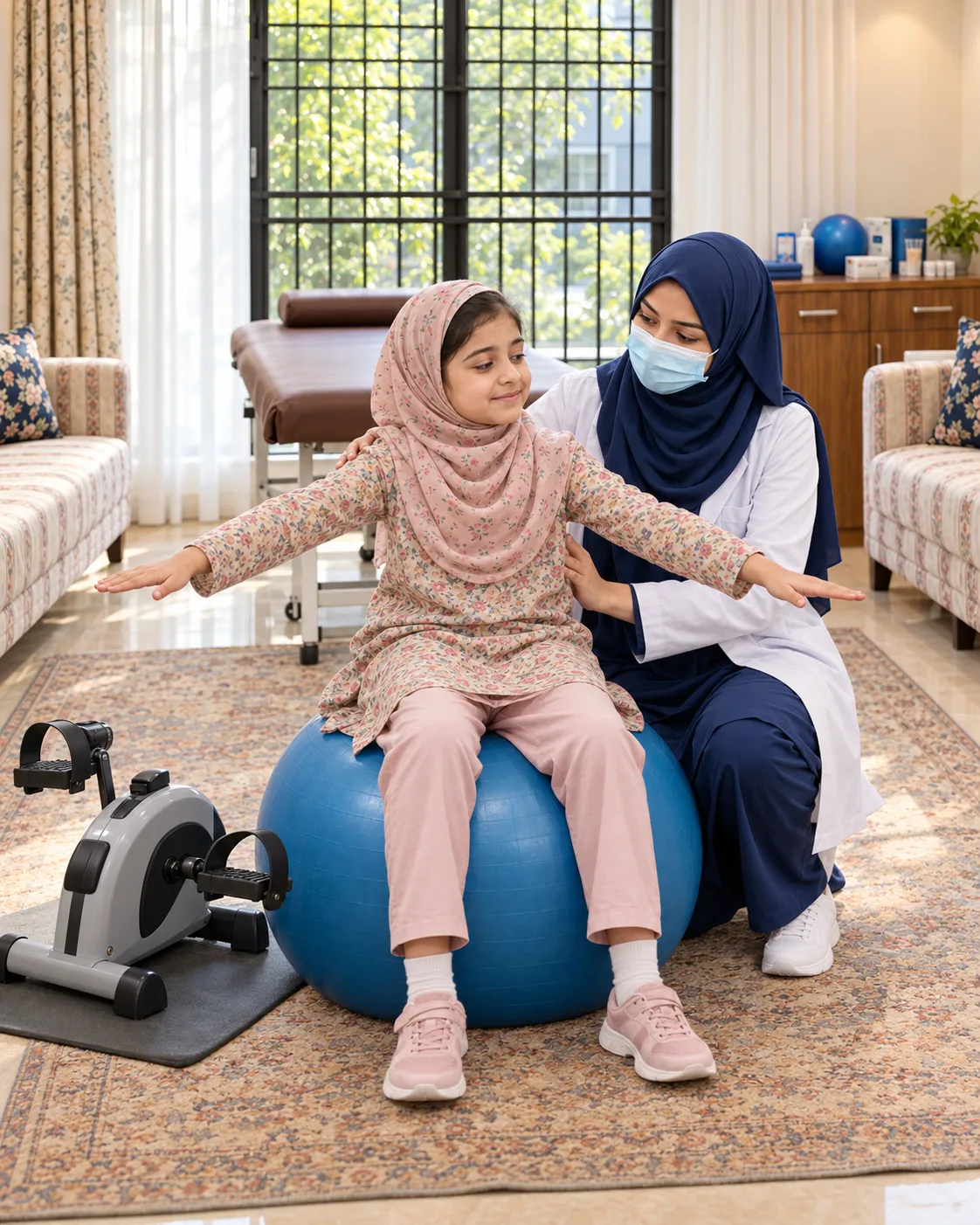
Comfortable movement and daily-function support where permitted by the metabolic team.
Care planning: exercise tolerance and illness precautions vary substantially; a generic strengthening programme is not suitable.

Gentle functional movement and positioning to support comfort and participation within specialist recommendations.
Care planning: cervical instability and spinal, cardiac or respiratory involvement require particular precautions.
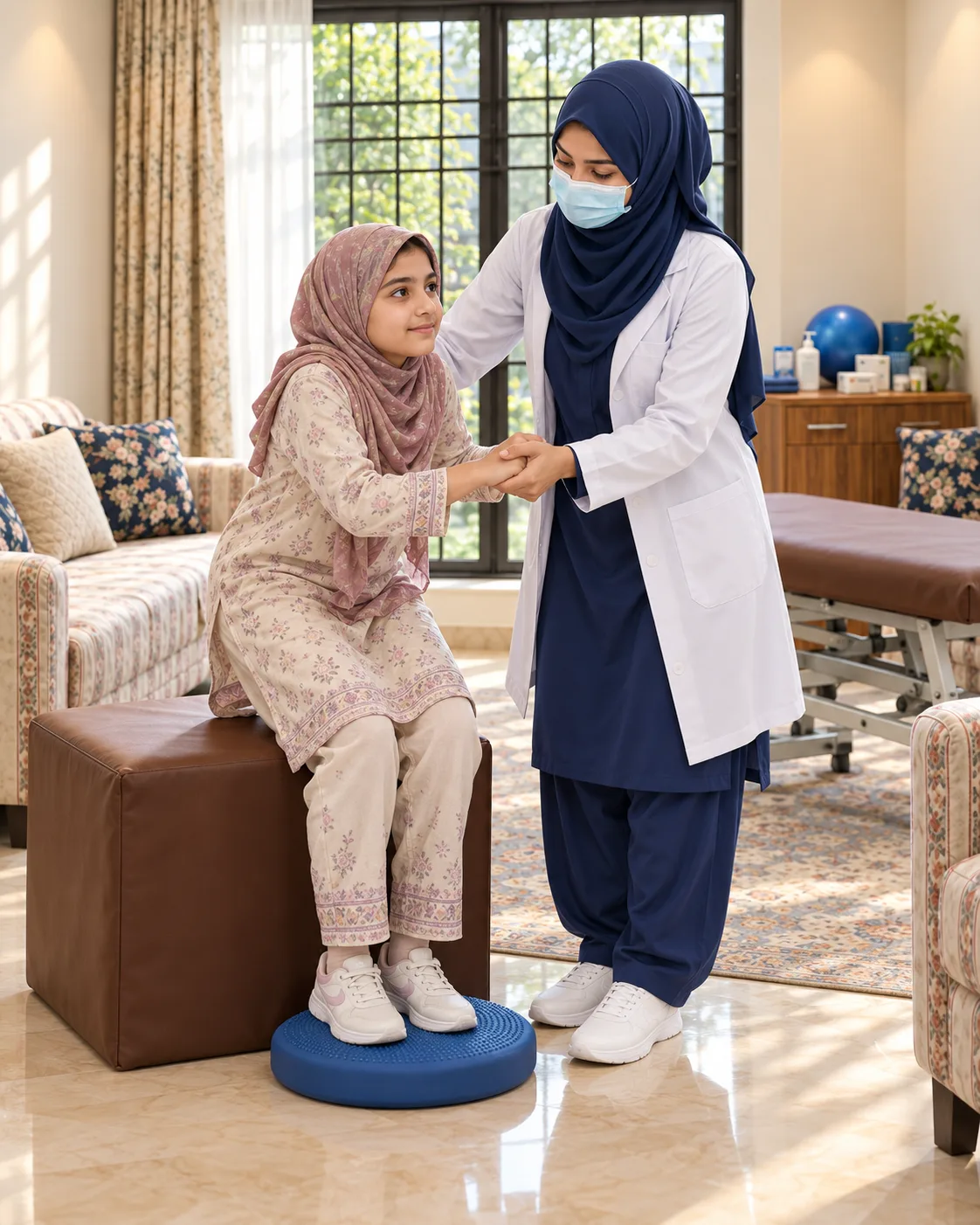
Following acute treatment, rebuild movement, balance and activity tolerance with carefully paced practice.
Care planning: avoid overwork. New weakness or breathing or swallowing difficulty requires urgent medical care.
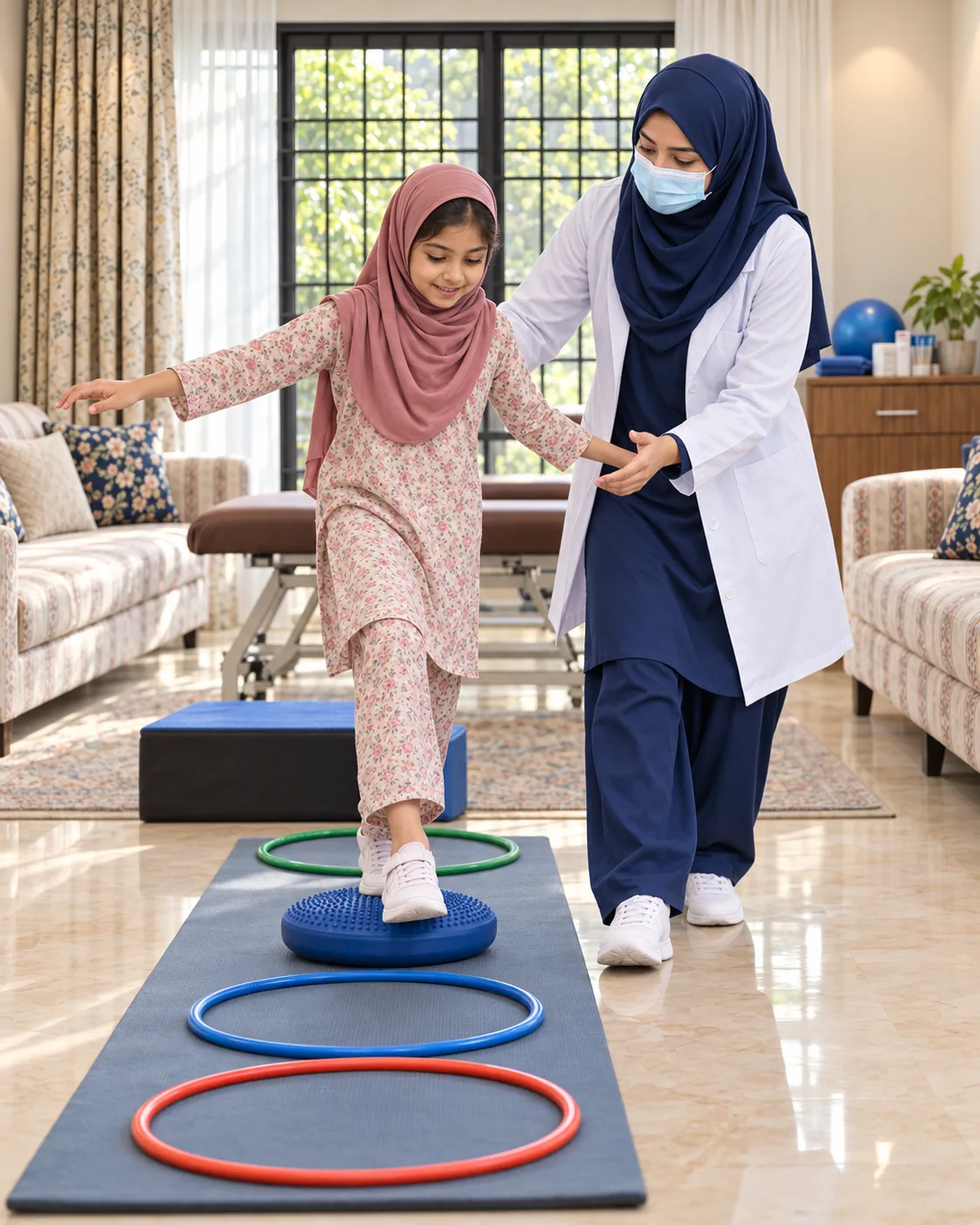
Rehabilitation for residual weakness, reduced balance or developmental difficulties after medical recovery.
Care planning: active or suspected meningitis requires emergency medical treatment, not physiotherapy.
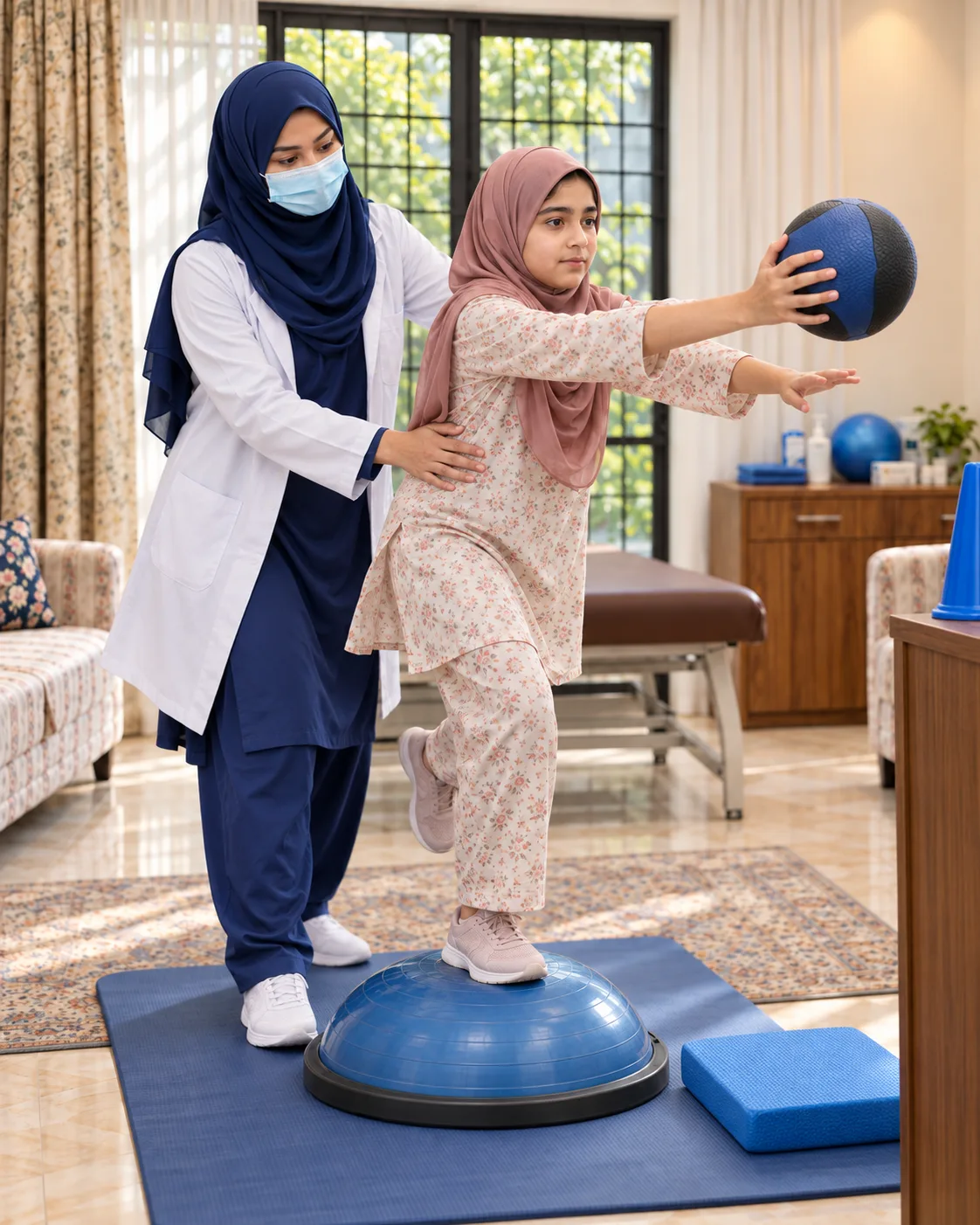
Meaningful movement practice for balance, coordination and mobility, with rest and pacing built into care.
Care planning: adapt to attention, fatigue and the wider rehabilitation team’s recommendations.
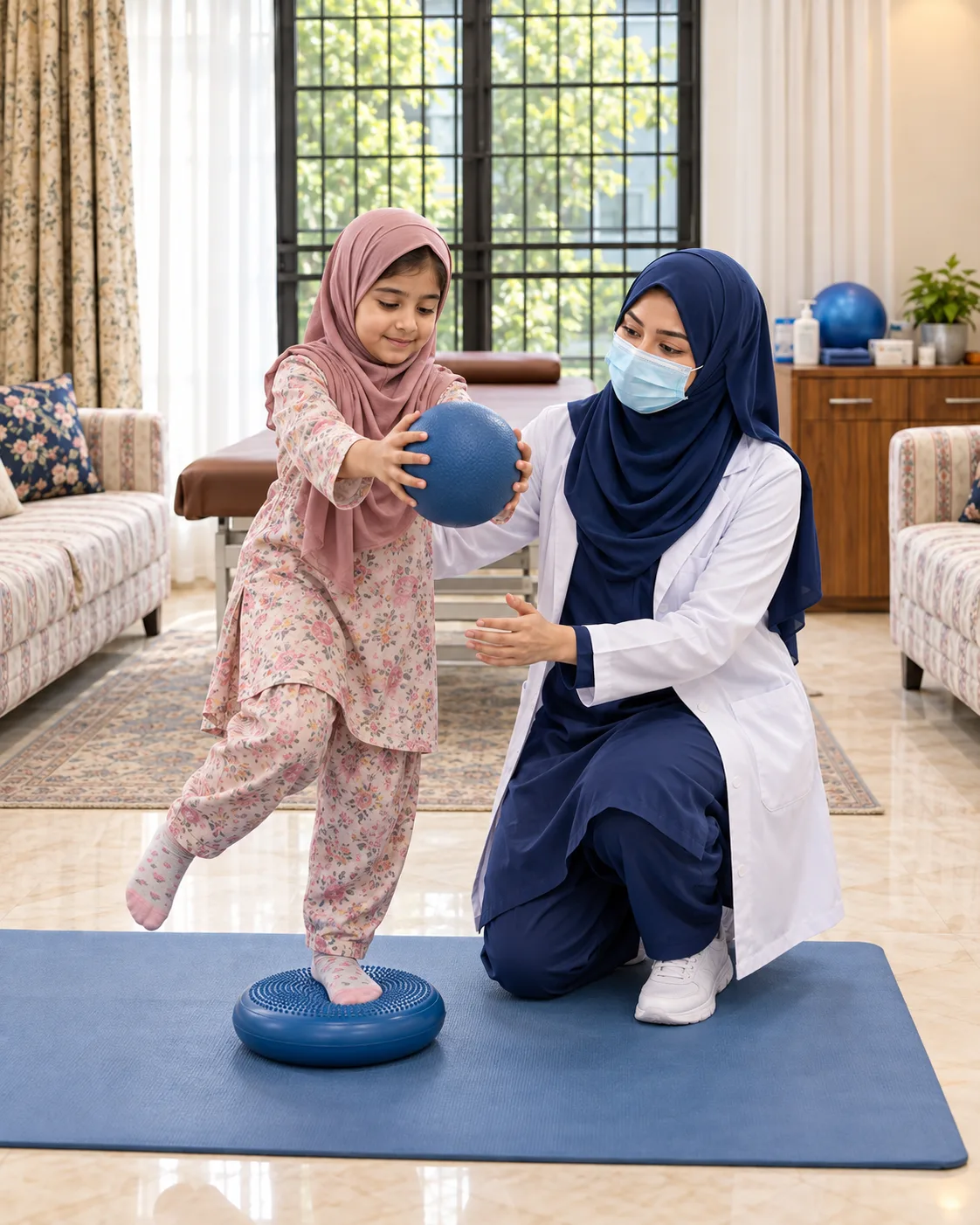
Physiotherapy for associated head-control, developmental, balance or mobility difficulties.
Care planning: follow an individual seizure safety plan. Physiotherapy supports physical function; it does not control seizures or replace prescribed medication.
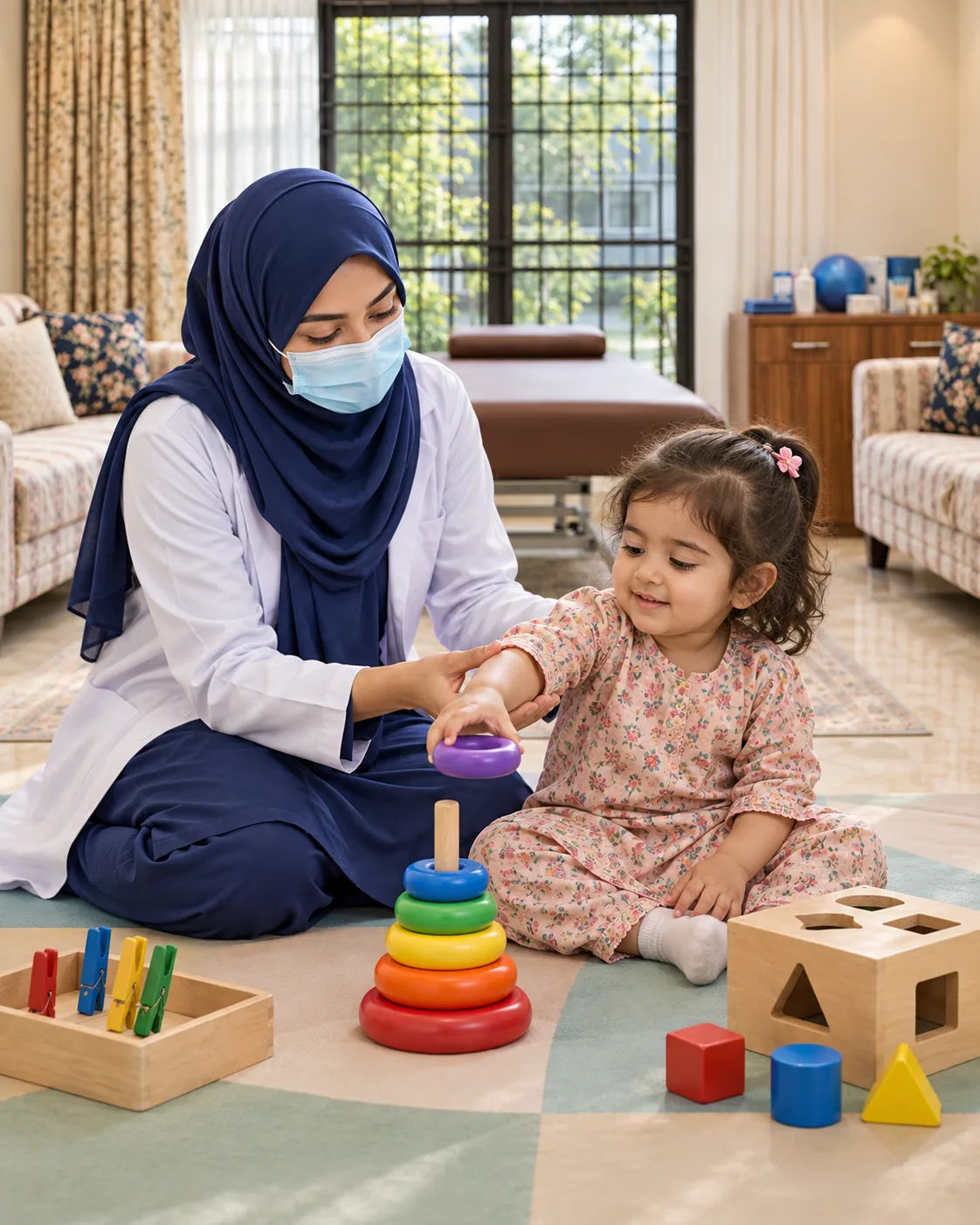
Gentle movement, reaching and age-appropriate arm use following brachial plexus assessment.
Care planning: protect the shoulder and follow specialist or postoperative guidance; early specialist follow-up is important.
Support for associated movement limitations in medically stable children with single or multiple cavernomas.
Care planning: neurology or neurosurgical advice guides activity. Rehabilitation does not treat the vascular malformations.
Individual developmental, balance and coordination support when these conditions affect everyday physical activities.
Care planning: treatment accounts for the specific diagnosis, skeletal findings, seizures and specialist recommendations.
Graded strength, movement control and pacing for pain, instability or activity difficulties.
Care planning: painless flexibility alone may need no treatment; avoid repeated stretching into excessive joint ranges.
Comfort-focused mobility, appropriate activity and energy management for everyday function.
Care planning: intensity follows neuromuscular advice and accounts for cardiac involvement and fatigue.
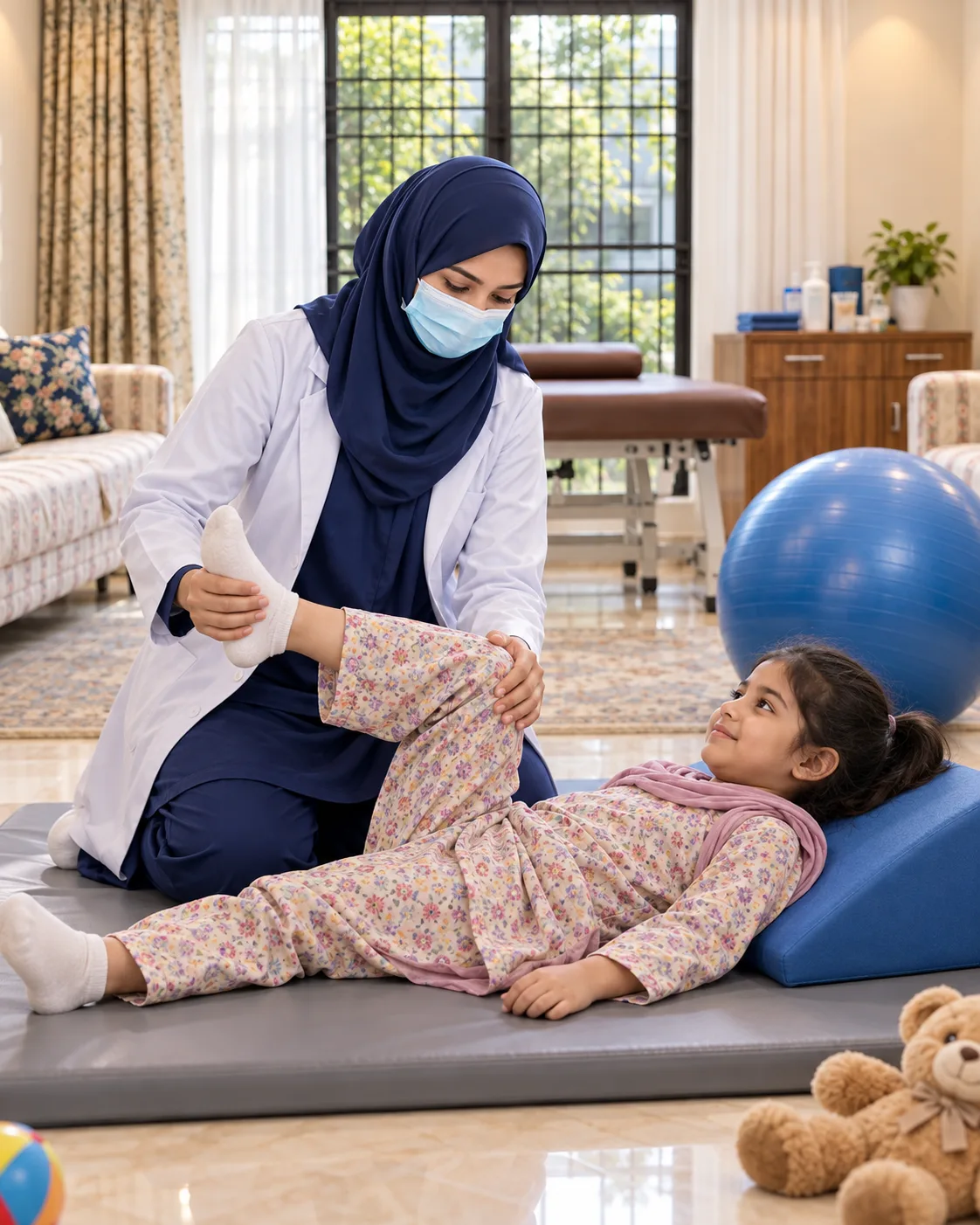
Positioning, prescribed gentle movement and functional practice as needs change.
Care planning: avoid high-resistance or exhausting exercise; coordinate joint, cardiac and respiratory care with specialists.

Supported movement, positioning and activity adapted to the child’s strength and medical treatment.
Care planning: respiratory status, fatigue, bone health and spinal alignment guide rehabilitation.
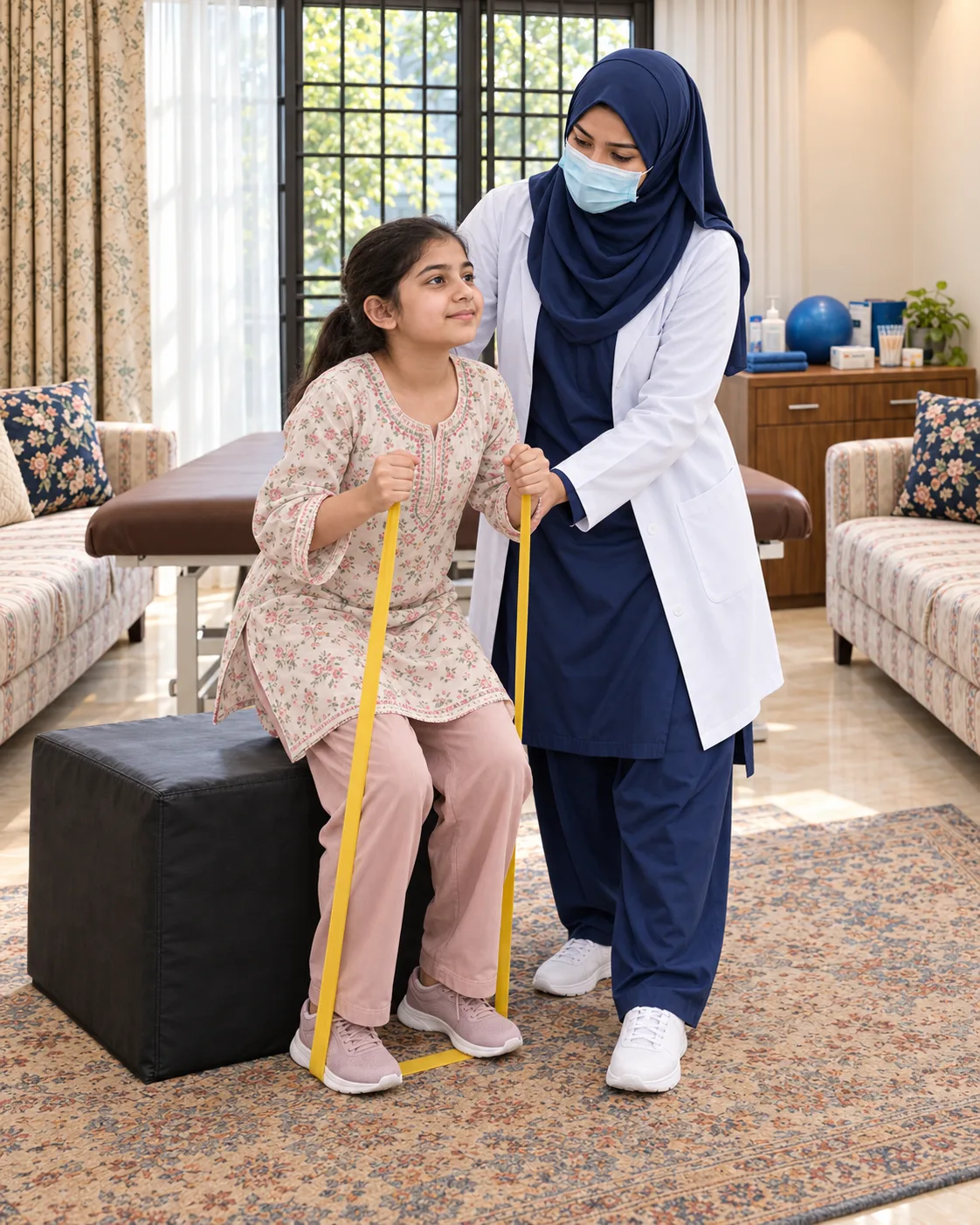
Functional movement and pacing to support activities affected by shoulder and hip weakness.
Care planning: subtype-specific cardiac, respiratory and exercise precautions must be established first.
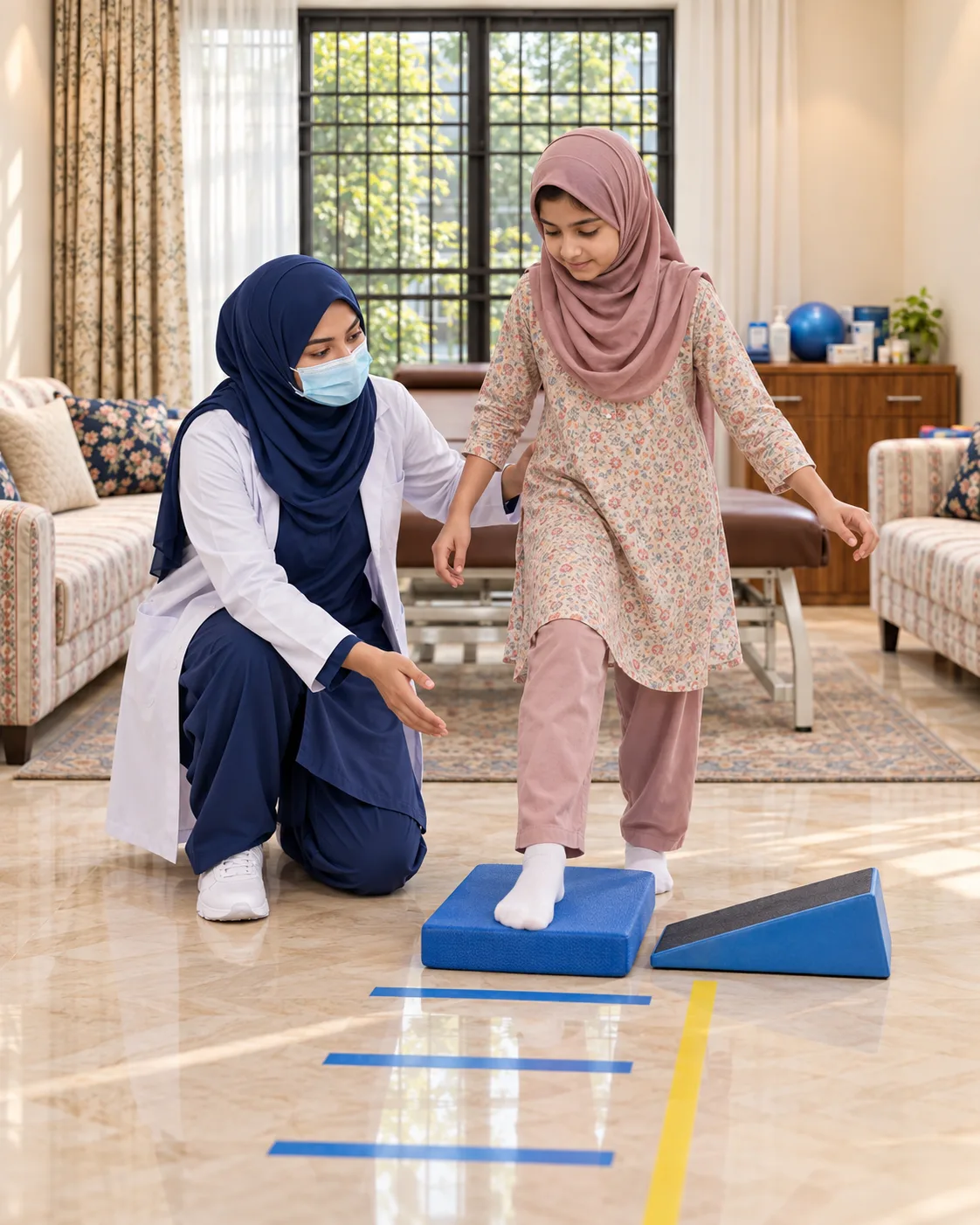
Balance, walking practice and appropriate strengthening for functional difficulties associated with peripheral nerve changes.
Care planning: monitor sensation, skin and fatigue; refer for orthotic or orthopaedic input when indicated.
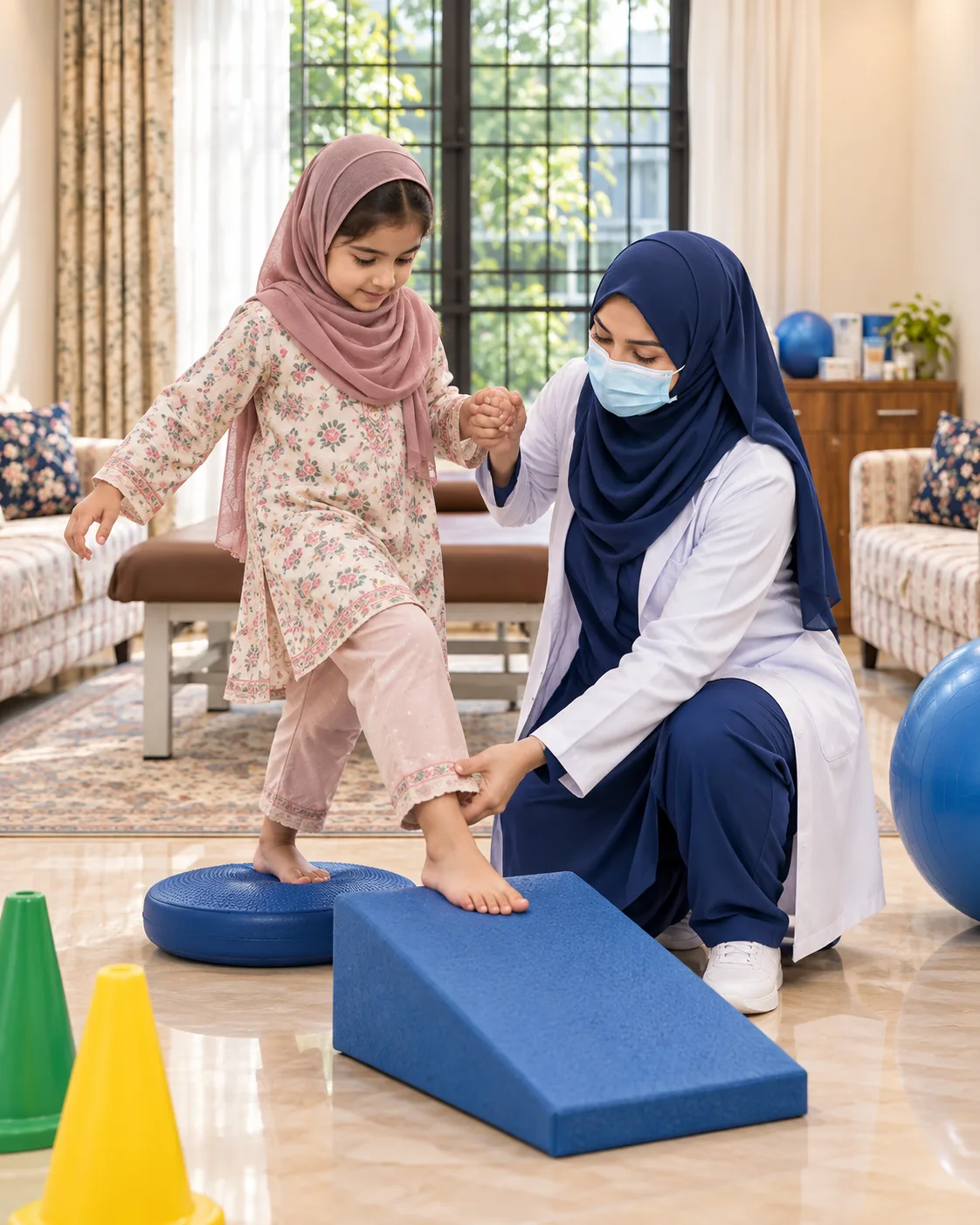
Movement and walking support alongside the child’s specialist clubfoot treatment pathway.
Care planning: exercises do not replace prescribed casting, bracing or surgery. These specialist procedures are not offered by this section.
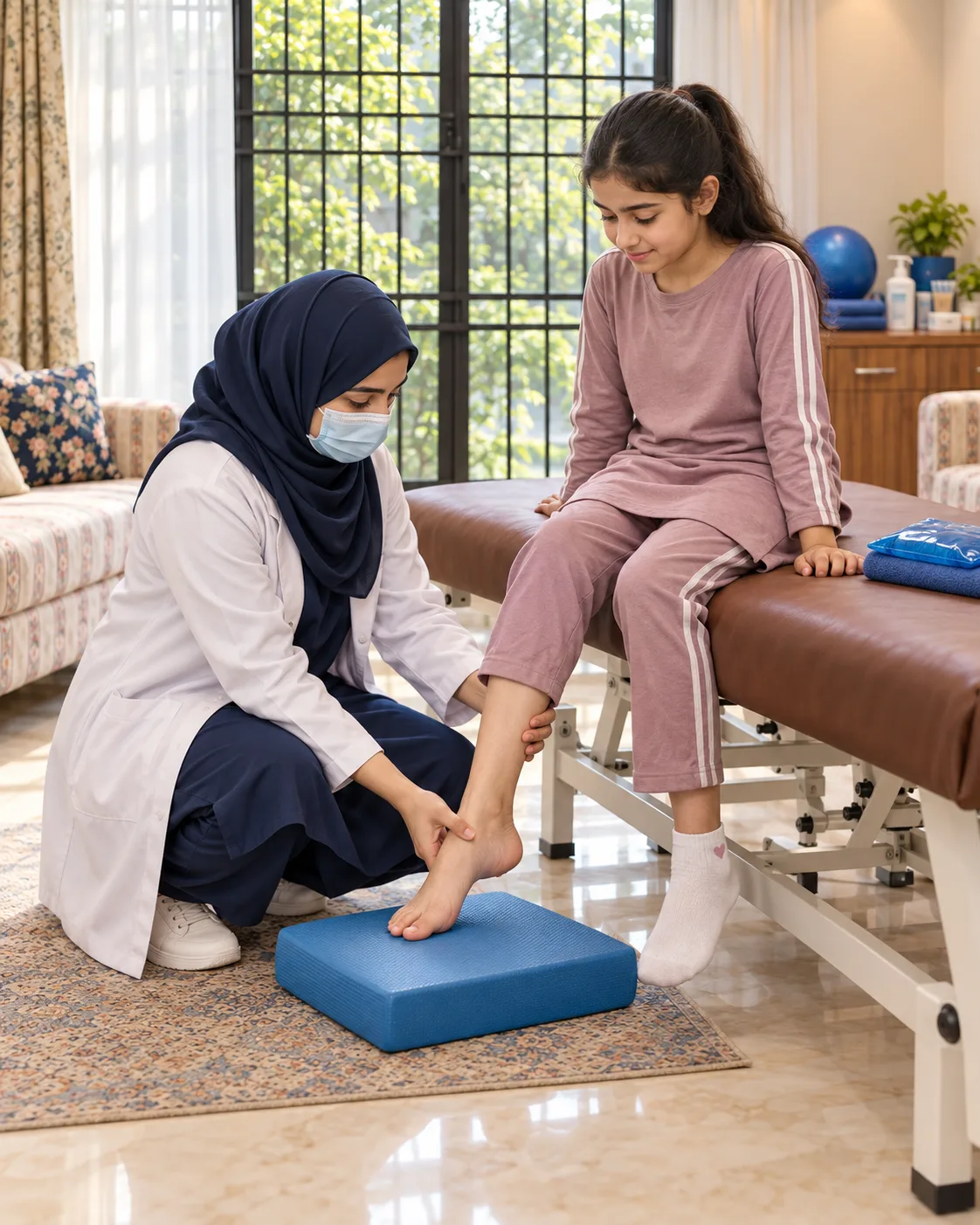
Activity adjustment, symptom-guided exercise and a gradual return to running and jumping for growth-related heel pain.
Care planning: persistent or severe heel pain needs assessment rather than an assumed diagnosis.

Support for head-turn preferences through awake positioning, gentle movement and supervised tummy-time play.
Safe sleep: babies should continue sleeping on their backs on a firm, flat surface. Do not use pillows or sleep positioners to change head shape.
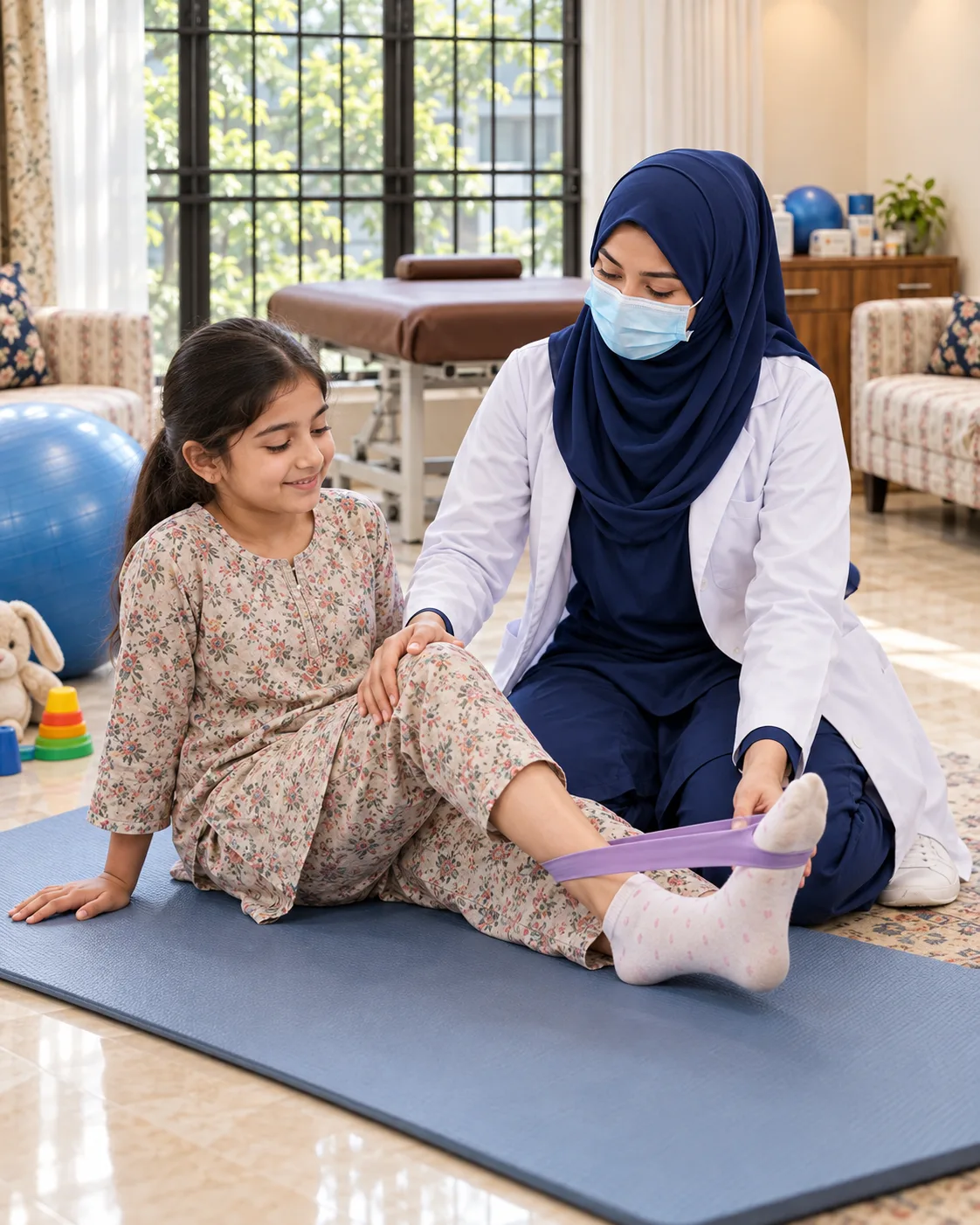
Support for comfortable hip movement, suitable strengthening and daily mobility within the orthopaedic treatment plan.
Care planning: impact and weight-bearing restrictions follow specialist advice. A persistent limp requires medical assessment.
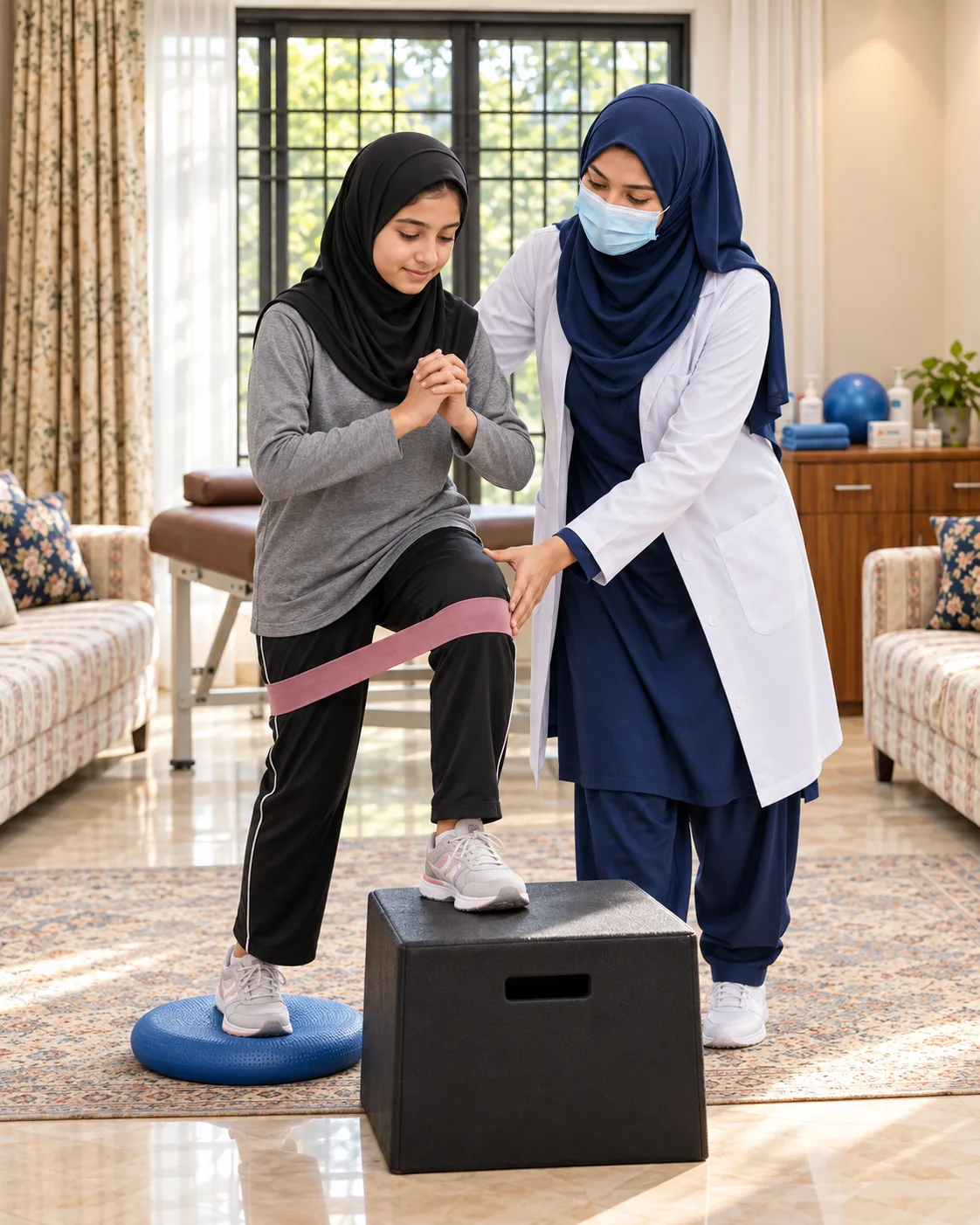
Symptom-guided strengthening and activity modification for growth-related pain below the kneecap.
Care planning: adjust jumping, running and kneeling to symptoms; sudden severe pain or inability to bear weight needs medical assessment.
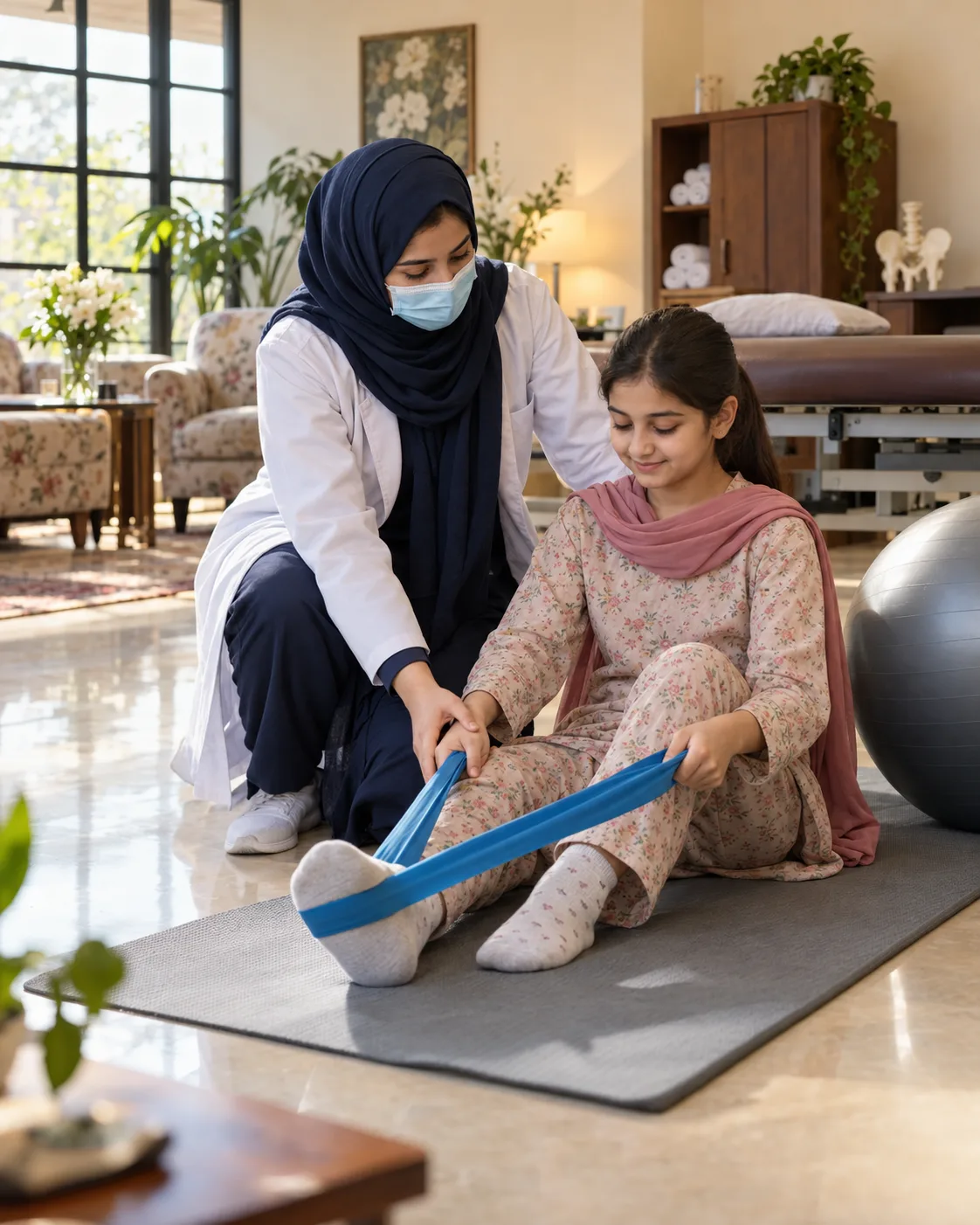
Maintain permitted movement and strength while supporting everyday function within prescribed loading limits.
Care planning: progression follows the treating specialist. Physiotherapy does not restore the affected bone’s blood supply.
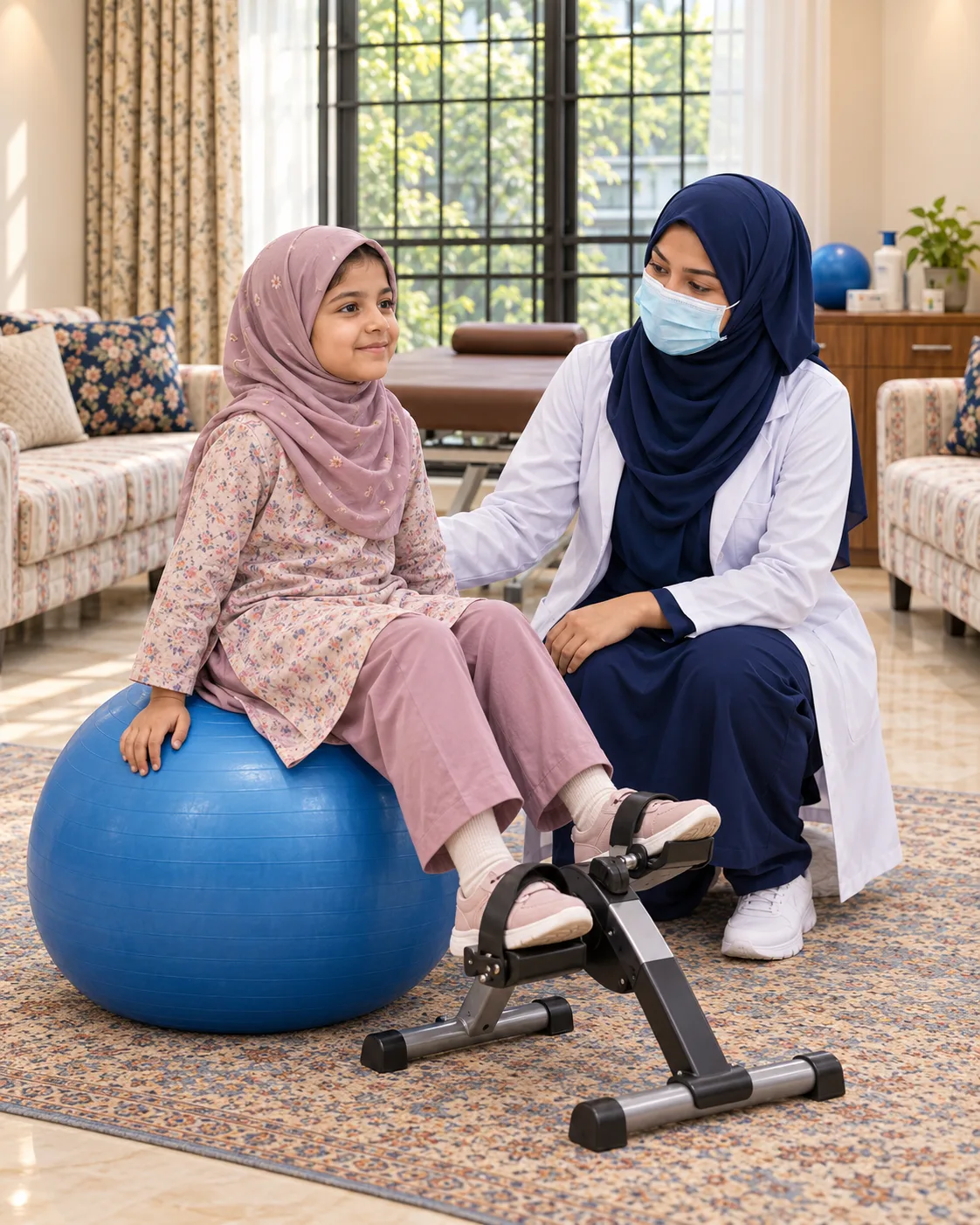
Graded movement and pacing to support tolerable play and daily activity alongside medical respiratory care.
Care planning: specialist airway-clearance treatment requires separate assessment and appropriately trained respiratory care.
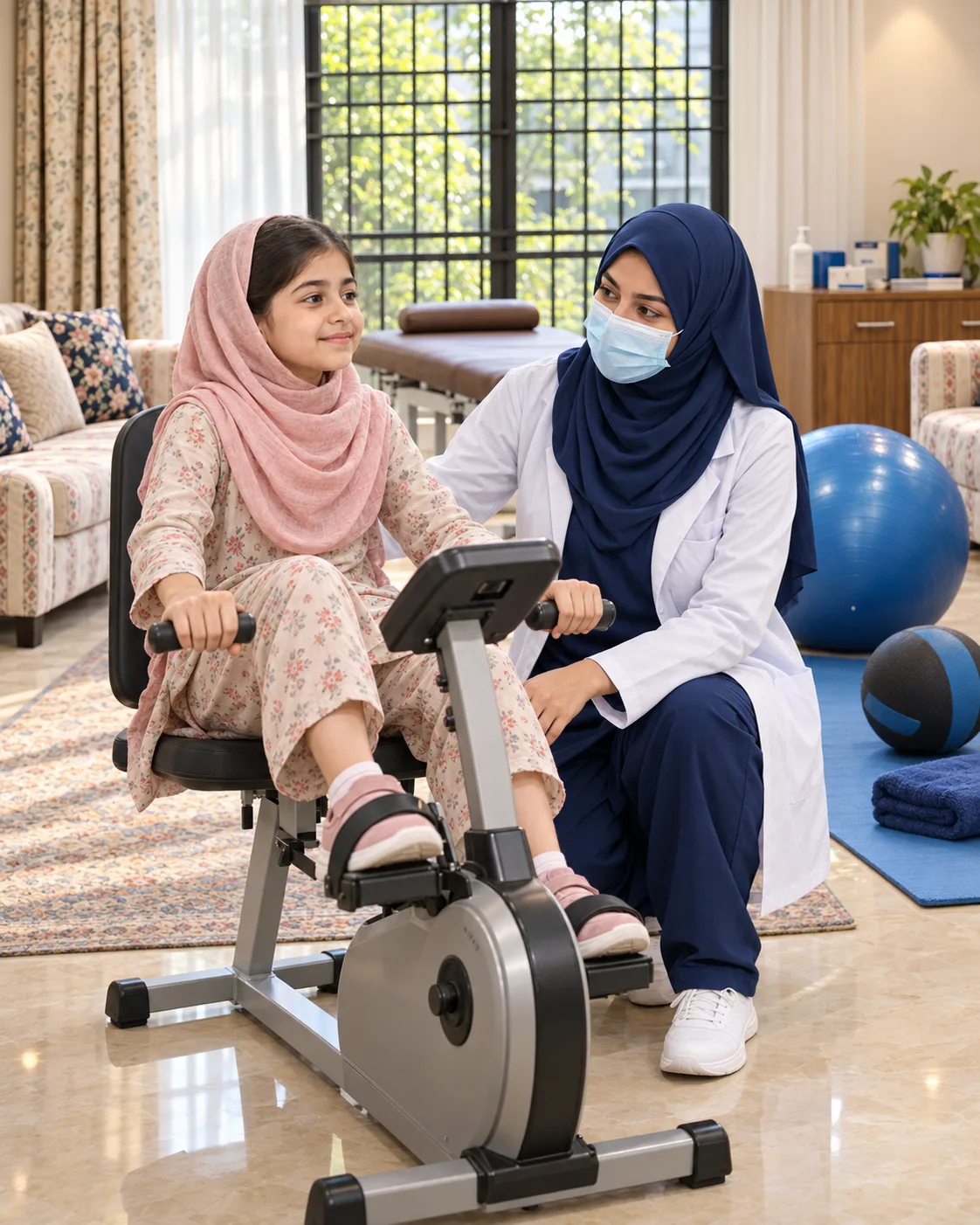
Individual exercise and pacing aligned with the specialist cystic fibrosis team’s recommendations.
Care planning: follow infection-control precautions. General activity does not replace prescribed airway clearance, medication or exacerbation management.

Graded activity and pacing to help children participate comfortably when their asthma is appropriately managed.
Care planning: follow the asthma action plan. Physiotherapy and breathing exercises do not replace inhalers or emergency treatment.
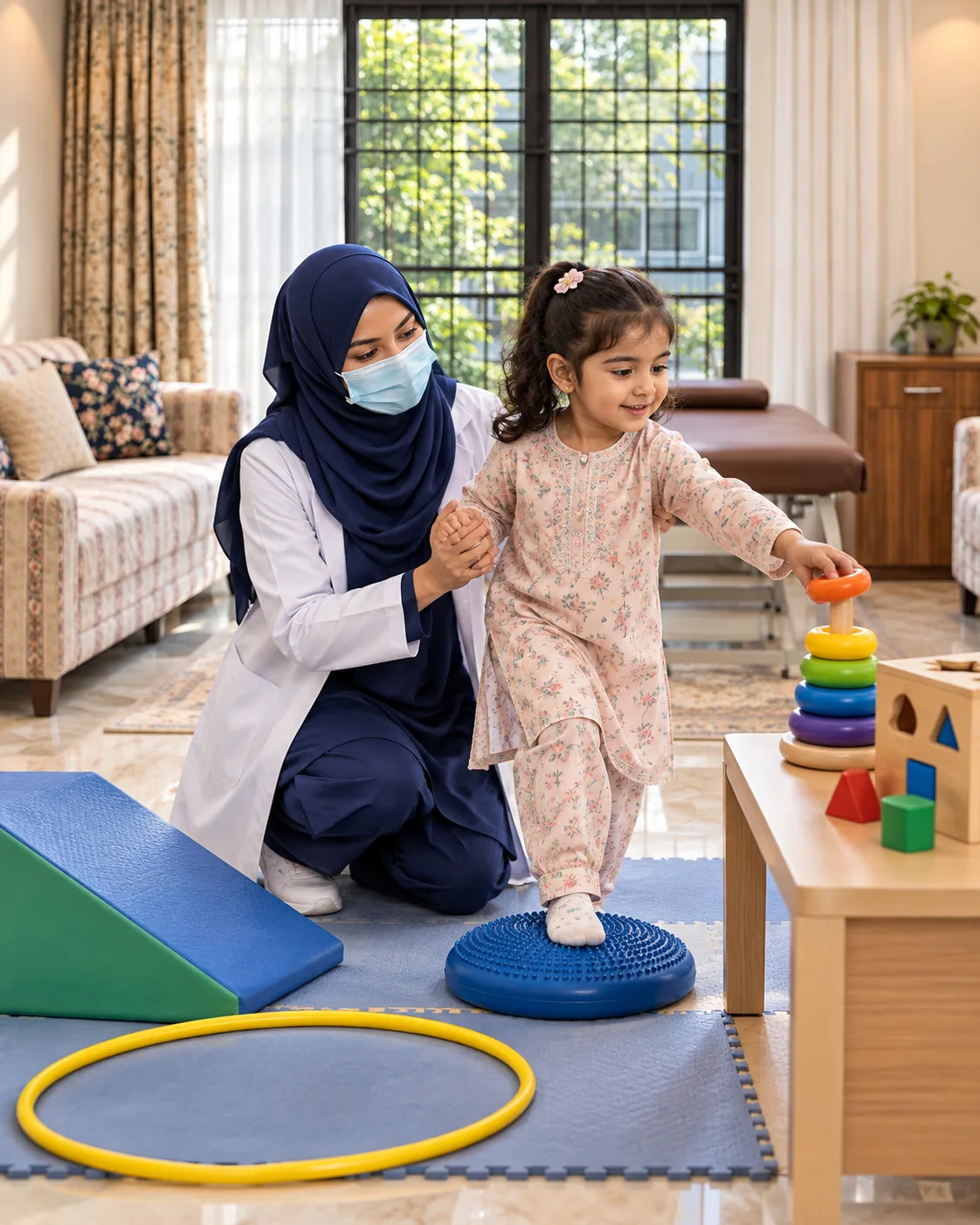
Play-based support for head stability, rolling, reaching, sitting, transitions and early mobility.
Care planning: activities follow assessment and developmental needs. Loss of previously acquired skills requires prompt medical review.
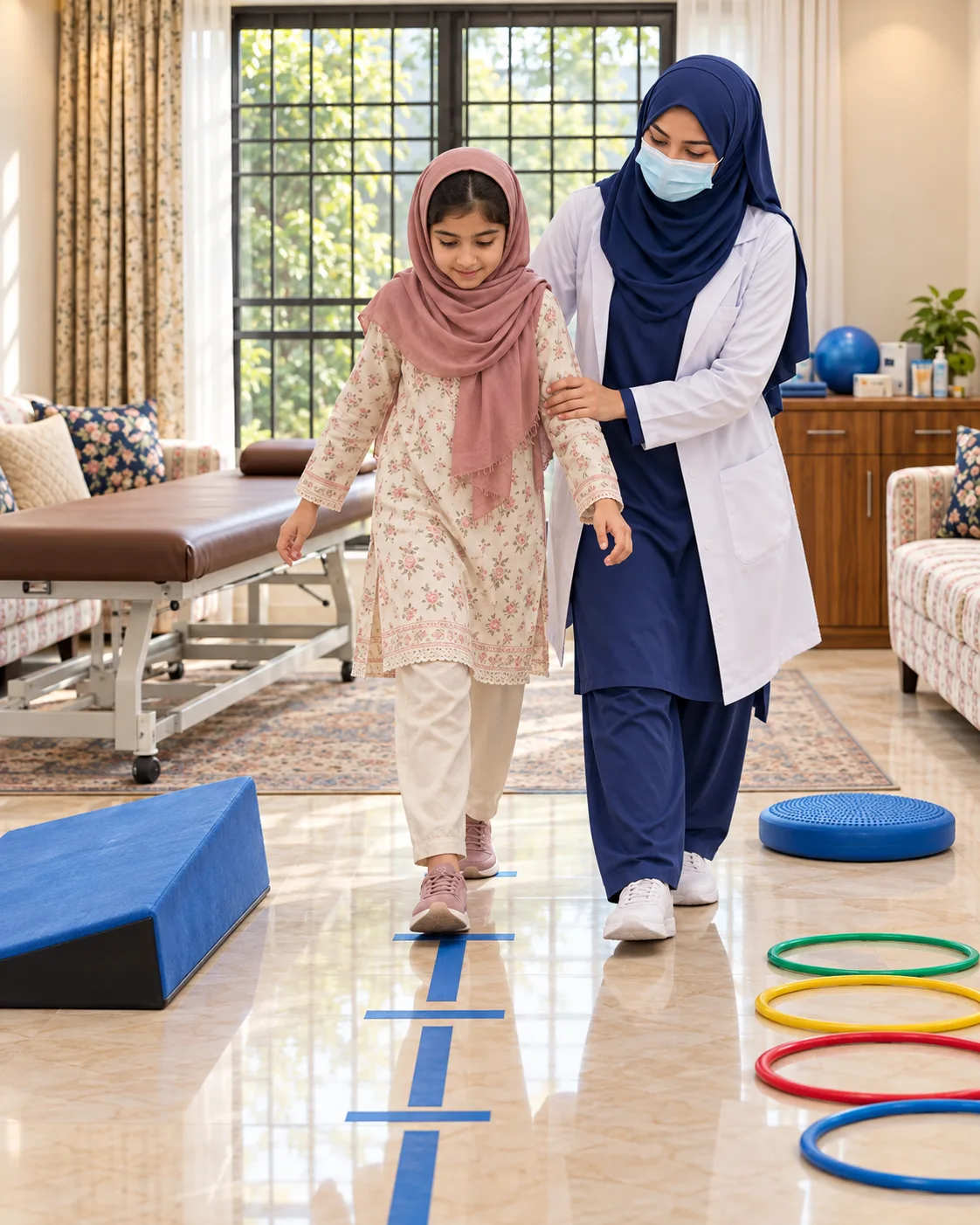
Assessment-led walking practice, balance training and strengthening for everyday mobility and confidence.
Care planning: identify pain, asymmetry and underlying causes; a new unexplained limp needs medical assessment.
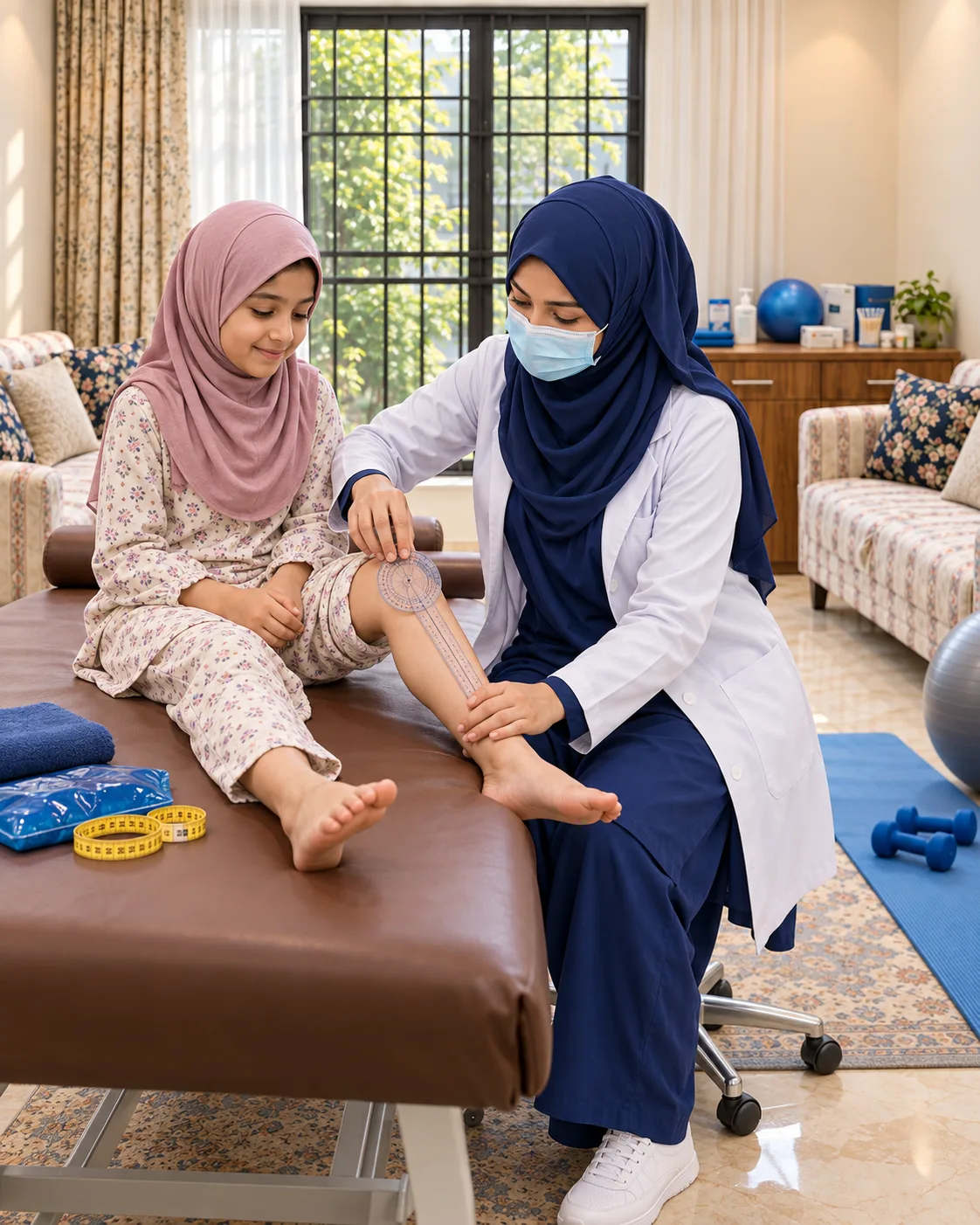
Assessment of movement, activity patterns and comfort where recurrent leg discomfort affects family routines.
Care planning: persistent one-sided pain, swelling, fever, morning stiffness or limping should not be labelled growing pains without medical review.
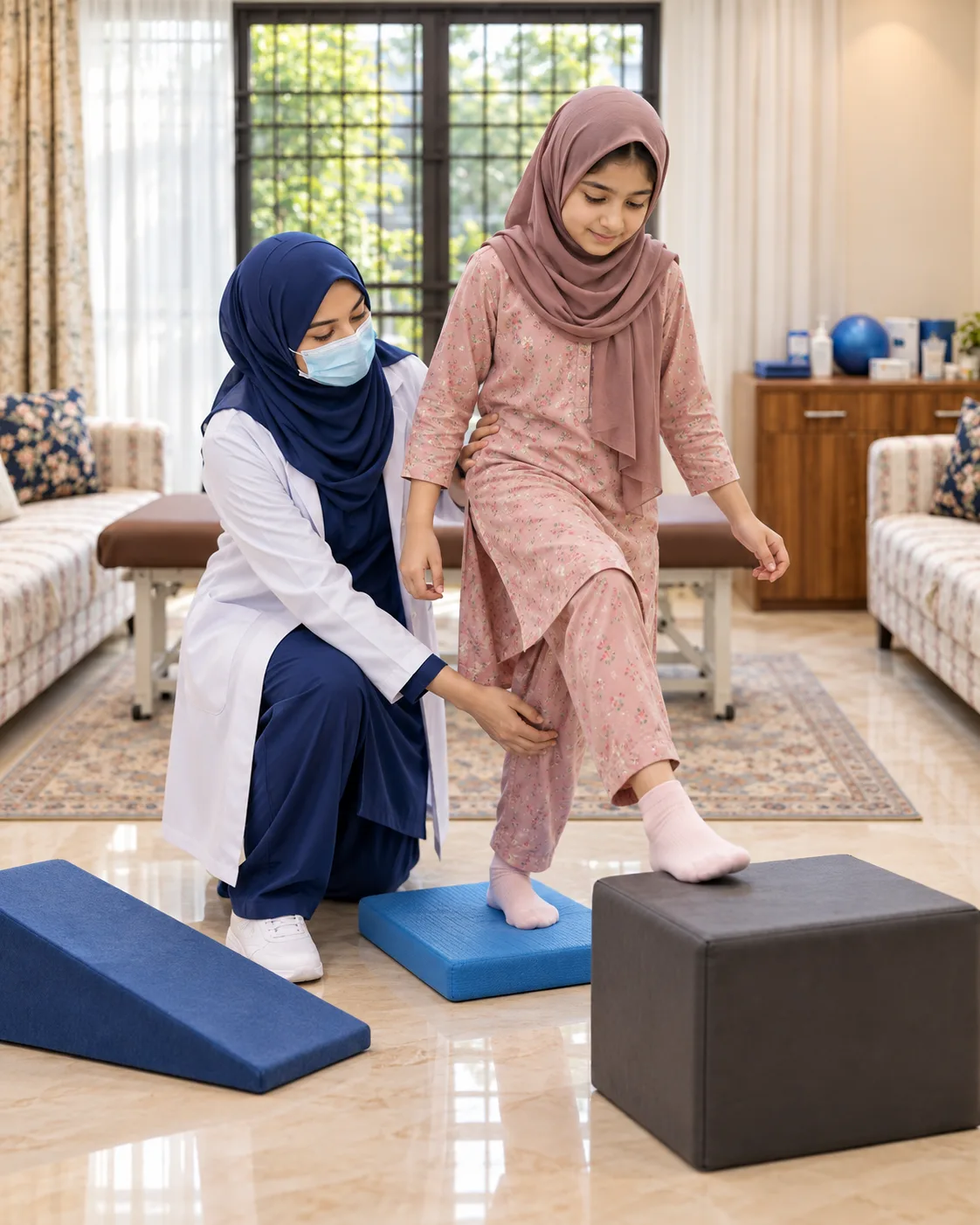
Appropriate strengthening, movement practice and walking-safety strategies following assessment of the underlying cause.
Care planning: newly developing foot drop needs prompt medical review. Orthotic or neurological referral may be required.
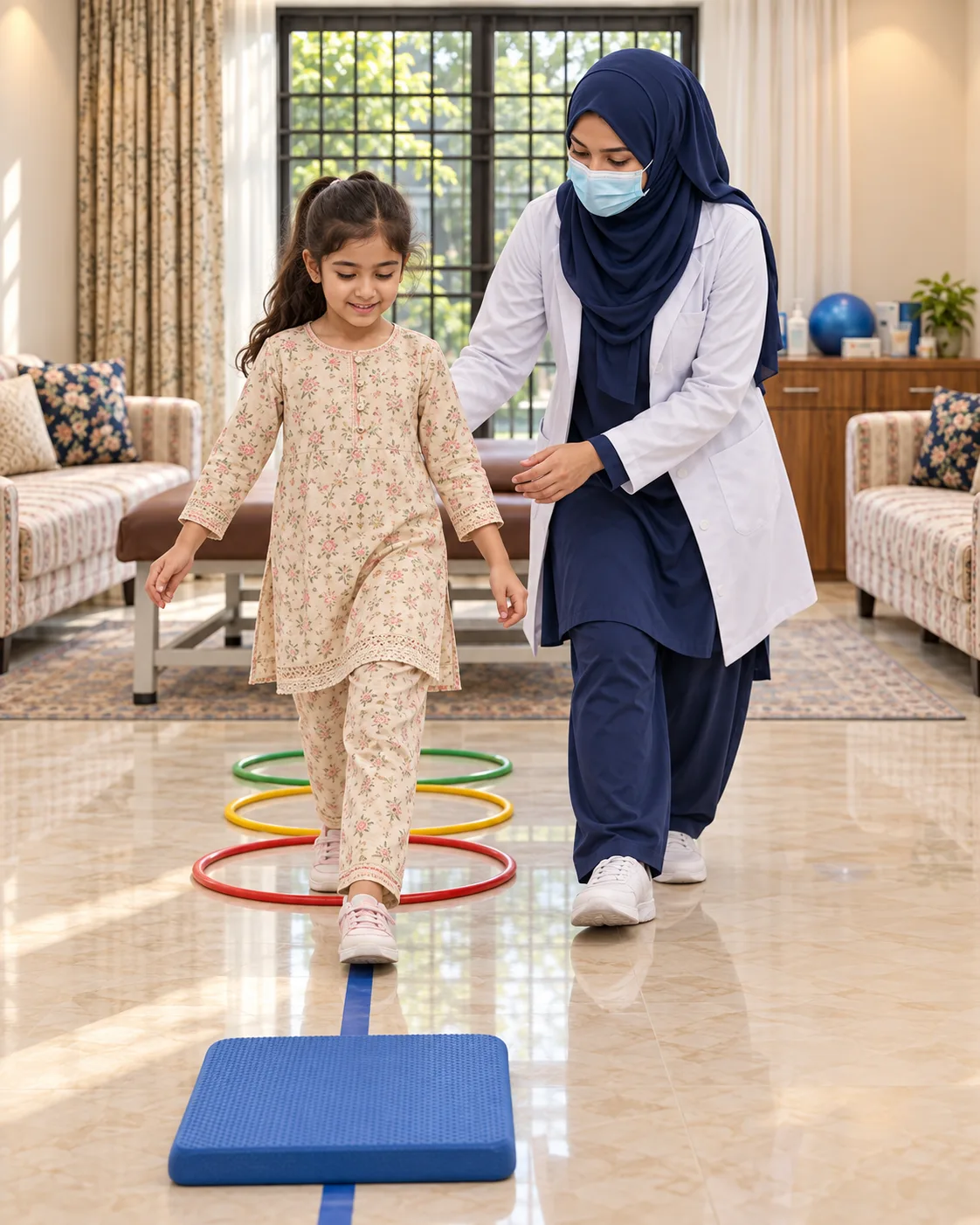
Assessment of walking, balance and functional concerns, with targeted practice when symptoms warrant treatment.
Care planning: painless developmental variation may need reassurance only. Exercises do not reliably change underlying bony rotation.

Assessment-led movement, ankle mobility and walking practice according to the cause and functional impact.
Care planning: new, one-sided or painful toe walking, weakness or regression needs medical investigation.
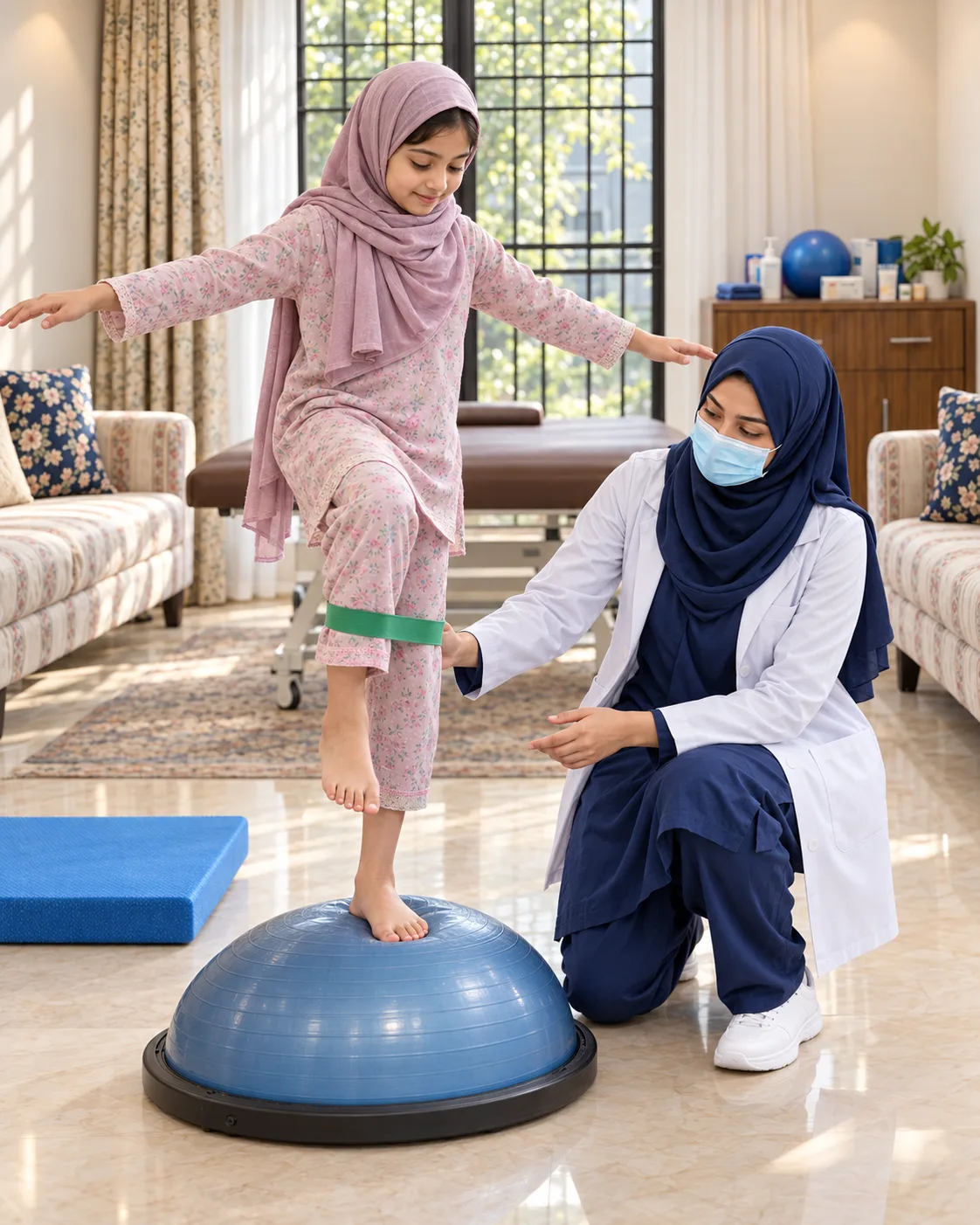
Comfort-focused strengthening and activity advice when foot symptoms limit walking or play.
Care planning: painless flexible flat feet often require no treatment. Rigid, painful or markedly asymmetric feet need assessment.
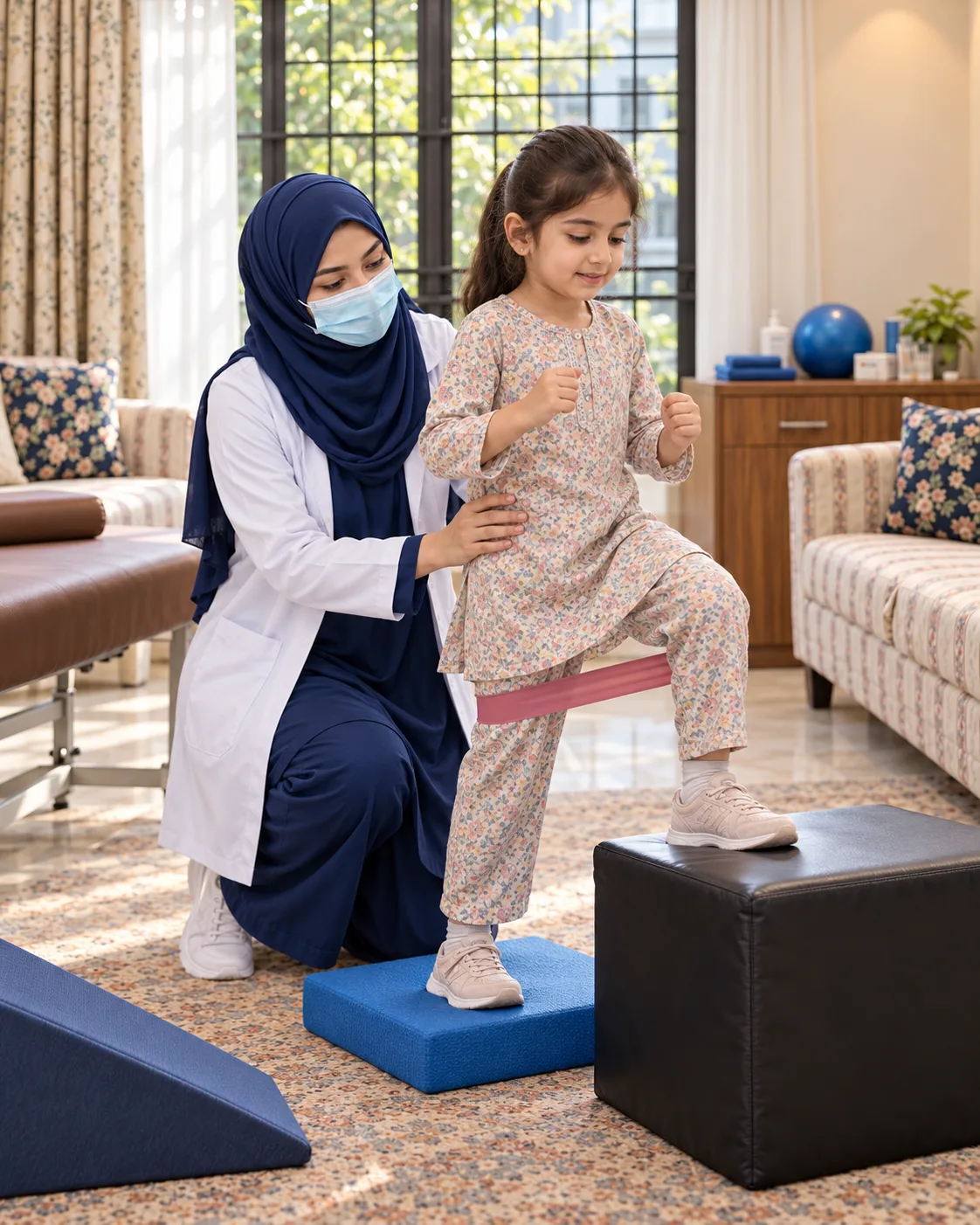
Postoperative strength, movement control, transfer and walking practice within the surgical centre’s rehabilitation programme.
Care planning: timing, intensity and precautions follow the specialist team. The surgical procedure is not provided here.

Graded strength, balance, positioning and mobility practice after surgical clearance.
Care planning: wound management, loading and prosthetic training are coordinated with the surgical and prosthetic teams.
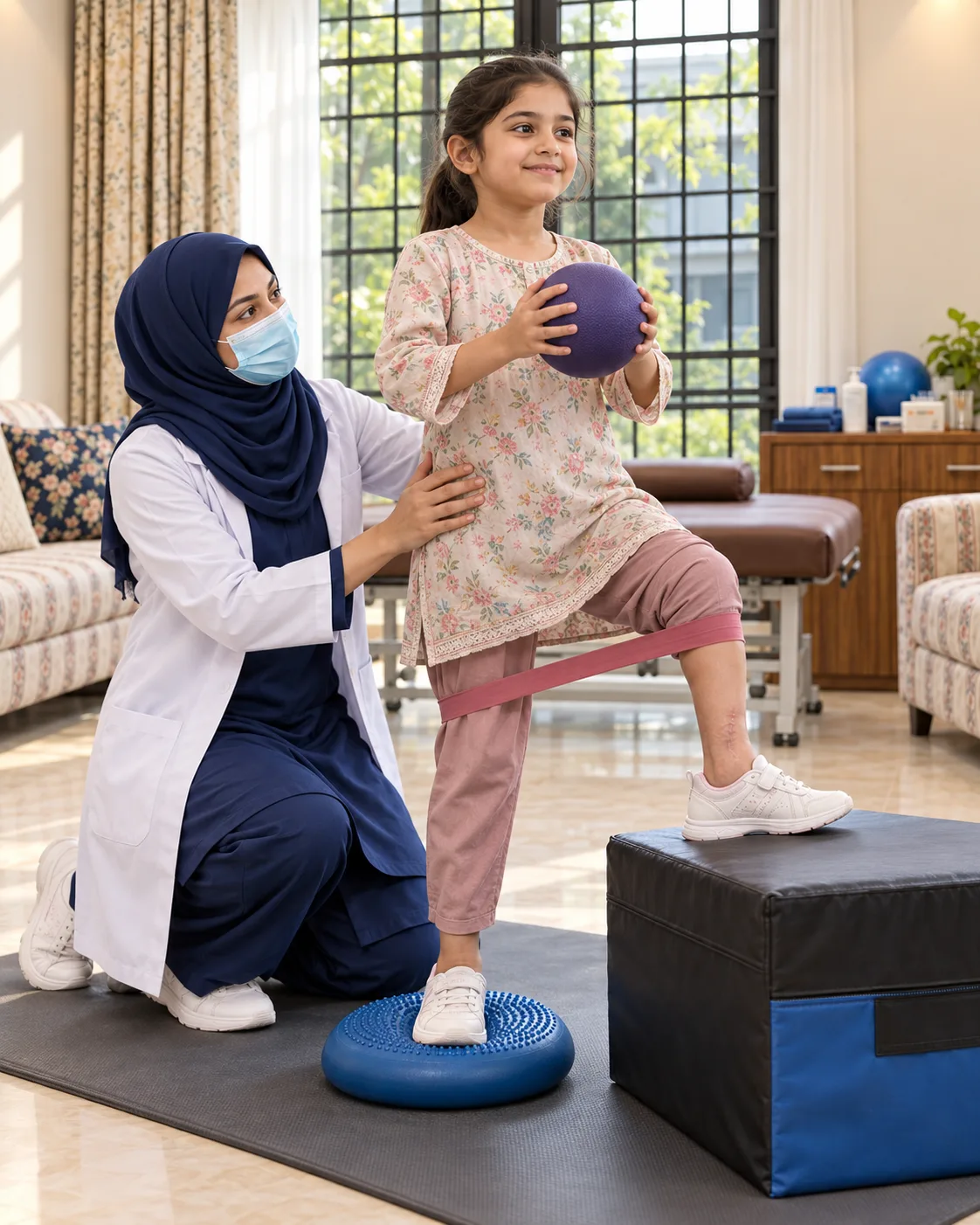
Functional movement, strength and balance practice to support rehabilitation and daily participation.
Care planning: follow surgical, oncology and prosthetic-team instructions. Surgery and prosthetic fabrication are not clinic-based physiotherapy services.
Therapeutic techniques
Treatment combines appropriate hands-on support with active practice. Techniques are chosen for the child and their goals—not used as a fixed package for every diagnosis.
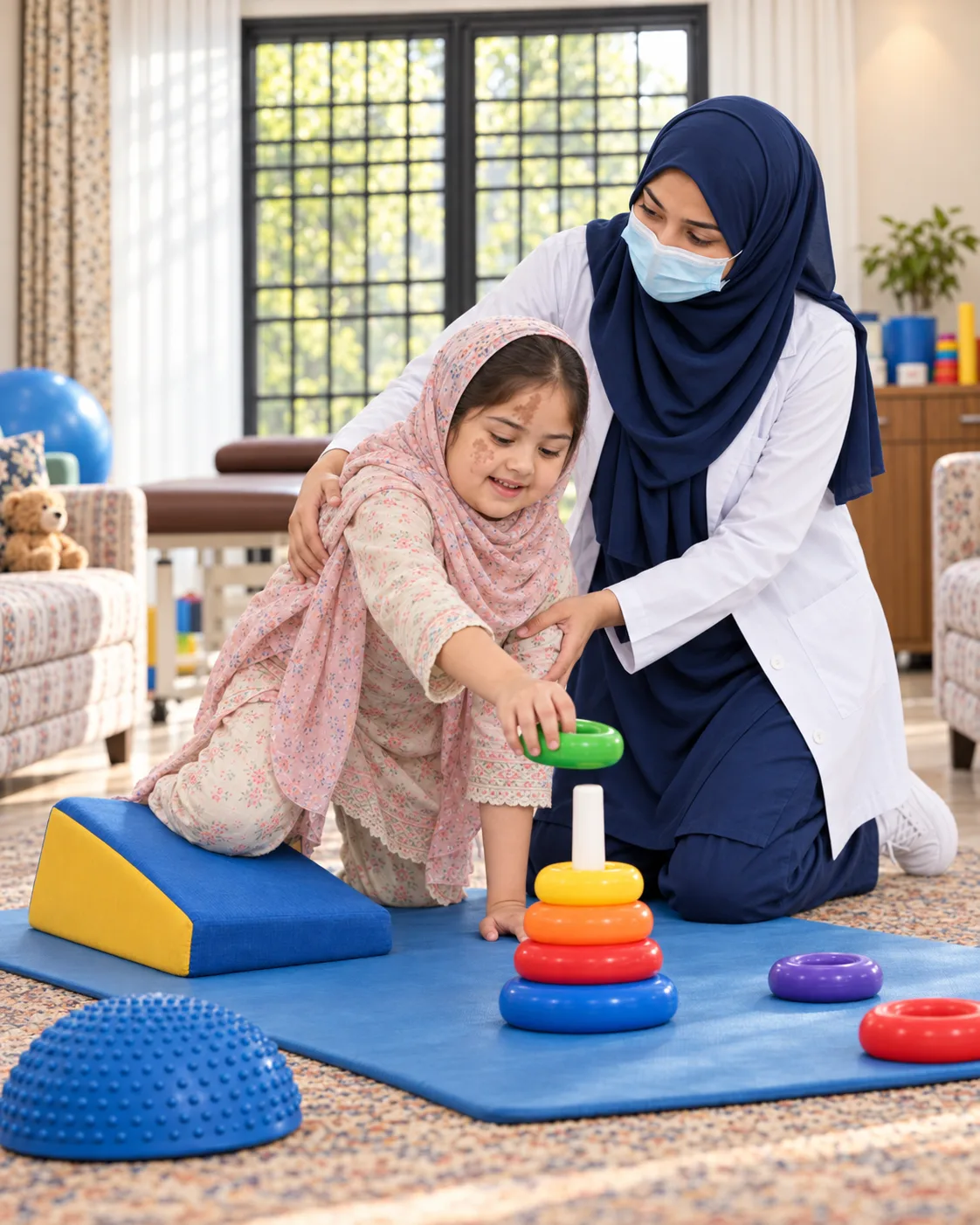
Supported head control, rolling, reaching, sitting and transitions. Play is adapted so the child can participate without being forced into positions they cannot comfortably manage.
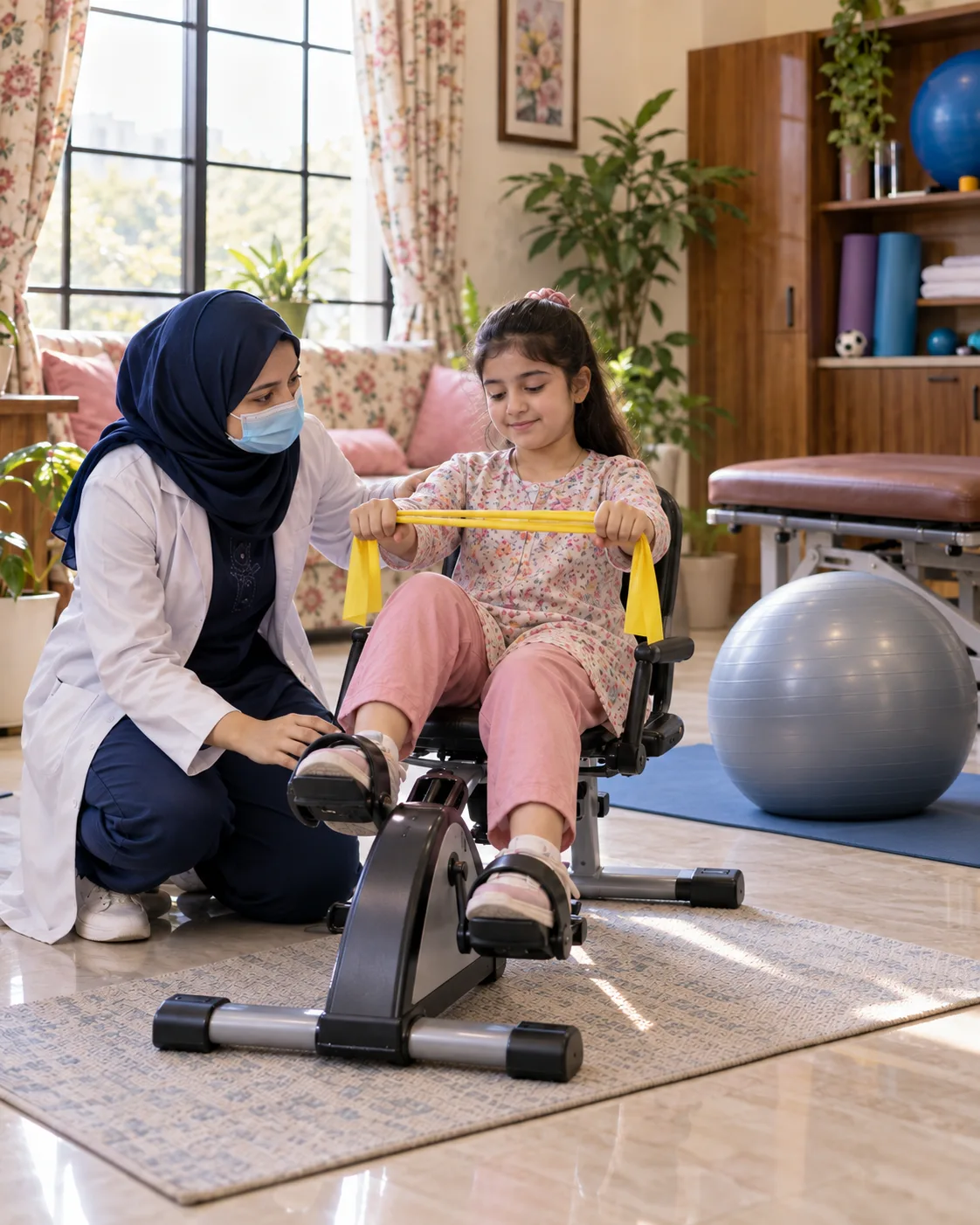
Graded activity for useful tasks such as rising from the floor, stepping and carrying. Resistance and repetition reflect age, diagnosis, fatigue and medical precautions.
Safe changes of direction, weight shifting, reaching and movement sequences to support confidence during walking and play. Assistance is adjusted to the child’s abilities.
Appropriate hands-on techniques may help comfort and movement when indicated. Manual care complements active rehabilitation; forceful manipulation is not a routine pediatric treatment.
Task-specific work on getting up, changing position, stepping and walking. Goals focus on real environments and safe participation, with specialist referrals where needed.
Reaching, grasping, releasing and coordinated play within functional rehabilitation. Complex self-care, sensory or school-participation needs may require occupational therapy input.
Individual advice for supported play, sitting and everyday handling. Positioning respects breathing, skin, joint alignment and comfort; infant safe-sleep guidance remains unchanged.
Symptom-guided progression after injury or surgery, following clinical clearance. Plans balance mobility, strength, rest and the demands of school or play.
Clear, achievable activities that fit family routines, with guidance on assistance, pacing and when to stop. Progress is reviewed through meaningful functional goals.
Developmental support timeline
These stages describe possible therapy priorities, not diagnostic deadlines. Development varies, and care follows your child’s abilities, interests and family priorities.
Supervised awake play, comfortable head turning, looking, reaching and supported positioning. Address persistent asymmetry or head-control concerns through assessment.
Practise rolling, sitting balance, reaching and changing positions. Encourage exploration without insisting that every child follows an identical movement sequence.
Build confidence with transitions, standing, early walking and simple play tasks. Goals may include easier mobility or more comfortable participation—not walking at a prescribed age.
Develop movement variety through stepping, climbing, ball play and age-appropriate hand activities, adapted to safety and individual abilities.
Work towards comfortable walking, useful endurance, confidence in games and manageable routines. Coordinate wider occupational therapy or school support when needed.
Start with one concern or one meaningful goal. Bring your questions to a physiotherapy conversation with Dr. Munaza in Lahore.
04 / The play & sensory lab
A game can be a small invitation to reach, balance, move and try again. Always adapted. Never rushed.
Developmental toy play encourages reaching, stacking, pushing and purposeful movement.
Supervised ball and balloon games invite coordination, reaching and gentle stepping reactions.
Small obstacle courses make crawling, stepping and changing direction a playful challenge.
Carefully chosen textures and movement games support body awareness and comfortable participation.
Balance and strength games build on what your child can do, with just the right amount of support.
Quiet moments count too. We follow your child's cues and make space for rest, reassurance and choice.
05 / A shore for little wins
What families say about their visits to Munaza Physio Studio, in their own words on Google.
My mother had a stroke that left her right arm and leg immobile. With Dr. Munaza’s expert physiotherapy, she regained full movement completely painfree and without any medication. We’re truly grateful for her care and professionalism.
I took home sessions for my neck, shoulder, back, and hip pain. Alhamdulillah, all my pain is gone like a magic. Even my headache, which I had for many years, got better with the exercises. Thank you so much Dr Munaza for your kind treatment and care. May Allah bless you.
“Dr. Munaza treated my neck and shoulder pain, as well as my muscle pull issue, very effectively. With the help of exercises and therapy, I feel much better now. She is very kind, caring, and cooperative. Highly recommended!”
06 / A little reassurance
You don’t need to have it all figured out before you say hello.
If movement seems difficult or skills are emerging more slowly than expected, an assessment can help. You don't need to wait for a diagnosis to discuss a concern. A loss of previously learned skills needs prompt medical review.
For little children, movement practice is usually woven into games and familiar play. Activities are adapted to your child's interests, comfort and needs.
Yes. Parent participation is welcome. You can observe, ask questions and learn comfortable ways to support everyday movement at home.
We confirm the appointment length when booking. The pace and amount of active play depend on your child's assessment, energy and need for breaks.
We agree on a small number of manageable home activities and explain how to practise them safely. Follow-up reviews help us adjust the plan together.
Care begins with assessment and consent. We adapt to your child's cues and work within physiotherapy scope. Medical, developmental or specialist concerns are referred to the appropriate professional; therapy doesn't replace that care.
A good place for a first little step
Calm pacing. Parent participation. A child-first approach.
Tell us a little about your child, and let's find a starting point together.