
Start with the whole picture.
We look at how your child sits, moves, plays and rests, listen to your worries and what matters most, and learn what your child’s doctor and other therapists have already advised.
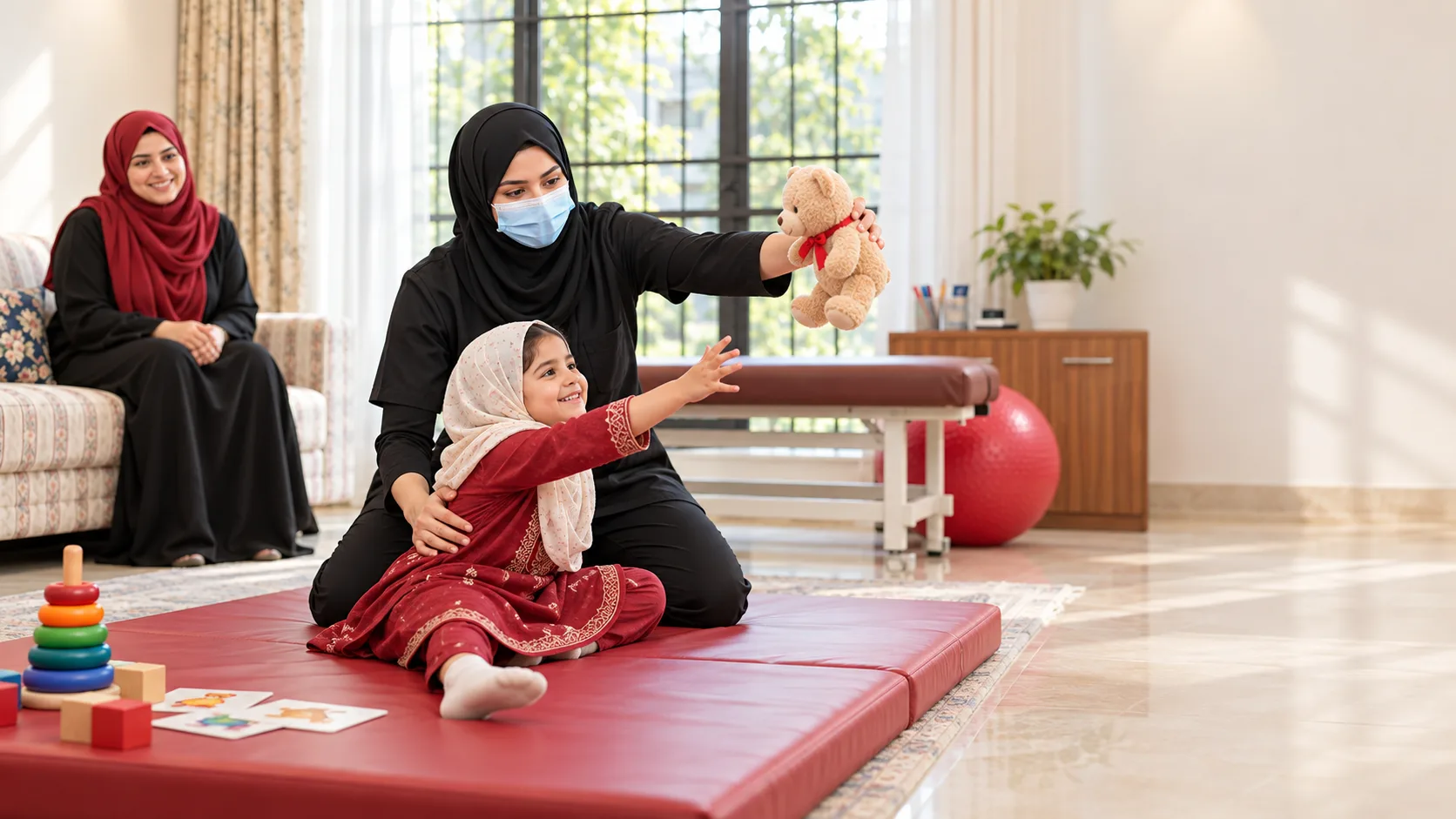
Cerebral Palsy Physiotherapy · Lahore
Cerebral palsy affects how a child moves, balances and uses their body. Family-centred physiotherapy from a female physiotherapist in Lahore builds on what your child can do, one practical goal at a time, in the studio or at home.
Cerebral Palsy Care
Cerebral palsy is a group of lifelong conditions affecting movement, posture and coordination, caused by an injury to the developing brain before, during or soon after birth. It does not get worse over time, but its effects change as a child grows.
At Munaza Physio Studio, a female physiotherapist assesses how your child moves now, agrees goals that matter to your family, and builds play-based sessions and a simple home programme around them. We promise honest goals and steady support, not a particular outcome.
Dr. Munaza Ghani · Women-only physiotherapy
Scroll to follow an illustrative story: sitting steadily, standing at a support, taking supported steps, then moving more freely. It shows the kind of progress therapy works towards. Every child’s pattern, pace and goals are different, and this is not a prediction.
We look at how your child sits, moves, plays and rests, listen to your worries and what matters most, and learn what your child’s doctor and other therapists have already advised.
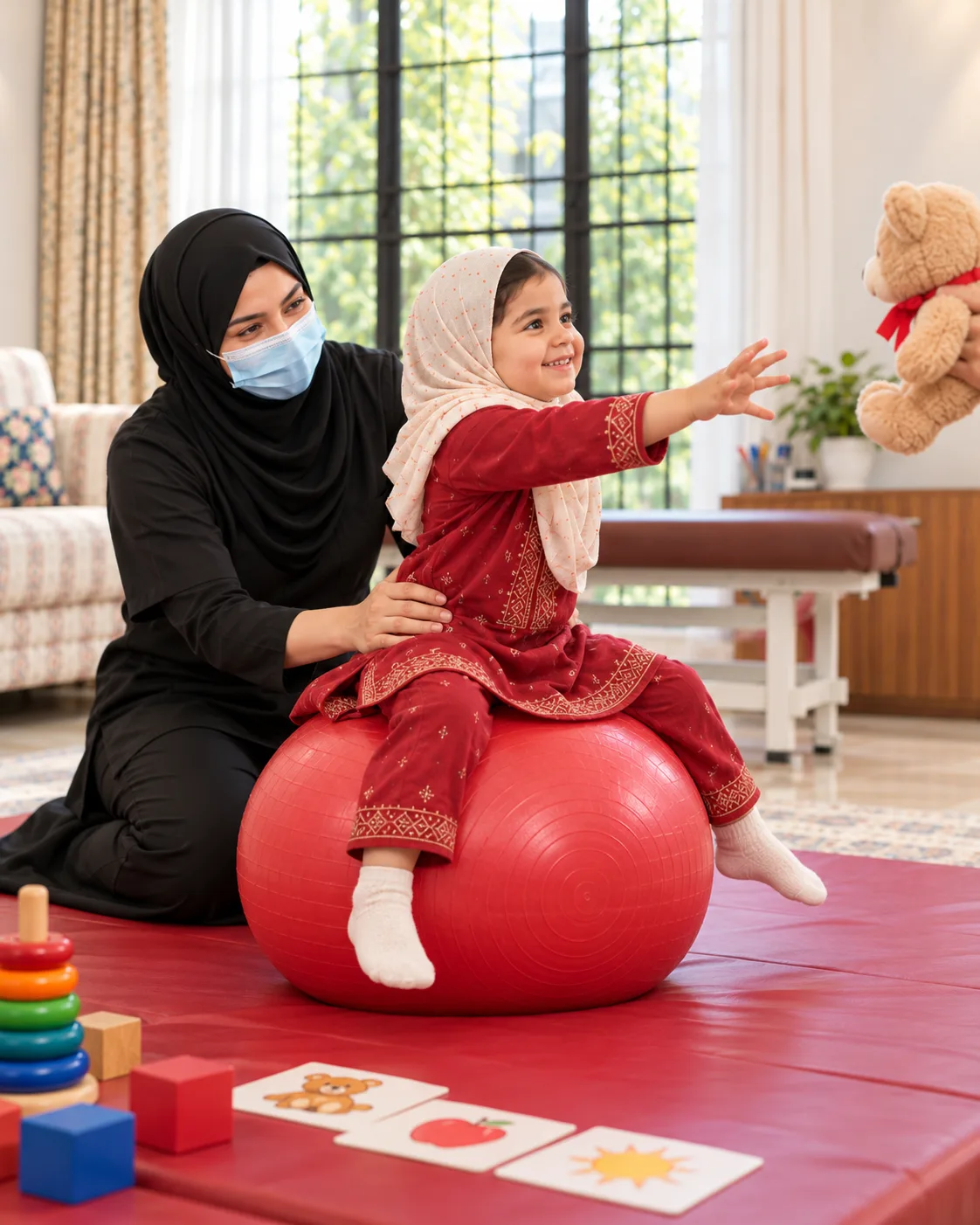
Through play and gentle handling, we practise holding the body upright and shifting weight, using seating, supports and a stable surface to hold where they help.
Repeated, enjoyable practice of the real movements your child needs, such as rolling, sitting up, standing, stepping and moving between positions, with the right amount of help.
We fit the skills into family life, at home and at school, so practice happens in play, dressing, meals and getting about, and we review and reset the goals as your child grows.
Is everyday life harder for your child…
What we treat
Cerebral palsy is described by which parts of the body are affected, and by how movement is affected. Your child’s doctor makes the diagnosis; we assess what it means for everyday movement.
One limb is affected.
One side of the body is affected.
Mainly the legs, with milder arm involvement.
Three limbs are affected.
All four limbs, often with trunk involvement.
All four limbs, with the arms more affected than the legs.
Increased muscle tone, causing stiffness.
Involuntary, fluctuating movements.
Difficulty with balance and coordination.
Early signs and assessment
Signs of cerebral palsy usually show in early childhood rather than at birth. A diagnosis can take months or longer, because some signs only become clear as a child develops. You can ask for a physiotherapy assessment of movement at any point.
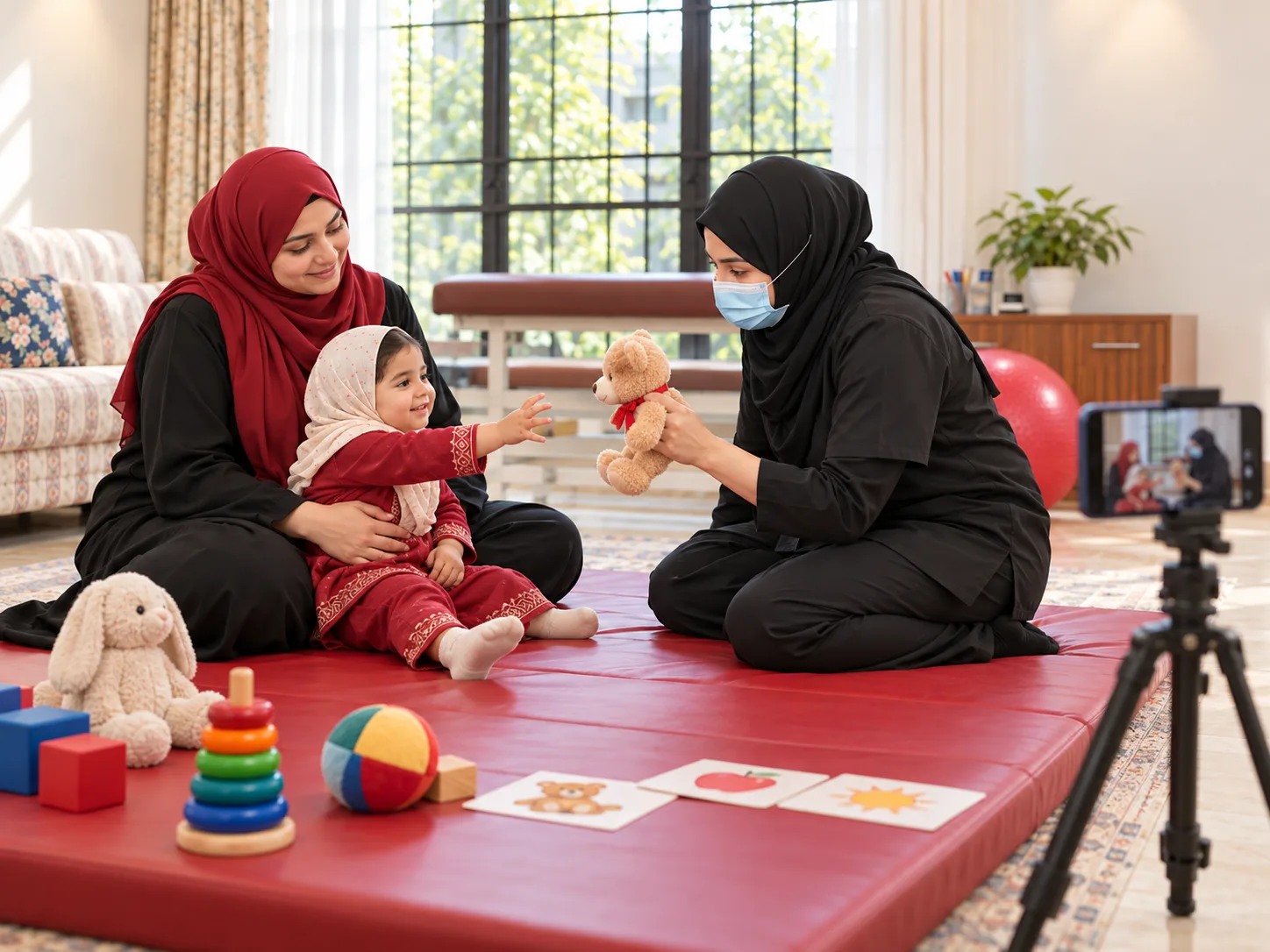
TipBring any reports or scans, and a phone video of how your child moves or plays at home. A short video often shows more than we can see in a visit.
Tone, stiffness and movement
In cerebral palsy, muscles may be too tight, too loose or hard to control. Over time, tight muscles can limit joint movement, and this can affect comfort, sitting, standing and hygiene. Regular movement and good positioning help protect range.
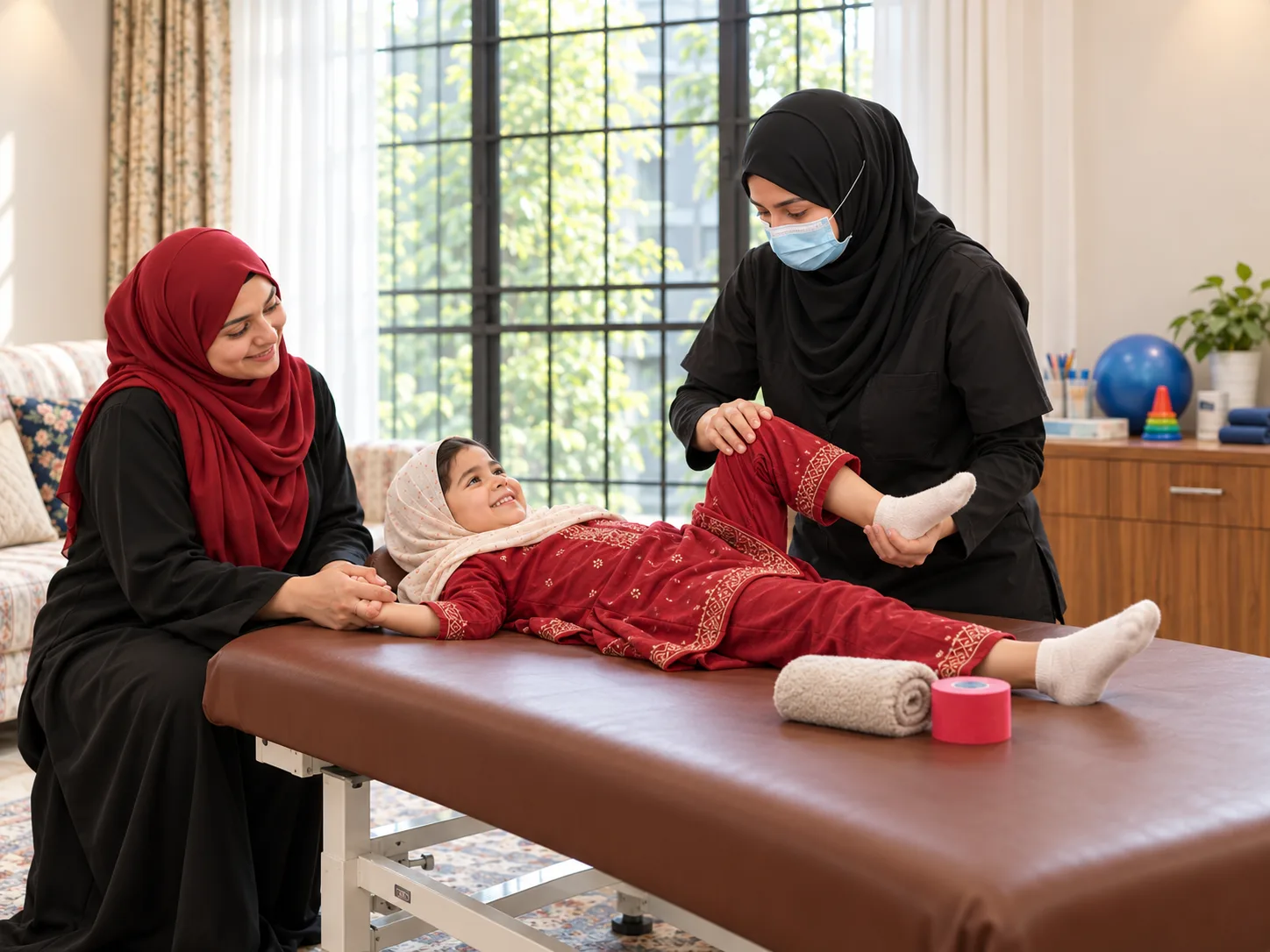
TipShort, regular stretches built into nappy changes, dressing and bath time usually work better than one long session.
Sitting, standing and balance
Balance and posture are the base for almost everything else a child does. We work on them in the positions your child already uses, and move on to the next step when they are ready, with the right amount of support.
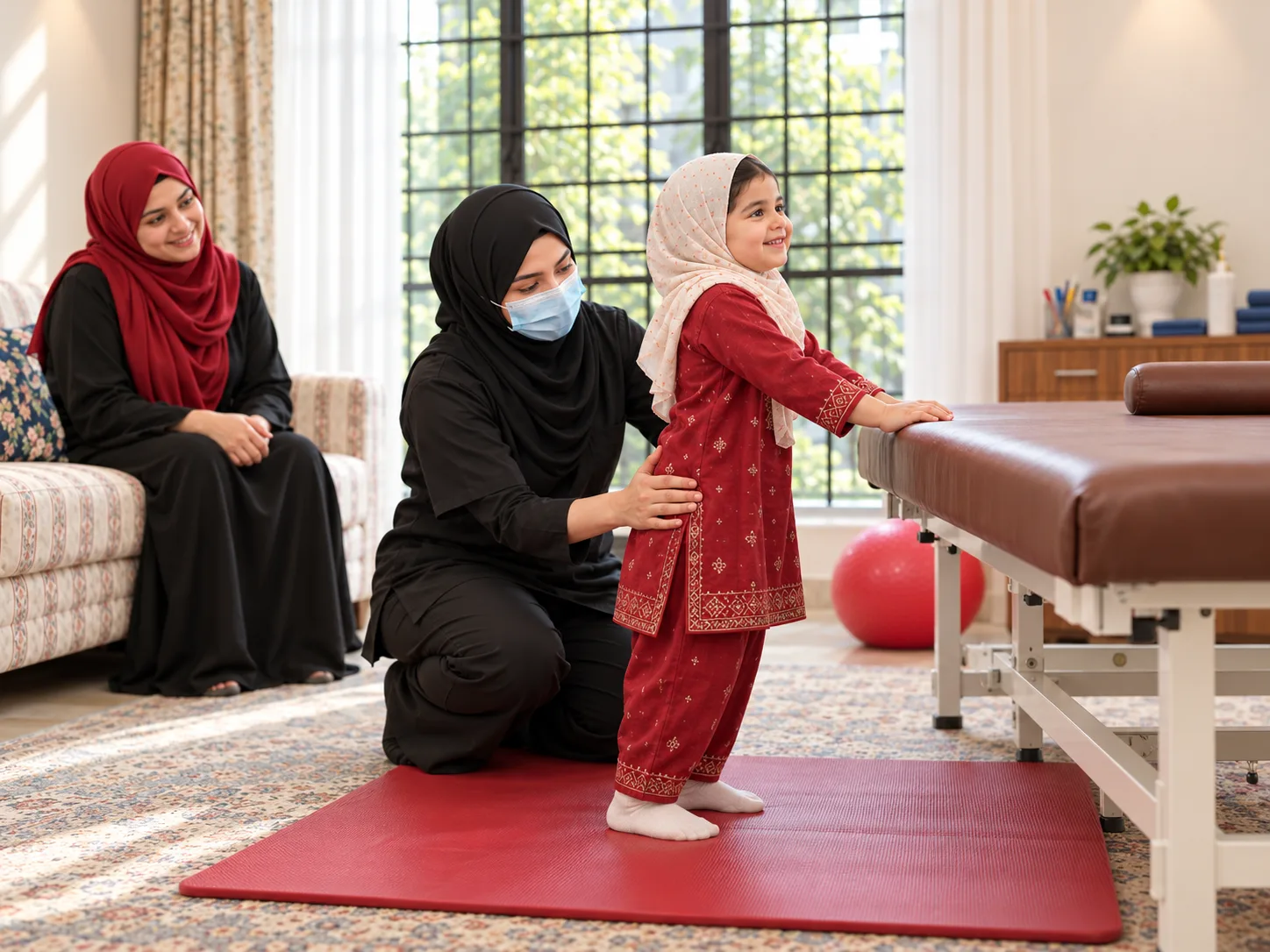
TipChoose a few moments in the day, such as getting dressed, playing on the floor or sitting at the table, to practise one small skill again and again.
Why plans differ
Which parts of the body are affected, and how movement is affected, change what we practise and how.
TypeA baby, a toddler and a teenager have different goals, and the plan grows with them.
StageTight or loose muscles decide how much stretching, positioning and strengthening is needed.
ToneWeakness, balance and selective control of movement set the next realistic step.
FunctionTiredness, pain, seizures, feeding and other conditions all influence what a good session looks like.
Whole childYour routines, home layout, school day and priorities shape the goals we choose together.
Daily lifeSCROLL FOR THE ASSESSMENT TO FIND YOUR ROOT CAUSE
Why therapy helps
Children build movement through repeated, meaningful practice. A physiotherapist chooses what to practise, how much help to give, and how to keep it enjoyable, then teaches the family to carry it on between visits.
We look at movement, posture, tone, strength and play, and use recognised measures to track change.
You choose what matters most, and we turn it into small, achievable steps.
Play-based, task-focused sessions that your child can enjoy and your family can repeat.
We re-assess regularly, celebrate progress and change the plan as your child grows.
Our advanced treatment techniques
Every plan is built around your child’s assessment and your family’s goals. These are the approaches we use most, chosen and combined for each child.
Hands-on facilitation of smoother, more efficient movement patterns, and positioning that supports them.
Strength work matched to age and ability, using the child’s own body weight, play and light resistance.
Repeating the real activities your child needs, such as sitting up, standing, stepping and reaching, in short, fun bursts.
Structured, step-by-step teaching of daily tasks, drawing on conductive-education principles.
Gentle range-of-movement work and positioning ideas to protect muscle length and joint movement.
For children with one weaker hand, play that encourages more use of it, agreed with your doctor and occupational therapist.
Step by step
A developmental and movement assessment with the family, including a look at your child’s history, reports and everyday routines.
We agree priorities with you and turn them into small, clear steps that your child and family can work towards.
Play-based, task-specific sessions, in the studio or at home, using handling, positioning, strengthening and practice.
A short, realistic programme that fits family routines, with training so you feel confident doing it.
Regular re-assessment against the goals you chose, and changes to the plan as your child grows.
For parents and carers
Simple habits that make every session more useful. Your physiotherapist chooses the exercises; these are about being ready and keeping practice gentle and fun.
Reports, scans, clinic letters, a medicine list, and any splints, supports or seating your child already uses.
A short phone video of how your child sits, moves and plays shows us what a clinic visit may not.
Pick one thing to practise in a regular moment of the day, rather than adding extra sessions.
Short, cheerful practice works best. Stop when your child is tired, in pain or upset, and tell us what happened.
Note changes in comfort, sleep, feeding, seizures or mood, and tell your doctor about any worries.
Do not start stretching or equipment practice that has not been shown to you. If your child seems in pain or unwell, contact your doctor.
Care designed for families
Munaza Physio Studio is a women-only physiotherapy practice, and your child is seen one-to-one by a female physiotherapist, in the studio or in your own home. A parent or carer stays with the child throughout, and you are part of every session.
Female physiotherapist, with a parent or carer always present
One-to-one sessions, unhurried and adapted to your child
Home visits across Lahore, so we can see everyday routines
Advice for siblings, grandparents and school staff when you want it
Please tell us about any access, communication or sensory needs before you attend
Real Stories
My mother had a stroke that left her right arm and leg immobile. With Dr. Munaza’s expert physiotherapy, she regained full movement completely painfree and without any medication. We’re truly grateful for her care and professionalism.
I took home sessions for my neck, shoulder, back, and hip pain. Alhamdulillah, all my pain is gone like a magic. Even my headache, which I had for many years, got better with the exercises. Thank you so much Dr Munaza for your kind treatment and care. May Allah bless you.
“Dr. Munaza treated my neck and shoulder pain, as well as my muscle pull issue, very effectively. With the help of exercises and therapy, I feel much better now. She is very kind, caring, and cooperative. Highly recommended!”
I had neck pain with headaches for a long time. After treatment with Dr. Munaza, my pain got much better and the headaches eased. She listened carefully, treated me gently, and explained everything clearly. I feel relaxed and thankful for her care Best physiotherpist in the area👍🏻
Dr. Munaza is very kind and professional. My shoulder pain improved within a few sessions. Highly recommended!!!!
Simple pricing
Transparent pricing, with a personalised assessment at the start of every plan.
Clinic sessions start from PKR 1,500.
Home visit pricing depends on your location and your child’s needs, contact us for a quote.
Book AssessmentGrow well, move well
There is no single timetable. Progress depends on your child, their type of cerebral palsy and their daily routines, so goals are reviewed and reset as they grow.
Questions
As soon as there are concerns about how your child is moving or developing. You do not need to wait for a diagnosis to ask for a physiotherapy assessment, and your health visitor, GP or paediatrician can also refer you. Earlier support gives more time to build movement and prevent problems, and it is never too late to benefit.
No. Cerebral palsy is diagnosed by doctors, usually a paediatrician or specialist team, after reviewing your child’s history and development, and sometimes brain scans or other tests. It can take time to be certain. Physiotherapy assesses how your child moves and functions, and builds a plan around that, whatever the diagnosis stage.
No. The injury to the developing brain does not get worse, but its effects change as a child grows. Therapy does not remove it. It aims to help your child move as well and as independently as possible, stay comfortable, avoid secondary problems such as tight muscles and joints, and take part in family and school life.
It depends on the type of cerebral palsy, how much of the body is affected and many other things, and nobody can promise it. At your first visit we set honest, practical goals with you, such as sitting steadily, standing with support, moving around the home or using the hands for play and eating, and we review them regularly.
Closely. A parent or carer stays with the child, and most progress comes from small, regular practice built into the day. We show you handling, positioning and play-based exercises, write down a short home programme, and change it as your child grows and as goals are reached.
It depends on your child’s goals, age and tolerance, and on what you can fit into family life. Many families come once to a few times a week at the start, then less often as the home programme takes over. We agree this with you and review it.
Yes, and we encourage it. Physiotherapy sits alongside your child’s doctor, and often occupational therapy, speech and language therapy, orthotists (for splints and supports) and school staff. With your permission we can share our findings and follow their advice.
Yes. Home sessions across Lahore can be helpful because we see your child’s real environment: where they sit, play and move, and what would make daily routines easier. Tell us your area when you book.
Any reports, scans or clinic letters, a list of medicines, current splints, supports or seating if your child uses them, and a phone video of how your child moves or plays at home. Bring a favourite toy, a snack and a drink.
Clinic sessions start from PKR 1,500. Home visit pricing depends on your location and your child’s needs, so contact us for a quote.
Safety first
Ready to take the first step?
Talk through your child’s movement, history and goals with a female physiotherapist in Lahore. Bring any reports, and tell us about access or communication needs before you attend.
 5.0