
Treated by a woman, in a space built for you.
Dr. Munaza Ghani treats women only, in the clinic or at your home, so you can explain your pain, dress comfortably and ask anything without hesitation.
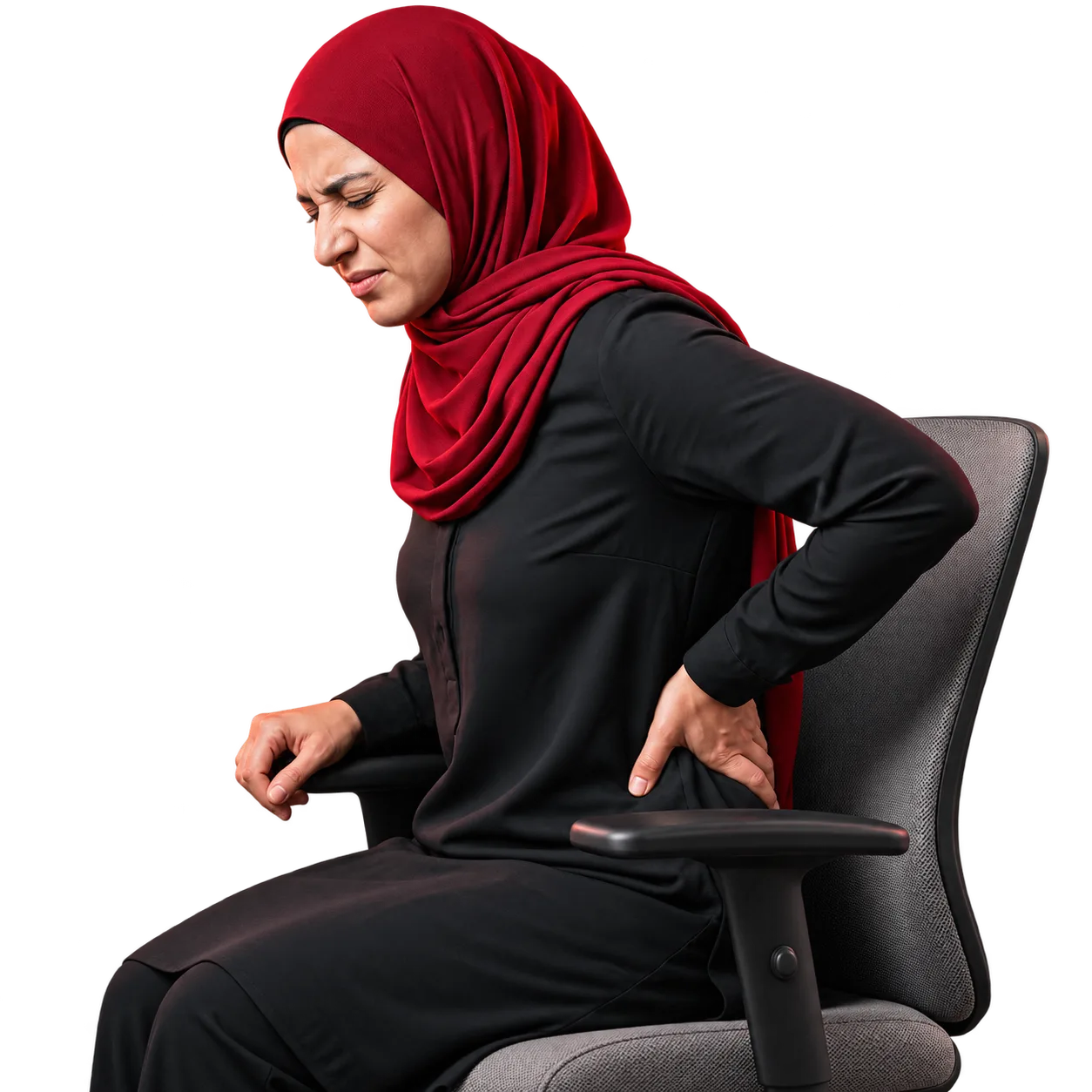
Women's Physiotherapy · Back Pain Clinic
When back pain starts controlling how you sit, sleep, lift your children and live your life, it deserves more than painkillers. Assessment-led, evidence-based physiotherapy, exclusively for women.
Back Pain Physiotherapy
Back pain is one of the most common reasons women seek care, from desk-work posture and lifting at home, to disc problems, postpartum changes and degenerative wear. It makes ordinary movement feel difficult.
At Munaza Physio Studio, treatment begins by understanding how your pain affects your movement, strength, posture and daily life, then targets the root cause, not just the symptom.
Dr. Munaza Ghani · Women-only physiotherapy
Scroll to see how a visit unfolds: a private women-only space, a proper assessment, hands-on care with movement, and a plan that keeps you moving.
Dr. Munaza Ghani treats women only, in the clinic or at your home, so you can explain your pain, dress comfortably and ask anything without hesitation.
A full history, movement and nerve screening, and a look at the load from your posture, work and home. We separate a recent strain from pain that has become over-sensitive, because each needs a different plan.
Gentle manual therapy and soft-tissue work settle symptoms first. Then graded mobility, stretching and strengthening retrain your back to tolerate everyday life.
You leave each visit with a short home programme, clear limits for flare-ups and a review date, so progress continues between sessions.

Is back pain stopping you from…
What we treat
These are the most common causes we assess and treat.
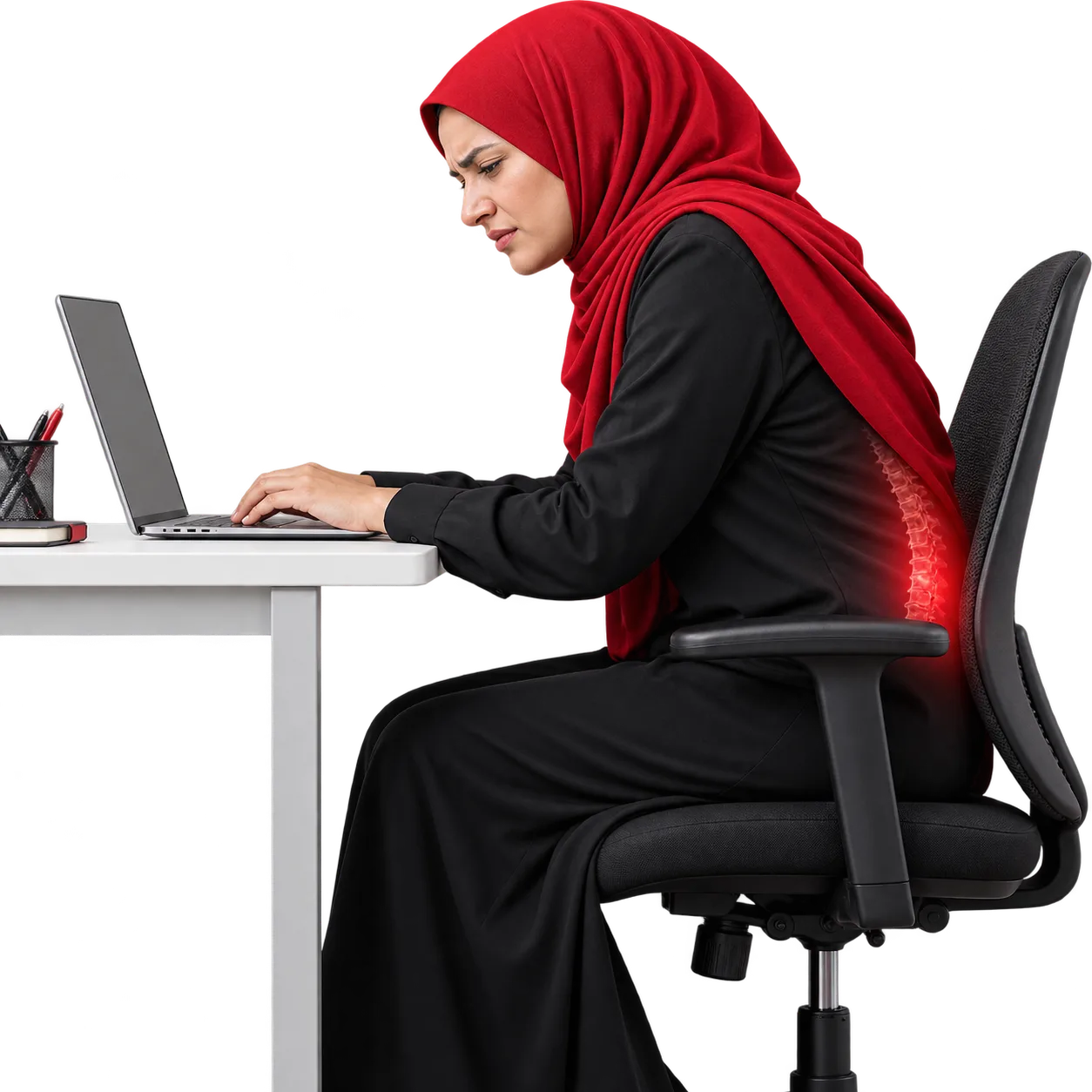
Sustained loading of spinal structures leading to stiffness and aching.

Sudden strain on the lumbar spine from bending and twisting under load.
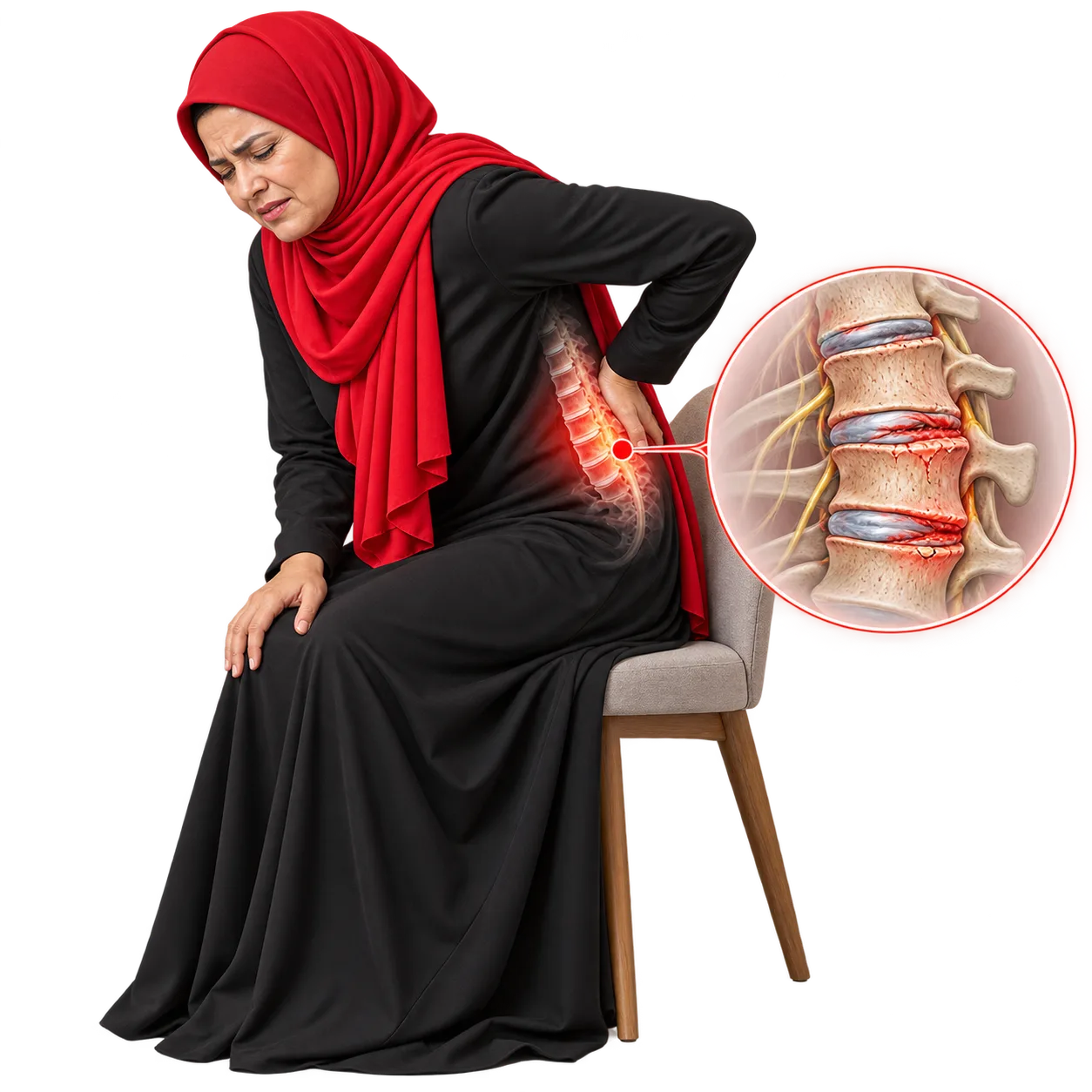
Age-related disc changes reducing shock absorption between vertebrae.
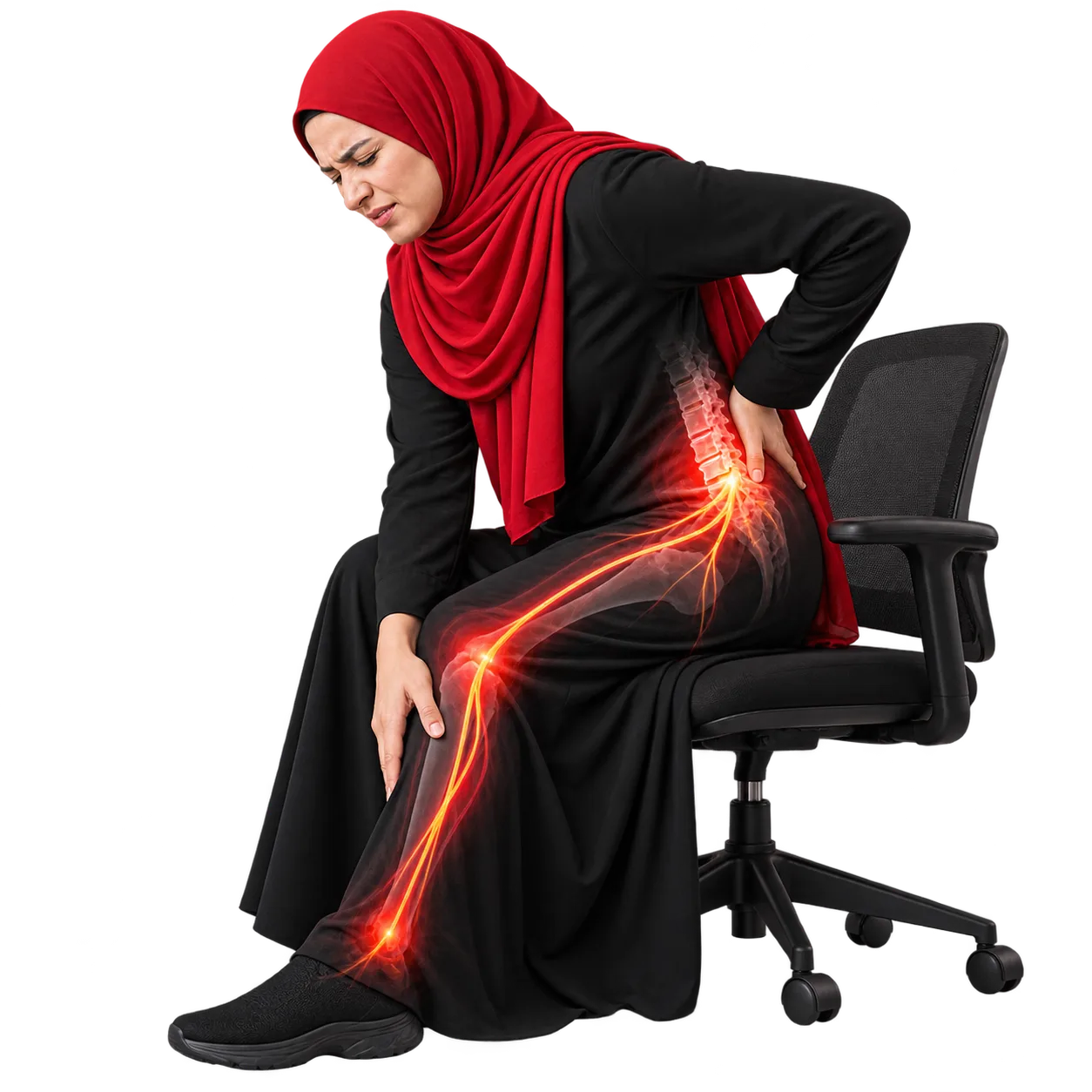
Disc material pressing on nerve roots, often causing radiating leg pain.
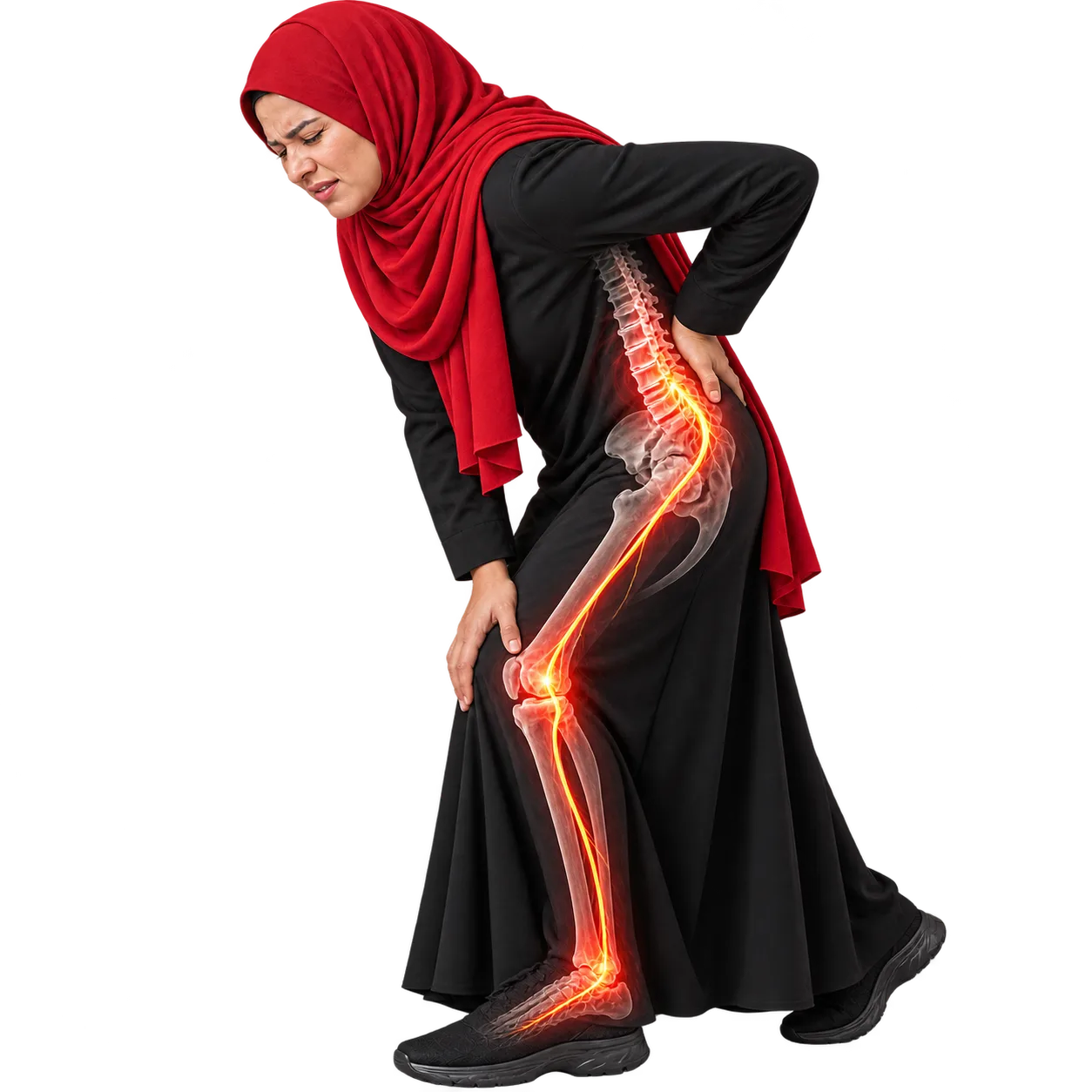
Narrowing of the spinal canal producing pain and heaviness on walking.

Joint inflammation and reduced bone density affecting spinal support.
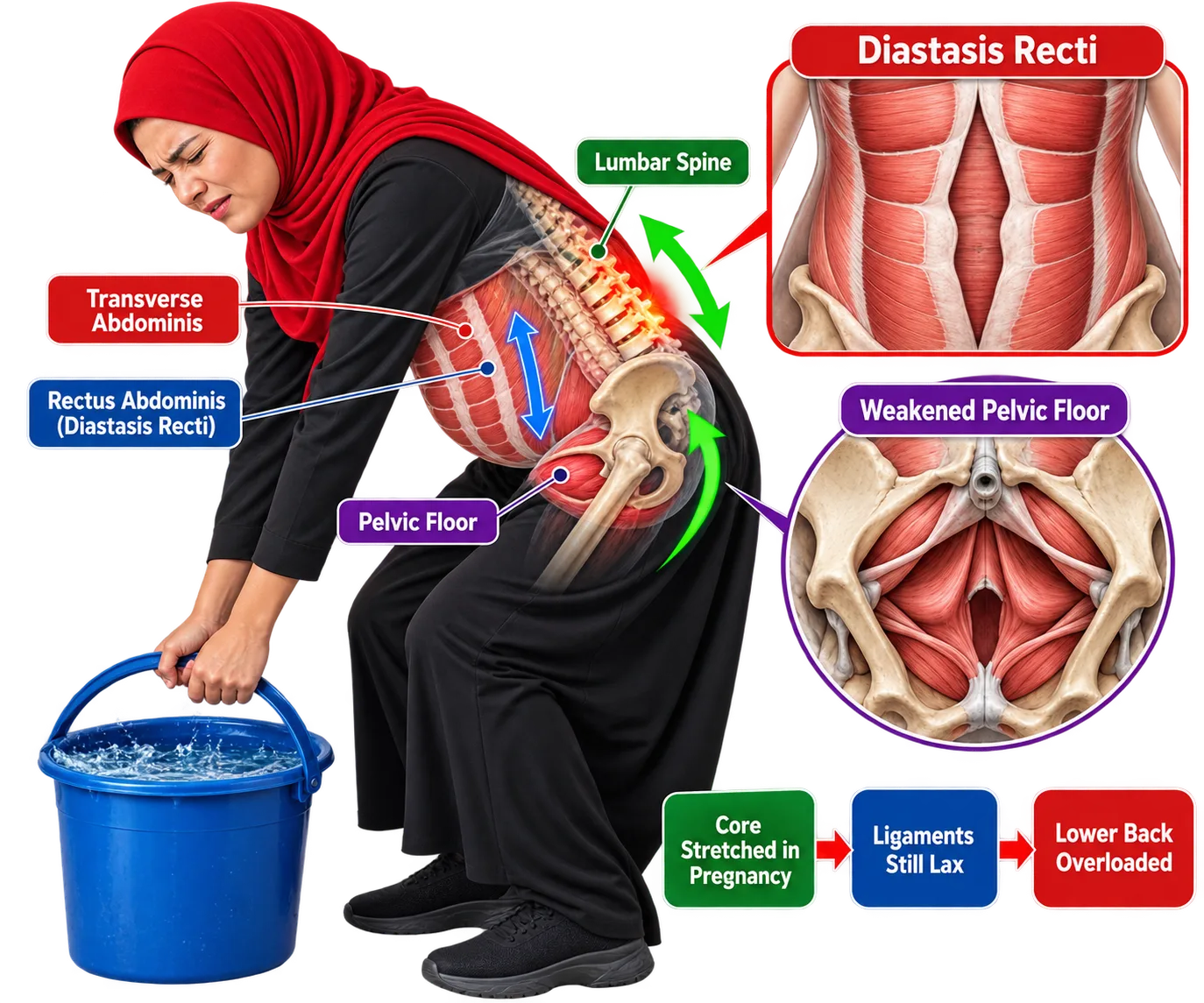
Weak deep core muscles leaving the spine poorly supported.

Old injuries that healed with compensations and altered movement patterns.
Why does it hurt
Sustained slumped alignment increases pressure inside discs and strains posterior spinal ligaments.
Mechanical loadLifting with a rounded back plus rotation creates shear forces on the disc wall, the primary mechanism behind strains and herniation.
Flexion + rotationDiscs lose hydration and height over time, causing segmental instability and stiffness.
DegenerationDisplaced disc material can compress nerve roots, causing sciatica or sensory changes, often after sudden flexion-rotation movements.
RadiculopathyNarrowing of the spinal canal causes leg pain on standing or walking that eases with bending forward.
Neurogenic claudicationFacet joint degeneration causes inflammatory back pain; reduced bone density increases fracture susceptibility.
Bone & jointWeak abdominals and glutes with tight hip flexors overload the lumbar spine. Postpartum abdominal separation compounds it.
Lower crossed syndromeOld trauma that never fully rehabilitated leaves scar tissue and altered motor control, a quiet driver of chronic recurrence.
Motor controlSCROLL FOR THE ASSESSMENT TO FIND YOUR ROOT CAUSE
Understand it
How long your back has hurt matters less than what your nervous system is doing. Knowing which kind of pain you have shapes what we do and what to expect.
Pain starts suddenly and settles as tissue heals. If you keep aggravating it, it can return again and again.
Pain that keeps coming back is often the same acute pain being re-triggered. Changing what triggers it usually helps.
The tissue has healed, but the nervous system may still guard the area. Pain can be real without ongoing damage.
Education, graded movement and strength gradually calm the alarm and rebuild trust in your back.
TipIf your symptoms have not improved after several weeks of consistent rehabilitation, that is the moment to review the contributing factors with your physiotherapist.
Why physiotherapy works
Effective back pain care isn't only about reducing discomfort. It's about understanding your body, restoring movement, and rebuilding the strength and confidence your daily life demands, with strategies you keep for life.
Assess symptoms, posture, movement and the lifestyle factors contributing to your pain. Root cause first.
Hands-on care, therapeutic modalities and movement strategies to bring pain and spasm down.
Progress mobility, deep-core strength and functional movement according to your individual needs.
Practical home programmes, ergonomic advice and prevention habits that support long-term spinal health.
Our advanced treatment techniques
Evidence-based methods, selected and combined for your specific presentation.
Hands-on mobilisation of stiff spinal segments to restore movement and reduce pain.
Directional preference exercises that centralise pain and reduce disc-related symptoms.
Retraining the deep abdominal and back muscles that protect the spine.
Suction-based release of tight muscles and fascia to improve local circulation.
Progressive strengthening and mobility work tailored to your stage of recovery.
TENS and ultrasound for pain modulation alongside active rehabilitation.
How we treat it
Hands-on and soft-tissue work help calm pain early; movement, strengthening and walking create the lasting change. Your physiotherapist chooses and doses each one for you.
Mild discomfort during exercise is acceptable if your usual symptoms are no worse a few hours later. If you flare up, reduce the load or step back a stage and tell us. These are general examples, not a personal prescription.
Step by step
Full movement, strength, and posture examination to find the true source.
A plan built around your goals, daily routine, and pain levels.
Hands-on treatment plus graded exercise as your capacity improves.
Long-term strategies so the pain does not return.
Care designed for women
Munaza Physio Studio is a women-only physiotherapy practice. Privacy, comfort and expertise are paramount, we treat the person, not just the pain, so you regain the strength and confidence to live fully.
Women-only environment with a female physiotherapist
Pregnancy-safe and postpartum-specific back pain programmes
One-to-one sessions, never a shared slot, never rushed
Home-visit rehabilitation and ergonomic guidance across Lahore
Mother-and-daughter visits welcome, flexible family scheduling

Real Stories
My mother had a stroke that left her right arm and leg immobile. With Dr. Munaza’s expert physiotherapy, she regained full movement completely painfree and without any medication. We’re truly grateful for her care and professionalism.
I took home sessions for my neck, shoulder, back, and hip pain. Alhamdulillah, all my pain is gone like a magic. Even my headache, which I had for many years, got better with the exercises. Thank you so much Dr Munaza for your kind treatment and care. May Allah bless you.
“Dr. Munaza treated my neck and shoulder pain, as well as my muscle pull issue, very effectively. With the help of exercises and therapy, I feel much better now. She is very kind, caring, and cooperative. Highly recommended!”
I had neck pain with headaches for a long time. After treatment with Dr. Munaza, my pain got much better and the headaches eased. She listened carefully, treated me gently, and explained everything clearly. I feel relaxed and thankful for her care Best physiotherpist in the area👍🏻
Dr. Munaza is very kind and professional. My shoulder pain improved within a few sessions. Highly recommended!!!!
Simple pricing
Transparent pricing, with a personalised assessment at the start of every plan.
Clinic sessions start from PKR 1,500.
Home visit pricing depends on your location and condition, contact us for a quote.
Book AssessmentBack health is movement
The goal is not to promise an instant cure. The goal is a clearer path toward comfortable, confident movement: relief now, strength for later, confidence that lasts.
Questions
No referral is needed. You can book directly and we’ll assess you at your first session.
Treatment is gentle and comfort-led. Some techniques cause mild temporary soreness, and we always work within your comfort limits.
It depends on severity and how long you've had symptoms. Most back pain patients notice improvement within 3–6 sessions; your plan is set after assessment.
Starts from PKR 1,500 for a clinic session. Home visit pricing depends on your location and condition, contact us for a quote.
Yes. Dr. Munaza is a female physiotherapist and the practice is dedicated to women, in a private and culturally sensitive environment.
Usually not at first. Most back pain is understood from your history and a physical examination, and findings such as disc bulges are common even in people with no pain. We refer you for imaging only when your symptoms or examination suggest it is needed.
In most cases, yes. Gradual, guided movement and strengthening reduce pain and help stop it coming back, and gentle walking is often a good place to start. We tailor the type and amount to you, so mild discomfort is acceptable but a flare-up is avoided.
There is no single perfect position. Many people are comfortable on their side with a pillow between the knees, or on their back with a pillow under the knees. Change position often and use whatever lets you settle; we can advise on your own set-up.
Safety first
Ready to move forward?
Don't let back pain limit your life any longer. Start with a comprehensive assessment and receive a personalised treatment plan.
 5.0