
Start by knowing your restrictions.
We go through your diagnosis, procedure and written instructions: how much weight the limb may take, which movements to avoid and when to use a brace, sling or cast.
Orthopaedic Rehabilitation · Lahore
After an operation, a fracture or a serious injury, daily life can feel different. Private, step-by-step rehabilitation from a female physiotherapist in Lahore, shaped around your surgeon’s instructions and the life you want back.
Orthopaedic Care
Orthopaedic rehabilitation helps you work towards better movement, strength and everyday function after a bone, joint or soft-tissue injury or operation. It starts with understanding what your surgeon or hospital team has asked you to do, and what you want to get back to.
At Munaza Physio Studio, a female physiotherapist assesses where you are now, turns your team’s restrictions into a practical plan, and adjusts it as you heal. There are no fixed weeks and no guarantees, only a clear next step.
Dr. Munaza Ghani · Women-only physiotherapy
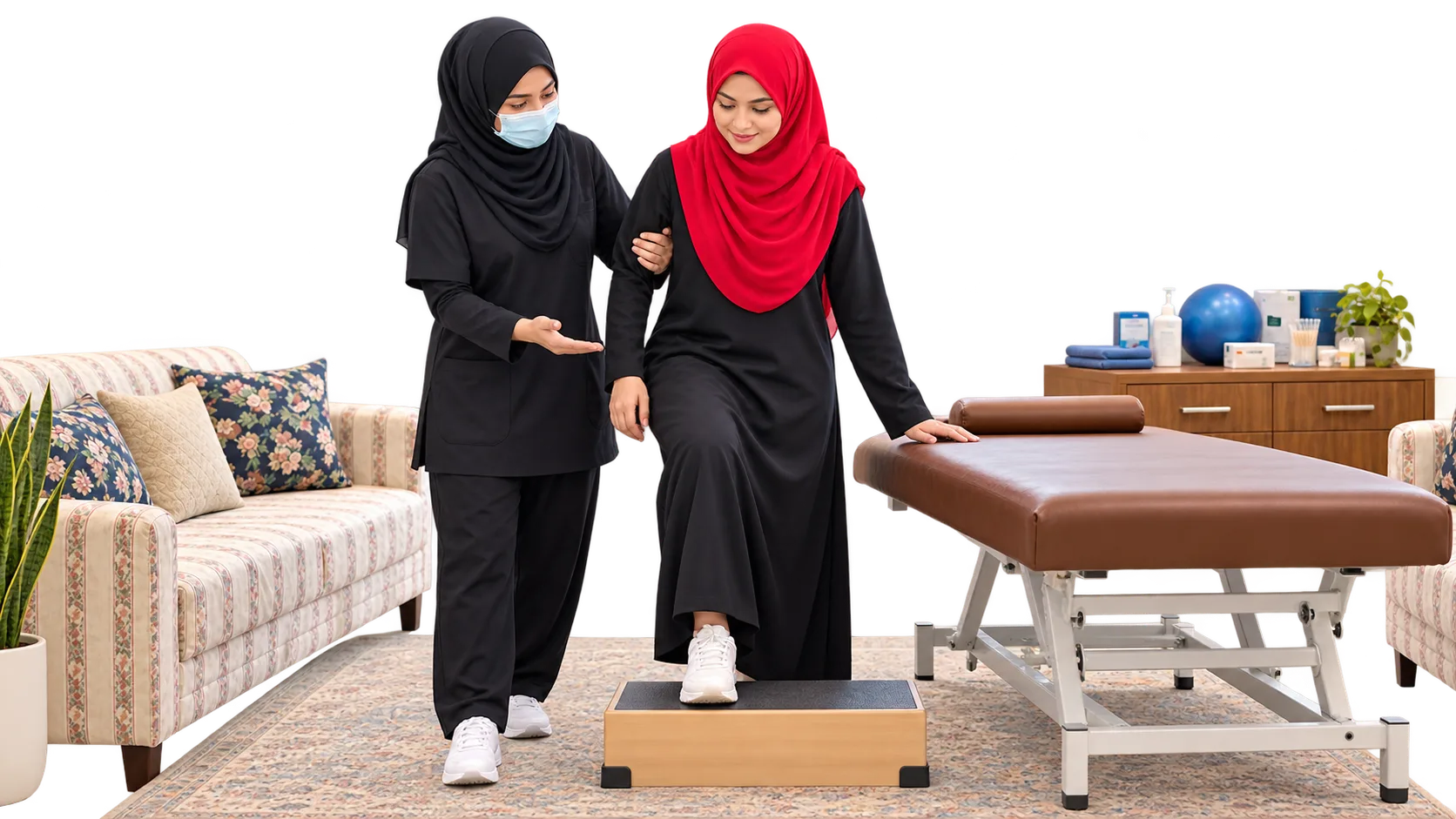
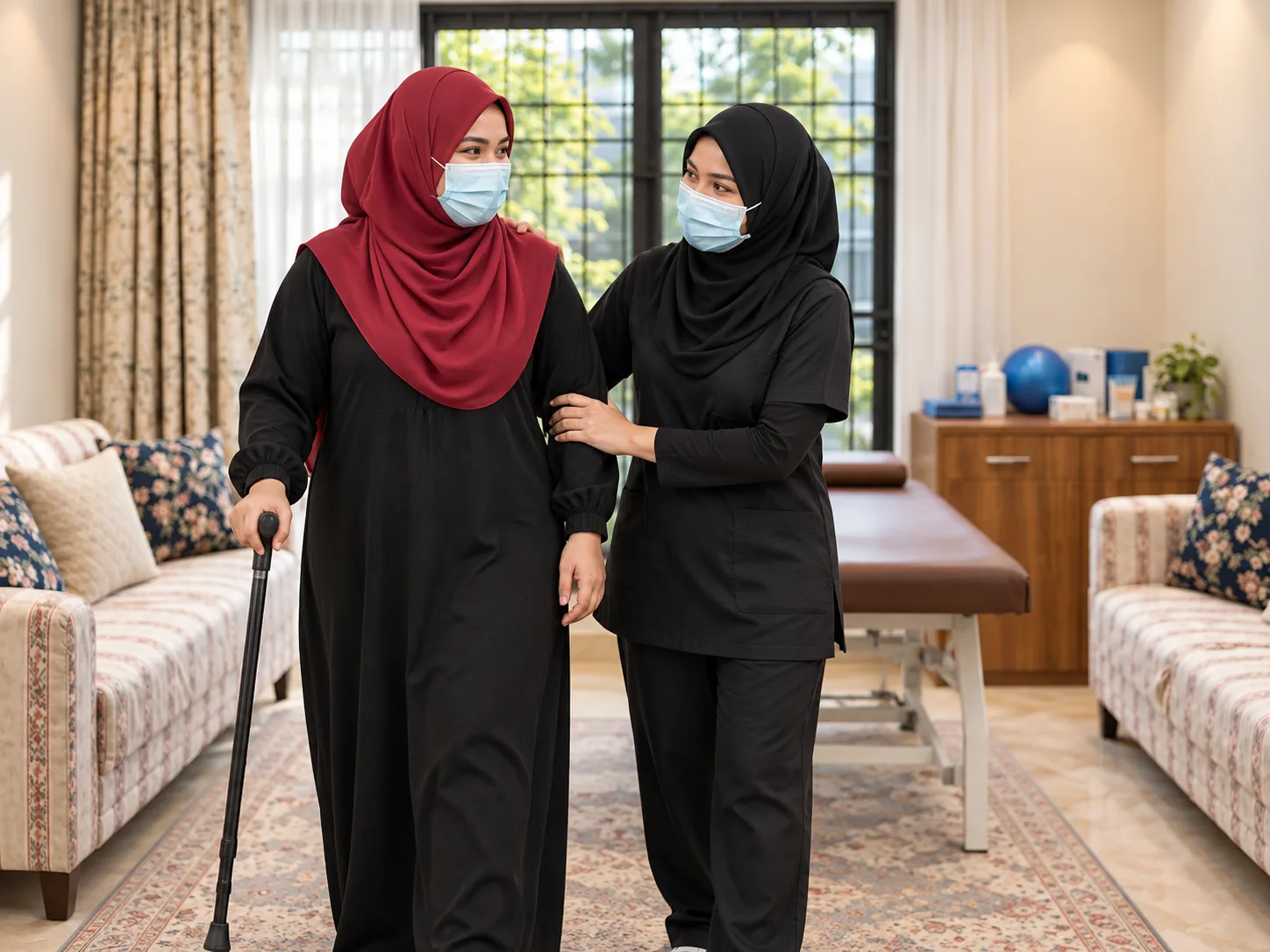
Scroll to follow an illustrative recovery: protected rest, standing with support, walking with a stick, then walking on your own. Everyone’s pace is different and your surgeon’s instructions come first.
We go through your diagnosis, procedure and written instructions: how much weight the limb may take, which movements to avoid and when to use a brace, sling or cast.
Once your team allows it, we practise safe transfers and standing, and use your prescribed aids correctly. Movement is gentle and matched to how you feel.
As healing allows, strengthening, balance and walking practice build up, and walking aids are reduced only when you have been cleared to do so.
We work towards the goals you chose, such as stairs, errands, prayer, work or hobbies, and agree how to keep going on your own, with review when you need it.
Is recovery stopping you from…
What we treat
Your injury or operation decides what is safe to do. Your assessment matches the plan to you, and it always follows your treating team’s instructions.
Work towards daily movement and function after hip, knee or shoulder replacement, following your hospital plan.
Address stiffness and reduced function once your team allows it. A removed cast does not mean unrestricted loading.
Follow the surgeon’s brace and loading instructions as strength and tasks are built up for your specific procedure.
Protect the repair, then restore movement and strength in the stages your surgeon sets.
Sprains and strains that need a structured plan to rebuild strength and confidence.
Regaining movement and function in a joint that has been protected for some time.
Surgery recovery
Rehabilitation after a joint replacement helps you work towards walking, moving and caring for yourself again. Each procedure has its own precautions, so your hospital plan is where we start.
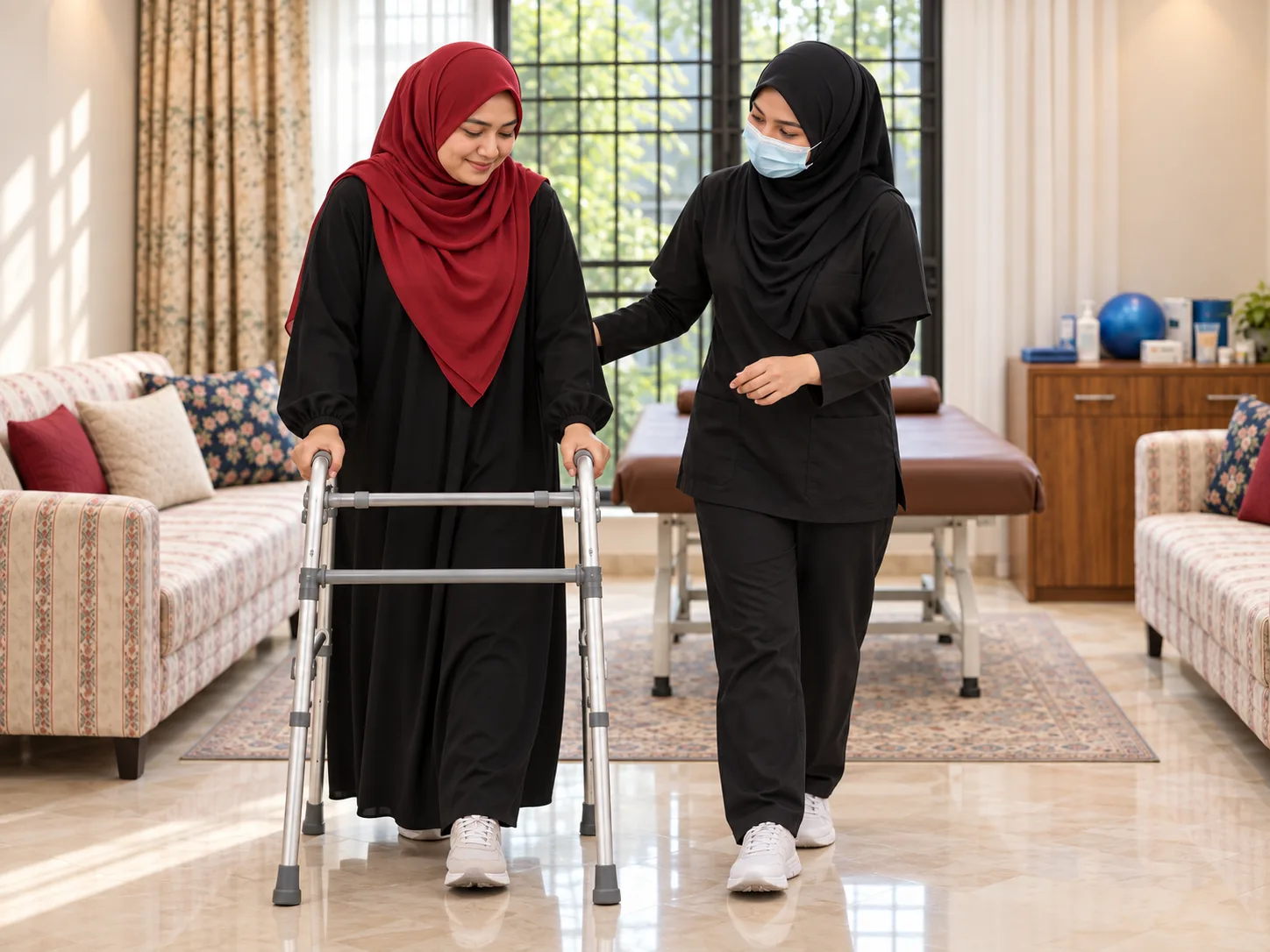
TipBring your discharge summary, any written restrictions and your walking aid to the first visit.
Injury recovery
A fracture needs time and protection to heal. Once your team allows more movement, stiffness, weakness and worry about using the limb are common, and a guided plan can help you rebuild.
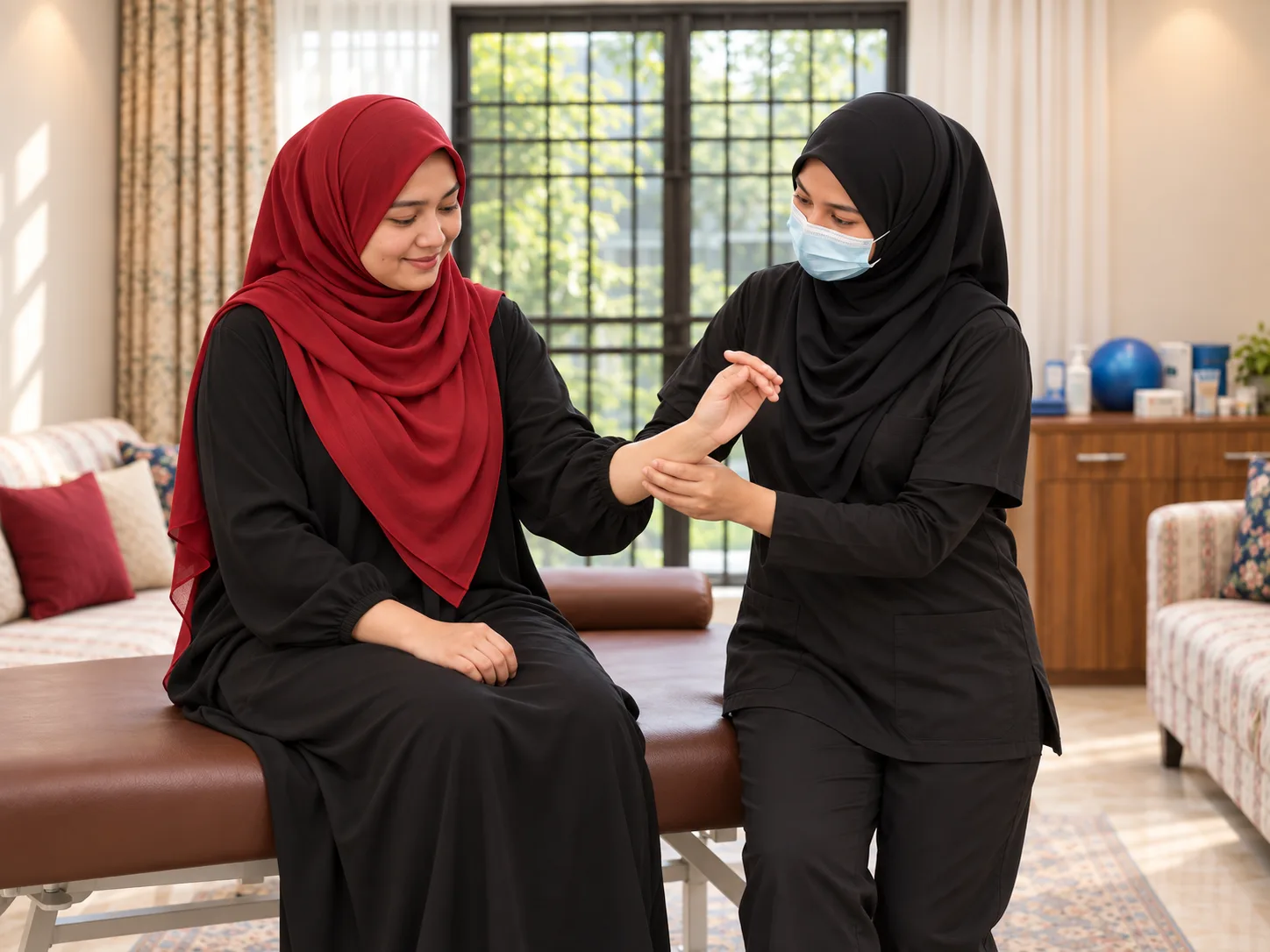
TipCast removal alone does not mean a bone is ready for full weight or heavy use. Wait for your team’s clearance.
Surgery recovery
A repaired ligament or tendon must be protected while it heals, then loaded gradually. The order and timing come from your surgeon’s protocol for your specific procedure, not from a general schedule.
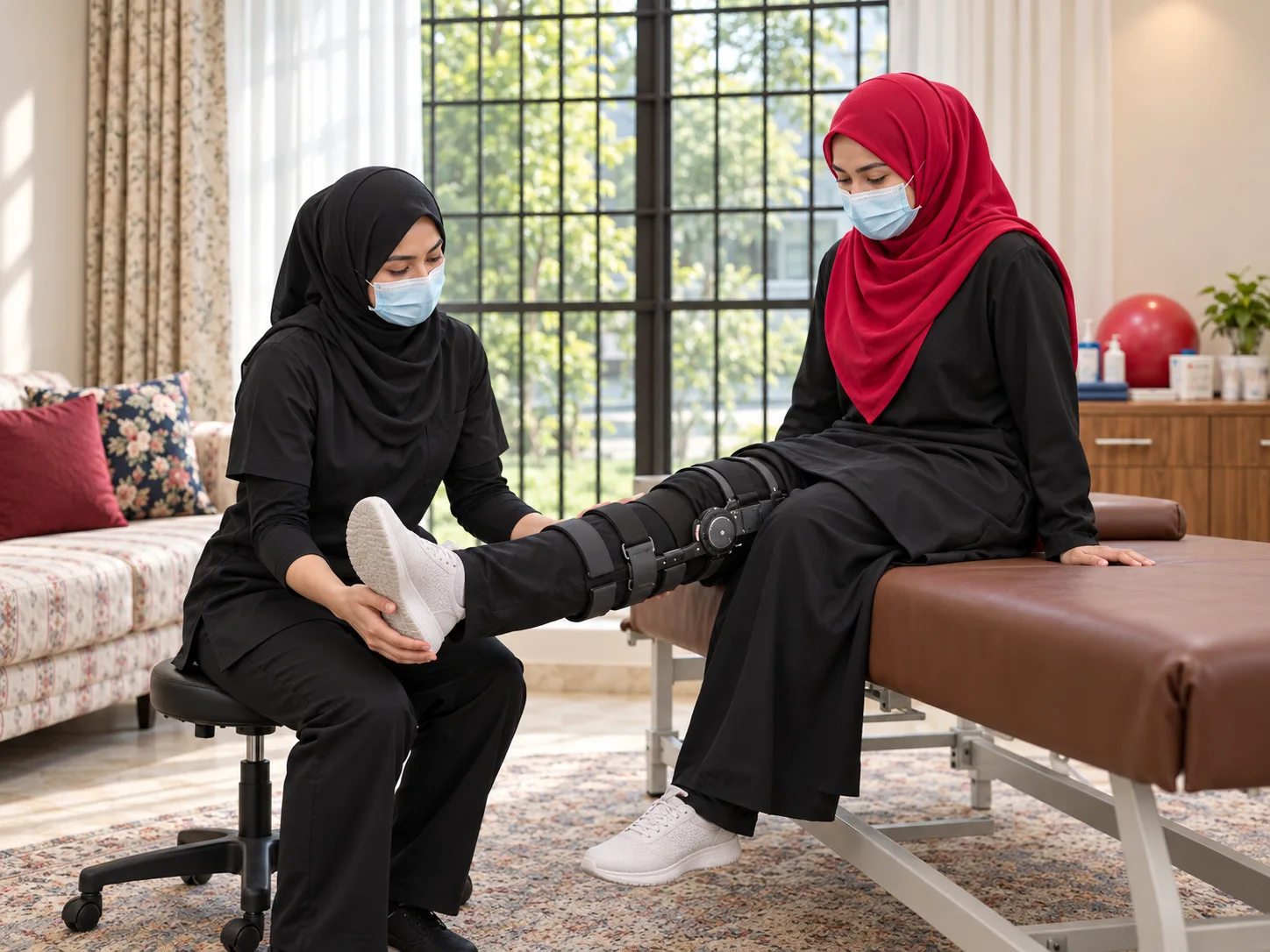
TipKeep your scheduled healing reviews. They are how your team decides when you can move on to the next stage.
Why recovery differs
A shoulder repair and a knee replacement need different precautions, loading and exercises.
ProcedureBone and soft tissue heal at their own pace, so what is safe changes as you progress.
HealingThey affect how well you can move and rest, and they guide how fast the plan progresses.
SymptomsWeakness and worry can slow you down, even when the tissue is healing well.
FunctionOther conditions, pregnancy and medicines all affect what is right for you.
Whole personStairs, family care, prayer positions and work all shape the goals of your plan.
Daily lifeSCROLL FOR THE ASSESSMENT TO FIND YOUR ROOT CAUSE

Why rehabilitation helps
Time heals tissue, but it does not rebuild strength, movement or confidence on its own. A physiotherapist turns your team’s instructions into daily steps, adjusts them as you heal, and tells you when to ask your surgeon.
We go through your diagnosis, procedure, restrictions and the tasks you want back.
We keep to your surgeon’s limits on loading, movement and support.
Permitted movement, strength and practice are built up in small, safe steps.
We work towards your goals when cleared, and plan how to keep going.
Our advanced treatment techniques
Every plan is built around your assessment and your treating team’s instructions. These are the tools we use most, chosen and combined for you.
Your diagnosis, restrictions and what to expect, in plain words.
Getting in and out of bed or a chair, using steps and your walking aid correctly.
Gentle range-of-movement work in the positions and limits your team allows.
Exercise that starts easy and builds as healing allows, never beyond clearance.
Practice that rebuilds trust in the limb as support is reduced.
Practical ways to settle swelling and pain and know what to watch for.
Step by step
Clarify your diagnosis, procedure and current restrictions. Agree comfortable starting activities, safe transfers and how to use any prescribed aid.
Work on permitted movement and everyday tasks, adjusting when symptoms, healing or your team’s instructions change.
Strengthening and balance build up as you are cleared, with walking aids reduced only when your team says so.
Build towards walking, stairs, work or other agreed goals when cleared, and review how it is going.
Plan how to continue independently, with support and a review when you need one.
Before and between visits
Simple preparation that makes every visit more useful. Your clinician chooses the exercises; these are about being ready.
Your discharge summary, operation or fracture details, written restrictions, reports and a medication list.
Ask your team in writing about loading (how much weight), movement (what to avoid) and protection (brace, sling or cast).
Use the walking aid or brace you were given until your team changes the instruction.
Write down which task you practised and how it felt afterwards, and any change in swelling or pain.
Clear rugs and clutter at home, and ask for help when you need it.
Do not start a general exercise programme without checking your restrictions. If symptoms worsen, contact your treating team.
Care designed for women
Munaza Physio Studio is a women-only physiotherapy practice. Recovering after surgery or injury is personal; you are seen one-to-one by a female physiotherapist, in the studio or in your own home.
Women-only environment with a female physiotherapist
Care shaped around pregnancy and other health conditions
One-to-one sessions, never rushed
Home visits across Lahore when travelling is difficult
Confirm access needs before you attend
Real Stories
My mother had a stroke that left her right arm and leg immobile. With Dr. Munaza’s expert physiotherapy, she regained full movement completely painfree and without any medication. We’re truly grateful for her care and professionalism.
I took home sessions for my neck, shoulder, back, and hip pain. Alhamdulillah, all my pain is gone like a magic. Even my headache, which I had for many years, got better with the exercises. Thank you so much Dr Munaza for your kind treatment and care. May Allah bless you.
“Dr. Munaza treated my neck and shoulder pain, as well as my muscle pull issue, very effectively. With the help of exercises and therapy, I feel much better now. She is very kind, caring, and cooperative. Highly recommended!”
I had neck pain with headaches for a long time. After treatment with Dr. Munaza, my pain got much better and the headaches eased. She listened carefully, treated me gently, and explained everything clearly. I feel relaxed and thankful for her care Best physiotherpist in the area👍🏻
Dr. Munaza is very kind and professional. My shoulder pain improved within a few sessions. Highly recommended!!!!
Simple pricing
Transparent pricing, with a personalised assessment at the start of every plan.
Clinic sessions start from PKR 1,500.
Home visit pricing depends on your location and condition, contact us for a quote.
Book AssessmentHeal well, move well
There is no single timetable. Progress depends on your injury, your operation and your response, so your plan is reviewed and adjusted as you go.
Questions
It is assessment-led rehabilitation for problems affecting bones, joints, muscles and related tissues, including recovery after injury or surgery. A plan combines education, appropriate movement, strengthening and everyday task practice.
Follow your hospital or surgeon’s instructions. Rehabilitation may start in hospital, but loading, movement and brace restrictions depend on the procedure and healing. Bring your discharge plan; do not start a general exercise programme without checking your restrictions.
Some people manage well with a prescribed home plan and a contact for advice. Individual or group support may be appropriate if daily tasks remain difficult, you have specific rehabilitation needs, or your home plan is not meeting your goals.
Only as allowed by your treating team. Non-weight-bearing, partial loading and full loading are different instructions. If the instruction is unclear, ask your surgeon or physiotherapist before practising standing or walking.
There is no single timetable. Your injury, operation, tissue healing, health and daily demands affect progress. Reviews consider useful movement, strength and daily function, alongside the treating team’s milestones.
Your physiotherapist should explain the response expected for your specific condition. Do not force a painful movement or work through new sharp pain, increasing swelling, numbness or weakness. Warning signs of a clot, infection or circulation problem need medical assessment.
Bring your discharge summary, operation or fracture details, written restrictions, relevant reports and a medication list. Bring your prescribed brace or walking aid and tell us which daily tasks you want to improve.
Women can request a private assessment at Munaza Physio Studio in Lahore. Contact the studio to confirm appointment availability and access needs. A routine physiotherapy visit cannot replace urgent hospital care.
Safety first
Ready to move forward?
Discuss your injury, operation and goals with a female physiotherapist in Lahore. Bring your hospital plan, and tell us about any access needs before you attend.
 5.0