
Relative-rest cross-training
Swimming, cycling or aqua jogging keep your fitness up while load through the tendon stays low.
Sports Rehabilitation / Achilles Tendinopathy
Achilles tendinopathy is the tendon struggling to keep up with the load you’re putting through it — not inflammation, and not a rupture. The strongest evidence we have says the tendon responds to progressive, well-dosed loading, not rest. Most people recover fully; it just takes a structured programme and patience.
The short answer
Achilles tendinopathy is pain and stiffness in the Achilles tendon, the band at the back of the ankle that joins the calf to the heel. It happens when the load on the tendon rises faster than the tendon can adapt, usually after a change in training. It is not inflammation, and it is not a tear.
It is treated by loading the tendon, not resting it: a progressive calf programme, often slow heel drops off a step, done daily for at least 12 weeks, with running and sport brought back in stages. Around 70% of people are back to sport or full activity by about 3 months.
The short version
Understanding Achilles tendinopathy
Your Achilles tendon attaches your calf muscles (gastrocnemius and soleus) to your heel bone (the calcaneus). It’s the biggest, strongest tendon in the body, and every step, run or jump asks it to store and release enormous force. Tendinopathy happens when the tendon can’t keep up with the strain placed on it — repeated small amounts of damage build up faster than the tendon can repair them.
"Tendinitis" is the term most people know, but it’s misleading: on closer examination there’s little true inflammation. What you actually see is a change in the tendon’s own structure — thickening, disorganised collagen fibres — which is why loading the tendon correctly, not resting it or treating it like an inflamed joint, is the treatment that actually works.
Two calf muscles, the gastrocnemius and the soleus beneath it, join to form the Achilles tendon. When they are weak or tire quickly, more of every step’s load falls on the tendon itself.
The biggest, strongest tendon in the body, from the calf to the heel bone. It works like a spring, stretching as you land and giving that energy back as you push off, which is why running and jumping load it so heavily.
The most common type, 2 to 7 cm above the heel. The tendon there often feels thickened and tender, and stiff first thing in the morning. It responds well to slow, heavy calf loading.
Within 2 cm of where the tendon meets the heel bone. Lowering the heel below level presses the tendon against the bone, so early on it is loaded on flat ground, without deep calf stretches.
It usually follows a change: more distance, speed or hills, or a new sport, faster than the tendon can adapt. Between 60 and 80% of runners with it describe a sudden change in training just before it began.
What puts load through the tendon
Many things affect the load going through your Achilles tendon — it isn’t simply the result of exercising too much. Training errors are common: running too far or too fast for your current capacity, increasing distance too quickly, too much hill running, lack of variation in training, and old or poor-quality footwear. In athletes and runners specifically, 60–80% describe a sudden change or increase in training intensity or duration right before their symptoms began.
General risk also rises with age (most common from 30 onwards), is higher in men, and is increased by higher body weight, diabetes, and tight or weak calf muscles with poor endurance strength. Poor core and hip stability, and stiff joints in the foot, also change how load travels down through the leg to the tendon. A less common but specific risk: certain antibiotics (fluoroquinolones) have been linked to tendon symptoms, typically starting around 8 days after treatment begins.
Weeks
Symptoms start when training jumps faster than the tendon can adapt. Easing the load while a loading programme builds capacity is how it settles.
Sudden increases in distance, intensity or hill running; poor footwear; too little variation.
Reduced calf strength/endurance, stiff ankle or foot joints, and hip/core control deficits.
Age 30+, male sex, higher body weight, and diabetes.
The anatomy in 3D
A model of the lower leg, calf and Achilles tendon, built for this page. Turn it, and step through where tendinopathy happens and how the heel drop loads the tendon.
Drag to turn the model. Pick a view to move to it.
Follow the tendon from the calf to the heel. As the heel lowers slowly off a step it lengthens under load: the eccentric heel drop at the heart of rehabilitation.
Gastrocnemius on top, soleus beneath. Watch them shorten and bulge as the heel rises: their strength and endurance decide how much load reaches the tendon.
The most common place for tendinopathy. The tendon here thickens as its fibres become disorganised, which you can often feel as a tender, swollen section.
Pain where the tendon attaches to the heel. Here it is the heel dropping below level that presses on the tendon, so the programme starts on flat ground.
Up on the toes, then down slowly on the painful leg, below the level of the step. Done with the knee straight and slightly bent, 3 sets of 15, twice a day, for at least 12 weeks.
A teaching model built for this page, not a scan of anyone’s leg. Your own assessment decides where your problem is.
The assessment
We start with your history and a functional assessment: how you stand, walk, squat, step onto a step, and perform a heel raise, alongside your foot posture, flexibility, calf strength and movement patterns — and a real conversation about your training, daily activities and footwear. We also locate the problem precisely: mid-portion tendinopathy sits 2–7cm above the heel and is far more common; insertional tendinopathy sits within 2cm of where the tendon meets the heel bone and is managed slightly differently, particularly avoiding deep stretching early on.
Specific tests carry real diagnostic weight. Palpation — feeling directly for tenderness and thickening — is 84% sensitive and 73% specific. The Royal London Hospital test (pain on palpation that reduces when the ankle is moved into dorsiflexion) is 93% specific. We don’t routinely need X-rays or scans to confirm the diagnosis; ultrasound or MRI is reserved for when the picture doesn’t fit, the course is unusual, or surgery is being considered.
Mid-portion (2–7cm above the heel) vs. insertional (at the heel bone) — managed differently.
Direct tenderness testing and the Royal London Hospital test guide the diagnosis.
What you’ve actually been doing, how much, and how it changed before symptoms began.
The rehabilitation approach
Any structured mechanical loading — isometric, eccentric or concentric — appears effective when done consistently. This is the staged approach the evidence supports, not a quick fix.
Weeks
The phases overlap, and you move on when your tendon responds well, not when the calendar says so.
Relative rest — not complete rest — using swimming, cycling or aqua jogging to maintain fitness while the tendon settles, alongside ice and simple pain relief if needed. If the tendon is too irritable for eccentric loading, we start with isometric holds: heels off a step, held for 45 seconds, 5 repetitions, done daily.
The "gold standard" for this condition: a daily eccentric loading programme — lowering slowly onto your affected leg, both with the knee straight and slightly bent — typically 3 sets of 15, twice a day, for a minimum of 12 weeks. You should expect some discomfort (up to around 4 out of 10) as you progress; this is normal and should settle, not worsen.
As the tendon tolerates load well, we add weight, speed and more functional positions — building toward the energy-storage demands of running and jumping, not just controlled slow movement. Progression is guided by how the tendon responds, not by the calendar.
A graded, criteria-based return to running and sport. Rushing this stage carries a real cost — reinjury rates of 27–44% have been reported when return to sport happens too quickly — so we progress deliberately even once you feel ready.
Graded return to running
A reduction in morning stiffness is usually the first sign of progress; tenderness on squeezing the tendon is usually the last thing to resolve. Here’s how we get you back on the road.
Pain during exercise, 0 to 10
Some discomfort while loading is expected and safe. The scale tells you whether to keep going or ease back.
Swimming, cycling or aqua jogging keep your fitness up while load through the tendon stays low.
Train through discomfort up to about 4/10; if it goes higher, we scale back until it settles below that.
Starting well below your normal volume once the loading programme is well tolerated.
Flat, even ground first — hills and uneven terrain are added later, deliberately.
Faster running and jumping/hopping work are introduced last, once steady-state volume is easy.
Ready, not just pain-free
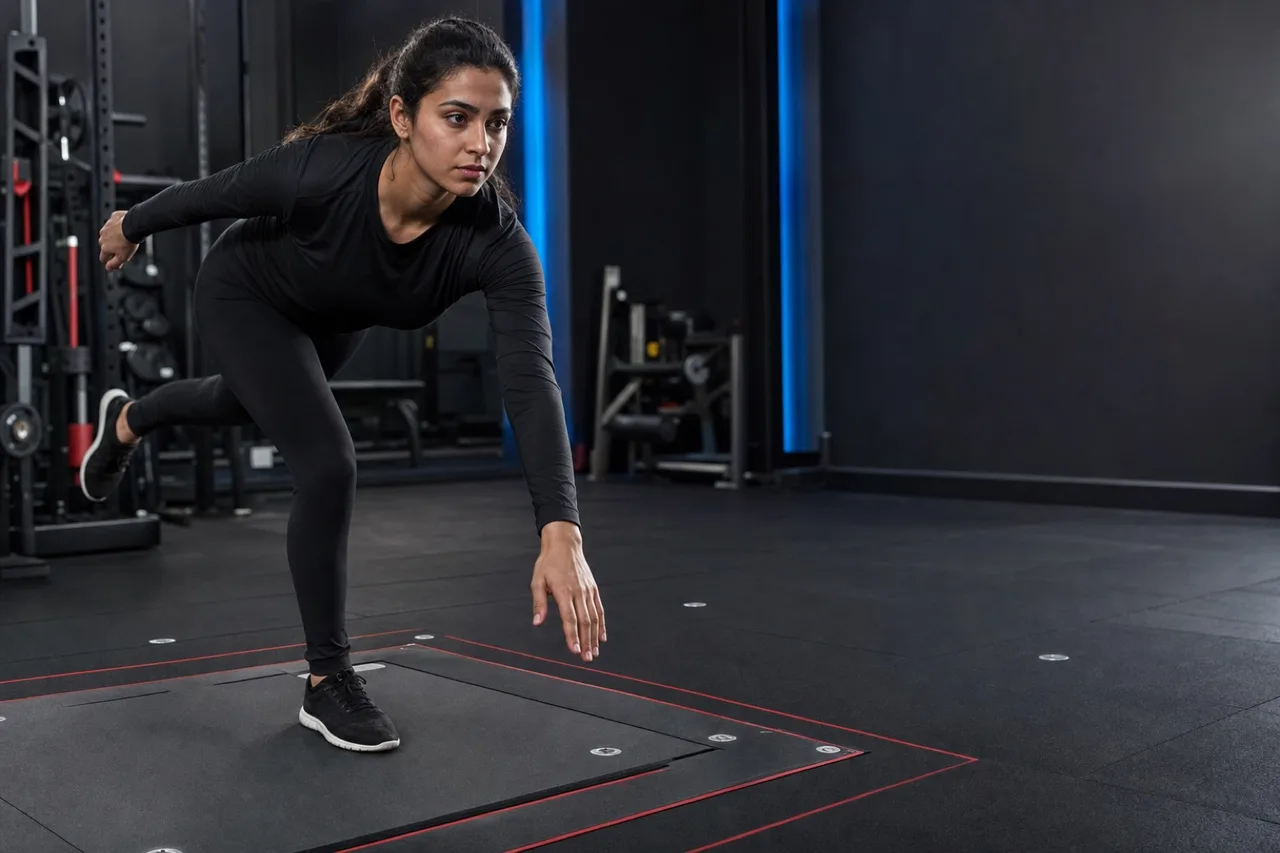
A tendon that has stopped hurting at rest is not yet a tendon ready to run, hop and sprint. Before each step back toward your sport, we check that it copes with the demands of that step, and compare it with the other leg.
Morning and next day Morning stiffness settling, and no flare the day after a session.
Single-leg heel raises Repeated heel raises on the affected leg, compared with the other side.
Hopping Hopping on the spot and forward on the affected leg, without pain building.
Steady running Easy runs on flat ground at your planned volume, without a flare afterwards.
Speed and hills Faster running, hills and uneven ground added one at a time.
Confidence Trusting the tendon to push off, jump and land at full effort.
Tests are chosen for your tendon, your sport and your stage. Rushing back raises the risk of the pain returning; passing them lowers it.
Your first appointment
We can usually confirm Achilles tendinopathy through examination alone — feeling for tenderness and thickening, and checking how your tendon responds to specific movements. Imaging isn’t routinely needed to start treatment; we reserve ultrasound or MRI for cases that don’t fit the typical pattern, or where surgery is genuinely being considered.
Your first session includes a full functional assessment — how you stand, walk, squat and heel-raise — and a look at your training history to understand what actually drove the load past what your tendon could handle. You’ll leave with a plan that starts that day, including your starting exercise dose and what "relative rest" looks like for you specifically, so you don’t need to stop activity altogether while we get to work.
Scans are reserved for atypical cases or when surgery is being considered.
Your starting exercise dose, explained and demonstrated, from the first visit.
Improvement over 3–6 months is normal — there are no overnight cures for this condition.
Frequently asked
Usually not. It can normally be confirmed through examination alone — feeling for tenderness, thickening and specific movement responses. We only recommend imaging (usually ultrasound) if your symptoms don’t fit the typical pattern, follow an unexpected course, or if surgery is being considered.
No — complete rest is rarely the answer. It reduces the tendon’s capacity to tolerate load, which can make things worse when you return to activity. "Relative rest" — swimming, cycling, aqua jogging — plus a structured loading programme is what the evidence actually supports.
The eccentric loading programme typically needs a minimum of 12 weeks, and can take 3 to 6 months to significantly improve symptoms — sometimes faster, sometimes slower. Around 70% of people return gradually to sport or full activity by around 3 months. Morning stiffness usually improves first; tenderness on squeezing the tendon is usually the last thing to settle.
The majority of people improve significantly with a well-run loading programme, but it’s estimated 10–30% don’t respond fully to eccentric exercise alone. If that happens, options include podiatry review for footwear/inserts, shockwave therapy, or other injection-based treatments — we don’t recommend steroid injections, as current evidence doesn’t support them as a good option here.
Often, in a modified form — reduced volume, flatter terrain, adjusted pace — rather than stopping altogether, once your tendon can tolerate it. Some people need a short period of relative rest using low-load alternatives like swimming or cycling first. We’ll tell you honestly where you stand after your assessment.
Tendinopathy. "Tendinitis" suggests inflammation, but in this condition there is little true inflammation: the tendon’s own structure changes, thickening as its fibres become disorganised. That is why it is treated by loading the tendon, not by rest or anti-inflammatory treatment alone.
It depends where the pain is. With insertional tendinopathy, at the heel bone, deep calf stretches and lowering the heel below level press on the tendon, so they are avoided early on. With mid-portion tendinopathy, loading matters far more than stretching. We will show you which suits your tendon.
A rupture is a different injury: a sudden snap, or a feeling of being kicked at the back of the heel, often with trouble pushing off. If that happens, get it assessed the same day. Tendinopathy builds up gradually, and a well-dosed loading programme strengthens the tendon.
Yes. Munaza Physio Studio in Allama Iqbal Town, Lahore, is a private, women-only studio with female physiotherapists, so squats, hops, running drills and every part of the assessment can be done comfortably in modest clothing.
Your next move
Tell us where the pain is, what makes it worse, and what you want to get back to. We’ll tell you honestly how we can help.