
A ridge or dome
Along the middle of your tummy, especially when you sit up, strain or get out of bed.
Midline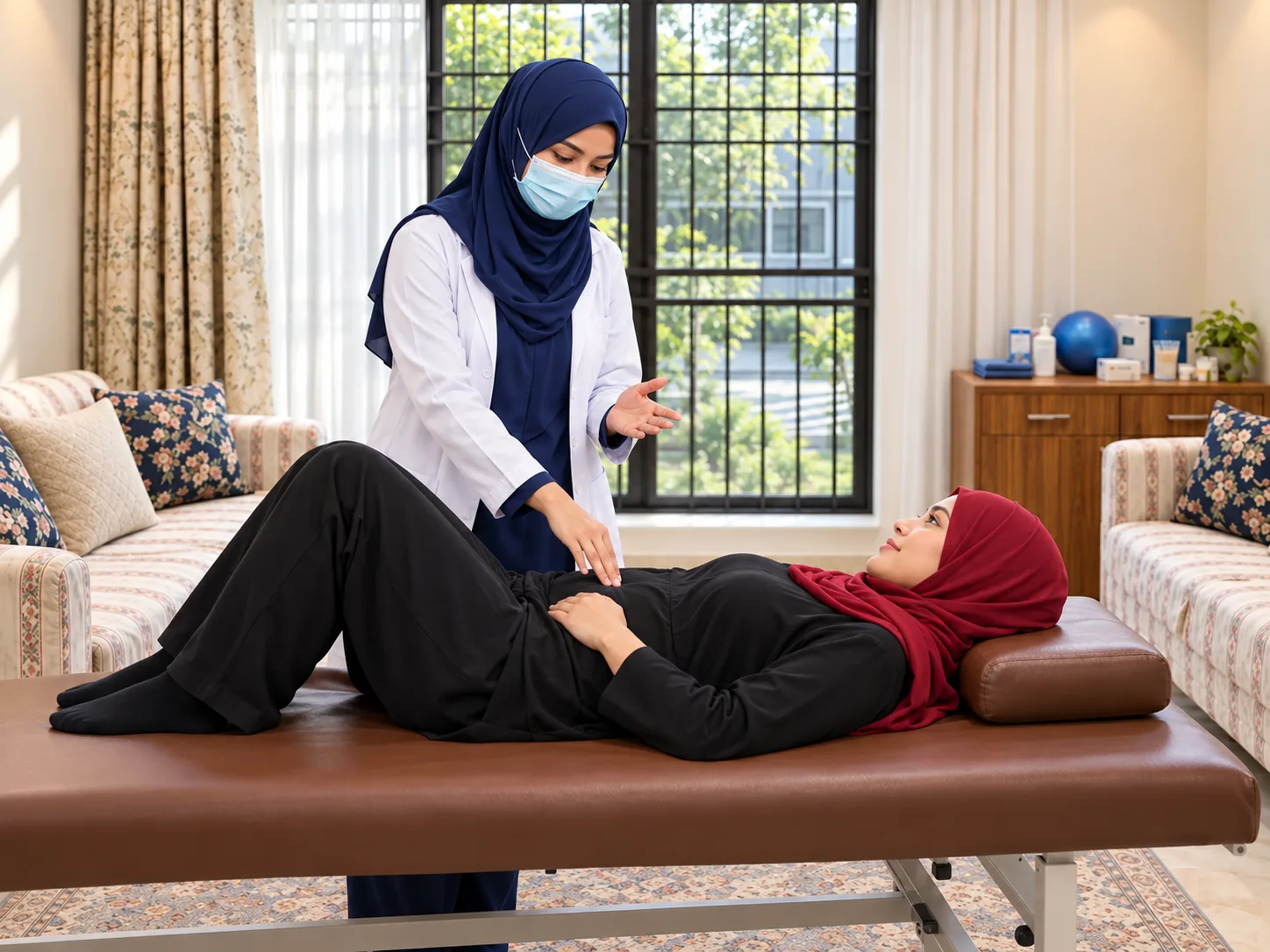
Diastasis Recti · Postnatal Physiotherapy · Lahore
Diastasis recti is a widening of the connective tissue between your two rows of abdominal muscles, common after pregnancy and very treatable. It is not a torn muscle, and crunches are not the fix. Private physiotherapy with a female physiotherapist in Lahore assesses your midline by hand and rebuilds your core around it, in the right order, at the studio or at home.
The short answer
Diastasis recti is a widening of the linea alba, the connective tissue that runs down the midline between your left and right abdominal muscles. It stretches and thins during pregnancy to make room for your baby, so some separation is normal; after birth the question is whether the midline has regained enough tension to support your core. The muscles are not torn.
Physiotherapy measures the gap by hand and checks how the midline behaves under load, whether it domes or holds. It then rebuilds the deep core with breath-led exercise, adds daily lifting, and only later fuller abdominal work, around your own gap. Crunches and sit-ups often do the opposite, increasing the pressure that keeps the midline domed.
At a glance
A gap on its own is not a problem. What matters is whether the midline holds tension and whether it is causing symptoms.
women have a separation six weeks after birth; about 1 in 3 still do at a year.
about two finger-widths is the width commonly used to call it diastasis.
A narrow gap that domes can matter more than a wider one that holds tension.
There is no closing window for rehabilitation.
What you may notice
Along the middle of your tummy, especially when you sit up, strain or get out of bed.
MidlineA gap or soft strip between the muscles that you can feel with your fingertips.
To the touchWhen the front of the trunk supports less, the back and pelvis can take more.
BackDifficulty lifting your child, getting up from the floor, twisting or carrying shopping.
WeaknessCoughing, sneezing, laughing or straining pushes the midline out.
PressureA tummy that still looks pregnant months or years after birth, whatever you do.
Months onSCROLL FOR THE ASSESSMENT TO FIND YOUR ROOT CAUSE
Gap or hernia?
They can look alike, they are treated differently, and they can happen together. These patterns help tell them apart; they cannot diagnose you.
We check for a hernia at every assessment, and refer you to a doctor if we suspect one.
Inside the abdominal wall
Pick a step to see it in a woman’s abdominal wall from the front. These describe terms you may hear; they are not a checklist for diagnosing yourself.
A strip of connective tissue, woven from the sheaths of the abdominal muscles, running from the breastbone to the pubic bone, with the navel on it. In pregnancy it stretches and thins; after birth the question is whether it has regained tension.
The long “six-pack” muscles on either side of the midline, crossed by tendinous intersections. They do not tear. They are pushed apart, and the strip between them is what widens.
As the womb grows the abdominal wall stretches, the muscles move apart and the linea alba thins. By late pregnancy some separation is expected; it is a normal adaptation, not damage.
When a wide, slack midline takes load, as in a sit-up, a strain or lifting without bracing, pressure pushes it forward as a ridge or dome. Doming is the sign that the midline is not yet holding tension.
The transversus abdominis wraps the trunk like a corset, working with the diaphragm above and the pelvic floor below. Breathing out and drawing it in gently shares the pressure and draws the midline together.
A teaching drawing, not your tummy. How wide your gap is, and how it behaves under load, is found by hand at your assessment.
Inside the abdominal wall
The 3D model of a woman’s abdominal wall follows each point as you read: the linea alba and the two rectus muscles, the strip stretching in pregnancy, the midline doming when a wide gap takes load, and the deep core drawing it together with the breath and the pelvic floor.
The linea alba runs between the two rectus muscles from the breastbone to the pubic bone. The assessment measures its width and feels how much tension it holds, at three points along its length.
As the bump grows the muscles are pushed apart and the strip thins. That is a normal adaptation; after birth it needs time and loading to regain tension.
Sit-ups, straining and lifting without bracing push the slack midline forward as a ridge. Seeing doming tells us a movement is too much for now.
Breathing out and gently drawing in the transversus abdominis, with the diaphragm and pelvic floor, shares the pressure and draws the midline together. That is where the plan starts.
How it is assessed
A narrow gap that domes and bulges under pressure can matter more than a slightly wider one that holds tension well. Width alone does not tell the whole story.
Assessment is external, with your consent at every step. There is no internal examination in a diastasis assessment.
Why crunches do not fix it
Movements that load a slack midline before the deep core can control the pressure can keep the tissue from regaining tension. Watch for doming as the sign.
These are general cautions, not rules for every woman; your assessment decides what suits you and when to move on.
Myths and facts
A few common beliefs keep women from getting help, or push them into the wrong exercise. These are the ones we hear most.
None of this means your tummy is not real or your worry is wrong. It means there is a clear, safe way forward.
Recovery in phases
Closing a diastasis means restoring an order: breath, deep core, daily lifting, then fuller abdominal work. The phases overlap and are adapted to you and your birth; they are not a fixed timetable.
Gentle breathing into the ribs and belly, a first feel for the deep core, easy walking, and how to roll out of bed and lift your baby.
The transversus abdominis and pelvic floor working together, with heel slides and toe taps that keep the midline flat.
Bridges, arm reaches and sit-to-stand, building to lifting your child, carrying shopping and getting up from the floor.
Planks, loaded work and running, in the right order for your midline, not all at once.
After a caesarean, your plan also follows your surgeon’s advice and the healing of your scar.
Diastasis recti exercises at home
Examples of early work, based on NHS and POGP postnatal guidance. Which of them suits you, and when to move on, depends on your assessment; do not start them on your own if you are unsure.
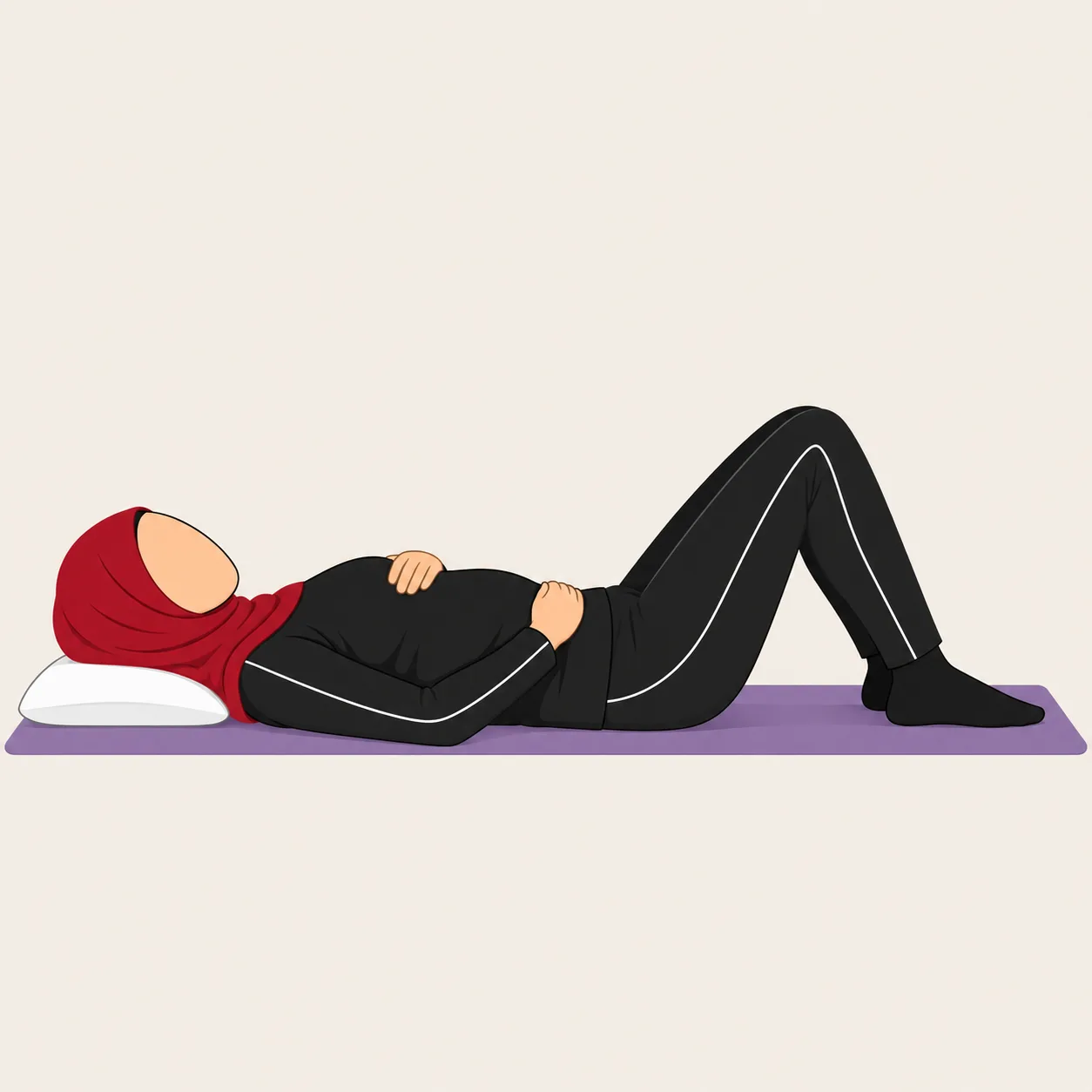
Breath and deep core coordination, the first step of the sequence.
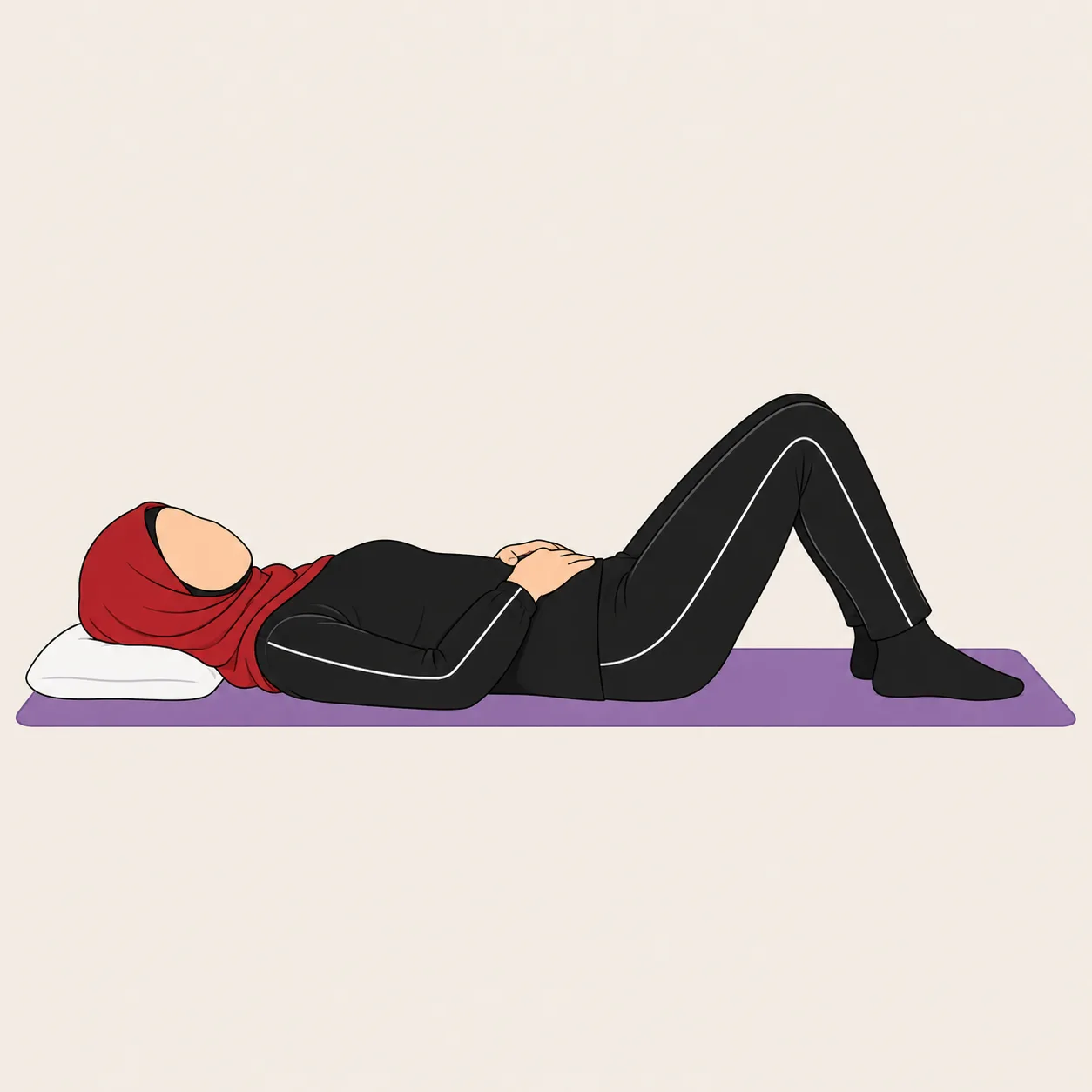
Keep the deep core steady while one leg moves, with no strain on the midline.
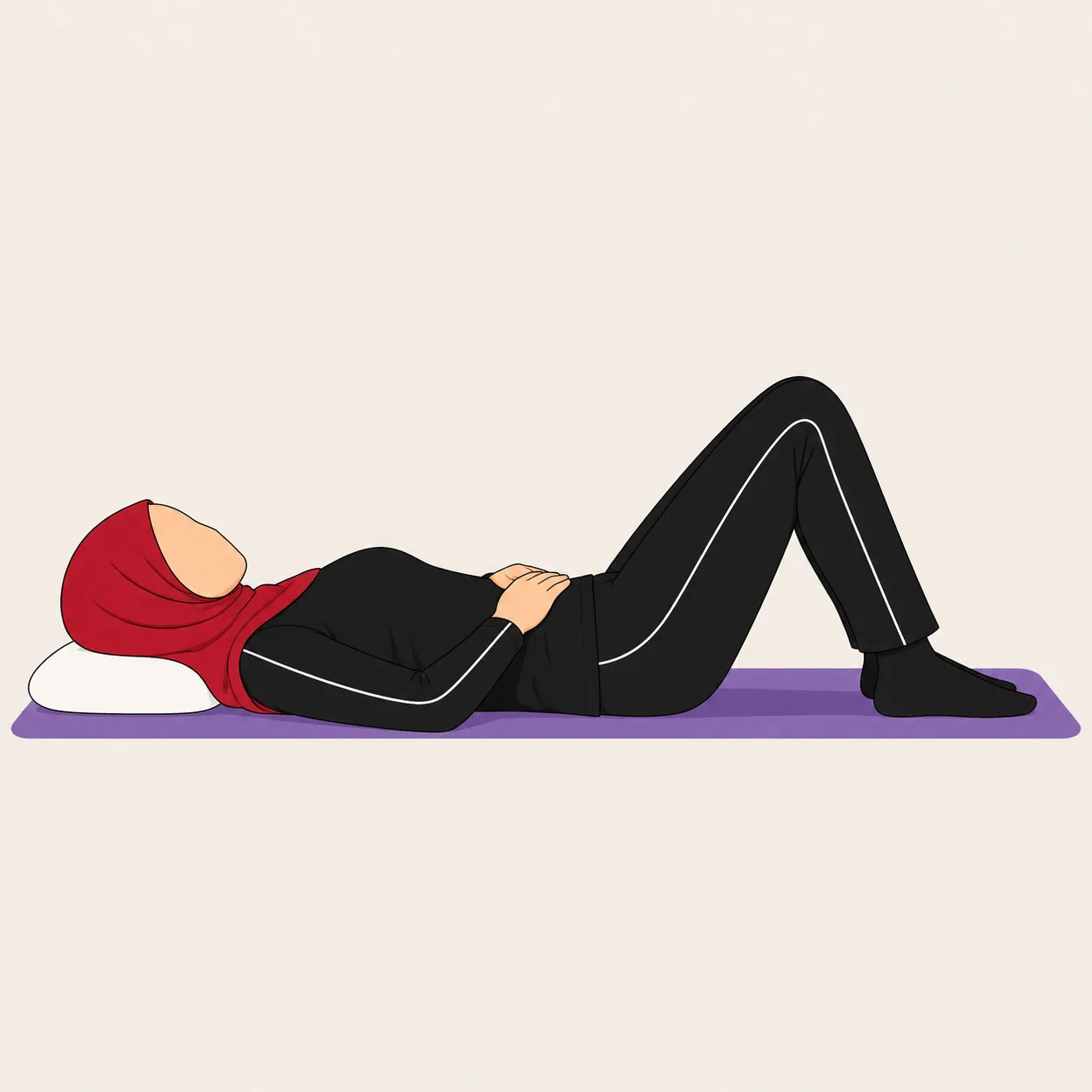
The next step on: one leg lifts and lowers while the deep core keeps the trunk still.
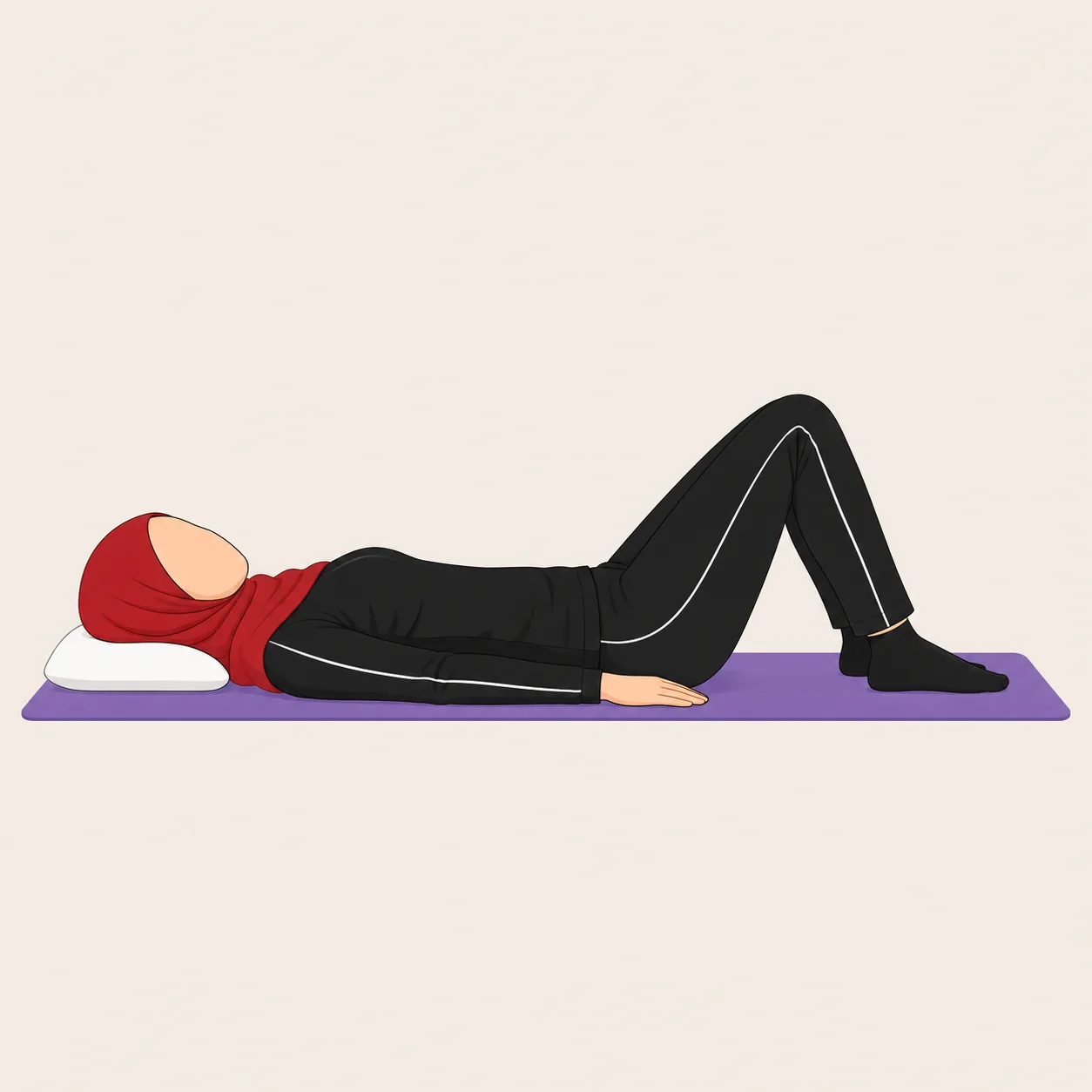
Coordinate the breath, the deep core and the hips without strain.
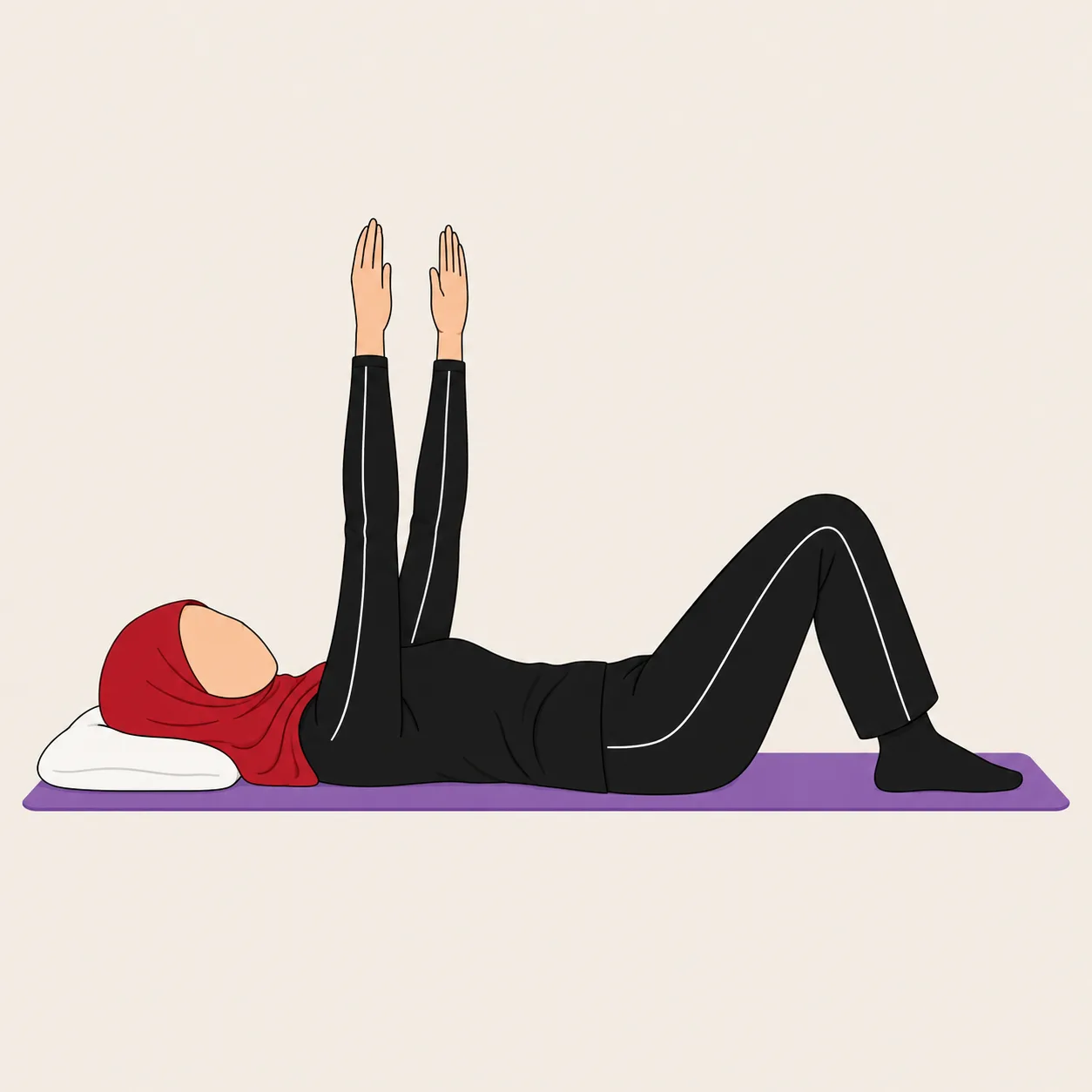
Keep the midline flat as an arm moves, building towards lifting.
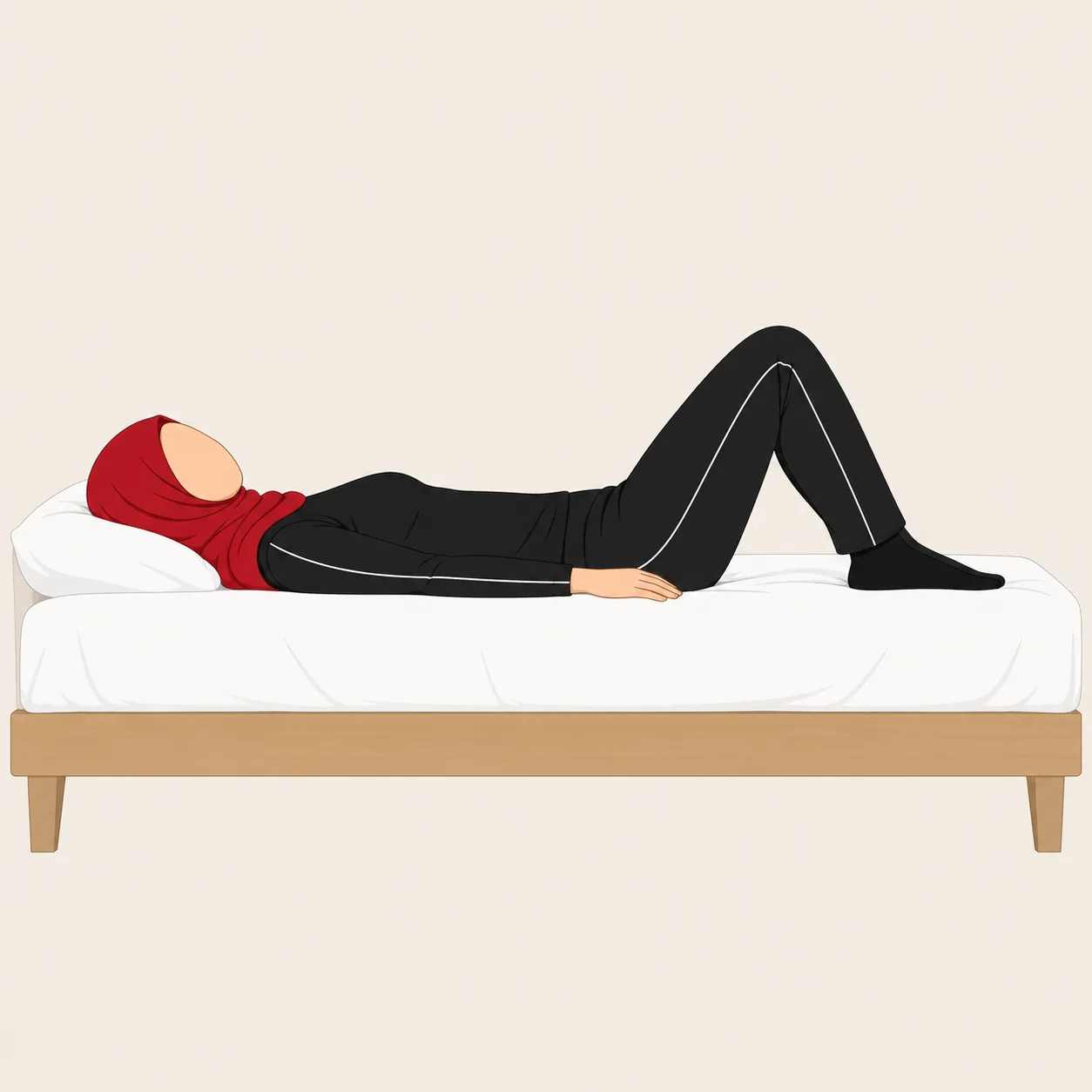
Get up from lying without the pressure of sitting straight up.
These are examples of what an assessment may build into a plan, not a programme to start on your own. Stop and ask for advice if you see doming along your midline, feel pain, or leak.
Day to day
How you breathe, lift and get up matters as much as any exercise. These small habits share the pressure.
Roll onto your side and push up with your arm instead of sitting straight up from lying.
Breathe out as you lift, stand up or pick up your child; never hold your breath and bear down.
Bring your baby or the shopping in close to your body before you lift, bending your knees.
Press gently on your lower tummy with your hands when you cough or sneeze while you are healing.
Sit with your feet raised on a small stool, breathe out and do not strain; ask about constipation.
Bring the baby up to you on a pillow and change sides, so your trunk is not twisted or slumped.
Pain relief and any support garment are matters for your doctor, midwife or physiotherapist.
Step by step
Your birth history, current symptoms, any caesarean, pelvic floor symptoms and what you want to get back to: lifting your child, exercise, or simply feeling supported.
We measure the width and depth of the gap by hand, check how the midline responds under load, whether it domes, bulges or holds tension, and look at your posture and breathing. Everything is external, with your consent at every step.
What your assessment shows, what it does not, and whether you need a doctor first, for example if a hernia is suspected.
A progressive plan starting with breath and deep core coordination, with how much, how often and when to move on, building towards safe daily lifting and, in time, fuller abdominal work.
Care designed for women
Munaza Physio Studio is a women-only physiotherapy practice. Your abdominal wall is assessed one-to-one by a female physiotherapist in a private room, so you can describe every symptom, including your birth, a caesarean scar, leaking and how you feel about your body, without hesitation.
Women-only environment with a female physiotherapist
A private room, with your consent at every step
One-to-one sessions, never a shared slot, never rushed
Postnatal recovery, caesarean and pelvic floor care understood
Home visits across Lahore when getting out with a baby is hard

Real Stories
My mother had a stroke that left her right arm and leg immobile. With Dr. Munaza’s expert physiotherapy, she regained full movement completely painfree and without any medication. We’re truly grateful for her care and professionalism.
I took home sessions for my neck, shoulder, back, and hip pain. Alhamdulillah, all my pain is gone like a magic. Even my headache, which I had for many years, got better with the exercises. Thank you so much Dr Munaza for your kind treatment and care. May Allah bless you.
“Dr. Munaza treated my neck and shoulder pain, as well as my muscle pull issue, very effectively. With the help of exercises and therapy, I feel much better now. She is very kind, caring, and cooperative. Highly recommended!”
I had neck pain with headaches for a long time. After treatment with Dr. Munaza, my pain got much better and the headaches eased. She listened carefully, treated me gently, and explained everything clearly. I feel relaxed and thankful for her care Best physiotherpist in the area👍🏻
Dr. Munaza is very kind and professional. My shoulder pain improved within a few sessions. Highly recommended!!!!
Simple pricing
Transparent pricing, with a personalised assessment at the start of every plan.
Clinic sessions start from PKR 1,500.
Home visit pricing depends on your location and condition, contact us for a quote.
Book AssessmentA midline you can trust
Diastasis recti is very common after pregnancy and treatable at any time. The aim is a midline that holds, a core you can rely on for lifting your child, and exercise that works with your body, not against it.
Questions
Diastasis recti is a widening of the linea alba, the strip of connective tissue that runs down the midline between your left and right rectus abdominis muscles. It stretches and thins during pregnancy to make room for your baby. Some separation is normal in late pregnancy; the question after birth is whether the midline has regained enough tension to support your core.
Very. In a large Norwegian study about 6 in 10 women had a separation six weeks after birth, and about 1 in 3 still did at twelve months. A gap on its own is not a problem; what matters is whether the midline holds tension when you lift, cough or sit up, and whether it is causing symptoms.
No. The two muscle bellies do not tear apart. The connective tissue between them stretches and thins, the way skin stretches. It needs time and the right kind of loading to regain tension, much like a stretched ligament needs rehabilitation rather than rest alone.
Usually not, and they can make it worse. Full sit-ups, crunches and early front planks load the outer abdominal muscles before the deep core can control the pressure, which can increase doming along the midline. Treatment starts with breathing and the deep core and builds up to that kind of loading only when your midline can hold.
By hand, with your consent, over your clothes or on bare skin as you prefer: the width of the gap in finger-widths above, at and below the navel, how deep it feels, and how the midline responds when you lift your head and shoulders or engage your core. Whether it domes or holds tension tells us more than the width alone. No equipment is needed, and an ultrasound scan is rarely required.
No. A weak midline can affect how well your core supports your spine and pelvis, so back pain, pelvic girdle pain, leaking and a feeling of weakness often come with it. Many women with a gap have no symptoms, and treatment is about function, not the look of your tummy.
They can look alike but are different. A diastasis is a broad, usually painless ridge or dome along the midline that flattens when you lie down. A hernia is a distinct lump, often round and at the navel, that may be tender and may not go back in. A painful, firm lump that does not reduce, especially with vomiting, needs urgent medical care. We check for a hernia at every assessment and refer if we suspect one.
Any time after birth. Many women come from around six weeks, once early recovery has settled and their doctor or midwife has said it is fine to start exercising, and after a caesarean we work with your surgical advice. There is no need to wait months if something concerns you sooner.
Yes. There is no closing window. Women years after birth still see real improvement in how the midline holds and in symptoms such as back pain with the right programme. A small gap may remain; that is fine if the midline holds tension and you have no symptoms.
No, but what you do matters. We help you adapt what you do now, from lifting your child to walking and training, and build back to fuller work in a sequence that supports the midline: breath, deep core, daily lifting, then fuller abdominal training and running when you are ready.
There is no strong evidence that a binder or tape closes a diastasis. Some women find a support garment comfortable for a short time, for example after a caesarean, but it does not replace exercise and should not make it hard to breathe. Ask your physiotherapist before buying one.
Yes. Munaza Physio Studio in Allama Iqbal Town, Lahore, is a women-only practice. Your assessment is external, one-to-one with a female physiotherapist in a private room, with your consent at every step, at the studio or at home across Lahore.
Safety first
Your next step
You do not need to have measured anything yourself, or to know the right terms. Tell us what you are noticing, how long ago you gave birth, and what you want to get back to. We will tell you honestly whether physiotherapy can help. Women-only · One-to-one · At the studio or at home in Lahore.
 5.0