Scar mobilisation
- Hands-on techniques applied directly to and around the scar
- Improves how the tissue glides against the layers underneath
- Starts light and builds as tolerated
Women’s Health · Postnatal · Lahore
Once your C-section wound has fully healed, the scar tissue underneath can remain tight, stuck to the layers beneath it, or tender to the touch, sometimes for years. Gentle, hands-on scar therapy can restore mobility and reduce the pulling, numbness or discomfort many women simply live with.
At a glance
Scar therapy is about function and comfort, restoring movement and reducing discomfort. It is not a cosmetic treatment.
Scar work only begins once your wound is fully closed and cleared.
Improvement is possible long after the surgery, not just in the first months.
Skin, fascia and muscle each heal and form their own scar tissue.
Techniques start light and build gradually, guided by how the tissue responds.
The short answer
Yes, once the wound has fully healed. Scar therapy is never appropriate on an open or healing wound. As scar tissue forms, it can adhere to the muscle and fascia layers beneath it, restricting how your abdomen moves and sometimes referring tightness or discomfort well beyond the scar line itself, including into the lower back or hips.
Gentle manual therapy techniques mobilise this tissue, improving how it glides against the layers underneath. This genuinely works years after the surgery: scar tissue does not have a closing window for improvement the way some other tissues do.
What it is
C-section scar therapy is gentle, progressive manual mobilisation of the scar tissue and the layers beneath it, only ever begun once the wound is fully healed and cleared.
What you may notice
Around the scar when bending, stretching, or standing up straight.
PullingIn the skin around or above the scar, sometimes years after surgery.
SensationThat is sensitive to touch or clothing pressure.
TenderThat may be linked to restricted movement at the scar site.
Further awayAbove the scar that feels connected to tissue tightness, not just softness.
Above the scarWanting the scar addressed for comfort and confidence, not appearance alone.
ConfidenceSCROLL FOR THE ASSESSMENT TO FIND YOUR ROOT CAUSE
Understanding it
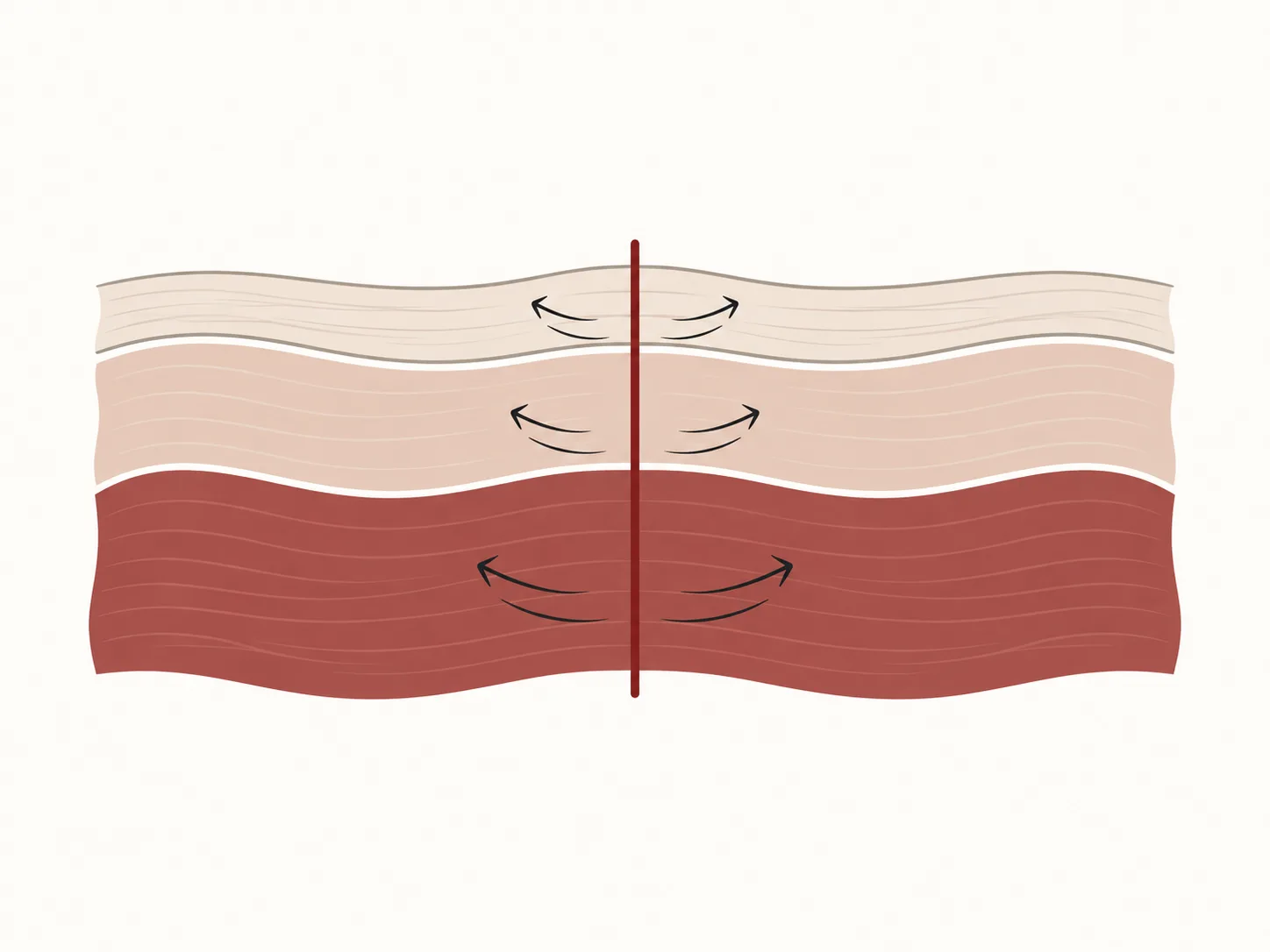
When the layers of a C-section heal, they can become adhered to one another, restricting the normal independent glide each layer should have against the ones around it. This is why a healed scar can still feel tight when you bend, stretch, or twist.
Skin, fascia and muscle all form scar tissue and can restrict each other’s movement.
Restriction at the scar can show up as tightness or discomfort elsewhere in the abdomen or back.
Techniques start light and build gradually, guided by how the tissue responds.
The layers
A C-section involves several layers of tissue, each healing and forming its own scar tissue. Manual scar mobilisation gently and progressively improves the mobility between them.
The line you can see.
The layer that should glide beneath it.
The abdominal wall underneath.
Before and after
This is what scar mobilisation works on. The model is a block of the lower abdominal wall cut through the middle of the scar, not a picture of anyone’s body: watch how the layers move when two fingertips move the skin.
Self-massage, step by step
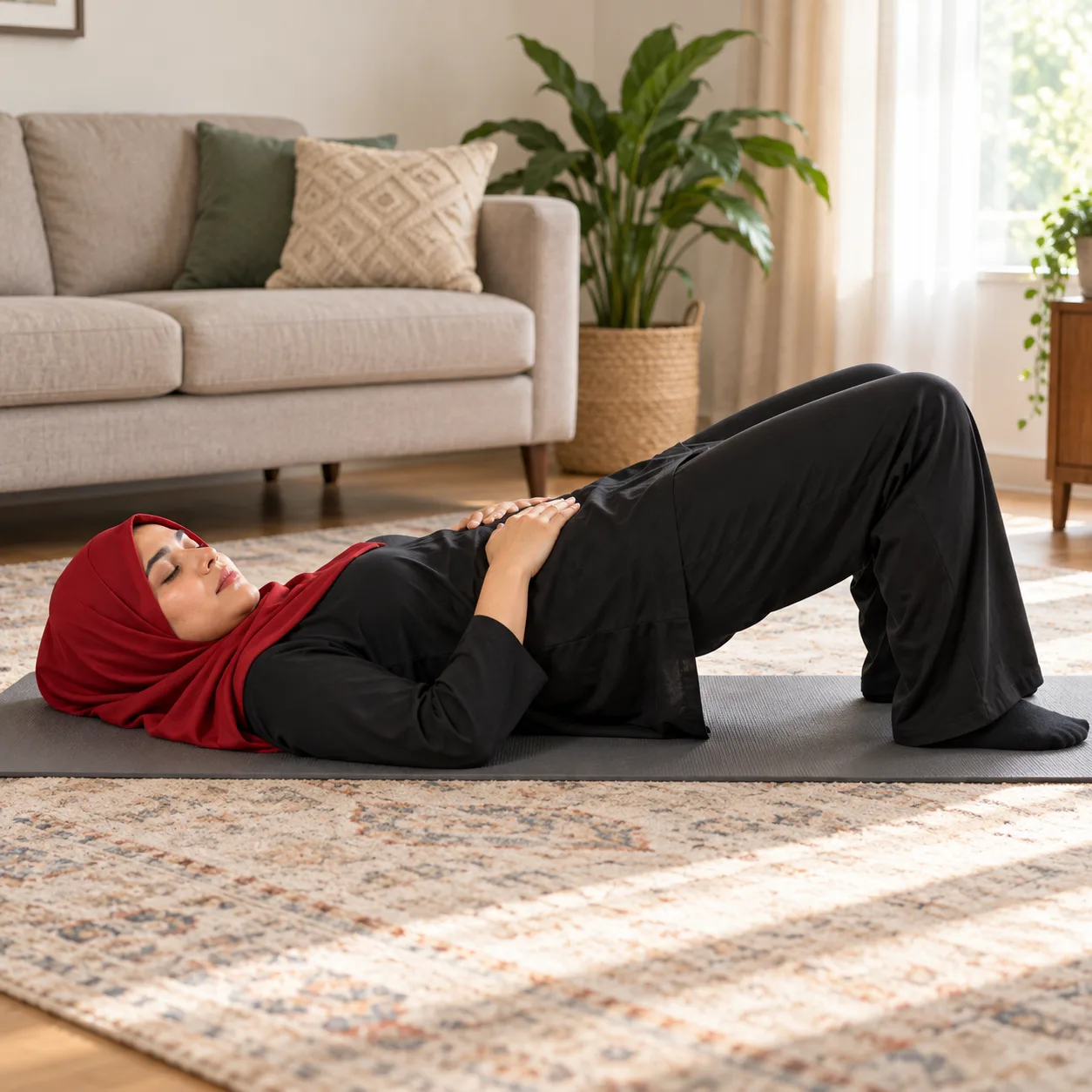
You are shown this in your session and it is adjusted to your scar. It is only for a wound that has fully healed and been cleared. Lie on your back with your knees bent, so your abdomen is relaxed.
With flat fingertips and light pressure, make slow circles over the abdomen above the scar. Tension here can pull on the scar, so this comes first. About a minute.
Stay about two finger-widths away from the line. Move the skin side to side, then up and down, then in small circles both ways, all the way round.
When touch there is comfortable, repeat the same three movements on the line, staying longer where it feels stuck. If it is too sensitive, begin with a light touch through a soft cloth.
Where it can show up
These can be present even years after your surgery, and even if your scar looks completely healed on the outside.
What to expect from it
It is worth being clear about this before you book.
When it can start
If your scar is still healing, we will tell you honestly and advise on timing rather than proceeding early.
Scar therapy is never appropriate on an open or healing wound.
Typically confirmed at your postnatal check. This varies and is individually assessed, not assumed.
Improvement is not limited to the first months.
Scar tissue mobility can genuinely improve years after surgery.
Alongside scar work
Scar mobilisation itself is hands-on, and you are shown self-massage in the session. Restricted scar tissue can affect how well your deep core engages, so it is often paired with core rehabilitation like this.
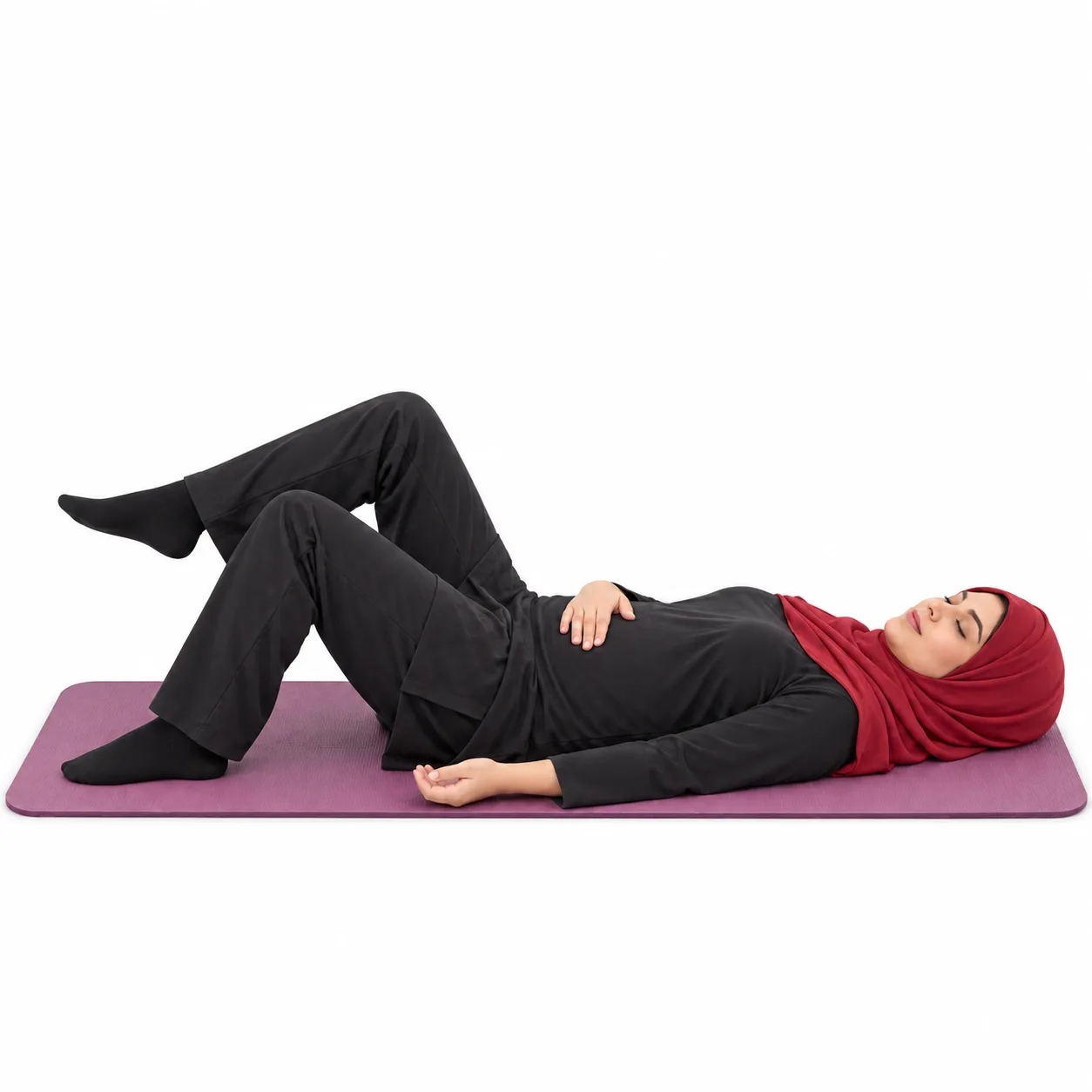
Re-engage the deep core with the breath.
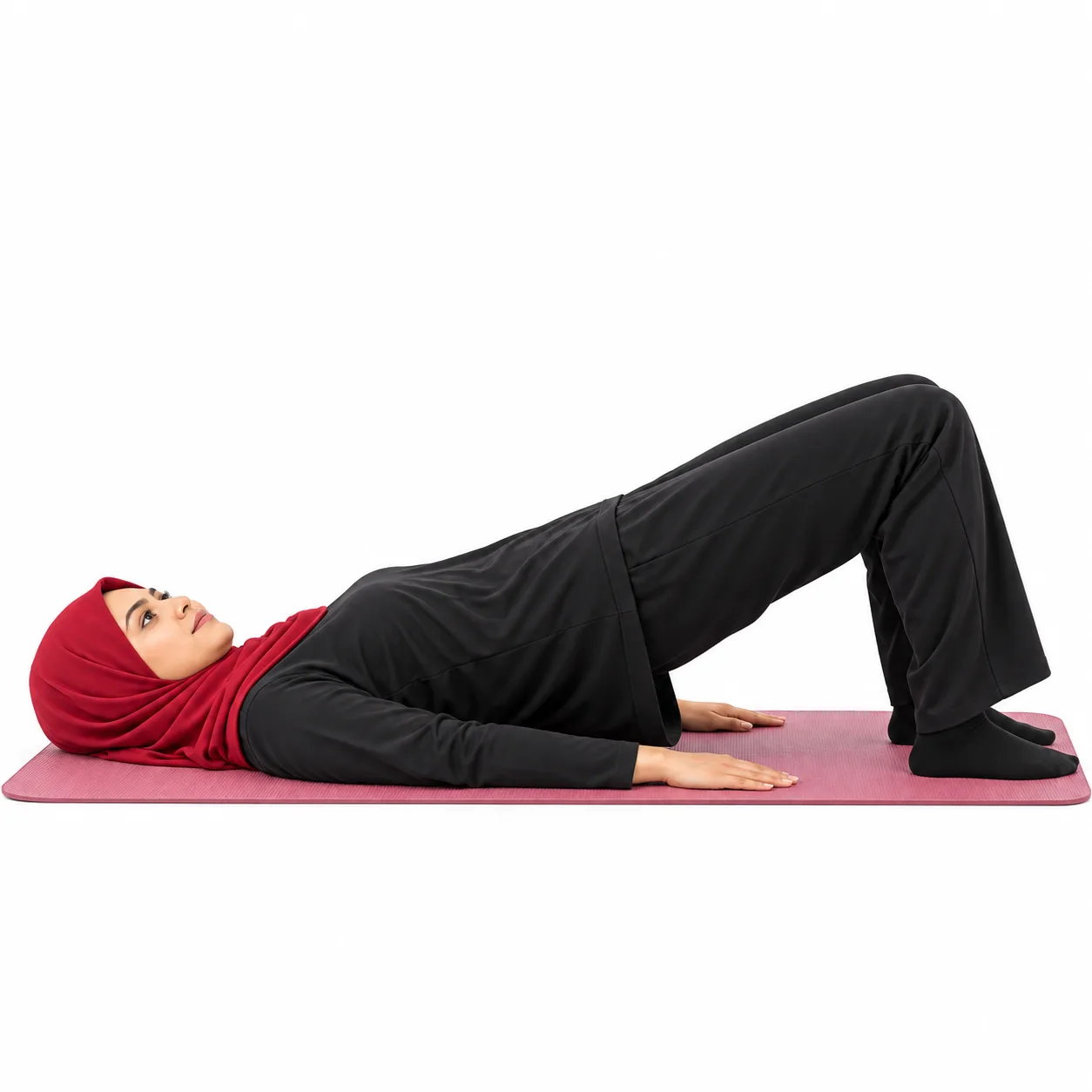
Coordinate the breath, the deep core and the hips without strain.
These are examples of what an assessment may build into a plan, not a programme to start on your own. Only once your wound is fully healed and cleared, and stop if anything pulls sharply or hurts.
Step by step
First 15 minutes. When your surgery was, how healing went, and what you are noticing now: tightness, numbness, or discomfort.
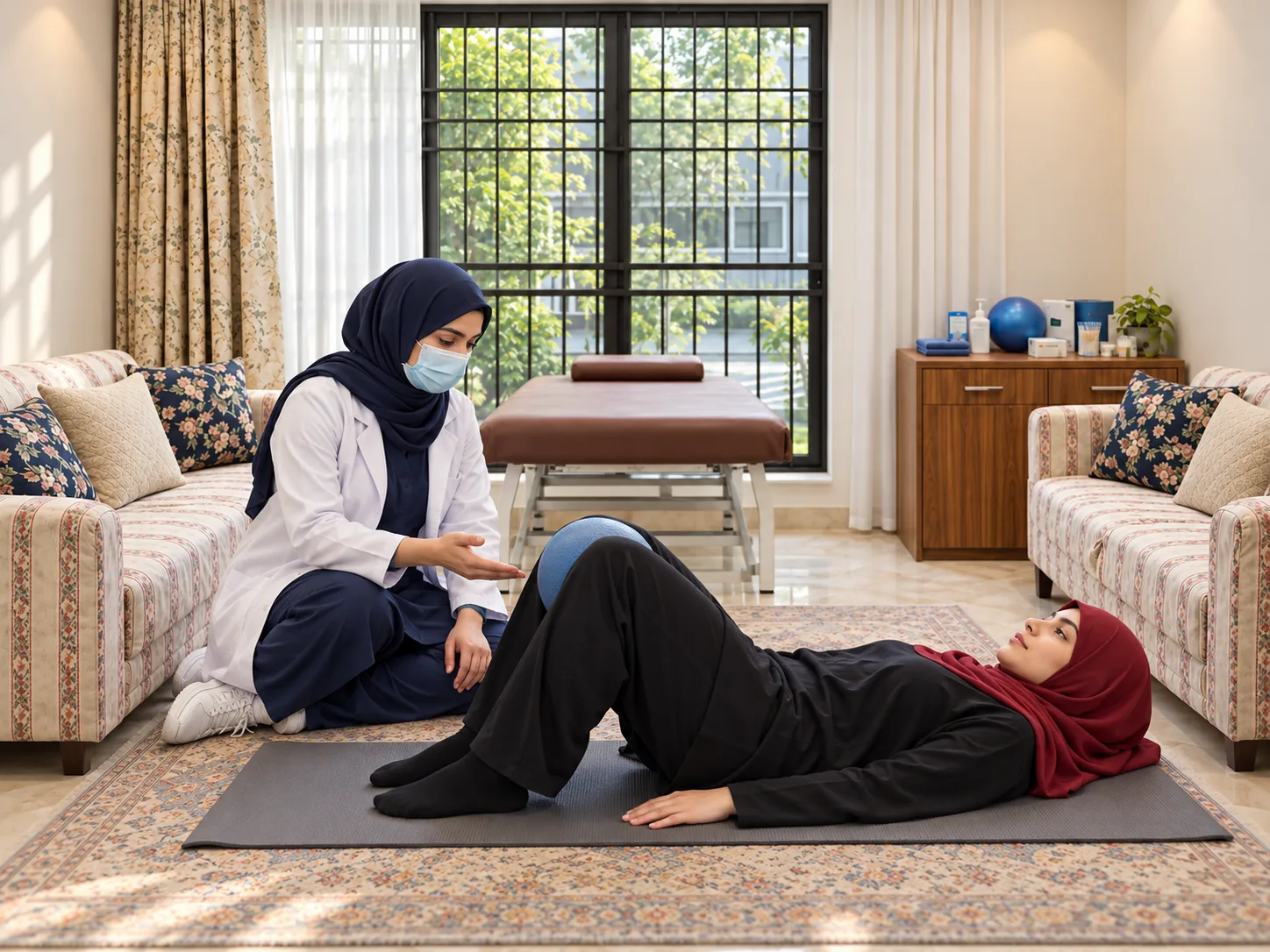
20 to 30 minutes. Checking scar mobility, sensitivity and how it moves against the layers beneath it, always with your consent before any direct touch.
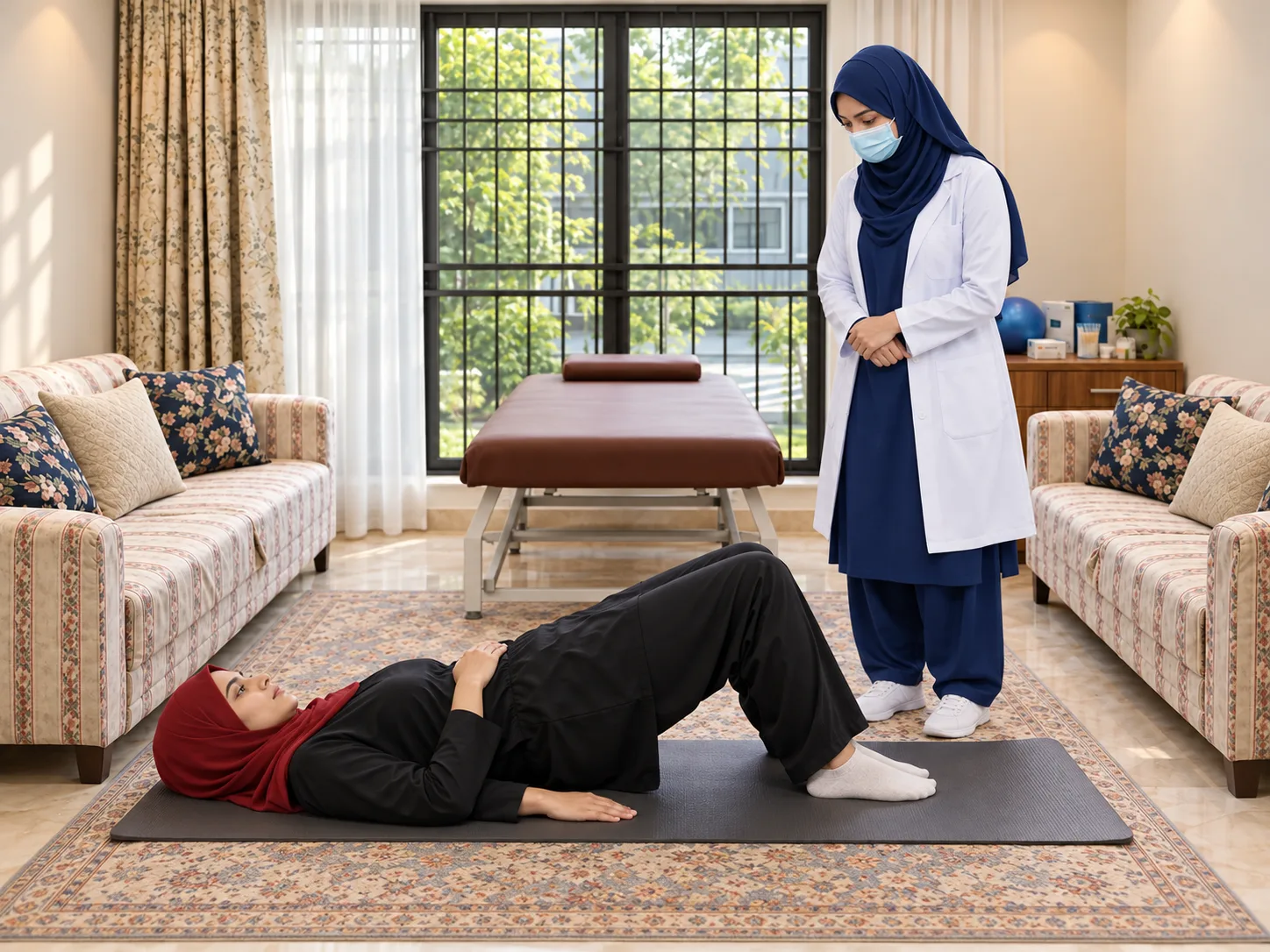
Same session. Specific, progressive mobilisation techniques applied directly to and around the scar, starting light and building as tolerated.
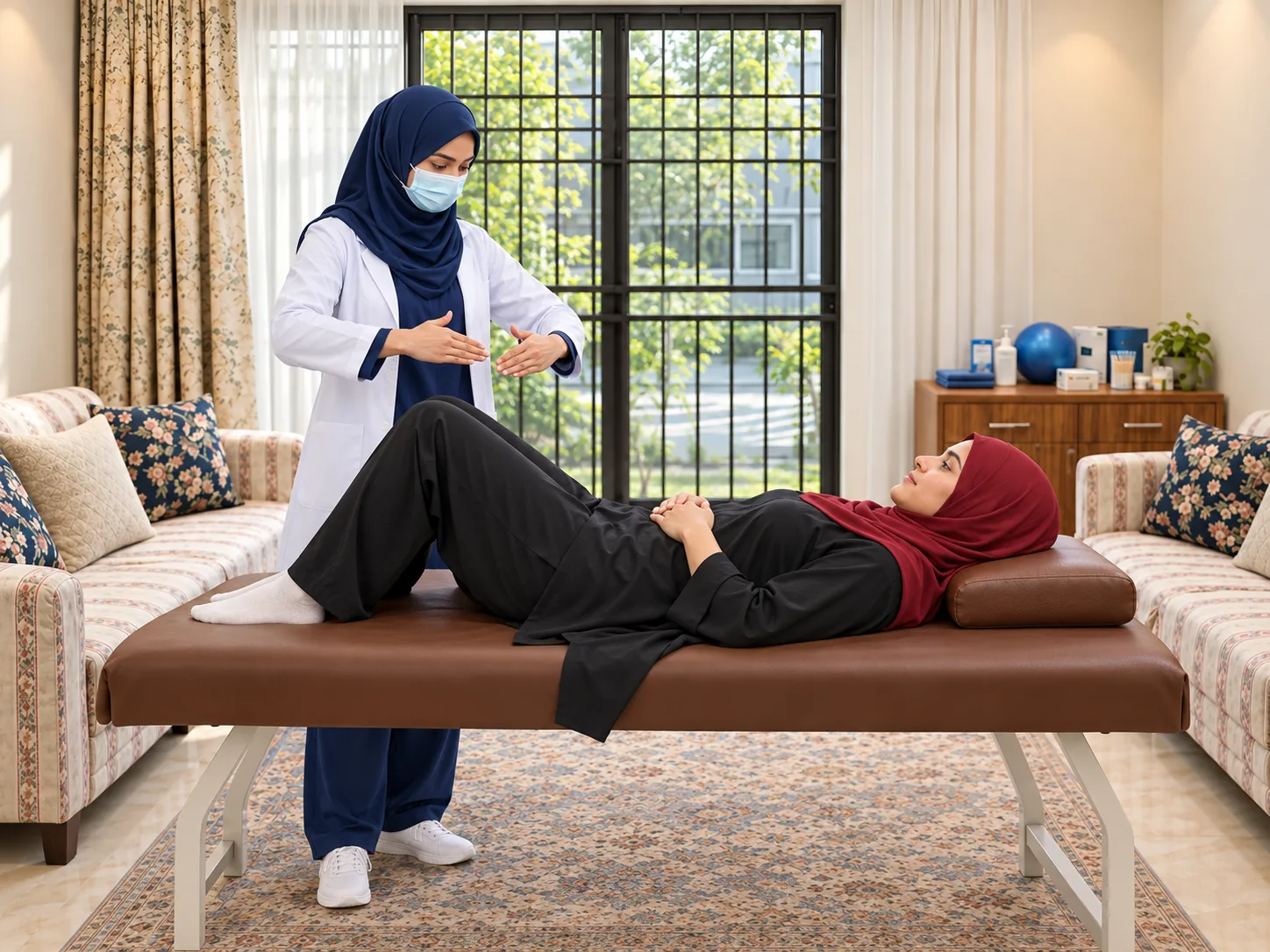
To take home. Self-massage and stretching techniques you can do between sessions to maintain and build on progress.
Your first visit
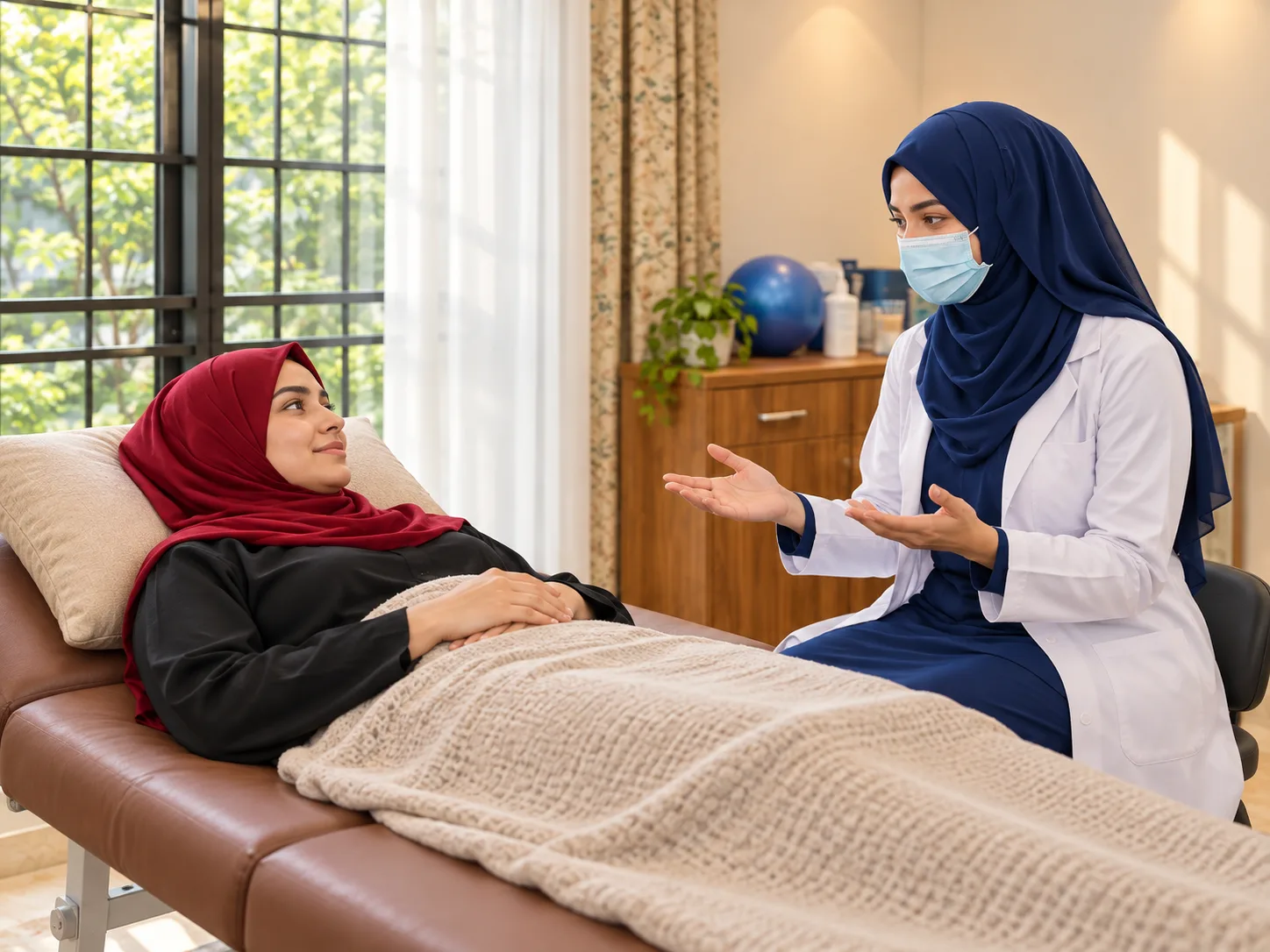
Appointments are one-to-one with a female physiotherapist in a private, women-only studio. Direct scar touch is always explained before it happens, and you are in control of pace and pressure throughout.
Scar mobilisation only begins once your wound is fully closed and appropriate for touch, typically confirmed at your postnatal check.
Techniques start light and build gradually based on how your tissue responds, never forced.
Where a scar shows signs of infection, a hernia, or another concern needing medical review, we refer you rather than treating outside our scope.
Questions
It is gentle, progressive manual mobilisation of the scar tissue and the layers beneath it, only ever begun once the wound is fully healed and cleared. It can reduce pulling, tightness and numbness around the scar and improve deep core function.
A C-section involves several layers of tissue: skin, fascia and muscle. As they heal they can become adhered to one another, which restricts the normal glide each layer should have. That is why a healed scar can still feel tight when you bend, stretch or twist.
Only once your wound is fully healed and closed, typically confirmed at your postnatal check. That is usually from around six weeks, though this varies and should be individually assessed rather than assumed.
No. Scar tissue mobility can genuinely improve years after surgery. There is no closing window the way there is for some other kinds of tissue healing.
It shouldn’t be. Techniques start gently and progress based on how your tissue responds. You are always in control of pace and pressure, and discomfort is a signal to adjust, not push through.
Often, yes to some degree. Altered sensation above a C-section scar is common and can improve with scar mobilisation, though the extent of improvement varies by individual and how long the numbness has been present.
It can. Restricted scar tissue can affect how well your deep core engages, so improving scar mobility is often paired with core and pelvic floor rehabilitation for a fuller recovery.
It can be linked. Restricted movement at the scar site can affect the abdominal wall, lower back or hips, which is why some women notice discomfort in areas away from the scar itself. An assessment checks whether your scar is part of the picture.
No. Scar therapy is about function and comfort: restoring movement and reducing discomfort. It is not a cosmetic treatment and it does not remove the scar.
Sometimes an overhang above the scar feels connected to tissue tightness, not just softness. Scar therapy works on that tightness and on how the scar moves against the layers beneath it. It is not a cosmetic treatment, and your assessment will tell you honestly what is likely to change.
No. Direct scar touch is always explained before it happens, and you are in control of pace and pressure throughout. Techniques start light and build gradually based on how your tissue responds, never forced.
Yes, once your wound is fully healed and cleared. You are shown self-massage and stretching techniques to do between sessions, to maintain and build on progress.
Yes. Appointments are one-to-one with a female physiotherapist in a private, women-only studio.
No referral is required, though we will always check your wound has been medically cleared as fully healed before beginning any direct scar work.
The studio is a private, home-based space in Hasham Street, Karim Block, Allama Iqbal Town, Lahore. We share exact directions after booking, so your visit stays discreet.
Safety first
Your next step
You do not need to know the right terms for what you’re noticing. Tell us about your scar and what’s bothering you, and we will tell you honestly whether therapy can help. Women-only · One-to-one · Your details stay between you and your clinician.