Sports InjuryExerciseRecoveryPain Relief
Tennis Elbow and Golfer’s Elbow: Causes, Exercises and Recovery
· 11 min read · Munaza Ghani
Munaza Physio Studio
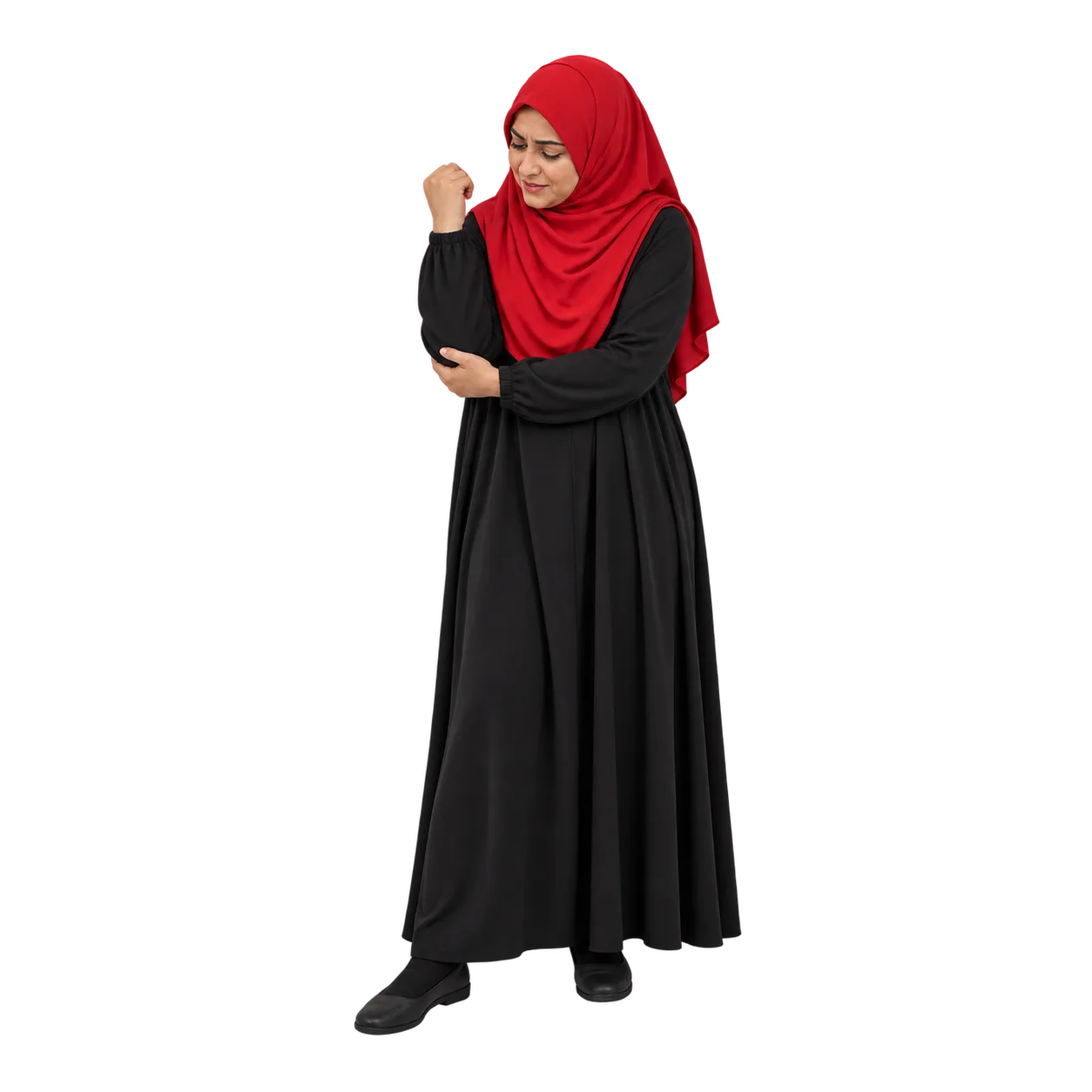
Pain on the outside or inside of your elbow when you lift a kettle, twist a lid, carry a bag or shake hands is almost always a tendon that has fallen behind the load it carries. On the outside it is called tennis elbow, on the inside golfer’s elbow, and most people who have either have never held a racket or a club. In Lahore it is more likely to come from cooking, housework, carrying a child, sewing or hours at a keyboard. It improves, usually fully, but not with total rest or a quick injection. It improves with the right load, built up over weeks. This guide explains what is happening, what works and what does not, and gives you a six-move programme to start from.
At a glance
Tennis and golfer’s elbow in four numbers
Typical figures from published research and clinical practice. Your own assessment sets your plan.
1–3%
Of adults at any time
Have tennis elbow, most often between 40 and 60.
7–10×
Tennis over golfer’s
Outside-elbow pain is several times more common than inside-elbow pain.
8–12
Weeks of loading
A typical programme to rebuild the tendon, progressing at its pace.
6–12
Months to settle fully
Many improve much sooner. Long-standing cases take longer.
Sources include Shiri and colleagues (Am J Epidemiol 2006) on tennis elbow prevalence, Bisset et al. (BMJ 2006) and Coombes et al. (JAMA 2013) on treatment results, and NHS and physiotherapy guidance on loading programmes.
Anatomy
What is actually hurting
The muscles that lift your wrist and fingers (the extensors) share one short tendon that attaches to the bony bump on the outside of the elbow. The muscles that bend your wrist and grip (the flexors) attach at the bump on the inside. Every time you grip, those muscles pull on their tendon at the elbow, which is why a kettle, a jar lid or a handshake hurts at the elbow and not in the hand.
When the load on a tendon rises faster than it can adapt, it becomes sensitive and thickened. That is a tendinopathy. The older name, "epicondylitis", suggests inflammation, but the problem is mostly in the tendon itself, which is why anti-inflammatory fixes work less well than people expect and loading works better.
It usually follows a spell of more gripping, lifting or repetitive wrist work than the tendon was ready for: a busy stretch of housework, a new job, a new baby to carry, more time on a keyboard or mouse, a few weeks of badminton or tennis. Scroll on to see it in 3D.
Inside the elbow
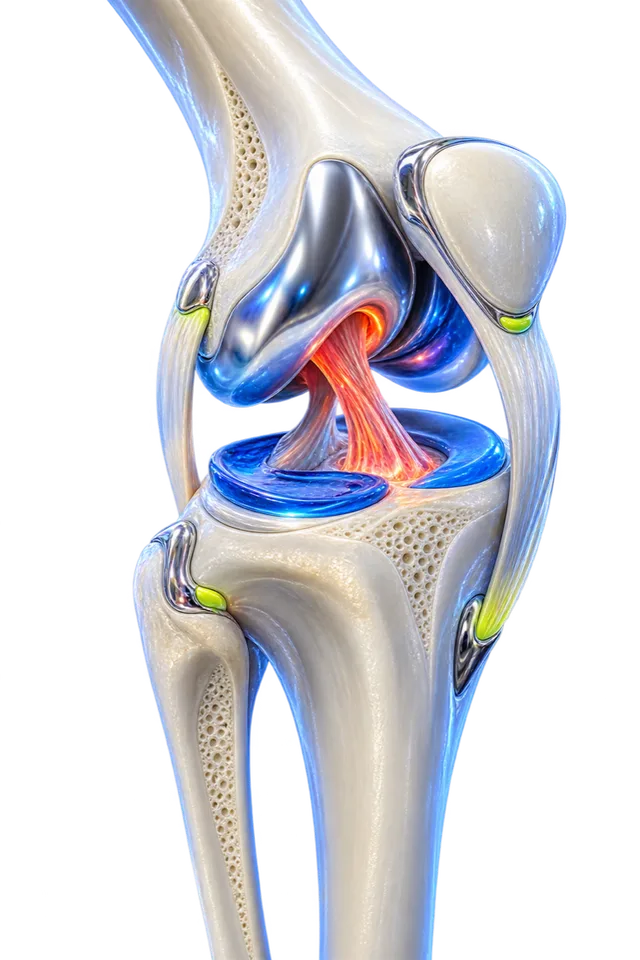
The tendons in 3D
Two tendons, two bumps
The extensor tendon attaches on the outside of the elbow (tennis elbow) and the flexor tendon on the inside (golfer’s elbow). Both are short, strong and heavily used.
Ease the irritation
For a while we reduce the tasks that clearly flare it: lighter or palm-up grips, bigger handles and breaks. The tendon needs calming, not complete rest.
Load it slowly
Held wrist lifts, then slowly lowering the wrist under a light weight, teach the tendon to take load again. The programme progresses as it responds.
Grip and the whole arm
Grip, forearm turning and strength up to the shoulder rebuild the capacity for lifting, carrying and work, with a plan to keep it.
Which one
Tennis elbow or golfer’s elbow?
They are the same kind of tendon problem in two places. Where it hurts, and what makes it worse, usually tells them apart. Pain at the bony bump on the outside, worse when you lift with the palm down or twist, is tennis elbow. Pain on the inside, worse when you grip hard, carry or bend the wrist, is golfer’s elbow. You can have both.
Outside or inside?
| Tennis elbow (outside) | Golfer’s elbow (inside) | |
|---|---|---|
| Where | Bony bump on the outside of the elbow | Bony bump on the inside of the elbow |
| Tendon | The muscles that lift the wrist and fingers | The muscles that bend the wrist and grip |
| Worse with | Lifting palm down, twisting lids, typing | Gripping and carrying, bending the wrist, throwing |
| How common | Much more common | Less common |
| Look-alike | The radial nerve, or pain from the neck | The ulnar nerve: tingling in the little and ring fingers |
Causes
Why it happens in everyday life, not only on the court
Most people with tennis elbow do not play tennis. The common triggers are ordinary:
- Cooking and housework: rolling dough, lifting heavy pots and the kettle, wringing out cloths, long spells of scrubbing.
- Carrying: shopping bags, a baby or toddler on one arm, a heavy handbag.
- Desk work: a keyboard and mouse for hours, with the wrist held up.
- Sewing, gardening and repetitive hand tasks.
- Sport: racket sports, cricket, golf and weight training, especially after a sudden increase, or with a grip that is too small or a technique that loads the wrist.
It is commonest between 40 and 60, which overlaps with perimenopause, and tendon problems are reported more often around that time. The research on why is still developing, so it is a reason to keep your arms strong, not a diagnosis.
Treatment
What works, and what does not
The honest picture is that tennis elbow usually gets better on its own over months, and the right treatment shortens and steadies that recovery. A well-known trial (Bisset and colleagues, BMJ, 2006) found that a steroid injection gave the fastest relief at six weeks, but by one year physiotherapy had done better and the injection group had more recurrences. A larger trial (Coombes and colleagues, JAMA, 2013) found that steroid injections gave worse results than placebo at a year. Injections are a decision to make with your doctor, knowing that trade-off.
Common treatments, compared
| What it does | What to know | |
|---|---|---|
| Total rest | Eases pain for a short time | Weakens the tendon and muscles further. Ease off flaring tasks, keep moving. |
| Graded loading (exercise) | Rebuilds the tendon’s capacity | The best-supported approach over 8 to 12 weeks, ideally with a physiotherapist. |
| Steroid injection | Short-term pain relief for some | Linked with slower recovery and more relapses over a year. |
| A strap or brace | Eases pain while you grip | Does not strengthen the tendon. Best used alongside exercise. |
| Hands-on treatment | Eases pain and tension | Helps for a while. Exercise is what makes it last. |
Recovery
Rebuilding the tendon in phases
The road back
Three phases, progressed by response
The phases overlap and move on when the tendon responds, not when the calendar says so. Pain during exercise should stay mild and settle within a day.
Weeks 1 to 2
Settle and hold
Ease the tasks that flare it, and start held wrist lifts that calm the pain.
Weeks 2 to 8
Load and lower
Slow wrist lowering with a light weight, grip and forearm work, building up steadily.
Weeks 8 to 12+
Strength and return
Heavier, faster and more task-like loading for work, home and sport.
Long-standing tennis elbow can take longer. If it flares for more than a day, the load is eased, not stopped.
Exercises
Six moves to start with
These are the loading exercises used in physiotherapy for elbow tendinopathy. Use the ones your physiotherapist agrees with; discomfort up to mild is fine, sharp pain is not. Rest your forearm on a table, palm down for tennis elbow.
- Held wrist lift (isometric): forearm on a table, palm down, hand over the edge. Lift the back of the hand against your other hand, which stops it moving. Hold the push steady, then relax. Five holds of 30 to 45 seconds.
- Slow wrist lowering: holding a water bottle, use the other hand to help lift the wrist, then lower it slowly on its own over three to four seconds. Three sets of 15, once a day.
- Grip squeeze: squeeze a rolled towel or soft ball firmly but comfortably, hold a few seconds, release slowly. Ten squeezes, two to three times a day.
- Towel twist: wring a rolled towel in both hands as if squeezing out water, then reverse. Ten each way.
- Forearm turning: forearm on the table holding a hammer or bottle by one end, slowly turn the palm down, then up. Ten each way, holding nearer the end to make it lighter.
- Palm-up wrist curl (for golfer’s elbow): palm up, hold a light weight, curl the wrist up, then lower over three seconds. Three sets of 15.
Stop and get advice if the pain is sharp, keeps building, or your hand tingles or feels weak.
At home
Small changes that settle the tendon
- Lift with your palm up, or use two hands, for bags, pans and the kettle.
- Use bigger handles on cutlery, pens and tools; a jar opener saves the twist.
- Break up repeated gripping: shorter spells of chopping, cleaning and wringing, swapping hands where you can.
- Set up your keyboard: rest the wrist level, keep the mouse close and take short breaks.
- Try a strap just below the elbow for heavy tasks, and take it off at rest.
- Cold for a flare, or heat for an aching forearm, for 15 to 20 minutes wrapped in a towel.
- Keep the rest of the arm strong: shoulder and shoulder-blade strength takes load off the elbow.
Warning signs
When it is not tennis elbow
Most elbow pain is tendon pain, but see a doctor promptly for:
- A sudden pop with pain at the front of the elbow, bruising, a change in the shape of the upper arm or weakness turning the palm up: this can be a torn biceps tendon, and a repair works best early.
- Tingling, numbness or weakness in the hand, which points to a nerve (the ulnar nerve on the inside of the elbow, the radial nerve, or a nerve from the neck) and needs assessment, urgently if weakness is getting worse.
- A hot, swollen elbow with fever, a deformed arm after a fall, or a cold, pale or blue hand.
- Arm pain with chest pressure, breathlessness, sweating or faintness, or sudden arm weakness with a drooping face: call 1122.
Our service
Elbow care at Munaza Physio Studio, Lahore
Munaza Physio Studio in Allama Iqbal Town, Lahore, is a women-only practice. Your elbow is assessed one-to-one by a female physiotherapist in a private room, at the studio or at home across Lahore. We find which tendon is sensitive, rule out a tear, a nerve or the neck, ease the tasks that flare it, and build a graded loading programme around your day, with hands-on treatment where it helps. See the full page on elbow tendinopathy.
Tennis and golfer’s elbow: your questions
Tennis elbow is on the outside of the elbow, where the muscles that lift the wrist and fingers attach. Golfer’s elbow is on the inside, where the muscles that bend the wrist and grip attach. Tennis elbow is several times more common.
No. Most people with it do not play tennis. Gripping, lifting and repeated wrist tasks cause it: housework, cooking, carrying, gardening, typing and many hand-based jobs.
Many people are much better within a few months of the right loading, but complete recovery can take six months to a year or more, especially if it has been there a long time. Steady progress in what you can grip and lift matters more than the date.
No. Complete rest lets the tendon and muscles weaken further. Ease off the tasks that clearly flare it for a while, keep the arm moving and start gentle loading set to your tendon.
They can ease pain for a few weeks, but research has linked them with slower recovery and more relapses over the following year compared with exercise-based care. It is a decision to make with your doctor.
A strap just below the elbow eases pain during gripping for some people. It does not strengthen the tendon, so it works best alongside an exercise programme.
Tingling, numbness or weakness in the hand points to a nerve rather than the tendon. It needs assessment, and urgently if weakness is getting worse.
Yes. Munaza Physio Studio in Allama Iqbal Town is a women-only practice offering elbow tendinopathy care at the studio or at home across Lahore.

Written by
Dr. Munaza Ghani
Munaza Physio Studio
Lead physiotherapist at Munaza Physio Studio in Allama Iqbal Town, Lahore, a private women-only practice for orthopaedic, women’s health and neurological rehabilitation.
- AHPC-registeredLicensed physiotherapist
- MSOMPT · DPTOrthopaedic manual therapy
- Women-only studioOne-to-one, private room
- Home and onlineAcross Lahore
Elbow pain stopping you lifting, cooking or typing?
Tell us which side hurts, how long it has been, and what it is stopping you doing. We will tell you honestly how physiotherapy can help. Women-only, one-to-one, in the studio or at home in Lahore.