
Pain lifting a kettle or a bag
Lifting with the palm facing down catches on the outside of the elbow.
Lifting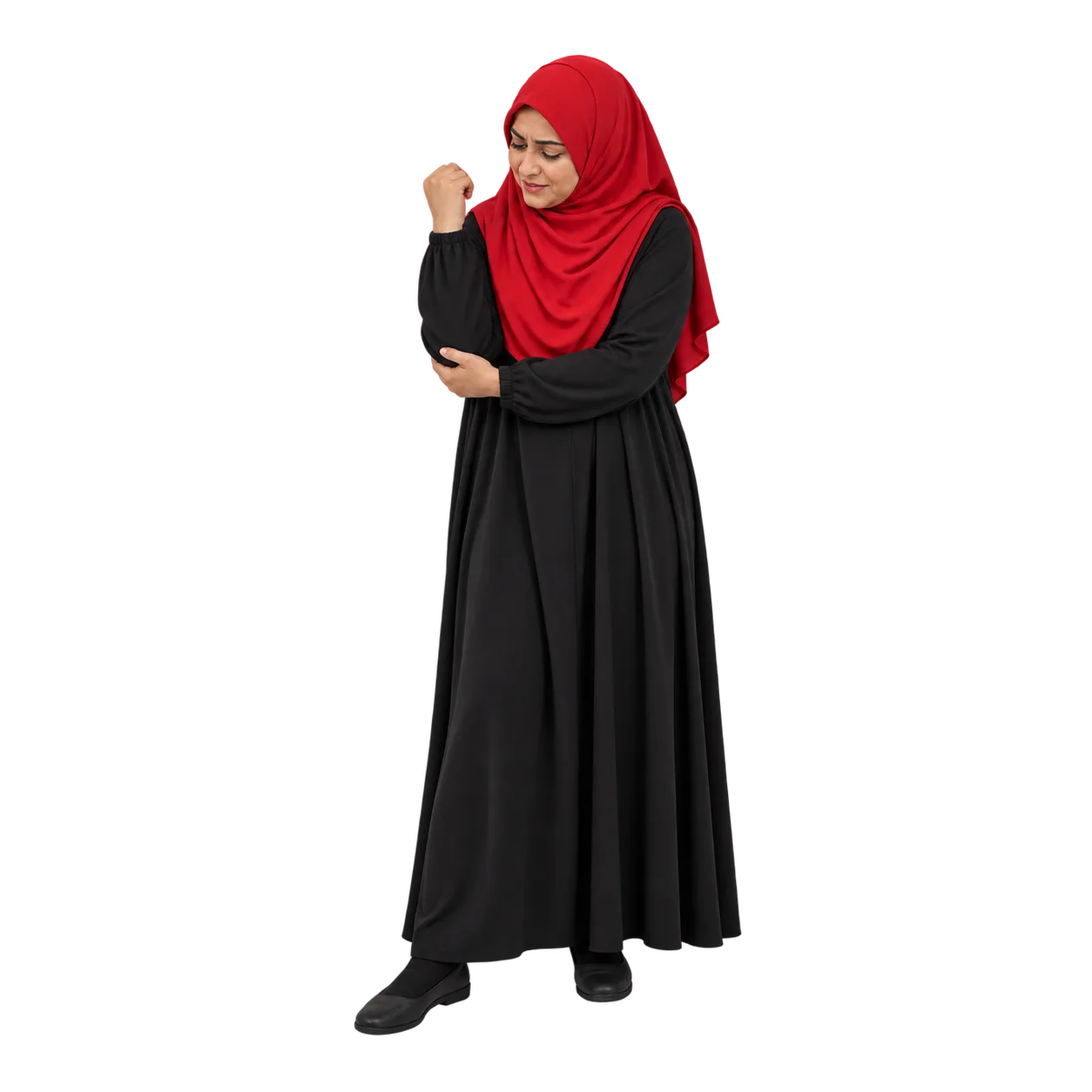
Tennis & Golfer’s Elbow · Physiotherapy · Lahore
Pain on the outside or inside of the elbow when you lift a kettle, twist a lid, carry a bag or shake hands. It is a tendon that has lost some of its capacity, and it improves with the right loading, not rest. Private physiotherapy with a female physiotherapist in Lahore, at the studio or at home.
The short answer
Elbow tendinopathy is pain from a forearm tendon where it attaches at the elbow. Tennis elbow is on the outside, where the muscles that lift the wrist and fingers attach; golfer’s elbow is on the inside, where the muscles that bend the wrist and grip attach. It usually follows more gripping or lifting than the tendon was ready for, and most people who have it have never played tennis or golf.
Physiotherapy starts by confirming which tendon it is and ruling out a tear, a nerve or the neck. Then it eases the tasks that flare it and builds the tendon back up with a graded loading programme over weeks, from held wrist lifts to slow lowering, grip and forearm strength, until gripping and lifting are comfortable again.
At a glance
Elbow tendinopathy is one of the most common reasons for arm pain in working-age adults. It takes patience, and it responds to the right load.
have tennis elbow at any one time.
Most people are in their forties or fifties when it starts.
The outside of the elbow is affected far more often than the inside.
A typical programme to rebuild the tendon, progressing at its pace.
What you may notice
Lifting with the palm facing down catches on the outside of the elbow.
LiftingTwisting, turning a key or wringing out a cloth hurts at the elbow.
TwistingThings feel heavier than they should, and you may drop a cup or put things down quickly.
GripA firm handshake or squeezing something brings on a sharp pain.
HandshakePressing just in front of the bump on the outside, or inside, of the elbow is tender.
TenderLong spells on a keyboard or mouse leave the forearm aching.
KeyboardSCROLL FOR THE ASSESSMENT TO FIND YOUR ROOT CAUSE
Outside or inside?
The same kind of tendon problem in two places. Where it hurts, and what makes it worse, usually tells them apart.
Pain at the front of the elbow after a pop while lifting is neither: it may be a torn biceps tendon and needs prompt medical assessment.
Where it can come from
Pick a step to see where it sits in the elbow and forearm. These describe terms you may hear; they are not a checklist for diagnosing yourself.
The muscles that lift the wrist and fingers share one short tendon on the bony bump on the outside of the elbow. When it can no longer take the load of gripping and lifting, it becomes sensitive and thickened: lateral elbow tendinopathy, by far the more common kind.
The muscles that bend the wrist and grip share a tendon on the bump on the inside of the elbow. Gripping, carrying and bending the wrist under load can make it sensitive in the same way: medial elbow tendinopathy.
A firm grip tightens the forearm muscles on both sides, and their pull is anchored at the elbow. That is why a kettle, a door handle, a jar lid or a handshake hurts at the elbow, not in the hand.
It usually follows a rise in gripping or lifting the tendon was not ready for: a busy spell of housework, a new job, a new baby to carry, or more time on a keyboard. The tendon recovers by being loaded gradually, not by resting.
The radial nerve on the outside and the ulnar nerve behind the inside bump can be irritated too. Tingling, numbness or weakness in the hand points to a nerve rather than a tendon, and needs assessment.
A teaching drawing of a woman’s right arm from the front, palm forward, not your arm. Where pain is felt is a clue, not a diagnosis, which is why an assessment matters.
Inside the elbow
The 3D model of a woman’s elbow and forearm follows each point as you read: the two common tendons, the grip easing, the wrist lowering slowly under load, and the hand squeezing as the forearm turns.
The tendon on the outside of the elbow (tennis elbow) or the inside (golfer’s elbow) is pinpointed, and a tear, a nerve and the neck are ruled out.
The tasks that flare it are eased for a while, with lighter or palm-up grips, bigger handles and breaks, so the tendon can settle without being rested completely.
Held wrist lifts, then slowly lowering the wrist under a light weight, teach the tendon to take load again. The programme progresses as it responds.
Grip, forearm turning and strength up to the shoulder rebuild the capacity for lifting, carrying and work, with a plan to keep it.
How it is assessed
Elbow tendinopathy is diagnosed from your story and a careful examination. A scan is rarely needed. This is what a physiotherapist checks.
Ultrasound or MRI is considered when the picture is unclear, symptoms are not improving as expected, or a tear is suspected.
Myths and facts
A few common beliefs about tennis elbow make it last longer. These are the ones we hear most.
None of this means your pain is not real. It means a well-dosed loading programme is the most reliable way out.
Recovery in phases
The phases overlap and are adapted to you; they are not a fixed timetable.
Ease the tasks that flare it, and start held wrist lifts that calm the pain.
Slow wrist lowering with a light weight, grip and forearm work, building up steadily.
Heavier, faster and more task-like loading for work, home and sport.
Long-standing tennis elbow can take longer. Exercise should settle within a day; if it flares for longer, the load is eased, not stopped.
Tennis and golfer’s elbow exercises at home
Based on the loading exercises used in NHS physiotherapy for elbow tendinopathy. Use only the exercises agreed with your physiotherapist; discomfort up to a mild level is fine, sharp pain is not.
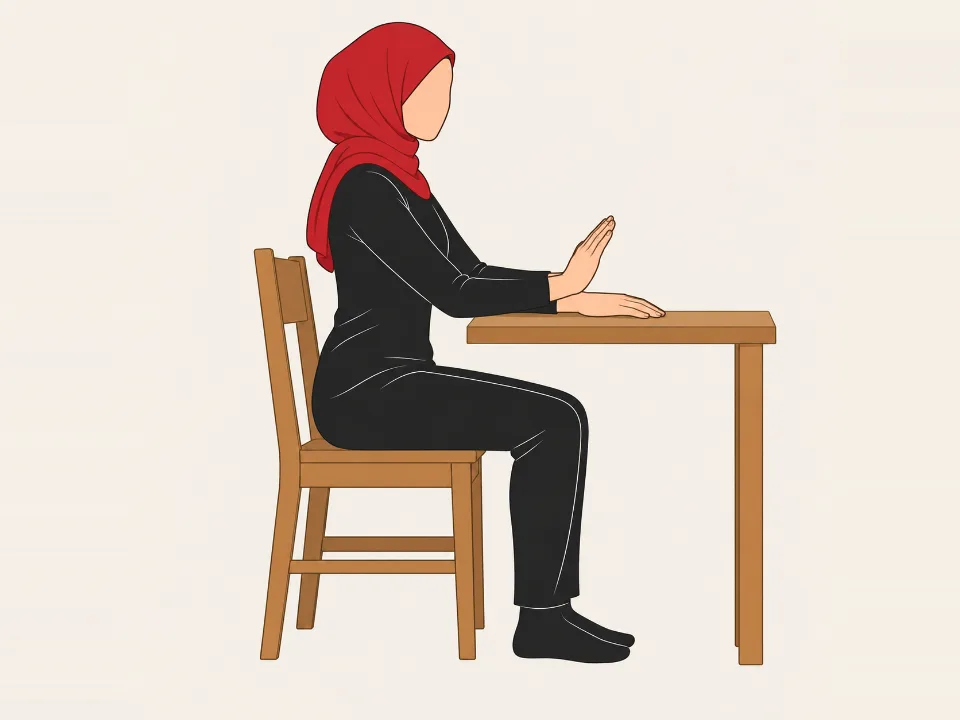
Calm the pain and start loading the tendon.
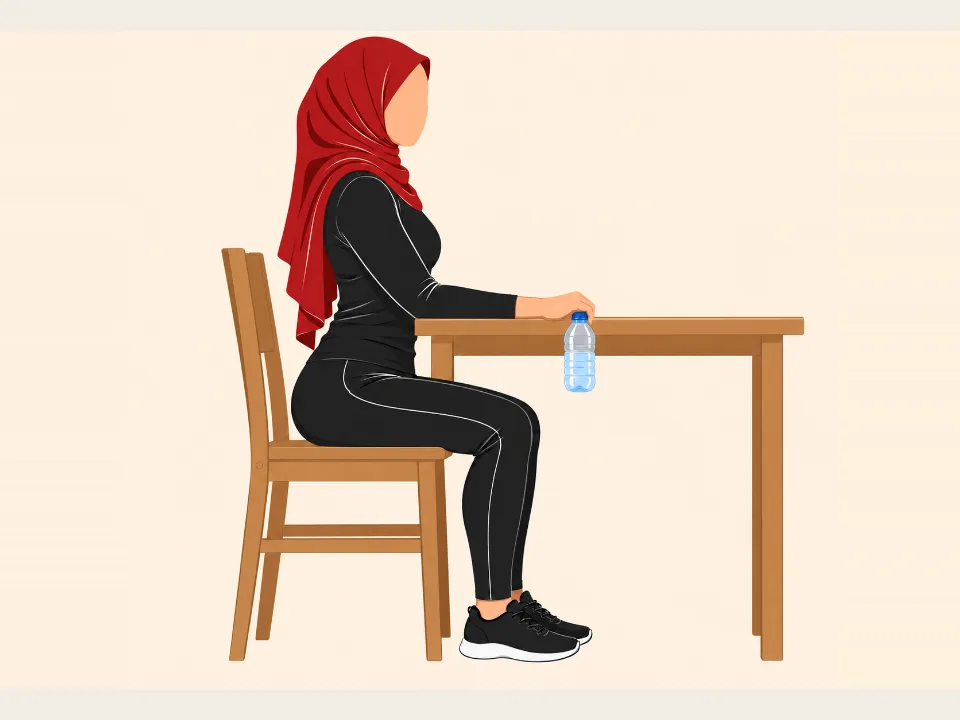
Rebuild the tendon by loading it as it lengthens.
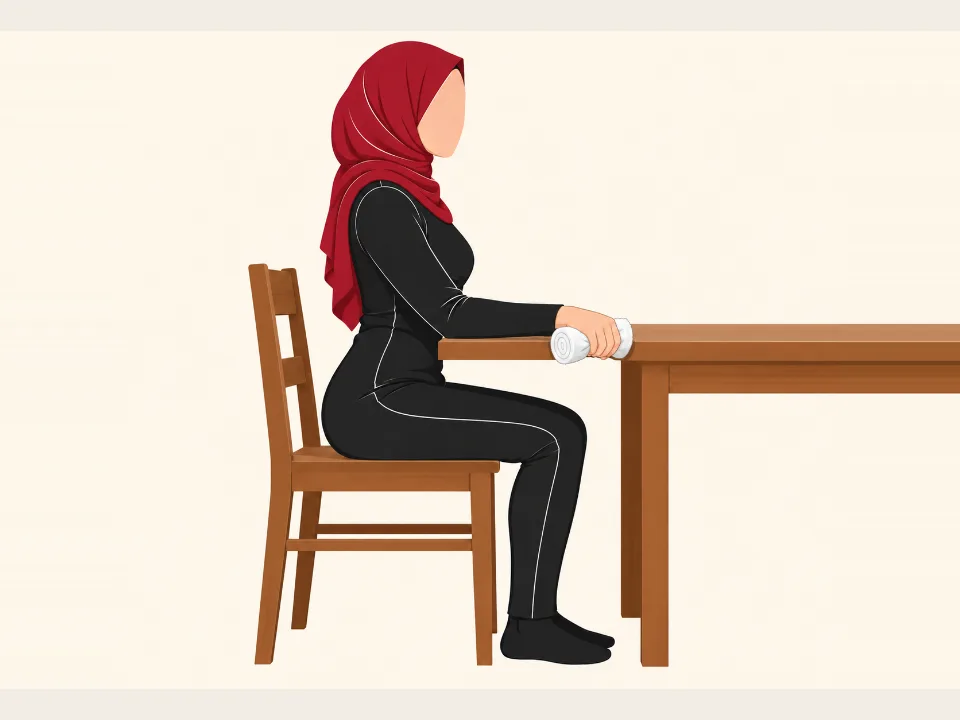
Bring back grip strength.
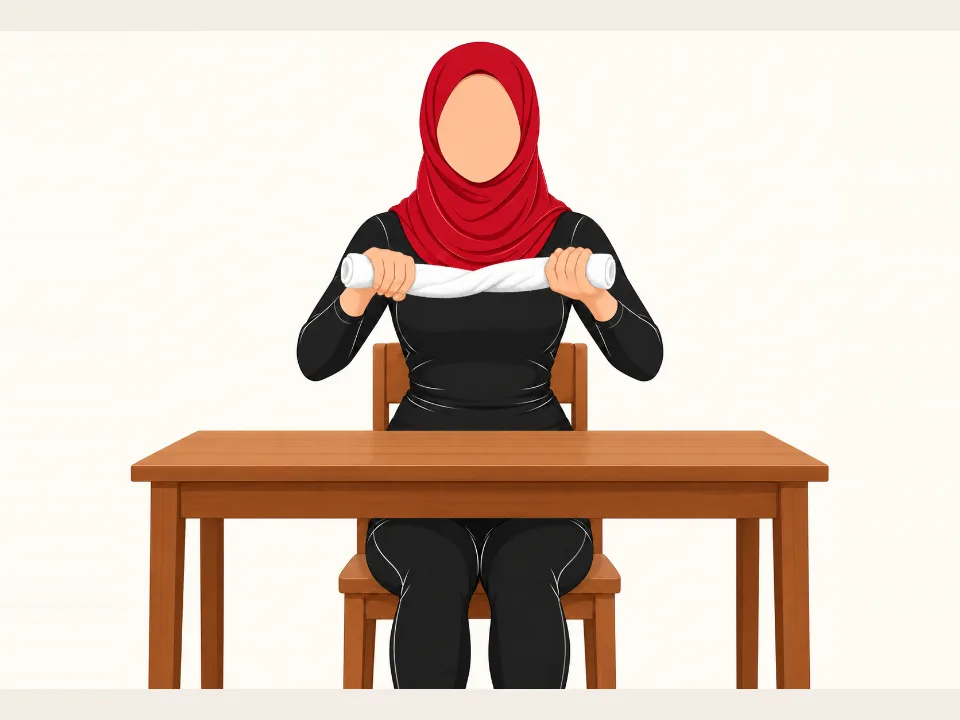
Load the forearm muscles in a twisting grip.
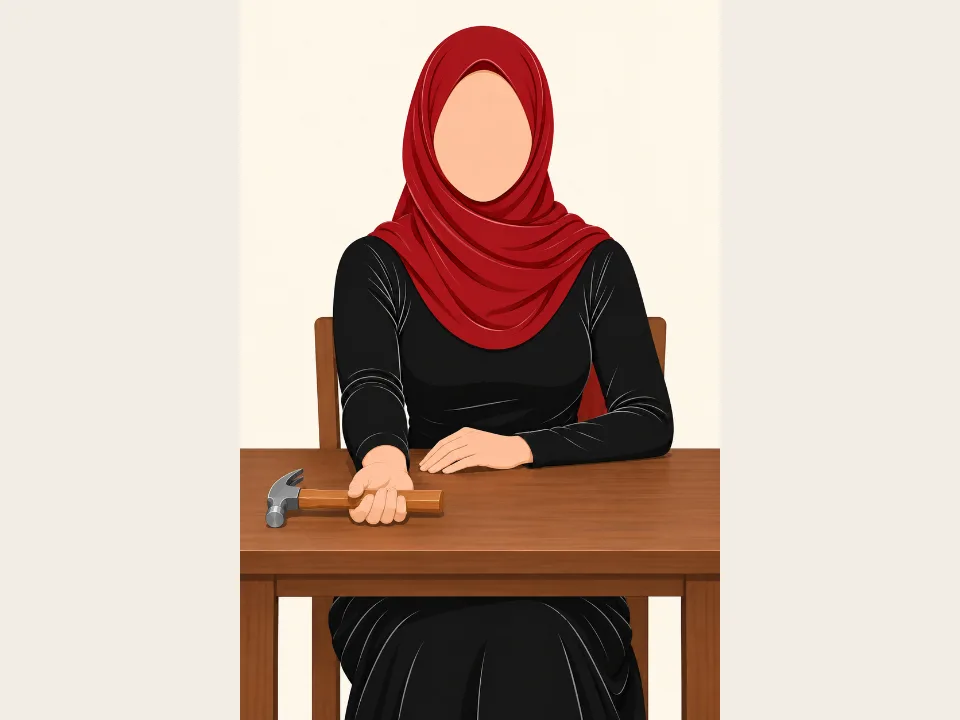
Strengthen turning the palm up and down.
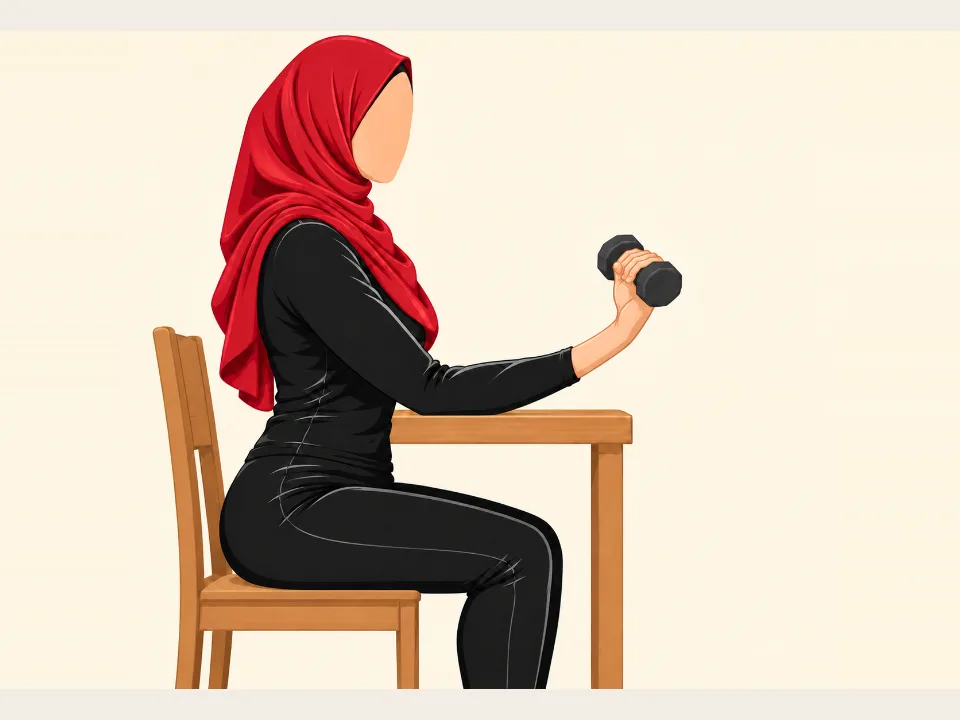
Strengthen the grip muscles, for golfer’s elbow.
Pain during exercise should stay mild and settle within a day. Stop and ask for advice if it is sharp, keeps building, or your hand tingles or feels weak.
Day to day
Small changes to how you grip and lift let the tendon settle while it rebuilds.
For tennis elbow, carry bags, pans and the kettle with your palm facing up, or with both hands.
Thicker handles on cutlery, pens and tools need less grip; a jar opener saves the twist.
Chopping, cleaning and wringing are easier in shorter spells, swapping hands where you can.
Rest your wrist level on the desk, keep the mouse close, and take short breaks from typing.
A forearm strap just below the elbow can ease pain while you lift; take it off at rest.
A cold pack for a flare, or heat for an aching forearm, up to 15 to 20 minutes wrapped in a towel.
Pain relief is a matter for your doctor or pharmacist. Tell them, and us, if pain is stopping you working, sleeping or looking after your family.
Step by step
How it began, which tasks hurt, your work, home and childcare, any pop, tingling or neck pain, and what you want to get back to.
Which tendon is sensitive, your grip strength, the nerves and the neck, and how you lift and carry. Nothing is forced.
What is likely going on, what is not, and whether you need a doctor or a scan first. Most people do not.
Changes to the tasks that flare it and your first loading exercises, with how much, how often and how to progress.
Care designed for women
Munaza Physio Studio is a women-only physiotherapy practice. Your elbow is assessed one-to-one by a female physiotherapist in a private room, so you can explain your day, at home or at work, without hesitation.
Women-only environment with a female physiotherapist
A private room for assessment and treatment
One-to-one sessions, never a shared slot, never rushed
Housework, childcare and desk work understood
Home visits across Lahore when travelling is hard

Real Stories
My mother had a stroke that left her right arm and leg immobile. With Dr. Munaza’s expert physiotherapy, she regained full movement completely painfree and without any medication. We’re truly grateful for her care and professionalism.
I took home sessions for my neck, shoulder, back, and hip pain. Alhamdulillah, all my pain is gone like a magic. Even my headache, which I had for many years, got better with the exercises. Thank you so much Dr Munaza for your kind treatment and care. May Allah bless you.
“Dr. Munaza treated my neck and shoulder pain, as well as my muscle pull issue, very effectively. With the help of exercises and therapy, I feel much better now. She is very kind, caring, and cooperative. Highly recommended!”
I had neck pain with headaches for a long time. After treatment with Dr. Munaza, my pain got much better and the headaches eased. She listened carefully, treated me gently, and explained everything clearly. I feel relaxed and thankful for her care Best physiotherpist in the area👍🏻
Dr. Munaza is very kind and professional. My shoulder pain improved within a few sessions. Highly recommended!!!!
Simple pricing
Transparent pricing, with a personalised assessment at the start of every plan.
Clinic sessions start from PKR 1,500.
Home visit pricing depends on your location and condition, contact us for a quote.
Book AssessmentYour tendon can adapt
Elbow tendinopathy is a tendon that has fallen behind the load it carries. Given the right load, a little more each week, it catches up, and gripping and lifting become easy again.
Questions
Both are tendinopathy: a tendon that has become sensitive and less able to take load. Tennis elbow (lateral elbow tendinopathy) is on the outside of the elbow, where the muscles that lift the wrist and fingers attach. Golfer’s elbow (medial elbow tendinopathy) is on the inside, where the muscles that bend the wrist and grip attach. Tennis elbow is several times more common.
No. Most people with tennis elbow do not play tennis. Gripping, lifting and repeated wrist or forearm tasks provoke it: housework, cooking, carrying shopping or a baby, gardening, typing and using a mouse, and many jobs that use the hands.
Gripping and lifting with the palm down pulls on the tendon that anchors the wrist and finger muscles to the outside of the elbow. When that tendon is sensitive, a firm grip, a lift, twisting a lid or turning a door handle makes it hurt, often with a weak-feeling grip.
It is slow but it does improve. Many people are much better within a few months of the right loading, but it can take six months to a year or longer to settle completely, especially if it has been there a long time. Steady progress in what you can grip and lift matters more than the date.
No. Complete rest lets the tendon and muscles weaken further. Ease off the tasks that clearly flare it for a while, keep the arm moving, and start gentle loading that is set to your tendon. Acute injuries and tendon repairs are different: follow your treating team’s instructions.
They can ease pain for a few weeks, but research has linked them with slower recovery and more relapses over the following year compared with exercise-based care. They are a decision to make with your doctor, knowing the trade-off.
A strap just below the elbow eases pain during gripping for some people, and is fine to use for tasks that hurt. It does not strengthen the tendon, so it works best alongside an exercise programme rather than instead of one.
A loading programme for the forearm muscles: often a held wrist lift (an isometric) to start, then slowly lowering the wrist with a light weight, grip work, a towel twist and forearm turning, building up over weeks. The exercises should be uncomfortable at most, not sharply painful, and should settle within a day.
Tingling, numbness or weakness in the hand points to a nerve rather than the tendon, such as the ulnar nerve on the inside of the elbow (little and ring fingers) or a nerve from the neck. That needs assessment, and urgently if weakness is getting worse.
No. A sudden pop with pain at the front of the elbow, bruising, a change in the shape of the upper arm or weakness turning the palm up can mean a torn biceps tendon. That needs prompt medical assessment, as a repair works best early.
Usually yes, with changes: lift with your palm facing up or with two hands, use bigger handles, take breaks from repeated gripping, and set up your keyboard and mouse so the wrist rests level. We will help you adjust the tasks that matter most to you.
Yes. Munaza Physio Studio in Allama Iqbal Town, Lahore, is a women-only practice. Your assessment and treatment are one-to-one with a female physiotherapist in a private room, at the studio or at home across Lahore.
Safety first
Your next step
Tell us which side of your elbow hurts, how long it has, and what it is stopping you doing. We will tell you honestly how physiotherapy can help. Women-only · One-to-one · At the studio or at home in Lahore.
 5.0